Bike tour
Luxury Burgundy Loop
Luxury cycling holiday in Burgundy with scenic backroads, vineyard rides, exceptional food and wine, and stays in beautiful boutique hotels. Slow, indulgent, unforgettable.
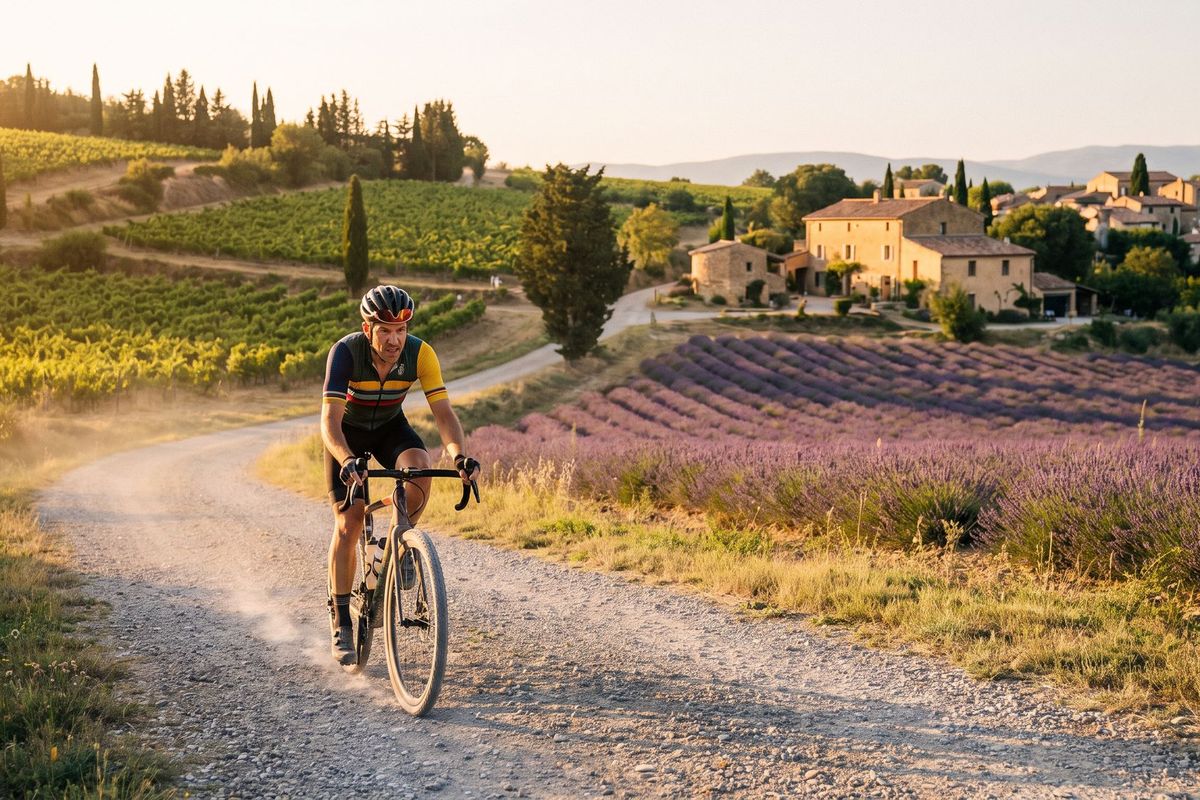
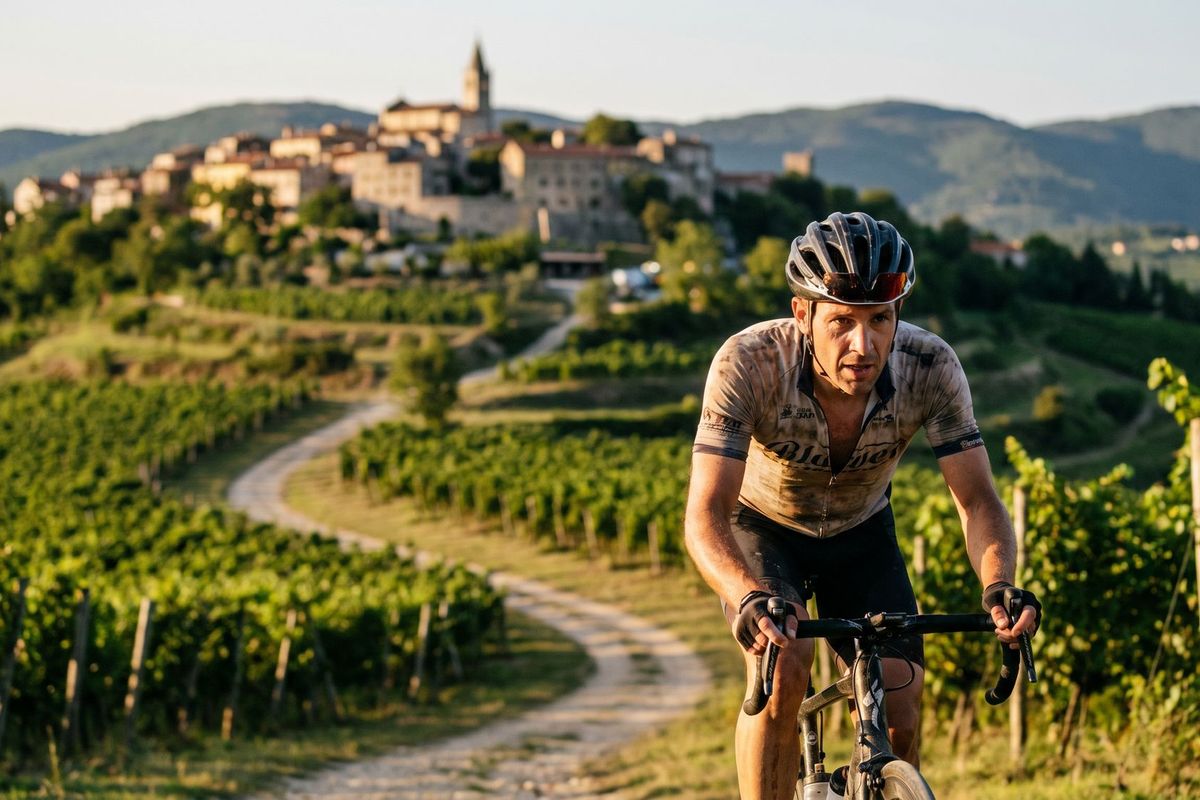
At the edge of the vine rows, set into the low stone walls, there are small markers. They come every few hundred metres. Gevrey-Chambertin. Chambolle-Musigny. Vougeot. Vosne-Romanée. The names are familiar from wine lists at good restaurants where the prices are written in three digits. Here, from the saddle of a bike, you are close enough to read the stone. You are travelling at perhaps 12km/h. The vines are an arm's length away.
At Vosne-Romanée, one marker reads Romanée-Conti. The vineyard is 1.8 hectares. It produces around 6,000 bottles a year. A single bottle costs more than most people spend on a holiday. You ride past it in about four seconds.
That is what makes cycling in Burgundy France different from every other wine region. You can read about terroir. You can visit a cellar and listen to someone explain limestone and clay and aspect. Or you can ride through it at a pace that lets the landscape actually register — the way the slope tilts, the micro-climate shift between one appellation and the next, the walled vineyard that appears suddenly behind a hedge and turns out to be Clos de Vougeot. No car window gives you that. No tour bus gets you close enough.
Luxury cycling holiday in Burgundy with scenic backroads, vineyard rides, exceptional food and wine, and stays in beautiful boutique hotels. Slow, indulgent, unforgettable.
The practical case is straightforward. The Côte d'Or — the "golden slope," the 50km ridge running south from Dijon to Santenay — has flat to gently rolling terrain along its length. The Voie Verte, a dedicated green way extending south from the Côte d'Or towards Mâcon, is largely traffic-free. The villages are clustered close enough that you are rarely more than 20 minutes between a stop. Difficulty 1 on most of our Burgundy tours: the most accessible wine-country cycling in France.
The scale is human. Beaune, the unofficial wine capital, is a 15-minute walk across. Meursault is a village of 1,700 people. Pommard has fewer than 500. You do not need a car or a bus tour — you need a bike and a quiet afternoon, and the whole Côte de Beaune opens up in front of you.
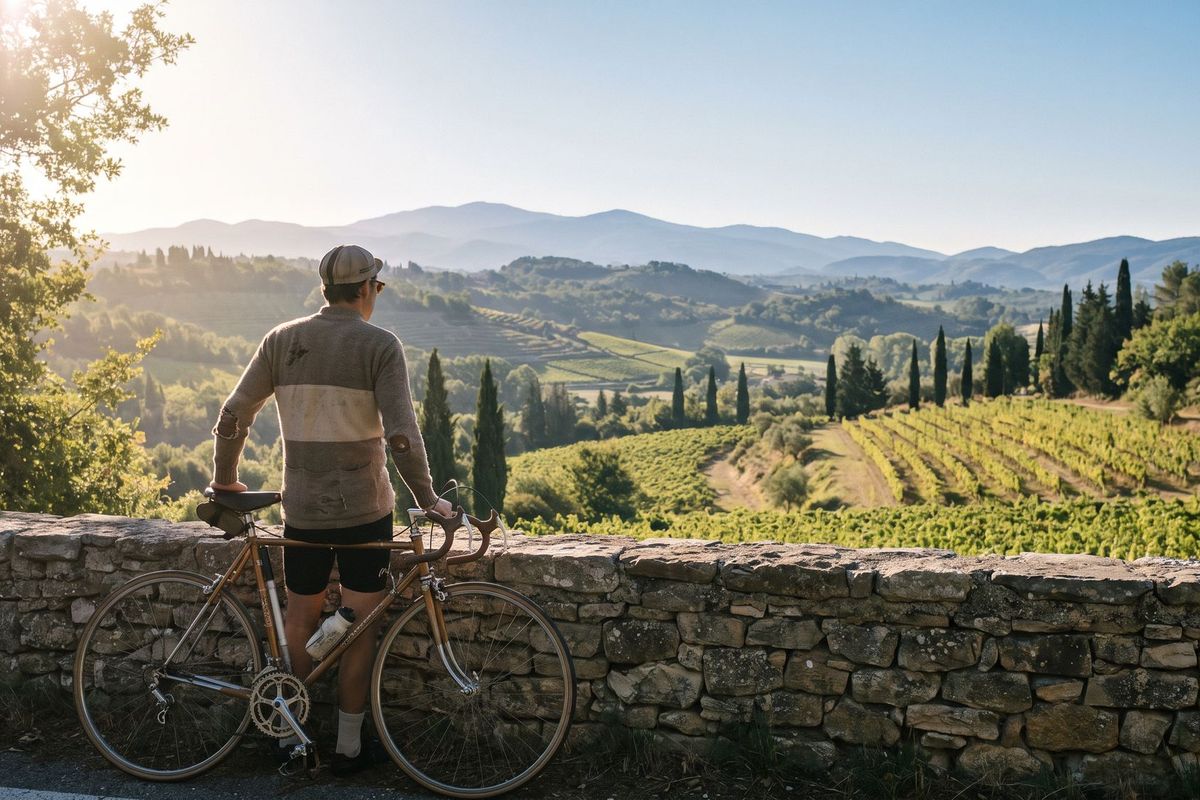
The wine itself rewards the format. Burgundy has over 100 AOCs — more than any other French wine region. But from a cyclist's perspective, the important thing is not the number: it's that these are small, precisely defined parcels of land separated by nothing more than a stone wall or a boundary marker in the grass. You can see the differences between appellations as you ride through them, and the differences are real — the soil colour changes, the vine density changes, the aspect shifts. That is what terroir means in practice, and it only makes sense when you experience it at this scale.
For all our tours across cycling holidays in France, Burgundy is the region where the cycling and the wine are most thoroughly inseparable. One informs the other.
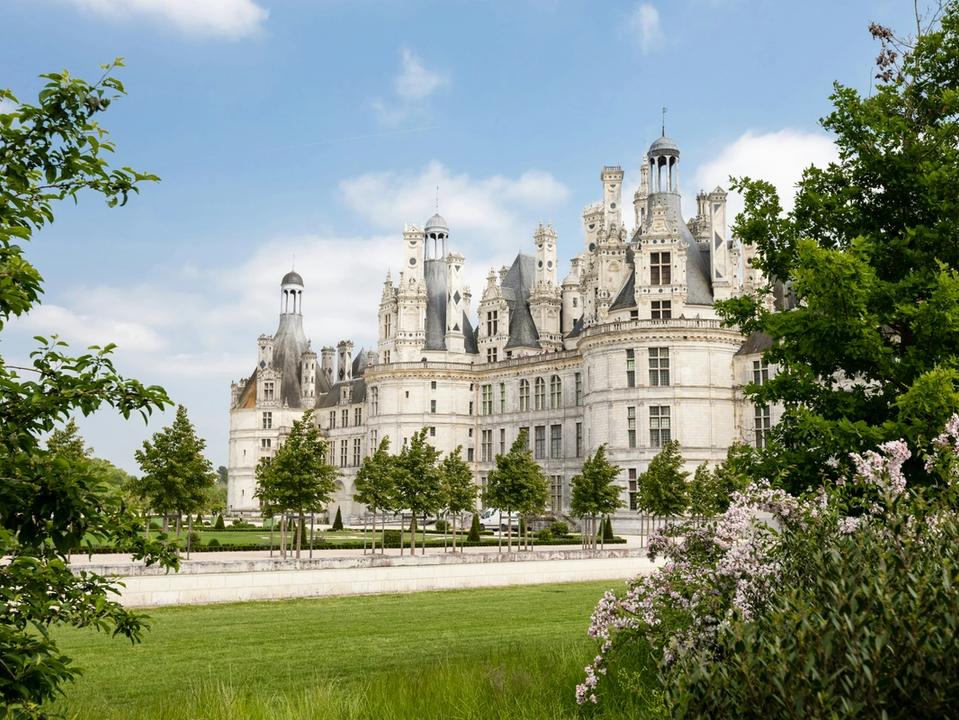
Cycle through the Loire Valley – Discover France’s most iconic châteaux, riverside paths, and historic towns on this relaxed, scenic bike tour.
The route begins in Dijon, which is more than a gateway city. The medieval old town — the Palace of the Dukes, the covered Marché Central, the tightly packed streets of the historic centre — deserves a morning before you head south. The market on a Saturday is one of the better food markets in France: local cheeses, charcuterie, Burgundy wines from small producers, seasonal vegetables from the surrounding farmland.
Find the mustard before you leave. Dijon's mustard industry has been in slow decline for decades, but Moutarderie Fallot in Beaune is the last family-run stone-ground mustard mill in France, still producing by traditional methods. The Grey-Poupon shop on Rue de la Liberté in Dijon is a good stop too — the brand has a history here that predates its American fame by about 200 years. These are the kinds of detail that the view from a car window misses entirely.
The northern half of the Côte d'Or runs south from Dijon through Gevrey-Chambertin, Morey-Saint-Denis, Chambolle-Musigny, Vougeot, Vosne-Romanée, and Nuits-Saint-Georges. This is where the great red Burgundies come from — Pinot Noir grapes grown on the mid-slope, where the chalk and limestone combine in a proportion that has proved, over several centuries, to produce something remarkable.
At Vougeot, the Château du Clos de Vougeot is worth a stop. The 12th-century Cistercian winery that built the wall around the vineyard is now the seat of the Confrérie des Chevaliers du Tastevin, the wine brotherhood that holds its banquets here in full medieval regalia. The clos itself — the walled vineyard — is one of the oldest continuously farmed wine plots in France. It was the Cistercian monks who first mapped the relationship between soil type and wine quality in Burgundy; what they were doing, centuries before anyone had a word for it, was terroir research.
Vosne-Romanée is a small village. Very little would distinguish it from the surrounding villages if it weren't for the density of Grand Cru plots within its boundaries. Romanée-Conti, La Tâche, Richebourg, La Romanée — all within a few minutes of each other, all identifiable from the bike. At 12km/h you get longer than you think to read the names.
Beaune sits at the centre of the Côte de Beaune and functions as the practical heart of the whole wine route. The Hospices de Beaune is the first thing most visitors see: the medieval hospital with its extraordinary polychrome tile roof, the glazed chevrons and geometric patterns visible from the street. It was founded in 1443 as a charitable hospital and has funded its work for nearly 600 years by auctioning wine from its own vineyards every November — the most famous wine auction in the world, held every third Sunday of November in the covered market next door. The Hospices still functions as a care home today.
Beneath Beaune, the wine merchants' cellars extend under the city streets — some of the largest underground wine storage systems in France. Most are open for visits. The Saturday morning market fills the square outside the Hospices and runs into the surrounding streets.
South of Beaune, the route continues through Pommard and Volnay before reaching Meursault — the point where the character of the wines shifts. This is where you cross from Pinot Noir country to Chardonnay country. The great white Burgundies come from here: Meursault, Puligny-Montrachet, Chassagne-Montrachet, finishing at Santenay. The whites are richer than Chablis, fuller than the Loire, with a texture that comes from the limestone and the age of the vines. At a wine list level they look similar to Chablis; from a bike in Puligny, the landscape tells you immediately why they taste different.
For the most direct introduction to this section, the Beaune Dolce Vita focuses on the Côte de Beaune and Côte de Nuits at difficulty 1 — the most accessible entry to Route des Grands Crus cycling. To extend south, the Burgundy Wine Trails: Beaune to Mâcon continues along the Voie Verte through Givry, Santenay, and the Mâconnais — difficulty 1, hotels with spas, one of our most unhurried products in France.
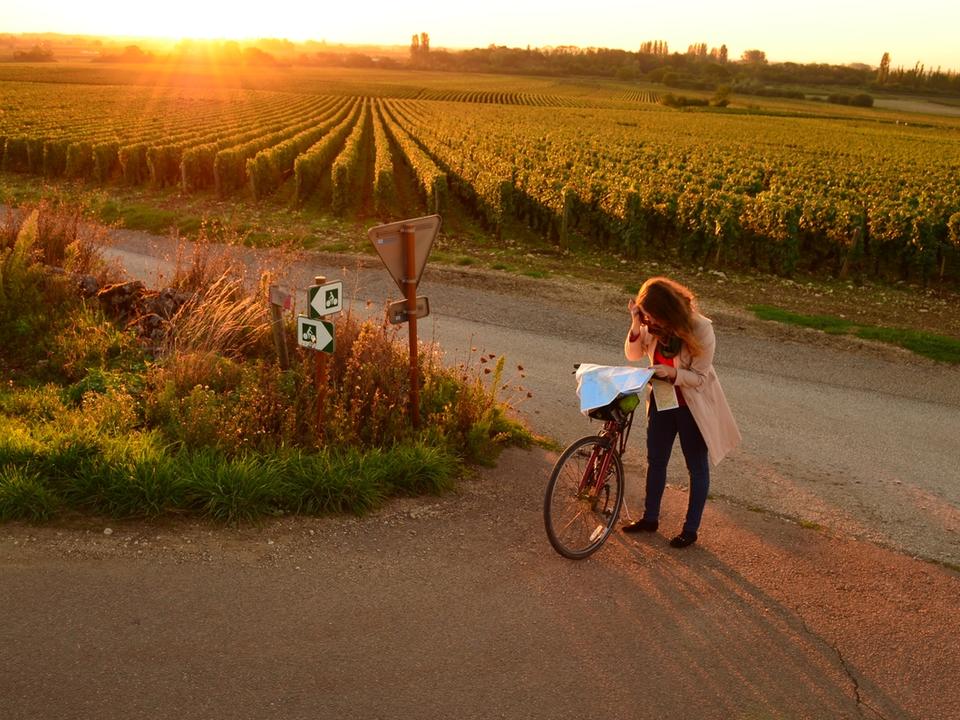
Cycle through Beaune, Nuits-Saint-Georges and Burgundy’s legendary vineyards. A gentle wine-country escape with tastings, gourmet stops and peaceful routes.
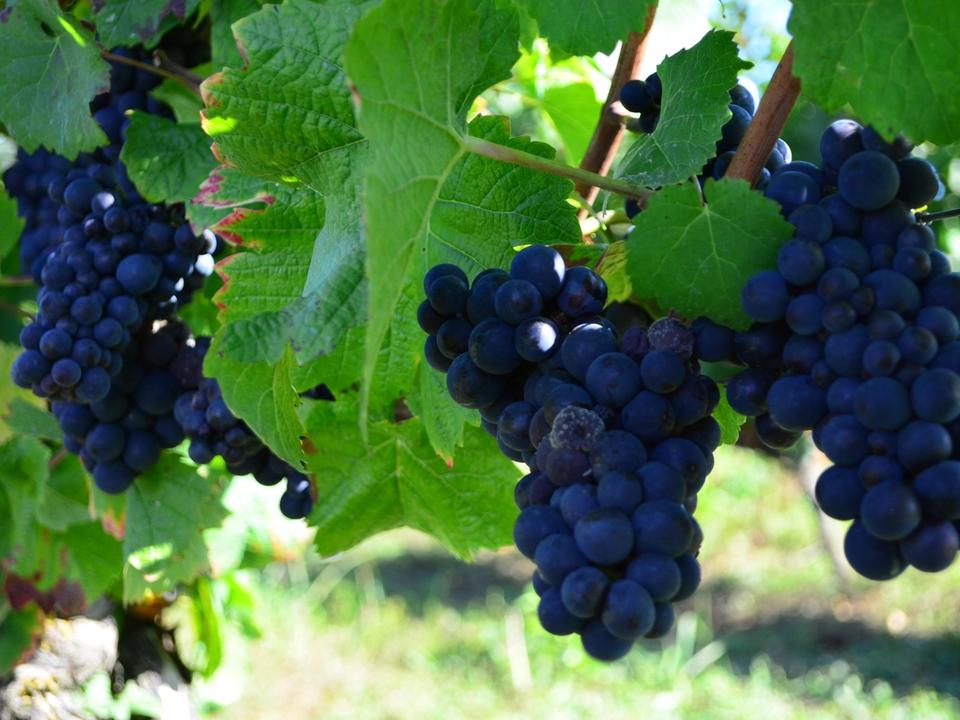
Ride from Beaune to Macon along Burgundy’s peaceful Voie Verte. Enjoy vineyard landscapes, charming wine towns and hotels with pools and spas on this relaxed point to point cycling holiday.
The Côte d'Or is Burgundy's headline act. But the region extends west and north into a landscape that has nothing to do with Grand Cru wines, and it is worth knowing about.
The Burgundy Canal runs west from Dijon to Tonnerre, passing through the Ouche Valley, over the Burgundy plateau, and down through the Auxois countryside. The cycling follows the towpath — flat, quiet, almost entirely free of motor traffic. This is Burgundy without the wine tourist infrastructure.
Three things along this route deserve mention. The Abbey of La Bussière, founded in 1136, sits directly on the canal with a formal French garden running down to the water — it's a hotel now, and the rooms in the medieval cloister are something else. At Pouilly-en-Auxois, there is a tunnel. The canal disappears underground for 3.3km, carved through solid rock by hand in the 19th century; the boats were historically pushed through by boatmen lying on their backs and walking on the tunnel ceiling. You bypass it on the bike and meet the canal at the other end, which is entirely fine, but knowing what's underneath the hill changes the way the landscape feels.
The hilltop village of Châteauneuf-en-Auxois, intact medieval fortress overlooking the canal from a ridge above, is best approached from below on the bike — the approach gives you the full silhouette of the towers and walls before you climb up. And at Alésia, the site of Julius Caesar's defeat of the Gaullish chieftain Vercingetorix in 52BC, a museum and outdoor monument now stands in open farmland. The story of the battle — Caesar surrounded by the besieged Gauls inside, and simultaneously fighting off a relief army outside, with two siege lines running in opposite directions — is one of the odder moments in military history, and the scale of the earthworks is evident even now.
Tour link: Burgundy Canal Path: Dijon to Tonnerre — difficulty 1, the most peaceful of our Burgundy options, and the one most useful for cyclists who want history alongside wine.
Chablis sits 80km northwest of the Côte d'Or, near Auxerre, and shares nothing except the Chardonnay grape. The landscape is cooler, more austere: rolling fields, the Serein river, 19 wine-producing hamlets clustered around a small market town. The geological term is Kimmeridgian limestone — a particular chalk and clay combination laid down in the Jurassic period — and it produces a wine that is steelier and more mineral than the Côte d'Or whites, with less richness and more acidity. It is a different expression of the same grape in a different soil.
The Chablis Grand Cru comes from seven named plots on a single east-facing slope above the town. You can cycle around the entire slope in 20 minutes. The distinction between a Premier Cru and a Grand Cru in Chablis is a matter of metres, of aspect, of the particular depth of the chalk layer. From a bike, looking up at the slope, you start to understand it.
The tour begins in Auxerre — a city that most people pass through without stopping, which is a mistake. The Gothic spires of Saint-Étienne cathedral are among the most distinctive in northern France; the half-timbered houses along the riverfront are better preserved than many more famous examples elsewhere; the riverside esplanade in the evening is one of the more pleasant stretches of urban cycling in Burgundy.
Tour link: Chablis Short Break — difficulty 3, the most demanding of our Burgundy options. Worth it for the distinctiveness — this is the least written-about part of the Burgundy wine region and the most surprising.
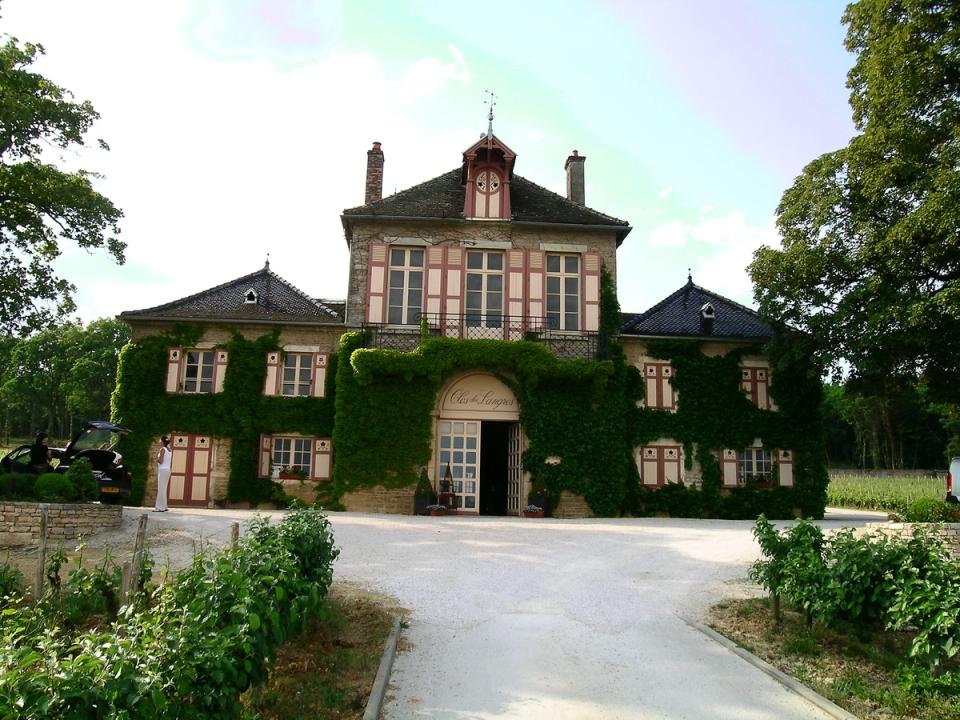
Discover Burgundy by bike through Auxerre, Chablis and peaceful wine villages. Gentle routes, rich history and unforgettable tastings along the way.
First time in Burgundy, wine focus: The Beaune Dolce Vita is the right entry point. Difficulty 1, focused on the Côte de Beaune and Côte de Nuits, shortest time commitment. The most direct way to experience the Route des Grands Crus.
Longer point-to-point journey: The Burgundy Wine Trails: Beaune to Mâcon extends south along the Voie Verte into the Mâconnais and Beaujolais borders. Difficulty 1, spa hotels, unhurried pace. Good for couples who want a week with serious wine and serious comfort.
History alongside wine: The Burgundy Canal Path: Dijon to Tonnerre swaps the Côte d'Or for the canal towpath and the Auxois countryside. Difficulty 1, the least wine-focused option, the most peaceful.
Off the main circuit: The Chablis Short Break starts from Auxerre and focuses on the Chablis appellation. Difficulty 3 — the hardest we offer in Burgundy, and the most distinctive. For cyclists who have already done the Côte d'Or and want something different.
The best of everything: The Luxury Burgundy Loop uses the best available accommodation in the wine villages — some in the cellars themselves — with more time for private cellar visits and wine dinners. For couples who know Burgundy and want to do it properly.
When to go: May and June offer quiet roads, green vines, and pleasant cycling temperatures — the best time if you want to move freely. September is harvest: the energy in the vineyards is high, the cellar doors are busy, and the smell of fermentation from the villages is something you only get at this time of year. October brings golden light on the Côte d'Or. November has the Hospices de Beaune auction. Avoid August if you want the main villages to yourselves.
Getting there: TGV from Paris Gare de Lyon to Dijon is 1h40. Beaune is a further 20 minutes south by regional train. Eurostar to Paris, then onward by TGV, is the straightforward route from London — no flying required.
For all five of our Burgundy cycling holidays, including current availability and pricing, visit the Burgundy region page.
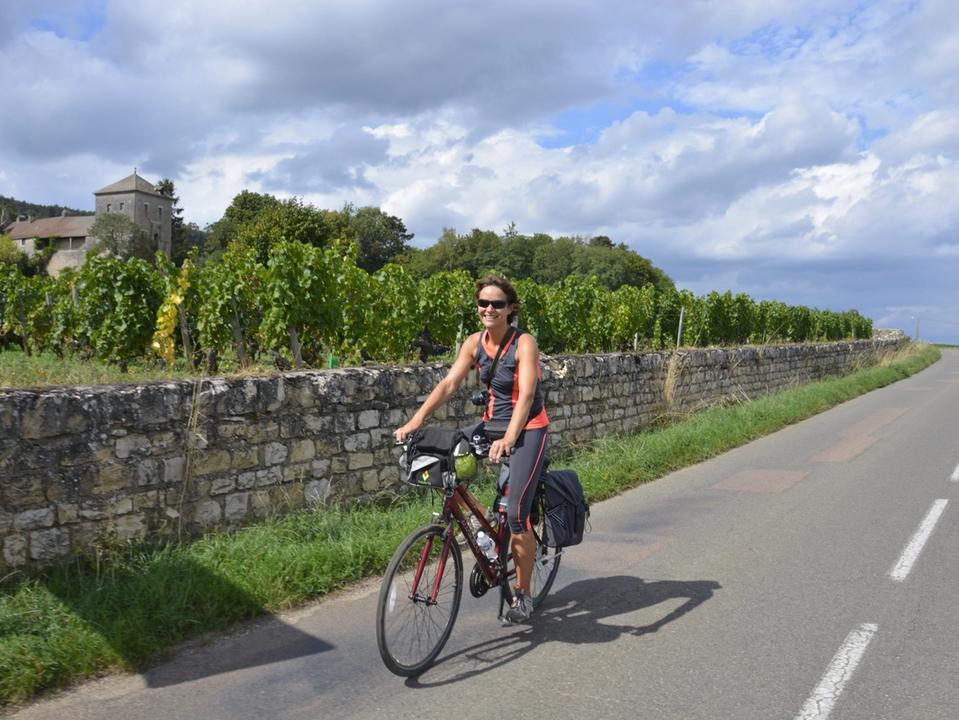
A round-trip cycling tour through Southern Burgundy from Beaune, riding green ways and quiet vineyard paths through Cluny, Macon, Tournus and Chalon.
Yes — Burgundy is one of the best cycling destinations in France. The Côte d'Or runs 50km at flat to gentle gradient, the Voie Verte extends the route south on traffic-free paths, and the vineyard villages are close enough together that you are rarely more than 20 minutes between stops. Three of our five Burgundy tours are rated difficulty 1, making them accessible for most fitness levels.
The Route des Grands Crus is the cycling and driving route that runs through the Côte d'Or, the ridge of Grand Cru and Premier Cru vineyards stretching from Dijon south to Santenay. Along it, stone markers at the edge of the vine rows identify each appellation — Gevrey-Chambertin, Chambolle-Musigny, Vosne-Romanée, Meursault, Puligny-Montrachet and more. Cycling it at 12–15km/h gives you a proximity to the vineyards that no other form of transport does.
May and June are the quietest and most comfortable months. September is the grape harvest — the most atmospheric time, with picking crews in the vines and a palpable energy in the region. October offers golden light and slightly quieter roads than September. November has the Hospices de Beaune wine auction. Avoid August if you want the most popular villages without summer crowds.
Three of our five Burgundy tours are rated difficulty 1 — genuinely accessible for occasional cyclists. The Côte d'Or terrain is flat to gently rolling. The Chablis Short Break is rated difficulty 3, with more elevation and the most challenging of the routes. E-bikes are available to hire on all tours.
Eurostar from London St Pancras to Paris (2h15), then TGV from Paris Gare de Lyon to Dijon (1h40). Beaune is a further 20 minutes from Dijon by regional train. Total journey time from central London to central Beaune is around 5 hours — no flying required.