Bike tour
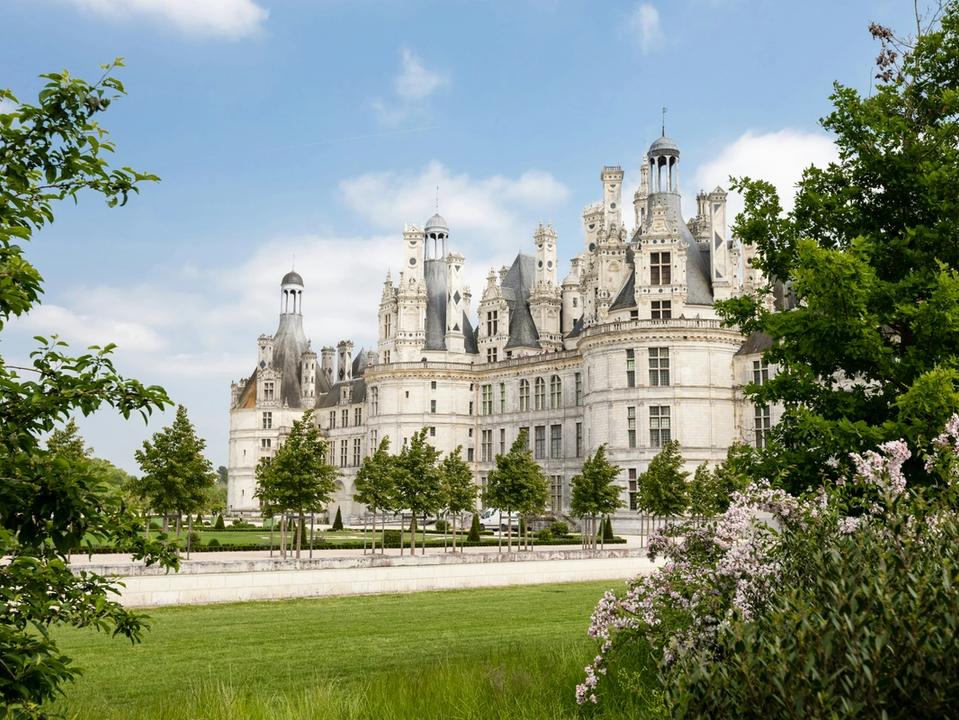
Castles of the Loire Valley
Cycle through the Loire Valley – Discover France’s most iconic châteaux, riverside paths, and historic towns on this relaxed, scenic bike tour.

Rob
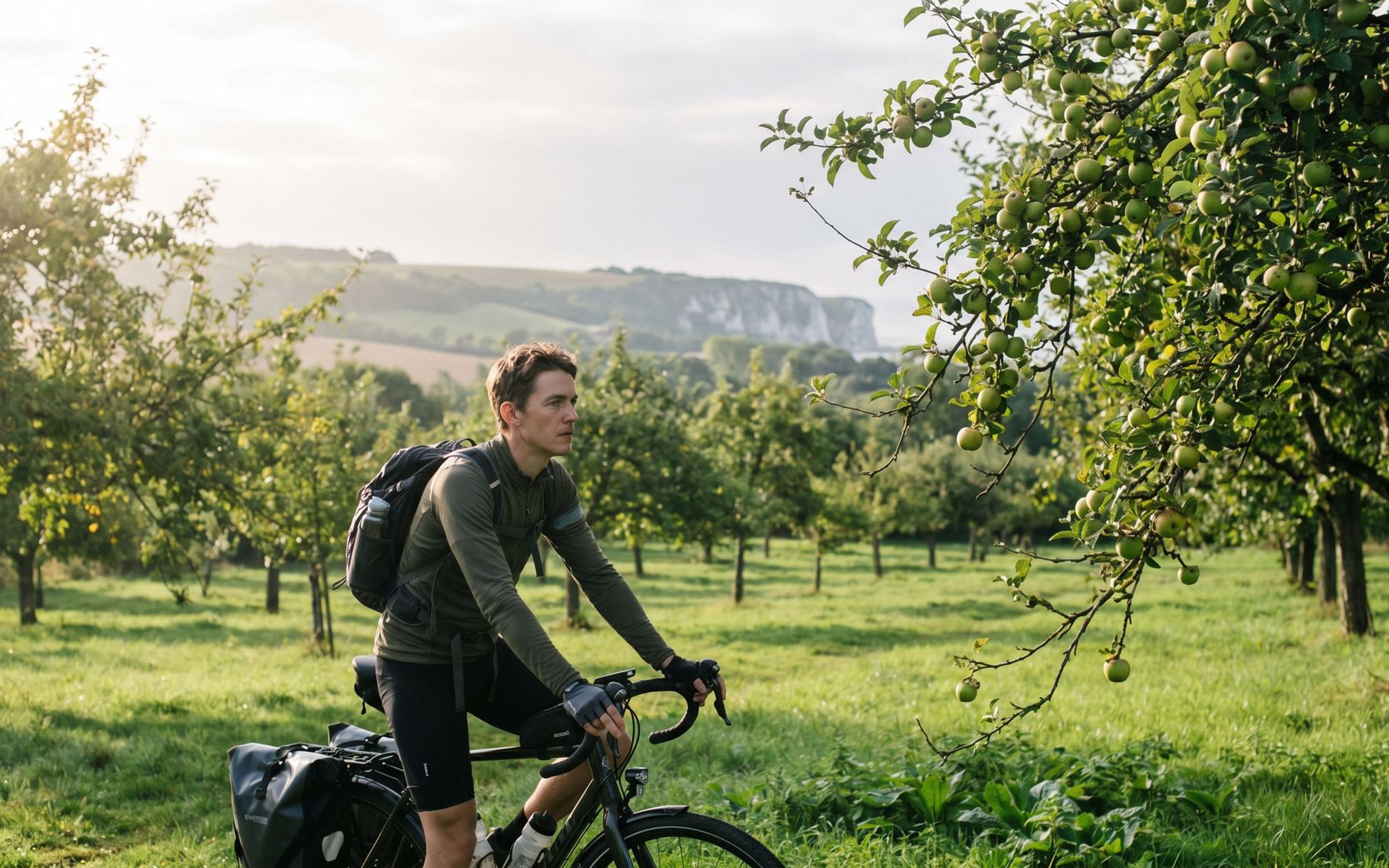
Normandy is a cycling destination hiding in plain sight. Coach tour operators claimed the D-Day beaches decades ago; road cyclists moved on to Provence and the Alps. What neither group has properly communicated is what Normandy actually offers the touring cyclist: a coastline of white chalk cliffs and long Atlantic beaches, a network of bocage lanes through apple orchard country, one of the most significant historical landscapes in Europe, and an evening culture built around Calvados, cider, and some of the best cheese in the world.
Cycling holidays in France rarely put Normandy at the top of the list. They should. This guide makes the case — with routes, timing, food, and an honest picture of what a week on a bike in Normandy actually looks and feels like.
Cycle through the Loire Valley – Discover France’s most iconic châteaux, riverside paths, and historic towns on this relaxed, scenic bike tour.
The first thing Normandy offers that most other French regions do not is proximity. From the south coast of England, the ferry crossing to Cherbourg or Caen is shorter than the drive to many UK holiday destinations. You can leave home in the morning and be cycling through apple orchards by the afternoon. For UK cyclists, this changes the calculation around Normandy considerably.
The second thing is the landscape itself. Normandy is not one thing — it is several. The coast (the Côte de Nacre between Caen and Bayeux, the Cotentin Peninsula, the alabaster cliffs of the Côte d'Albâtre near Étretat) is genuinely spectacular. The inland country is bocage: a landscape of small fields enclosed by ancient earth-bank hedgerows, threaded by lanes that carry almost no traffic and pass through villages of half-timbered houses and Norman churches. This is the France that existed before the motorway network, and it survives remarkably intact in Normandy's interior.
The third is history. The D-Day landing beaches, the American Cemetery at Colleville-sur-Mer, the Bayeux Tapestry, the abbey of Mont Saint-Michel — this is a landscape where the weight of history is present but not oppressive. Cycling gives you access to it at the right pace: slowly enough to stop at a memorial or a viewpoint, quickly enough to cover the ground between them in a morning.
Distance: The Normandy section runs approximately 500km from Cherbourg to Le Tréport. Difficulty: Easy to moderate.
The Vélomaritime is a signed EuroVelo route that follows the French Atlantic and Channel coast from Roscoff in Brittany to the Belgian border. The Normandy section runs east along the Channel coast from Cherbourg through Bayeux and Caen, past the D-Day beaches, through the fishing towns of Honfleur and Fécamp, to the chalk cliffs and stacked pebble beaches of the Côte d'Albâtre near Étretat.
This is a long-distance route suited to cyclists with 10–14 days available. Most cyclists visiting Normandy for a week will take a specific section — the D-Day coast between Cherbourg and Caen, or the Alabaster Coast between Fécamp and Dieppe — rather than the complete route.
The cycling is mostly flat to gently rolling. The coastal sections can be exposed to westerly winds; the inland alternatives are more sheltered. Signage along the Vélomaritime is reliable, which makes it well-suited to self-guided cycling in France.
Distance: Approximately 80–120km depending on the route taken. Difficulty: Easy to moderate.
The D-Day circuit uses Bayeux as its hub — a town of medieval streets, the famous tapestry, and an extraordinary concentration of good restaurants for a place of its size. From Bayeux, day rides run out to the five landing beaches: Utah, Omaha, Gold, Juno, and Sword. The distances are manageable (15–35km per beach depending on starting point), the roads are quiet, and the experience of arriving at these sites by bicycle — quietly, at your own pace, with time to stop at every memorial — is qualitatively different from arriving by coach.
Omaha Beach is the most visited and the most emotionally significant: the American Cemetery at Colleville-sur-Mer sits above it on a clifftop, 9,387 white marble crosses in ordered rows above the sea. The scale of it, approached slowly on a bike, lands differently than it does from a car park.
Bayeux itself warrants a half-day: the Tapestry tells the story of 1066 in extraordinary detail across 70 metres of embroidered cloth, and the town's Norman architecture — largely undamaged during the 1944 campaign — gives it a coherence that many Normandy towns, rebuilt quickly after the war, lack.
Best for: Active Couples with a history interest, solo travellers, anyone for whom the cultural dimension of a cycling holiday matters as much as the cycling itself.
Distance: Approximately 150km for a full circuit. Difficulty: Easy to moderate.
The Cotentin Peninsula juts north into the Channel from the town of Carentan, with Cherbourg at its tip. The route runs from Cherbourg south along the west coast — through lush marshes, long sandy beaches, and the dramatic Nez de Jobourg headland — to Utah Beach and the D-Day monuments at the peninsula's base.
This section of Normandy sees fewer tourists than the Bayeux coast, the roads are correspondingly quieter, and the landscape has a slightly wilder quality. The Nez de Jobourg, where the land drops sharply into the Channel, is one of the most dramatic coastal viewpoints in northern France.
Cyclists who want to move away from the coast and the D-Day circuit entirely will find the inland Calvados and Orne countryside a quieter, more meditative experience. The bocage lanes are genuinely narrow — often single track between earth banks topped with mature hedgerow — and carry almost no traffic beyond farm vehicles. Villages appear every 10–15km, with a church, a mairie, and usually a boulangerie or bar.
Terrain is gently rolling, with enough undulation to make the days interesting without the sustained climbing of Normandy's southern neighbour, the Loire Valley. This is where the apple orchards are — the source of the cider and Calvados that define Normandy's drinking culture. In late summer, the grass beneath the trees is thick with fallen fruit.
May and June are the best overall months for cycling in Normandy. The days are long, the apple blossom is at its peak in the orchards (particularly mid-May), the D-Day commemorations bring a respectful but not overwhelming crowd in early June, and the Atlantic weather at this time of year is more settled than autumn.
September is the second-best option and arguably the most interesting. The cider harvest runs from late September into October — apple-pressing in the farmyards, the smell of fermenting juice on the lanes, and the opportunity to buy new-season cider directly from producers. The D-Day sites have breathing room. The light in late September on the chalk cliffs above Étretat is worth the journey in itself.
July and August are perfectly viable but bring the most visitors. The D-Day coast in particular becomes busy with coach tours from the UK, Germany, and the USA. Cycling allows you to avoid most of this — the lanes are yours even when the beach car parks are full — but accommodation prices peak and early booking is essential.
The weather: Normandy is wetter than southern France. This is simply true. The Atlantic influence means cloud and rain are possible at any time of year. Pack a waterproof, plan for a damp morning occasionally, and accept that the light after rain on a Norman bocage lane — everything very green, the hedgerows steaming slightly, the road ahead empty — is one of the better things a cycling holiday can show you.
Normandy's food culture is built around four things: dairy, apples, seafood, and meat. This is not the wine country of Burgundy or Bordeaux — it is something older and more rural, and it suits the cycling holiday format well.
Camembert, Livarot and Pont-l'Évêque — Three of France's great washed-rind cheeses all originate in the Calvados department. Buy them from fromageries in the market towns; eat them ripe, at room temperature, with good bread and local cider. Camembert de Normandie with a proper label (made with raw milk, hand-ladled) is different in character from anything sold in UK supermarkets. This is a good reason to visit.
Calvados — Normandy's apple brandy, distilled from cider and aged in oak barrels. The young versions (VS and VSOP) are fiery and direct; the older expressions (XO) are complex and smooth enough to drink slowly at the end of a long day. In the Pays d'Auge — the heartland of Calvados production between Caen and Lisieux — the distilleries are small, family-run, and generally willing to pour a tasting for cyclists who arrive at the door.
Cider — The everyday drink of Normandy, produced across the region from dozens of local apple varieties. Brut cider (dry) is better than demi-sec (medium) with food. Order it with a galette or a cheese plate; it is inexpensive, extremely local, and right for the climate and the landscape in a way that wine, however good, would not be.
Moules marinières and plateau de fruits de mer — The Norman coast produces excellent mussels, oysters, and shellfish. The port towns of Honfleur, Granville, and Barfleur are particularly well-served; a plateau de fruits de mer — a tiered platter of raw and cooked shellfish — is the right way to spend an evening after a coastal day's cycling.
Tarte normande — An apple tart made with crème fraîche and Calvados, baked until the apples caramelise and the pastry is very short. Found in every boulangerie and crêperie in the region. Eat it warm.
Normandy is excellent self-guided cycling territory. The signed routes are clear, the ferry arrival points are well-connected to the main cycling itineraries, and the accommodation network — gîtes, chambres d'hôtes, and small hotels — is accustomed to cyclists and their luggage.
The D-Day circuit in particular suits a self-guided format: you set your own pace at each site, stop as long as the history demands, and move on when you are ready. A guided tour of the D-Day beaches is a different experience — valuable, particularly if you want historical context delivered in real time — but not necessary for a meaningful visit.
For cyclists who want interpretation and companionship, a guided cycling holiday in France with a knowledgeable local guide makes the historical content considerably richer, and is worth considering if the D-Day history is a primary reason for the trip.
Pedal Ventures is a marketplace: we connect you to local operators in Normandy who run both self-guided and guided tours. Every operator on the platform is handpicked and vetted — if we would not book it ourselves, it is not listed.
By ferry: The most practical option for UK cyclists, and one of Normandy's genuine advantages. Brittany Ferries run crossings from Portsmouth to Caen (Ouistreham), Portsmouth to Cherbourg, and from Poole to Cherbourg. DFDS runs Portsmouth to Le Havre. Crossing times range from approximately 4 hours (Poole to Cherbourg, fast ferry) to overnight. Bikes travel with you without disassembly; you arrive refreshed and directly in the cycling country.
This is the strongest argument for including Normandy in your France cycling shortlist: you can leave home on a Friday evening and be cycling the D-Day coast on Saturday morning. No flight, no transfer, no bike bag required.
By Eurostar and train: London to Paris by Eurostar (2.5 hours), then Intercités to Caen (approximately 2 hours from Paris Saint-Lazare). Caen is a natural starting point for the D-Day circuit. For Étretat and the Alabaster Coast, connect to Rouen from Paris; for the Cotentin Peninsula, continue by train to Cherbourg.
Every cycling holiday booked through Pedal Ventures carries PTS financial protection — your money is protected if Pedal Ventures or the operator fails. At around £3,000 per booking, this protection matters and is worth confirming with any provider before paying a deposit.
Yes — the coastal Vélomaritime route and the D-Day circuit around Bayeux are among the more accessible cycling routes in northern France. Most daily stages can be kept to 25–40km on relatively flat to gently rolling terrain. The inland bocage is slightly more demanding but still manageable for most cyclists. E-bikes are available through operators for anyone who wants additional range.
The D-Day circuit based in Bayeux is the most compelling for cyclists who want a mix of history, coast, and food. The Vélomaritime coastal route is the better choice for cyclists who want sustained coastal cycling and are prepared for a longer itinerary of 7–10 days. The Cotentin Peninsula offers the most unspoilt landscape with the fewest other tourists.
May and June for the best weather and the apple blossom. September for the cider harvest, the Calvados distillery visits, and the D-Day sites without the summer crowds. Both are preferable to July and August if your dates are flexible.
Yes — ferry crossings from Portsmouth and Poole to Caen or Cherbourg are the most convenient option for UK cyclists, allowing you to travel with your own bike without disassembly or airline restrictions. Most crossings run overnight or as half-day sailings, and bikes are accommodated on board.
Normandy and Brittany share a similar climate and a similar relationship with the sea, but they feel quite different as cycling destinations. Brittany is wilder and more Celtic in character, with a stronger coastal cycling infrastructure and a seafood culture that is hard to match anywhere in France. Normandy has more historical depth and a food culture — the cheeses, the Calvados, the cider — that is uniquely its own. Both reward slower travel and do not require good weather to be excellent.
Yes, particularly the D-Day circuit around Bayeux. The historical content is substantial enough to interest teenagers and adults; the terrain is manageable for older children; and Bayeux as a base offers enough beyond the cycling — the Tapestry, the markets, the restaurants — to keep everyone engaged. The Cotentin Peninsula is a better family option for younger children given its quieter roads and beach access.
Browse all cycling holidays in France to find the right tour for your trip.
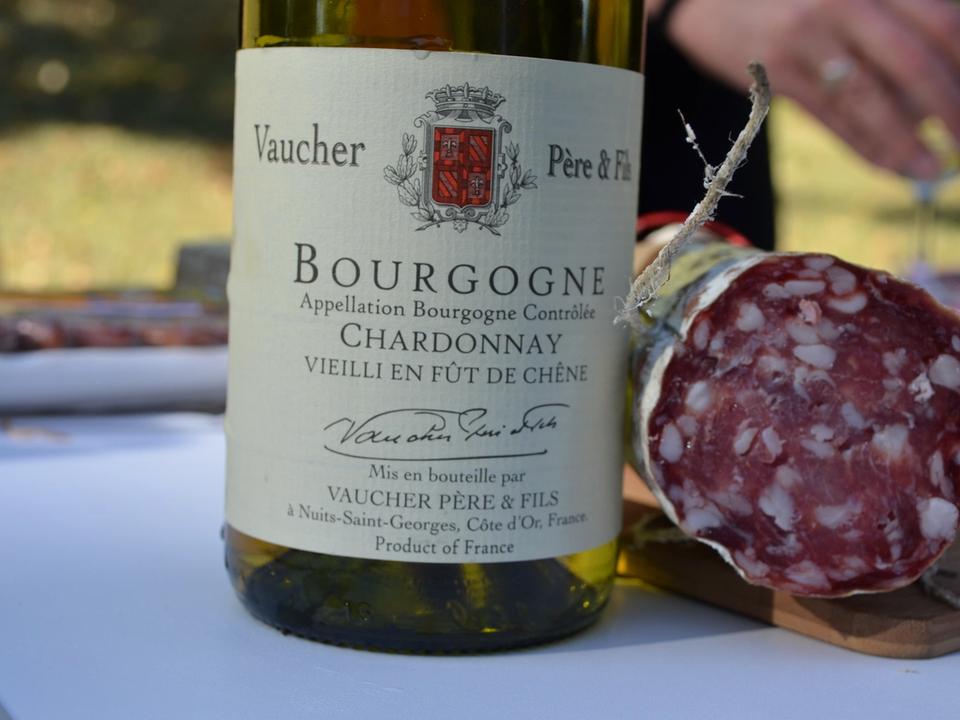
Luxury cycling holiday in Burgundy with scenic backroads, vineyard rides, exceptional food and wine, and stays in beautiful boutique hotels. Slow, indulgent, unforgettable.