Bike tour
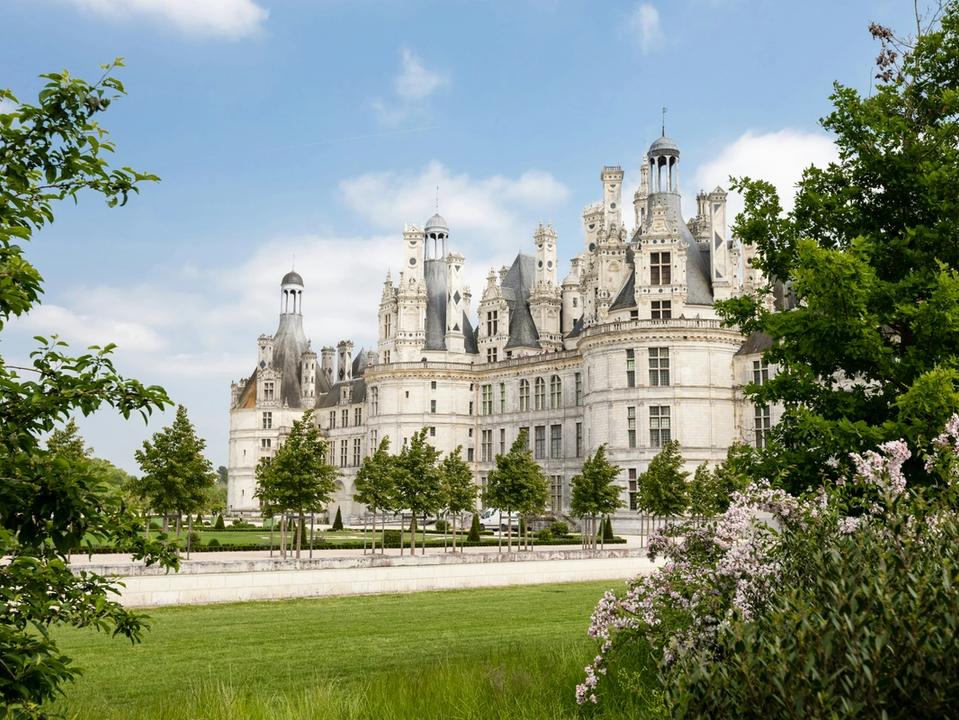
Castles of the Loire Valley
Cycle through the Loire Valley – Discover France’s most iconic châteaux, riverside paths, and historic towns on this relaxed, scenic bike tour.

Rob
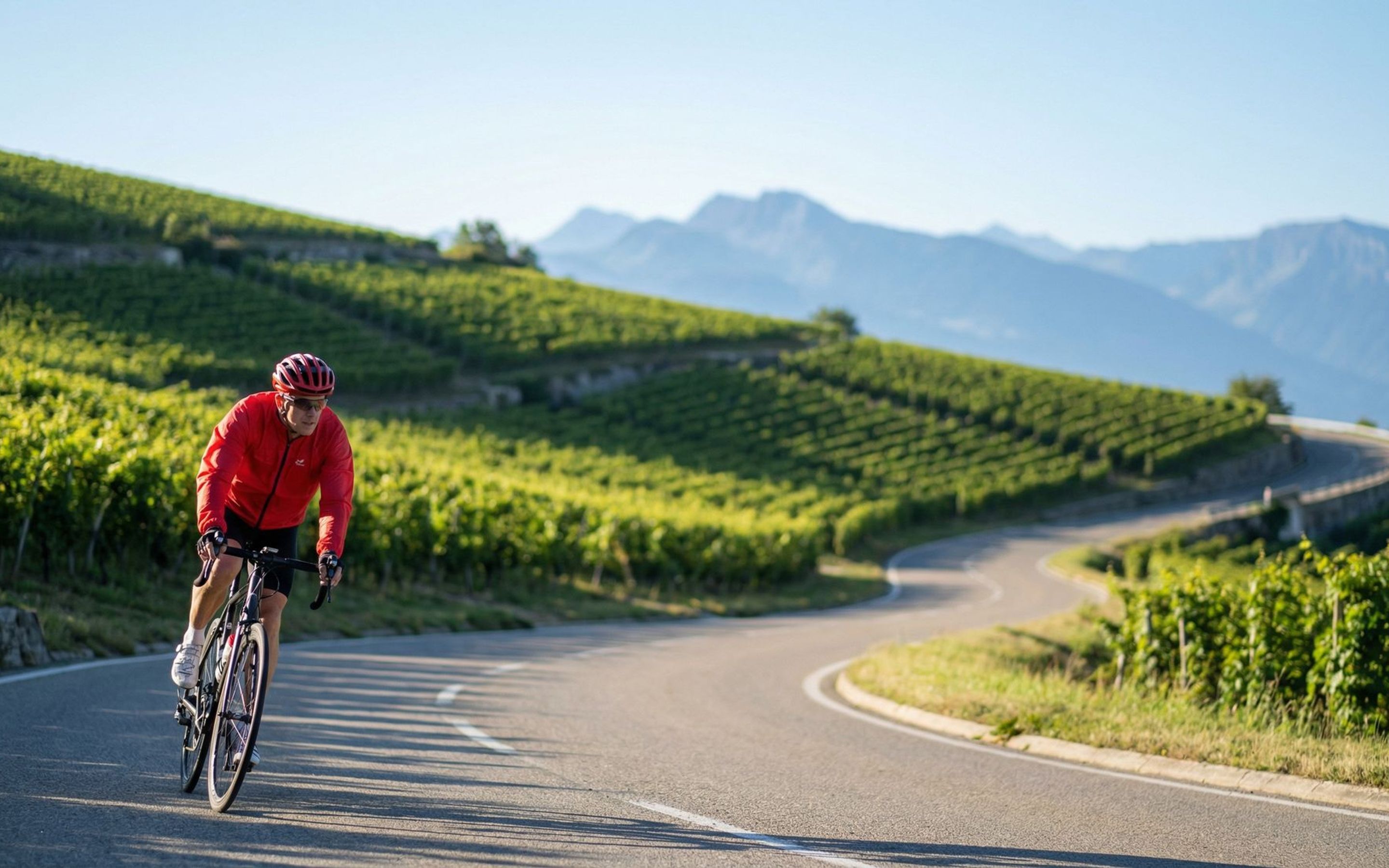
The appeal of a self-guided cycling holiday is not difficult to understand. Your own pace. No group to keep up with. The freedom to stop at the vineyard terrace for an extra half-hour, or to cycle a different variant of the route because the view looks better. No one waiting for you.
What stops many people from booking one is a version of the same question: what happens when something goes wrong? What if I get lost? What if the hotel is not what I expected? What if I can't manage the route?
These are reasonable concerns. They are also, for the most part, based on a misunderstanding of what a self-guided cycling holiday in France actually is. This guide explains the reality — what self-guided means in practice, why France is the best country for it, and how to choose the right region for your first (or next) independent cycling trip.
Self-guided does not mean you organise everything yourself. It does not mean cycling alone through a foreign country with a paper map and no backup. That is a cycling tour. A self-guided holiday is something quite different.
When you book a self-guided cycling holiday through Pedal Ventures, a local operator has done the following before you arrive:
Pre-booked your accommodation at every stage of the route. A hotel or gîte is confirmed and waiting at the end of each day's ride. You do not need to find somewhere to stay.
Arranged daily luggage transfers. Your bags are collected from your hotel each morning and delivered to the next one. You carry only a day pack — sunscreen, a jacket, lunch money, your phone. Everything else travels ahead of you.
Provided navigation. Detailed daily route notes, a GPS file, or a dedicated cycling app loaded with the route. Turn-by-turn navigation for the entire trip. On well-marked routes like La Loire à Vélo, the signage is so good that most guests barely need to check their phone.
Set up a support helpline. A number you can call throughout the trip if anything goes wrong — mechanical issue, navigation confusion, health concern, hotel problem. Someone answers. Someone helps.
On some tours, a support vehicle drives the route and can assist if needed. On others, the helpline is the primary support mechanism. Either way, you are not without backup.
What you do yourself: you ride. You choose your lunch stop. You decide whether to visit the château or carry straight on. You pick the restaurant for the evening. The independence is real — but it sits on top of a logistics framework the operator has built.
France works better for self-guided cycling than almost any other European country. There are specific reasons for this.
Route infrastructure. France has dedicated cycling infrastructure that few countries match. The La Loire à Vélo (900km along the river), the Canal du Midi route, EuroVelo routes through multiple regions — these are properly maintained, well-signed paths. You are not navigating on instinct along country roads. You are following a route that hundreds of thousands of cyclists have used before you.
Route marking. The signage on major French cycling routes is exceptional. La Loire à Vélo in particular is signed so consistently and clearly that the navigation anxiety most first-time self-guided cyclists anticipate vanishes within the first morning. You look for the sign. The sign is there.
English spoken. In tourist areas across France — Loire Valley, Provence, Burgundy, Brittany — English is widely spoken. Hotels, restaurants, tourist offices, wine caves: you will not be fumbling through a conversation in French to find your room or order dinner. This matters more than people admit when they are nervous about travelling independently.
Accommodation density. Along France's popular cycling routes, well-chosen accommodation exists every 30–40km. Your operator has selected the best options. You are not arriving somewhere remote and hoping for the best.
The reward. No other self-guided cycling destination in the world concentrates culinary and cultural reward the way France does. When you are cycling independently and choosing your own lunch stop, France consistently delivers. A vineyard terrace in Burgundy. A cave cellar in the Loire. A seafood restaurant in Brittany where you are the only non-local. The independence makes these moments feel earned.
Not every region suits every type of self-guided traveller. Here is where to go based on what you want from the trip.
The Loire Valley is the natural starting point for anyone considering their first self-guided cycling holiday. The La Loire à Vélo route is flat, exceptionally well-marked, and culturally extraordinary — UNESCO World Heritage châteaux every 10–15km, outstanding wine at every other stop. Daily distances of 35–50km on almost entirely flat terrain are accessible to anyone who cycles occasionally.
The self-guided format suits the Loire Valley particularly well. The route is so clearly signed that a guide adds relatively little navigation value. The towns and villages along the route have excellent independent restaurants and hotels. The independence feels natural here, not daunting.
Difficulty: Leisurely. Best time: May or September.
Browse Loire Valley cycling holidays → | Read the complete Loire Valley guide →
Cycle through the Loire Valley – Discover France’s most iconic châteaux, riverside paths, and historic towns on this relaxed, scenic bike tour.
Burgundy rewards the self-guided traveller specifically because the best experiences here are the ones you stumble across rather than the ones a guide leads you to. A producer in Gevrey-Chambertin who invites you in for a tasting. A village restaurant where the menu is whatever was at the market that morning. The freedom to linger in Beaune for an extra hour because the old town deserves it.
The terrain is gently rolling — more varied than the Loire Valley, with some modest climbs through the vineyards — but nothing that requires exceptional fitness. Burgundy is a step up from the Loire in physical demand and a significant step up in gastronomic reward.
Difficulty: Leisurely to Moderate. Best time: June or September–October.
Browse Burgundy cycling holidays →
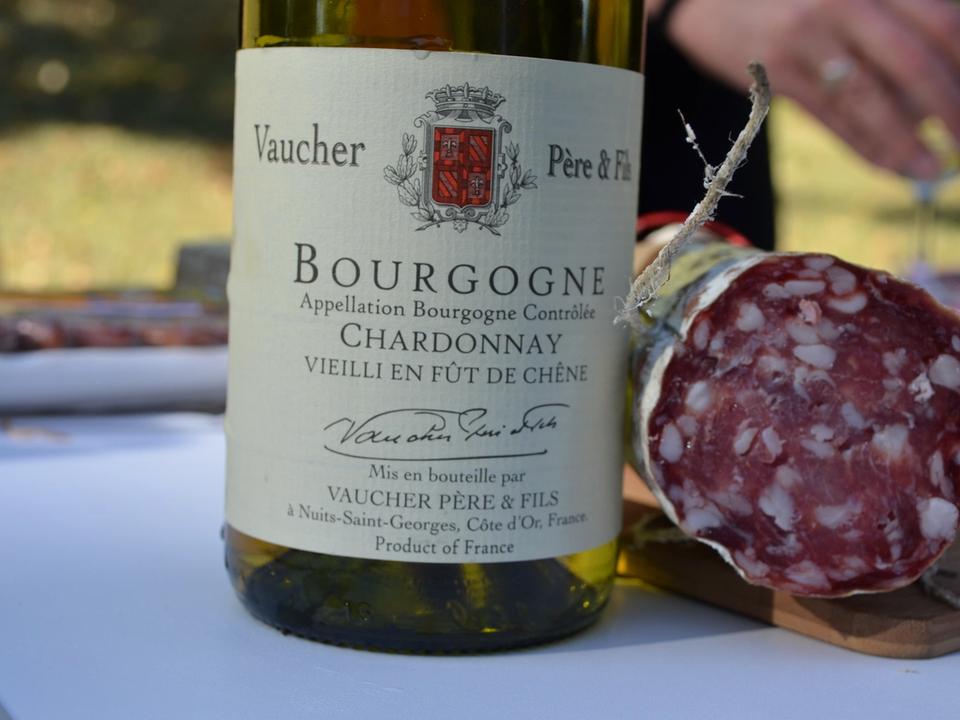
Luxury cycling holiday in Burgundy with scenic backroads, vineyard rides, exceptional food and wine, and stays in beautiful boutique hotels. Slow, indulgent, unforgettable.
Brittany offers the Atlantic, and the Atlantic is a different kind of cycling experience. Coastal headlands, fishing harbours, granite cliff paths, the smell of the sea. The terrain is more varied than the Loire — some coastal climbs and occasional Atlantic wind — but the route infrastructure is excellent and the independence feels particularly well-suited to a coastline that changes every few kilometres.
Brittany is also one of the best self-guided regions for solo cyclists. The culture along the coastal routes is welcoming, the accommodation is excellent, and the seafood makes every evening worth looking forward to.
Difficulty: Moderate. Best time: June–August.
Browse Brittany cycling holidays →
Provence is France's most visually spectacular cycling region — lavender fields, hilltop villages, ochre cliffs, the extraordinary light of the south. It is also more demanding than the Loire or Burgundy, with a hillier terrain and a summer heat that requires careful timing. Experienced self-guided cyclists who want a more challenging backdrop will find Provence deeply rewarding. First-timers should build up to it.
Difficulty: Moderate. Best time: May, June, September — avoid July–August afternoons.
Browse Provence cycling holidays →
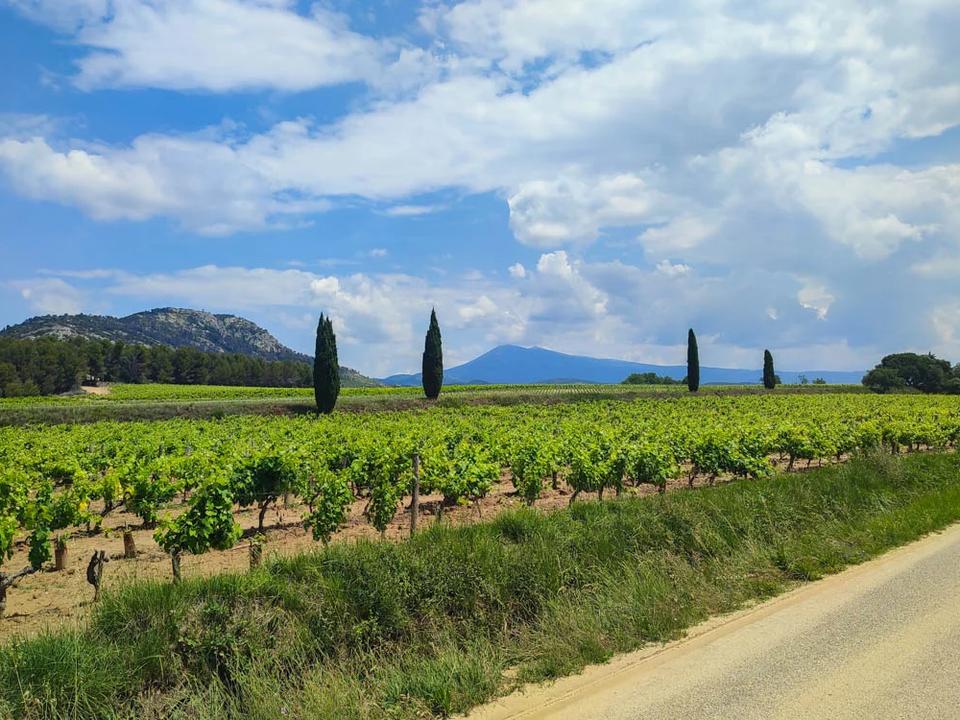
Cycle through the heart of Provence on quiet routes linking Orange, Avignon, Saint Rémy and L’Isle sur la Sorgue. Roman history, vineyard landscapes and classic Provençal towns, all at an unhurried pace.
Both formats work well in France. The choice is about what kind of traveller you are, not which option is objectively better.
Self-guided: Pace is entirely your own. You stop when you like and linger as long as you want. It is just you and your travel companion. Support comes via a helpline and pre-booked logistics. Local knowledge comes from your route notes and your own curiosity. Best for: independent travellers, couples, those who have cycled before.
Guided: Pace is set by the guide and the group. The daily schedule is fixed. Evenings are often communal — a small group with built-in company. A guide is present throughout and brings genuine local knowledge: the history, the wine, the best lunch stops. Best for: first-timers, solo travellers wanting company, anyone who wants expert local context.
Our recommendation is consistent: if this is your first cycling holiday, choose guided. The confidence and structure it provides make the whole experience easier to enjoy. If you have done a cycling holiday before and value independence, self-guided in France is exceptionally well-suited to you.
Browse self-guided cycling holidays → | Browse guided cycling holidays →
Mechanical issue with the bike. Call the support helpline. Most operators have a process for getting a replacement part or bike to you within a few hours. On supported self-guided tours, a vehicle passing the route can assist more quickly.
Navigation problem. Modern GPS route apps make getting genuinely lost uncommon on well-marked French cycling routes. If you take a wrong turn, your phone recalculates. If you are significantly off-course, the helpline is there. It is the same helpline that hundreds of guests have used before you for exactly this reason.
Health or injury. Your travel insurance covers this — confirm before you travel that your policy covers multi-day cycling and any relevant pre-existing conditions. Your operator's helpline can direct you to the nearest medical facility. FCDO France travel advice is always available for current guidance.
Hotel problem on arrival. Your operator pre-books and confirms all accommodation. If there is an issue, the helpline resolves it. You do not navigate a French-language hotel dispute alone.
The honest truth is that problems on self-guided cycling holidays in France are rare. The operators Pedal Ventures works with have run these routes many times. The infrastructure is designed for exactly the situations people worry about. The worry, in most cases, is larger than the risk.
Browse Pedal Ventures' self-guided cycling holidays in France, filter by region, difficulty, and duration. Check the inclusions carefully: confirm that luggage transfers are included, understand what bike hire costs if you need it, and check the single supplement if you are travelling solo.
All Pedal Ventures bookings are PTS financially protected. Your money is secure if anything happens to us or the operator.
Browse self-guided cycling holidays →
The standard inclusions are: accommodation at each stage pre-booked and confirmed, daily luggage transfers, GPS route notes or a cycling app with the full route loaded, and a support helpline. Bike hire is available on most tours as an add-on. Flights and the majority of meals are not included — check individual tour listings for exact details.
It depends on the region. The Loire Valley is suitable for anyone who cycles occasionally — the terrain is flat and the daily distances are gentle. Provence and the Pyrenees require more fitness and cycling experience. Choose your region based on your current level, and contact us if you are unsure — we are happy to advise.
Yes. France is one of Europe's safest cycling destinations. The FCDO travel advice rates France as safe for independent travel. Dedicated cycling paths on routes like La Loire à Vélo mean limited road exposure. Solo female cyclists regularly choose the Loire Valley and Brittany as their first self-guided destination — both have a well-established infrastructure for independent travel.
Your bags are collected from your hotel each morning by the operator or a local logistics partner and delivered to your next accommodation. You carry only a small day pack. Your luggage is in your room when you arrive each afternoon. You do not handle it at any point during the day.
Yes. In tourist areas across France's main cycling regions — Loire Valley, Provence, Burgundy, Brittany — English is widely spoken. Hotels and restaurants along popular cycling routes are experienced with international guests. Your route notes are in English. The support helpline operates in English.
Self-guided cycling holidays in France give you genuine independence — the pace, the stops, the evenings — built on a logistics framework that means you are never actually alone. Browse our France self-guided tours, or get in touch and we will help you choose the right region and format.