Bike tour
Castles of the Loire Valley
Cycle through the Loire Valley – Discover France’s most iconic châteaux, riverside paths, and historic towns on this relaxed, scenic bike tour.

Rob
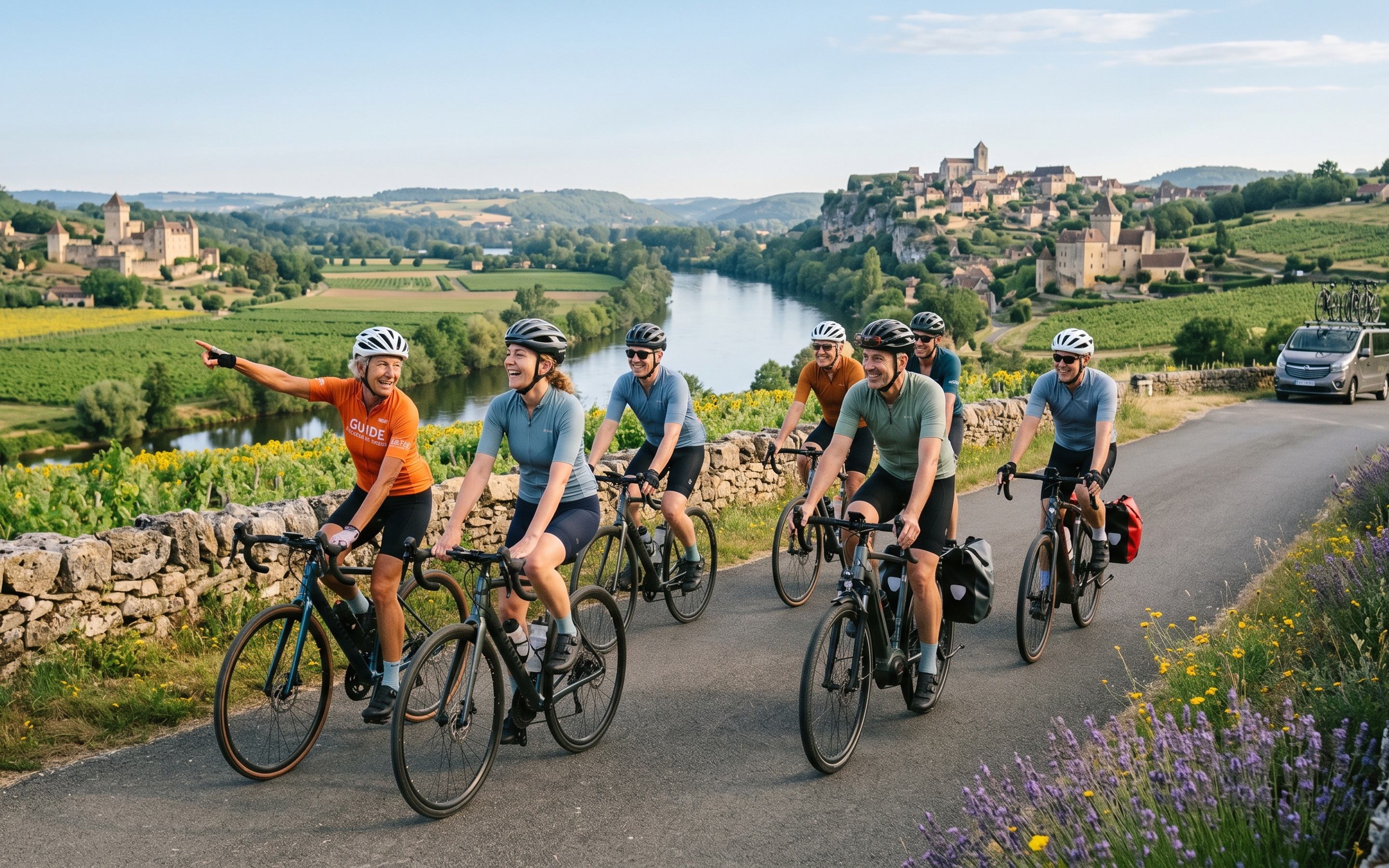
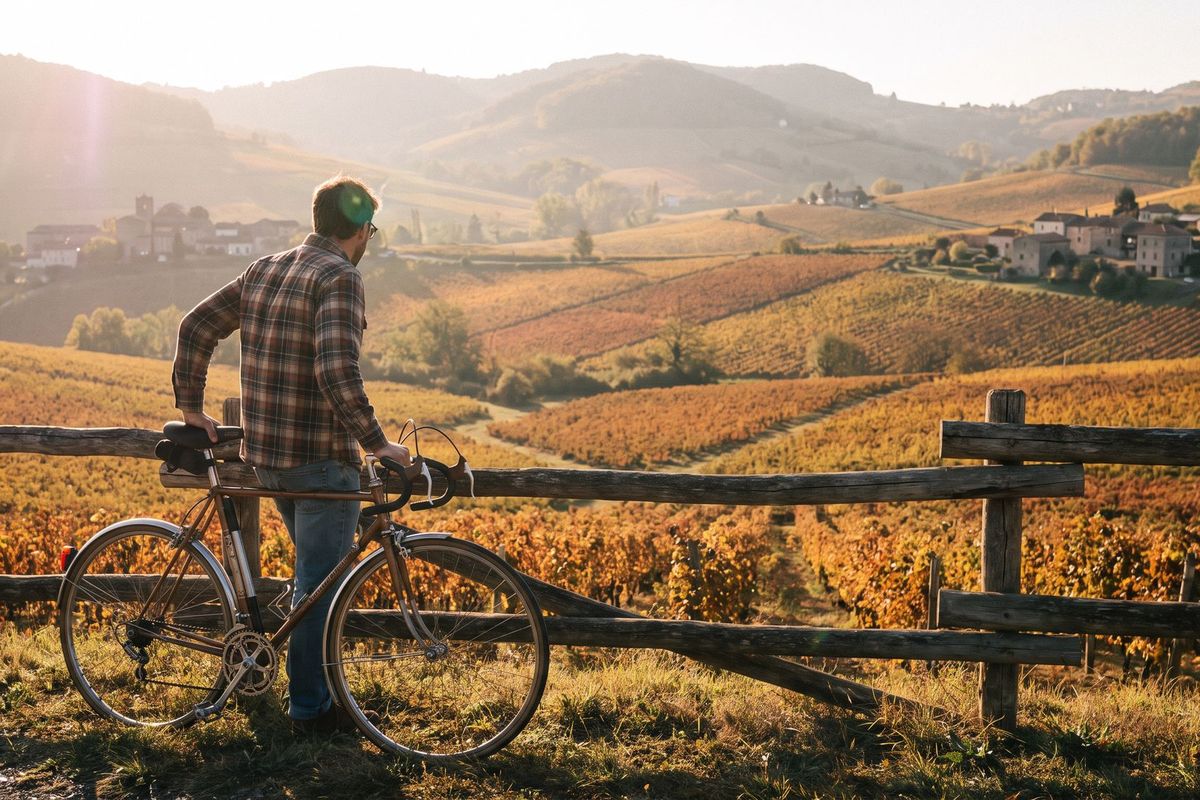
The guide pulls over at the edge of a vineyard on the third afternoon. She is pointing at nothing in particular — just the slope of the land, the way the vines are planted in rows that follow the contour rather than the road. She explains the soil. She explains the producer. She explains why this particular wine, from this particular plot, tastes different from the one the group tried the evening before. That evening the wine tastes different. Not because it is a better wine. Because the context has changed.
Guided cycling holidays in France are sometimes assumed to be the option for people who lack the confidence to travel independently — a support structure for nervous first-timers, essentially a coach trip on two wheels. That misunderstands the format. A guide does not just manage the route. They unlock the country. For the right traveller, guided is not the cautious choice. It is the better one.
This guide explains what guided cycling holidays in France actually include, which regions suit the format best, and how to decide whether guided or self-guided is right for your next trip.
The term "guided cycling holiday" covers a spectrum of formats, but the core offering is consistent: a local, professional guide who cycles with you or travels the route alongside you each day, combined with pre-arranged logistics handled before you arrive.
What the guide provides:
The guide leads the route each day. They set a pace that accounts for the group's ability, ensure no one is left behind, and navigate so you do not have to look at your phone. Beyond logistics, the guide provides cultural depth — the history of the château the group stops at, the context for the wine tasting, the recommendation for lunch that is not in any guidebook. On good tours, the guide is the reason the holiday stays in the memory rather than blurring with every other pleasant trip.
What the operator provides:
Pre-booked accommodation at every stage of the route. Daily luggage transfers — your bags are collected each morning and waiting in your room when you arrive that afternoon. Bike hire, properly fitted, is available on all tours Pedal Ventures lists. A support vehicle accompanies most guided tours, providing mechanical assistance and a lift for tired legs on the one day that needs it.
Group sizes:
Most guided cycling tours in France run with 8–14 guests. Smaller groups (6–10) offer a more intimate dynamic; larger groups (12–16) provide more social variety. The difference matters if you are travelling solo — a smaller group tends to foster closer connections.
Guide qualifications:
The guides on tours we list are local professionals — they know the region they cycle, often speak multiple languages, and frequently have a background in wine, history, or professional cycling. They are not couriers.
Both formats work well in France. The choice comes down to what kind of traveller you are and what you want from the trip.
Self-guided: The pace is entirely your own. You stop when you like, linger as long as you want, and eat where you choose. Your luggage transfers daily; your accommodation is pre-booked; a helpline is available if anything goes wrong. The independence is genuine. Support comes from route notes and a phone number — not a person cycling beside you.
Guided: The pace is set by the guide, shaped around the group. The schedule is structured — the morning ride, the lunch stop, the afternoon stage, the optional group dinner. What you gain is depth. The guide knows the wine producer who offers a private tasting not listed on the website. The guide knows the history of the town well enough to make it interesting rather than merely informational. The guide resolves the unexpected — a mechanical issue, a closed restaurant, a navigation question — without you needing to think about it.
Our recommendation: If this is your first cycling holiday, guided gives you the confidence and cultural framework to get the most from France. If you have done a cycling holiday before and value independent travel, self-guided in France is hard to beat. If you are travelling solo, guided provides the social structure that makes evenings feel like part of the holiday rather than an afterthought.
Browse self-guided cycling holidays | Browse guided cycling holidays
The guided format earns its premium differently in each region. Here is where it adds the most value.
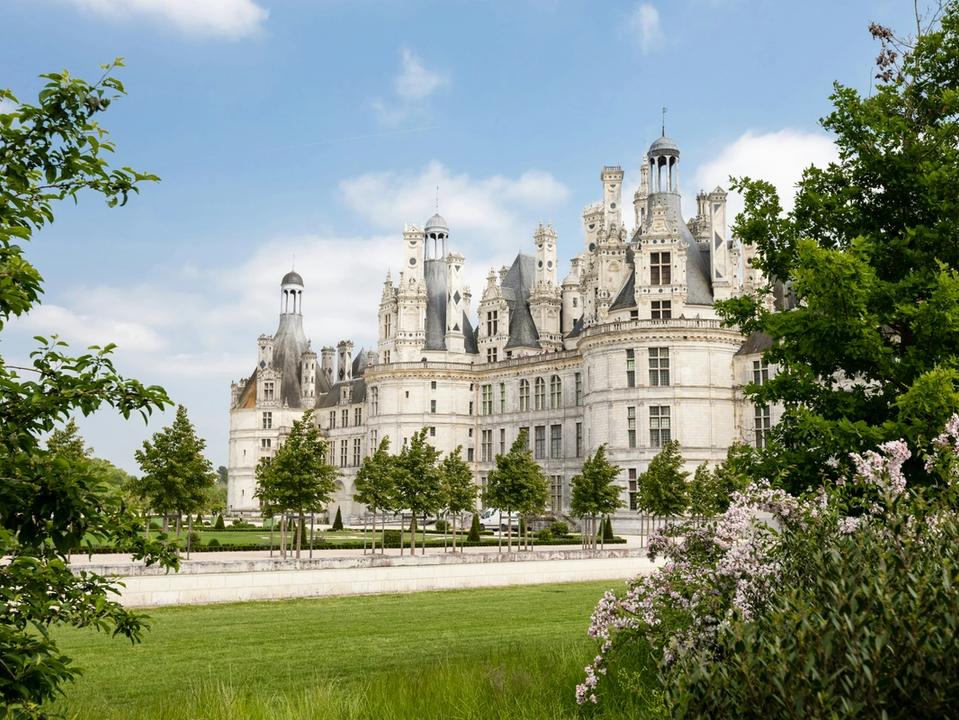
The Loire Valley is France's most popular guided cycling destination, and the reason is straightforward: the cultural depth here requires local knowledge to fully unlock. The châteaux are extraordinary, but a guide who explains the history of Chambord — the political context of François I, the theories about Leonardo da Vinci's role in the double-helix staircase — transforms a beautiful building into something that makes sense. The wine caves at Vouvray are accessible without a guide, but a guide who knows the producer personally gets you to the back of the cellar, past the public tasting, and into the barrels.
Daily distances: 35–50km. Difficulty: Leisurely. Best months: May and September.
Burgundy is where the guided format earns its clearest advantage. The Côte d'Or is the most celebrated wine landscape in the world, and understanding what you are looking at — the individual lieux-dits, the classification system, the reason one field produces wine worth ten times the price of the field beside it — requires either years of study or a very good guide. The best guided tours in Burgundy include access to private estate tastings that self-guided guests simply cannot replicate. The food is equally serious: the guide's restaurant recommendation in a Beaune backstreet will consistently be better than anything discovered independently on a first visit.
Daily distances: 40–60km. Difficulty: Leisurely to Moderate. Best months: June and September–October.
In Provence, the guide's value is partly epistemic — the lavender, the light, the hilltop village history — and partly practical: they know how to manage the heat. July and August afternoons in Provence can reach 35°C. A guide who builds the itinerary around early starts and quiet afternoon visits makes a material difference to how the week feels. The Luberon's stone villages and the Alpilles' limestone drama are best experienced with someone who can explain why they look the way they do.
Daily distances: 40–55km. Difficulty: Moderate. Best months: May, June, September.
Brittany's coastal cycling is among the most varied in France, and the guided format adds value through the guide's knowledge of tidal patterns, fishing harbour rhythms, and the restaurants that serve yesterday's catch rather than last week's frozen version. Solo cyclists in particular often find Brittany's Atlantic landscape more enjoyable with a guide who knows the sheltered routes.
Daily distances: 40–55km. Difficulty: Moderate. Best months: June–August.
Browse cycling holidays in France
Cycle through the Loire Valley – Discover France’s most iconic châteaux, riverside paths, and historic towns on this relaxed, scenic bike tour.
Guided cycling holidays are not only for beginners. They suit specific types of traveller in ways that have nothing to do with cycling ability.
First-time cycling holiday guests. The confidence that comes from having a guide present — knowing that navigation, logistics, and unexpected problems are managed — allows first-timers to focus entirely on enjoying the experience. Most guests who book guided for their first trip return for self-guided on their second, with a much clearer sense of what they enjoy.
Solo travellers. A guided tour provides built-in company: shared meals, group dynamics, evenings that feel social rather than solitary. The guide often plays a connective role, ensuring solo guests feel part of the group rather than adjacent to a couple. The EuroVelo cycling network hosts thousands of solo cyclists each year — many of them on guided tours.
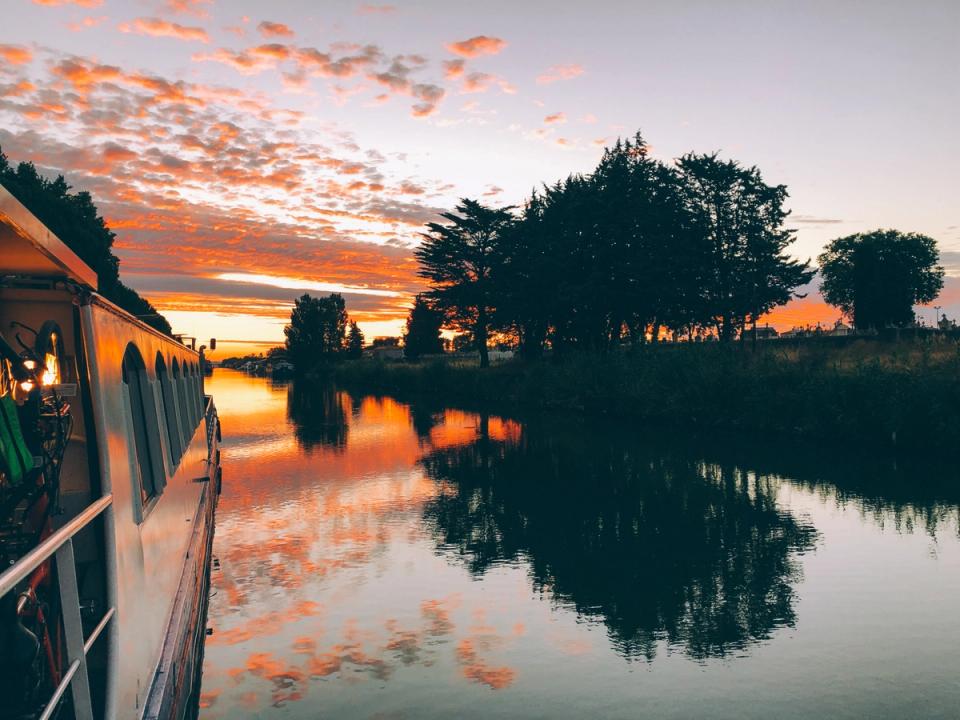
Discover Provence and the Camargue: 7-day bike & boat journey from Aigues-Mortes to Avignon, with guided tours and local wine tastings.
Couples where confidence levels differ. When one partner has significantly more cycling experience than the other, a guided format provides the less confident rider with visible support. The guide paces the day around the group, which means slower riders are never at the back of a group they cannot see.
Anyone for whom the cultural depth of France is the point. If the reason you are cycling in France is the wine, the food, the history, and the landscape — guided is the format that extracts the maximum value from all of those things. Self-guided gives you freedom. Guided gives you context.
Morning. Breakfast from 7:30am. The guide briefs the group on the day's route — distance, highlights, weather, lunch stop. Bikes checked. Departure typically by 9am.
On the route. The group rides together at a pace the guide sets, adjusting for the terrain and the group's energy. The guide leads, with a support vehicle following or running ahead depending on the tour format. At key points — a vineyard, a château entrance, a viewpoint — the group pauses for context, for photographs, or for a tasting.
Lunch. Either at a pre-arranged restaurant where the guide has a relationship, or at a village café the group arrives at together. The guide typically handles any language barrier and ensures the experience is what the day needs it to be.
Afternoon. A shorter stage — typically 15–20km. Arrival at the accommodation by 4pm, luggage already in rooms. The guide is available for recommendations: what to visit, where to eat, what to drink.
Evening. Group dinner is optional on most tours — some guests prefer an independent evening. Good guides make themselves available for questions without making the evening feel obligatory.
Browse guided cycling holidays in France
Yes. Most guided tours are designed with solo travellers in mind. Single supplements apply on some tours — confirm this at booking. The guided format is particularly well-suited to solo travel: the group provides built-in social structure, and the guide often plays a connecting role that makes group evenings feel natural rather than forced.
It depends on the tour and region. The Loire Valley tours on our site are classified as Leisurely — anyone who cycles occasionally can manage 35–50km on flat terrain. Burgundy and Brittany are Leisurely to Moderate. Provence and the Alps are Moderate to Challenging. Filter by difficulty on Pedal Ventures and read the daily distance details before booking.
Standard inclusions: accommodation pre-booked at each stage, daily luggage transfers, a professional local guide, and a support vehicle or helpline. Bike hire is available as an add-on on most tours. Flights are not included. Meals: breakfast is typically included; some lunches and group dinners are included on specific tours — check individual listings for details.
Guided tours are generally 20–30% more expensive than equivalent self-guided tours over the same route. The additional cost reflects the guide's fee, any support vehicle, and the group logistics. Whether that premium is worth it depends on what you value: if local depth and social structure matter, guided earns its price. If independence is the priority, self-guided at a lower cost is the better choice.
Escorted cycling holidays are fully guided: the same guide leads the group every day and the group moves together throughout. Some "guided" tours are supported rather than escorted — a guide joins for selected days or activities but guests ride independently the rest of the time. Check the tour description carefully. Fully escorted tours offer more support and group cohesion; lightly guided tours offer more independence with intermittent expert input.
A guided tour through France rewards a specific kind of traveller: someone who wants the country unlocked, not just cycled. Browse our guided cycling holidays in France, or get in touch if you would like help choosing the right region and format.