Bike tour
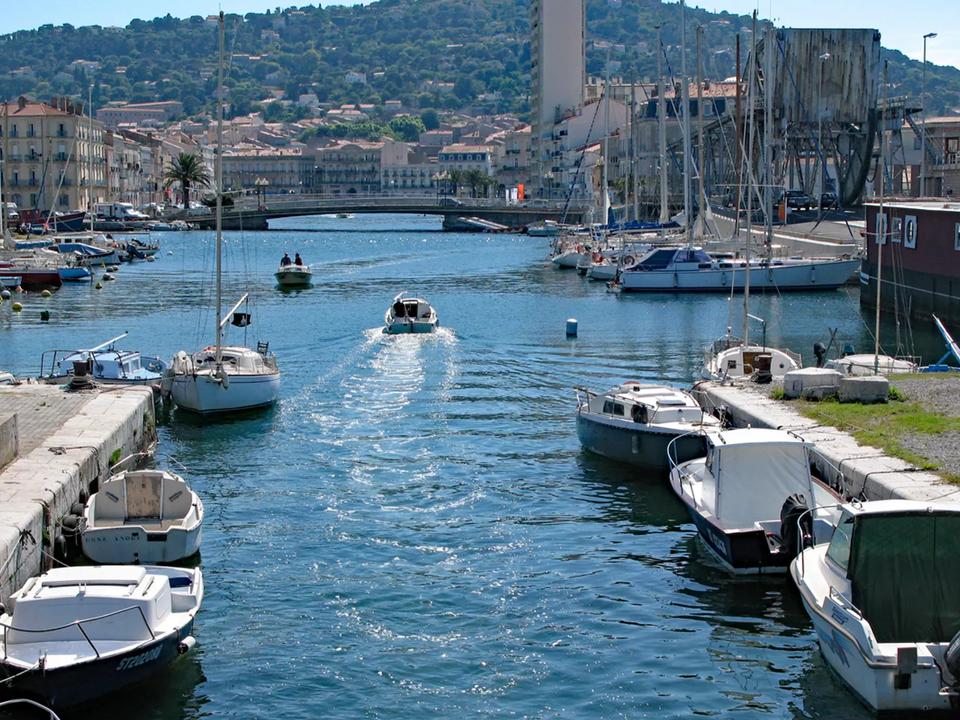
Canal du Midi: Toulouse to Sète
Cycle the Canal du Midi from Toulouse to Sète. Discover vineyards, castles, historic towns, and Mediterranean charm on this 8-day tour.

Rob
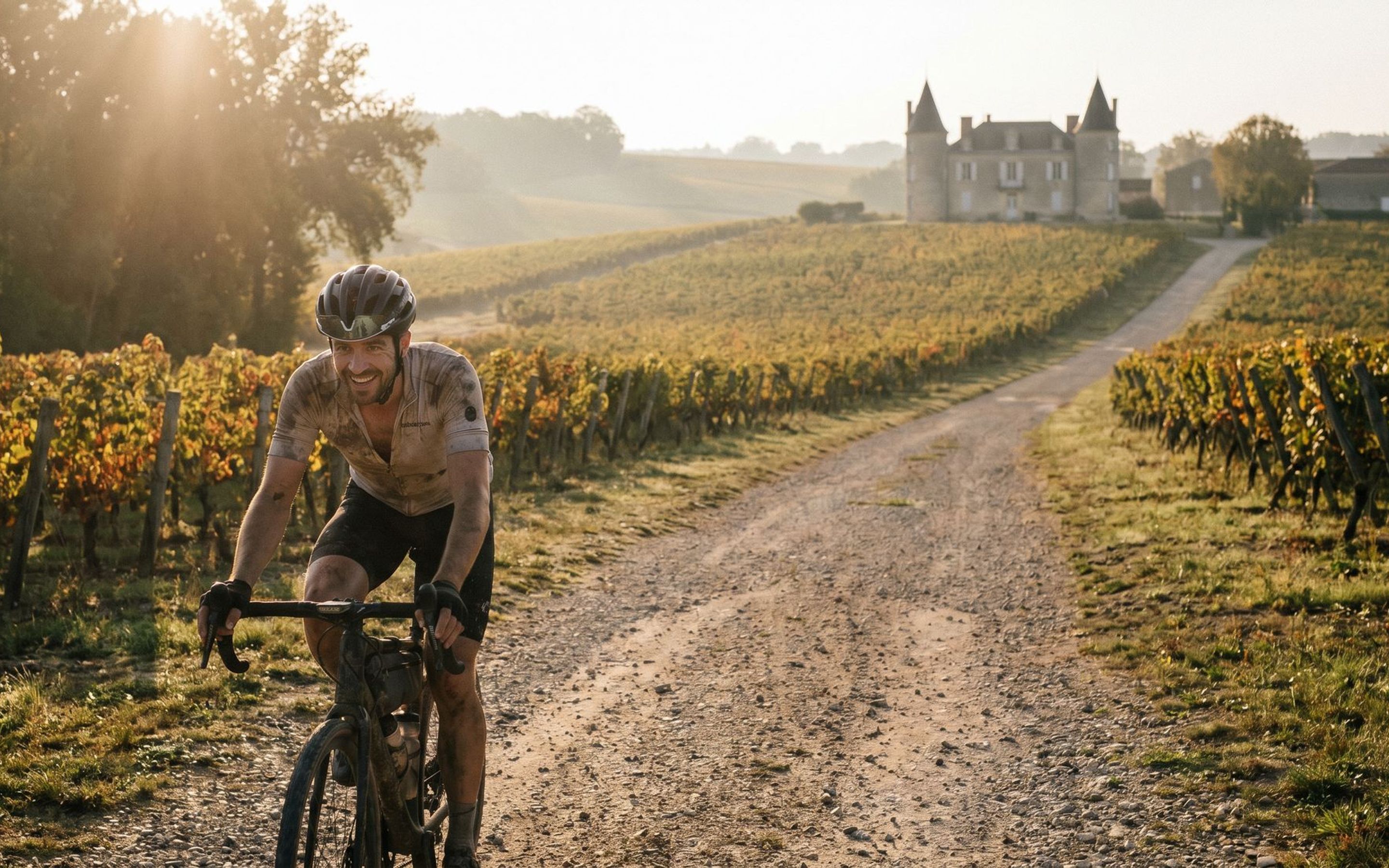
The serious wine tourist arrives in Bordeaux by TGV, books a cellar tour six months in advance, and spends two hours in a vaulted caveau working through a scripted tasting. The cyclist arrives by the same train, gets on a bike the next morning, and rides the Médoc road at eight o'clock — a long, quiet track through gravelly vineyard country, smelling of damp soil and old oak — and pulls up at a château gate to find the cellar door already open and a winemaker with time to talk.
Cycling holidays in Bordeaux produce moments like that routinely, because the cycling here is genuinely easy, the wine country is extraordinary, and the two combine in a way that requires very little effort to arrange. This guide covers the best routes, the best time to go, who Bordeaux suits, and what the evenings look like. To see what's available now, browse cycling holidays in the South of France.
Cycle the Canal du Midi from Toulouse to Sète. Discover vineyards, castles, historic towns, and Mediterranean charm on this 8-day tour.
Bordeaux's cycling appeal starts with the terrain. The Médoc peninsula is a long, low landscape of vines, gravel roads, and estuary views where the only gradients worth mentioning are the gentle rolls between appellations. For cyclists who want manageable daily distances rather than a physical challenge, this is an unusually good fit.
Saint-Émilion is hillier — a medieval hilltop town surrounded by Merlot vineyards on a limestone plateau — but even here the climbs are modest compared to Burgundy or the Rhône. A cyclist in average condition will find Bordeaux comfortable at 30–50km per day. Someone returning to cycling after a long break will manage 25km without difficulty, particularly on an e-bike.
What makes Bordeaux exceptional rather than merely pleasant is the wine. You cycle through the heart of the appellation system itself — past grand châteaux in Margaux and Pauillac on the Médoc, through the limestone slopes around Saint-Émilion, along the Garonne river towards Sauternes. The geography that produces the wine is the landscape you are riding through. Wine tourism at its most direct and most rewarding.
The Foodie and Wine Cyclist — Bordeaux's natural customer. You are as interested in the cellar door as the cycling route, and you want to arrive at a Médoc château in time for an afternoon tasting and stay for dinner. The cycling provides the shape of the day; the wine country provides the reason for it.
The Active Couple — Bordeaux works particularly well for couples where one partner is more enthusiastic about cycling than the other. The flat terrain means both finish each day feeling pleasantly active rather than exhausted. The food, wine, and evening culture is an excellent settlement for anyone who agreed to the holiday under mild duress.
Beginners and returning cyclists — If you have not cycled seriously in some years, Bordeaux is one of the most forgiving destinations in France. Manageable distances, quiet roads, and a reward-to-effort ratio that is difficult to beat anywhere in Europe.
What Bordeaux is not: a destination for cyclists who want a physical test. If you want real gradients, the Pyrenees are three hours south. Bordeaux is for people who understand that a 40km day followed by a three-course dinner is not a wasted cycling day — it is the point.
The Médoc is the most iconic wine-cycling route in France. Heading north from Bordeaux along the left bank of the Gironde estuary, it passes through the famous appellations in sequence: Graves, Margaux, Saint-Julien, Pauillac, Saint-Estèphe. The terrain is almost entirely flat; the roads are quiet; and what you are cycling past is extraordinary. Grand Cru Classé châteaux appear every few kilometres — Château Margaux, Château Latour, Château Mouton Rothschild. Most offer tastings by appointment; some welcome visitors with shorter notice during quieter periods.
Typical itinerary: 5–7 days, 25–45km per day. Bordeaux city to Pauillac is approximately 55km following the route; most cyclists split this over two days with an overnight in the Margaux or Saint-Julien area, before continuing north to explore the full Médoc.
Best for: Foodie and Wine Cyclists, self-guided touring, couples with mixed appetites for cycling.
Saint-Émilion is a UNESCO World Heritage site: a medieval hilltop town of narrow stone streets, ancient wine cellars carved into the limestone beneath the town, and vineyards that begin immediately beyond the walls. The cycling circuit loops through the surrounding appellation country — Pomerol, Fronsac, and the satellite appellations of Saint-Georges and Lussac-Saint-Émilion. It is hillier than the Médoc, but nothing here requires significant fitness.
Typical itinerary: 2–4 days based in Saint-Émilion as a hub, with day rides of 20–40km through the surrounding vineyards. This combines naturally with the Médoc route for a full Bordeaux circuit over 7–10 days.
Best for: First-time cycling tourists, wine-focused couples, anyone who wants a base-and-explore format rather than a linear route.
A third option follows the Garonne upstream from Bordeaux towards Sauternes — the appellation famous for its extraordinary golden dessert wines and Château d'Yquem. The terrain is the flattest of the three routes, the cycling less structured, and the area sees fewer tourists than the main Médoc road. Dedicated cycle paths follow the Garonne through the Entre-Deux-Mers area — the large appellation between the Garonne and Dordogne rivers — towards Cadillac and Langon. A one-way route of 60km is manageable over two days; return to Bordeaux by local train.
The food culture in Bordeaux is serious and unhurried, which makes it ideal for cycling holidays. You finish a day's ride genuinely hungry, and Bordeaux regional cooking is built precisely for this moment.
Canelé — Small, caramelised, custardy cylinders made with rum and vanilla: the emblem of Bordeaux pastry. Buy them from any boulangerie and eat them still warm at the end of a morning ride. They are very good.
Entrecôte à la bordelaise — Steak in a rich red wine and bone marrow sauce. Find variations on every bistro menu in the region. After a day on the Médoc road, this is exactly the right dinner. Order it with a glass of whatever the house recommends from the Médoc.
Oysters from the Arcachon Basin — The Bassin d'Arcachon, 50km west of the city, supplies the oysters that appear on every seafood menu in the Bordeaux region. Fresh, briny, and excellent with a cold glass of Bordeaux Blanc. Order them as a starter without deliberation.
The wine itself — You will drink the best Bordeaux of your life here, not because the bottles in the region are different to those you could buy at home, but because context matters. A Médoc on a terrace overlooking the vines that produced it, after 35km in the October sun, tastes different to the same bottle in a London restaurant. This is the argument for Bordeaux cycling that no brochure properly makes.
Most visitors target July and August. For cycling, this is the wrong instinct.
September and October are the best months to cycle in Bordeaux. The harvest — vendange — typically runs from mid-September into October, depending on the appellation and the vintage. The châteaux are at their most active: picking crews in the vineyards, tractors carrying grapes, the smell of fermenting juice from open cellar doors. Bordeaux wine country is most alive during these weeks, and most worth visiting.
Temperature in August can exceed 35°C in the Médoc. September drops to a manageable 22–26°C. October averages 18°C — close to ideal cycling conditions. Availability at cellar doors also improves significantly outside high summer, when tour coaches arrive at the major estates throughout the day.
April and May are a strong secondary option — cooler temperatures, vines in early leaf, and significantly lower prices than summer. The main limitation is that some cellar doors are less available during the growing season's busiest period.
Bordeaux lends itself naturally to self-guided cycling in France. The routes are well-signposted, the terrain is forgiving, the destination structure — moving appellation to appellation — makes it straightforward to plan your own stages without needing anyone to interpret the landscape for you. A good self-guided Bordeaux holiday includes pre-booked accommodation in key villages, GPS routes, luggage transfers between stages, and a curated list of cellar doors worth visiting. Pedal Ventures connects you to the local operators who build these itineraries — we are a marketplace, not a tour operator.
Guided cycling holidays in France make most sense for solo travellers who want a social element built in, or for anyone who wants a guide who knows which smaller châteaux offer the best unplanned tastings, and who can pace a mixed-ability group through the Médoc without anyone feeling rushed.
By Eurostar and TGV: The most comfortable option from the UK. Eurostar from London St Pancras to Paris Gare du Nord (approximately 2.5 hours), transfer to Gare Montparnasse (allow 45 minutes for the cross-city connection), then TGV to Bordeaux-Saint-Jean (2 hours). Total journey time: approximately 5.5–6 hours from central London to central Bordeaux. Most operators on the Pedal Ventures platform arrange bike hire at the destination, removing the need to travel with your own bike.
By air: Bordeaux-Mérignac Airport has direct flights from several UK airports including Bristol, Edinburgh, Manchester, and London Gatwick. Flight time is approximately 1.5 hours. Door-to-door, the train often compares well given the city-centre arrival in both cities.
Every cycling holiday booked through Pedal Ventures is PTS-protected — your money is safe if Pedal Ventures or the operator fails. At around £3,000 per booking, this matters. Check that any cycling holiday you book elsewhere carries equivalent financial protection before transferring a deposit.
Yes — the Médoc and Entre-Deux-Mers routes are among the flattest cycling terrain in France. Typical daily distances are 25–45km on quiet roads. Beginners and returning cyclists cope comfortably; e-bikes are available through most operators for additional support on the hillier sections around Saint-Émilion.
The Médoc route — riding north through the famous appellations from Bordeaux city towards Pauillac — delivers the best combination of cycling quality and wine country access. The Saint-Émilion circuit is the best self-contained option if you want a shorter trip based in one location rather than moving each day.
September and October, during and immediately after harvest. Ideal cycling temperatures of 18–26°C, the châteaux active with the vendange, and the region noticeably quieter than high summer. April and May are a strong secondary choice.
For the major Grand Cru estates — Châteaux Margaux, Mouton Rothschild, Latour — advance bookings of several months are the norm. Smaller estates, particularly in Pomerol and the satellite appellations around Saint-Émilion, often welcome visitors with shorter notice. Your operator will advise on which visits to arrange before departure.
Both are wine-country cycling destinations, but they feel markedly different. Cycling in Burgundy involves more varied terrain and more compact appellations — you can cover Beaune, Nuits-Saint-Georges, and Gevrey-Chambertin in a single afternoon. Bordeaux is flatter, the estates larger, and the scale of the wine country wider. Burgundy suits cyclists who want more gradient and more intensity; Bordeaux suits those who want more leisurely progress through grander landscape.
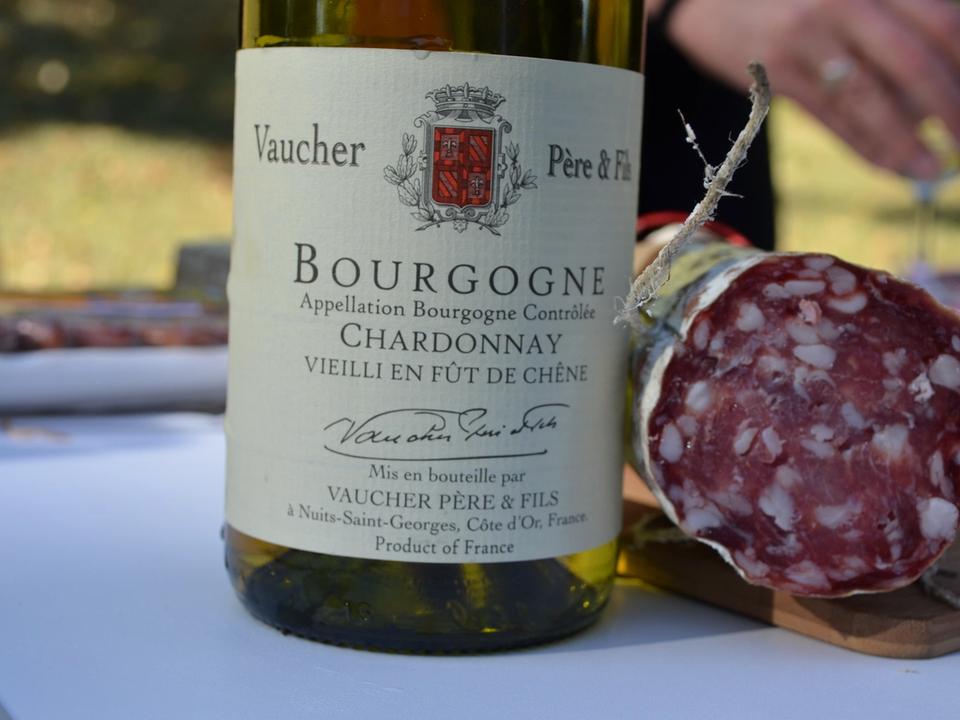
Luxury cycling holiday in Burgundy with scenic backroads, vineyard rides, exceptional food and wine, and stays in beautiful boutique hotels. Slow, indulgent, unforgettable.
Bordeaux works well for solo travellers on a guided small-group tour, where the social element is built into the format and you meet other cyclists from day one. Self-guided solo cycling in Bordeaux is entirely manageable but requires more personal organisation. If solo travel on a cycling holiday is new to you, a guided format is the stronger starting point.
Browse cycling holidays in France or explore South of France cycling holidays to see available tours.