Bike tour
Alsace Wine Country
Cycle through the vineyards and villages of Alsace from Strasbourg to Colmar and along the famous Alsace Wine Route on this relaxed 7 day cycling holiday.
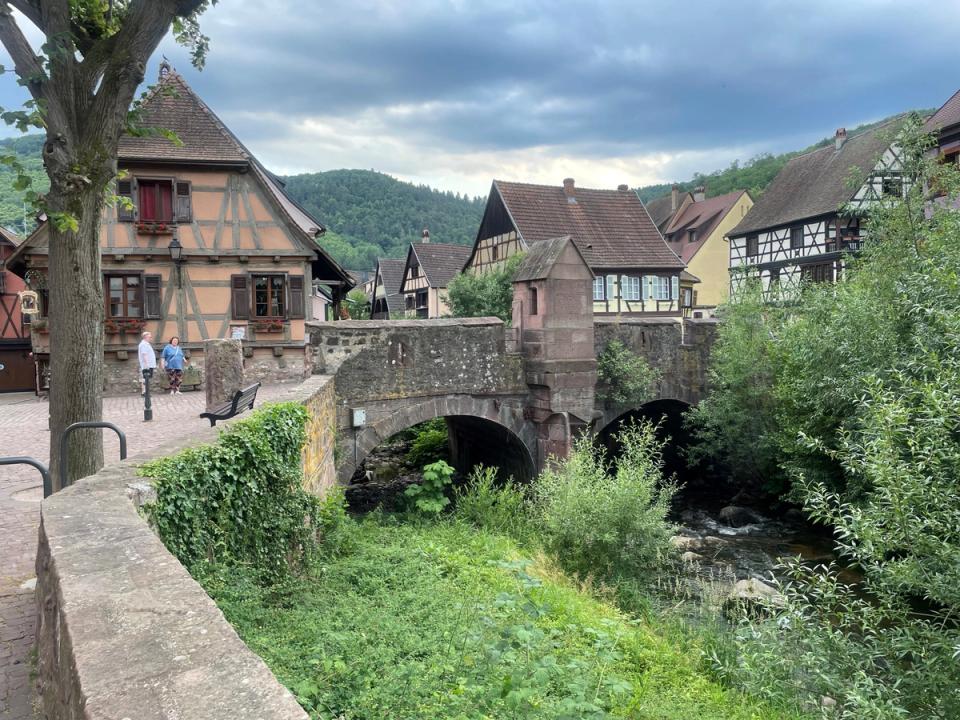
Pedaling into Riquewihr for the first time, you might do a quiet double-take. The street is narrow enough to touch both walls at once, the houses are half-timbered in the style of a German village, and the wine on the café menu is a Riesling from down the road. The language on the signposts flickers between French and Alsatian. The food — tarte flambée and choucroute — belongs to no single tradition. You are in France, just about. But Alsace has always been something else entirely.
That in-between quality is exactly what makes cycling holidays in Alsace unlike anything else in France. This region on the German border has changed hands four times between France and Germany since 1870. The back and forth left its mark on the architecture, the food, the dialect and — crucially, if you're arriving by bike — the landscape you cycle through. To the west, the Vosges mountains rise steeply above beech and fir forest. To the east, the Rhine plain rolls flat towards Germany. Between them runs the Alsace Wine Route, one of Europe's oldest and most rewarding cycling corridors. And to the north, something that surprises nearly every visitor: the hop fields.
Most of France's great cycling regions have a single identity. Provence is lavender and rosé. Burgundy is Pinot Noir and grand châteaux. The Loire is a river and 300 castles. Alsace is more complicated than that — and more interesting for it.
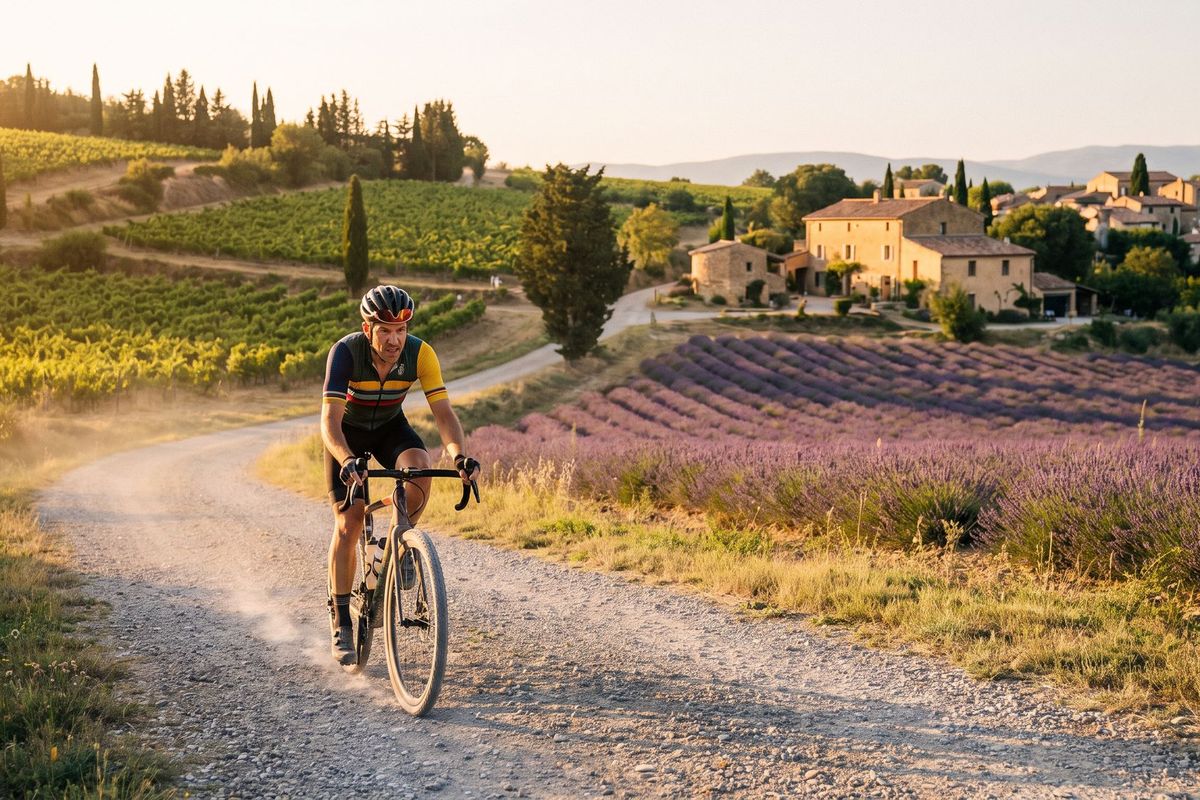
The region has over 2,500km of marked cycle routes, many of them connecting vineyard villages across the foothills without touching a main road. The terrain is mostly flat to gently rolling: the wine route runs along the base of the Vosges, where the gradient is gentle enough that even occasional cyclists manage it comfortably. Most Alsace cycling holidays are rated difficulty 2, which in practice means relaxed days, good distances, and energy left over for the evening.
Cycle through the vineyards and villages of Alsace from Strasbourg to Colmar and along the famous Alsace Wine Route on this relaxed 7 day cycling holiday.
The other thing that sets Alsace apart is the scale. Strasbourg to Colmar — the full length of the wine route — is around 80 kilometres. You can cycle the whole thing in four days at a gentle pace, stopping in villages that are 30 minutes apart. There is no need to rush. That is rather the point.
As for the food: expect tarte flambée (a thin crispy base with crème fraîche, onion and lardons — it has more in common with a German Flammkuchen than a Provençal pizza), choucroute garnie (sauerkraut with pork, sausages and mustard), and Münster cheese, a washed-rind, distinctly pungent cow's milk cheese made in the Vosges valleys. The wines are exclusively white — Alsace is the only major French region that labels bottles by grape rather than appellation: look for Riesling, Gewurztraminer, Pinot Gris, and Muscat. If you see Crémant d'Alsace on a wine list, order it — Alsace's own sparkling wine, made by the same traditional method as Champagne, and a fraction of the price.
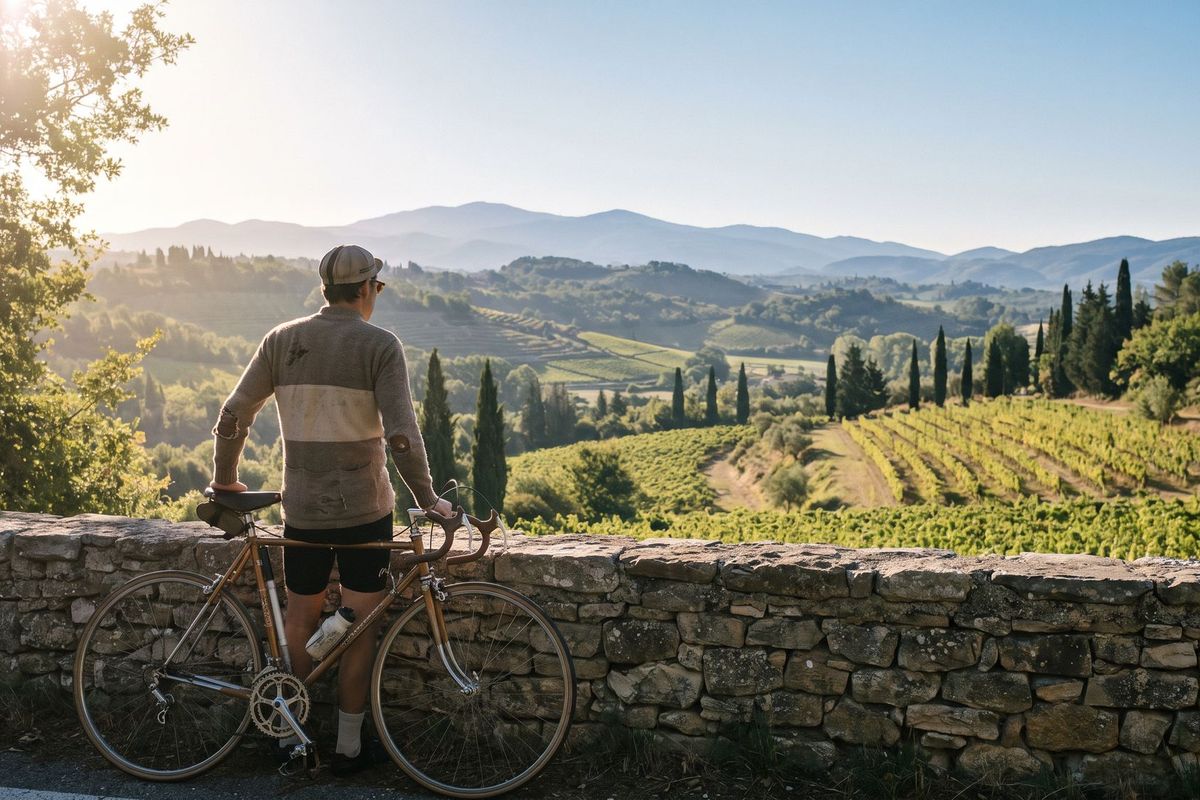
The classic Alsace cycling itinerary runs south from Strasbourg to Colmar along the Route des Vins, the wine route that has been signposted since 1953. The route passes through more than 70 wine-producing villages, but four are worth lingering in.
Obernai is the first major village south of Strasbourg — medieval ramparts, a Renaissance town hall, and a Saturday market that spreads across the square under a row of half-timbered facades. It also marks the point where the landscape shifts: the Vosges close in on the left, the vineyards begin in earnest on the right.
Eguisheim is often called one of the most beautiful villages in France. The streets follow a circular medieval plan — one outer ring and one inner ring, so tightly drawn that cycling it feels almost theatrical. Seven distinct pastel shades of half-timbered house. Wine cellars open directly onto the cobbles. The village produces wines from the Eichberg and Pfersigberg Grand Cru plots. Stop at one of the smaller producers, ask for the Gewurztraminer, and take your time.
Riquewihr sits inside its medieval walls almost perfectly intact — no modern development beyond the car park at the gates. The main street is tourist-busy in summer but quieter at the edges, and the wine here (Schoenenbourg Grand Cru, mostly Riesling) is worth the detour. The village has been continuously inhabited and continuously producing wine since the 13th century.
Kaysersberg was Albert Schweitzer's birthplace and holds a particular kind of dignity — less perfectly preserved than Riquewihr, more lived-in, with a ruined castle above the rooftops and a small river running through the lower town. The wines from the nearby Schlossberg Grand Cru, the first appellation in Alsace to receive Grand Cru classification, are reliably excellent.
Colmar marks the end of the main wine route — the "Little Venice" quarter, with canal-facing houses reflected in the water, is one of those places that looks exactly like the photographs and still manages to be worth the visit in person.
For a full week along the wine route, the Alsace Wine Country tour is a 7-day circular journey from Strasbourg through the main wine villages and back, with luggage transfer and GPS tracks included. For those who prefer a point-to-point, the Alsace Wine Route: Strasbourg to Basel continues the route south all the way into Switzerland.
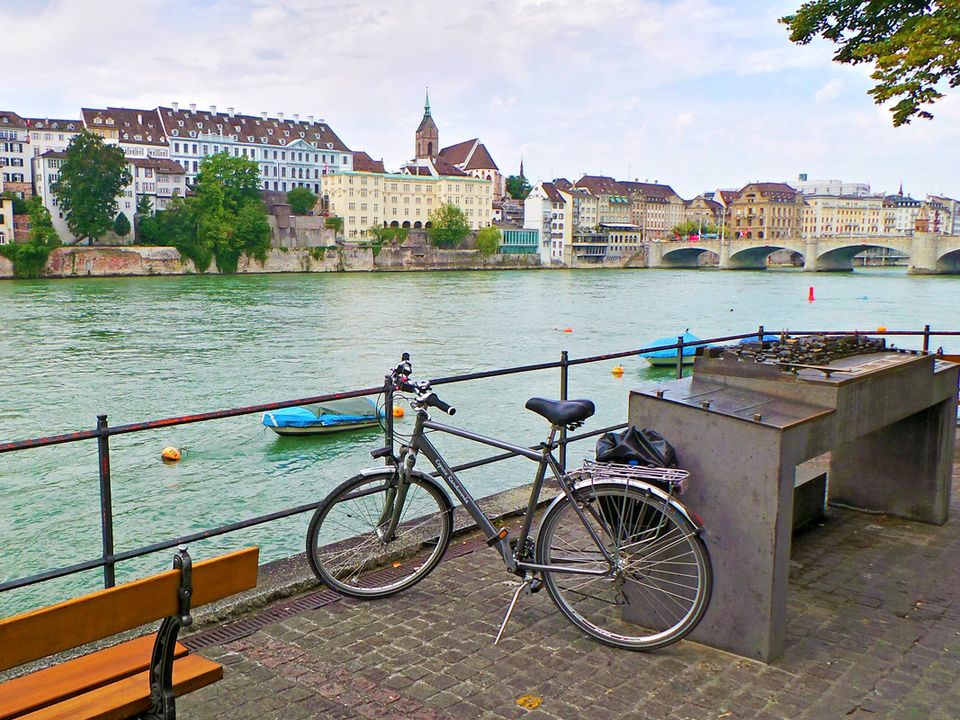
Cycle the full Alsace Wine Route from Strasbourg to Basel. Discover vineyard villages, Colmar, Mulhouse and Alsace’s food and wine culture over 8 days.
Most people who come to cycle Alsace come for the wine. That is entirely reasonable. But the northern part of the region — above Strasbourg, around Haguenau — has a different story to tell, and it involves hops.
Alsace produces around 65% of France's hops. The fields around Haguenau are still called "green gold" by the farmers who tend them, and in late August, when the bines are in full growth, the landscape shifts completely: tall trellised rows replacing the neat vineyard slopes of the south, the smell of the harvest hanging in the air.
The Alsace Beer Tour starts and ends in Strasbourg and loops north through Haguenau and Saverne. Along the way you ride through the Haguenau forest — at nearly 14,000 hectares, one of the largest lowland forests in France — follow quiet canal paths, and visit breweries that have been operating in this region since the Middle Ages.
The highlight is Villa Meteor in Hochfelden, founded in 1640 and still family-run. It holds the title of France's oldest independent family brewery. The visit includes the brewing hall and a tasting, and the guides have an easy, unselfconscious pride about the place that is quite different from the more polished wine estate experience further south.
The Alsace Beer Tour Short Break covers this northern circuit in five days, and for those who want to extend the experience, the Grand Alsace Beer Route offers a longer version of the same journey. Difficulty 2 throughout — the terrain is flat.
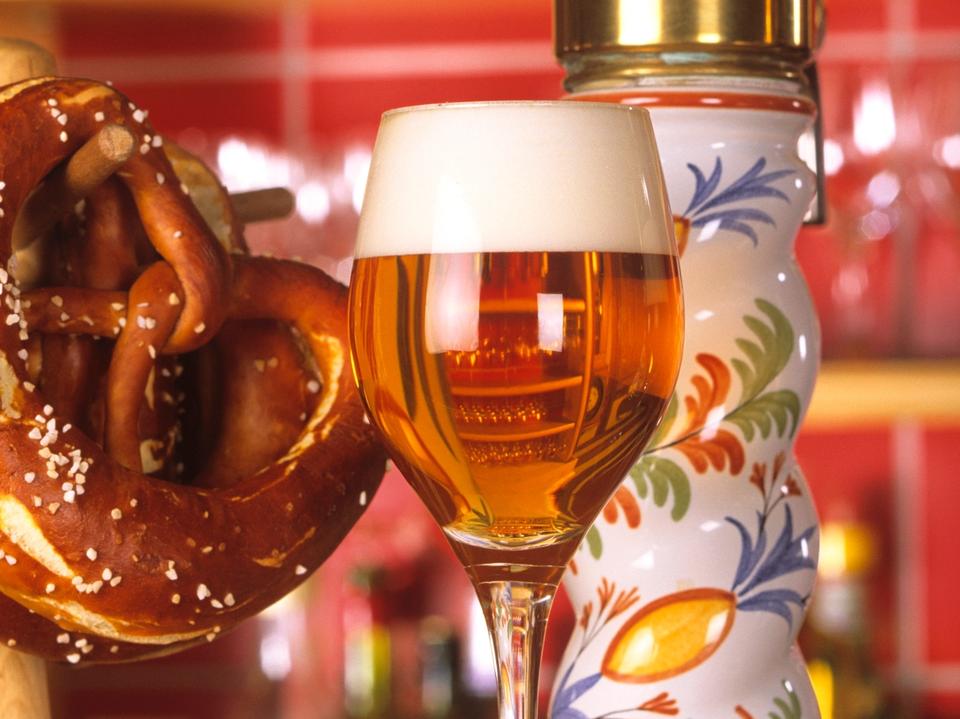
Cycle through northern Alsace exploring its brewing heritage. Visit local breweries, ride through forests and along the Rhine on this 5 day cycling holiday.
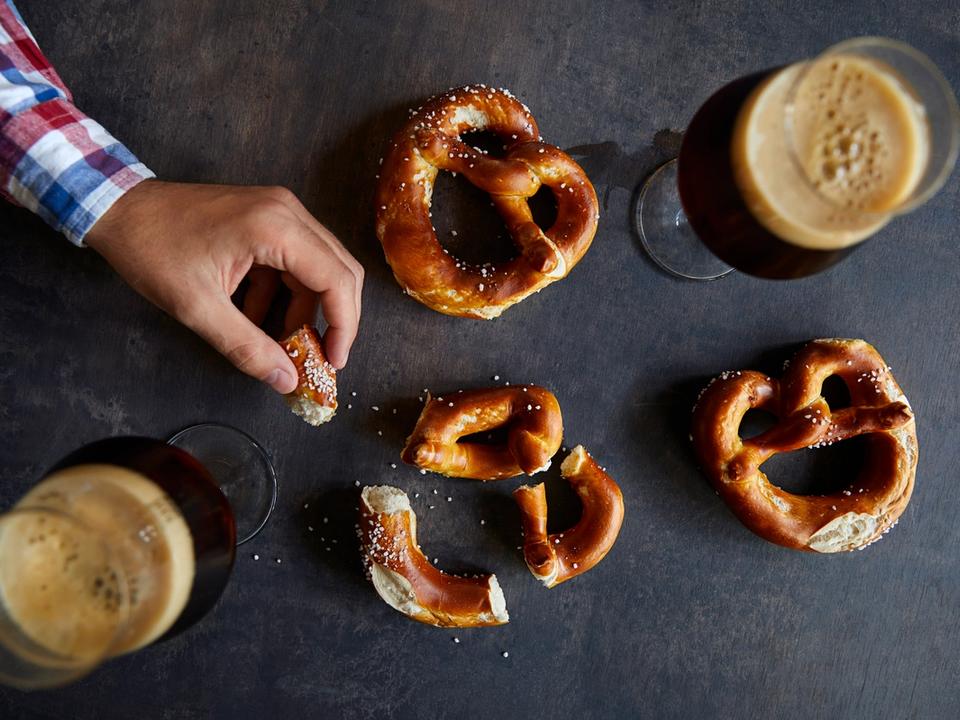
Cycle through Alsace and Germany exploring brewing heritage. Ride from Strasbourg across the Rhine, visit breweries and discover forests, villages and canal paths.
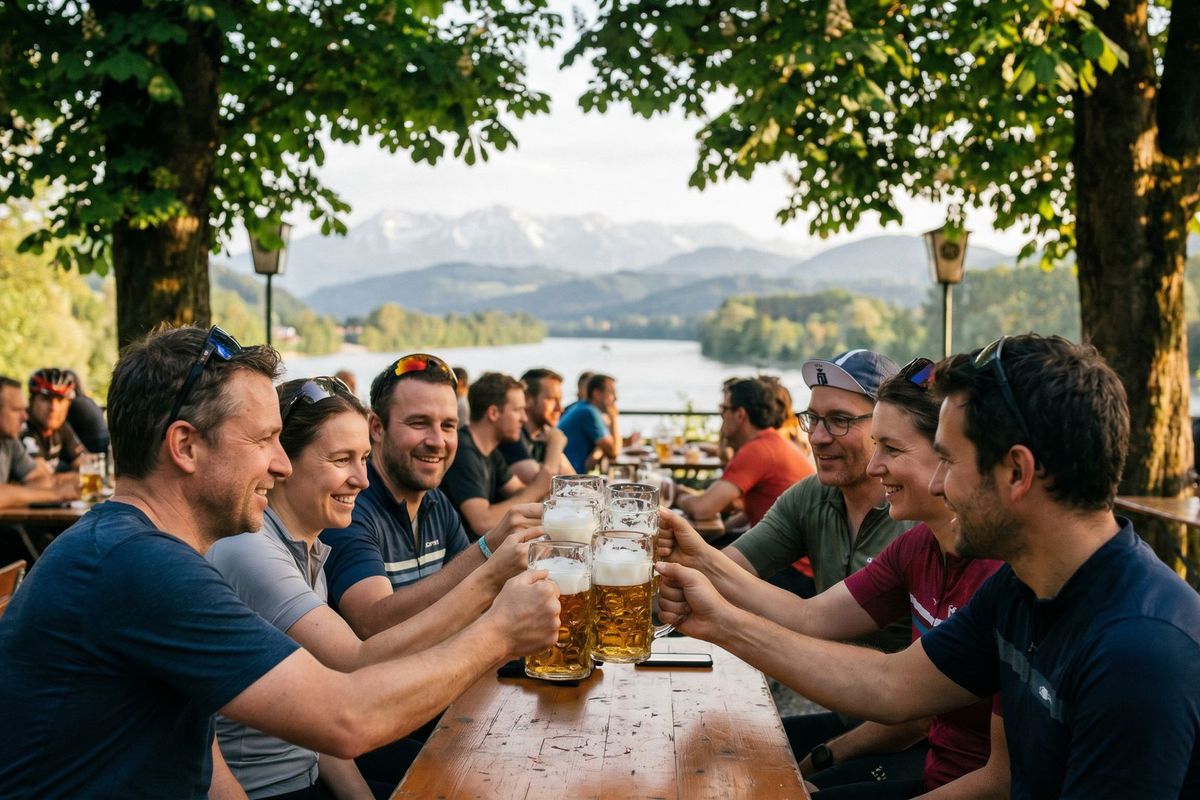
The point worth making here: no other cycling destination in France gives you this combination. Wine country and beer country in the same region, a short train ride apart. Most visitors pick one. The more interesting trip does both.
For wine focus, relaxed pace: The Alsace Wine Country 7-day circular from Strasbourg is the most complete introduction — it covers the main wine villages, follows the route at a genuinely leisurely pace, and finishes back at your starting point, making logistics simple.
For a short break: Both the Alsace Wine Route Short Break and the Alsace Beer Tour Short Break work well as 4–5 day escapes. The wine break is based around Colmar; the beer break loops through Haguenau from Strasbourg.
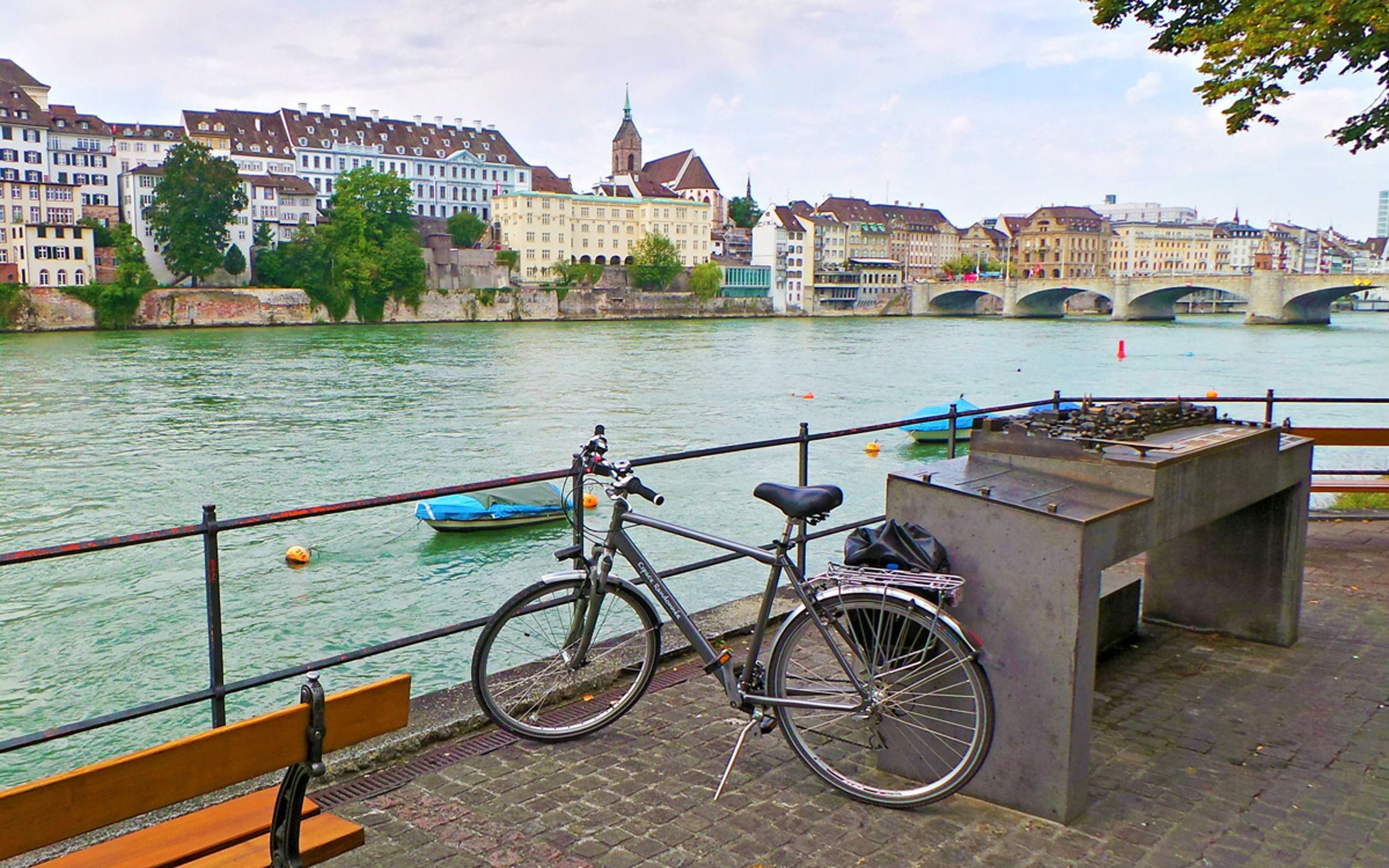
For a longer point-to-point: The Alsace Wine Route: Strasbourg to Basel adds a Swiss finale — arriving in Basel, a city on the Rhine at the meeting point of France, Germany and Switzerland, on the last day.
For something more indulgent: The Luxury Vineyards and Villages of Alsace tour uses higher-end accommodation in the wine villages themselves, with more time built in for cellar visits and tastings.
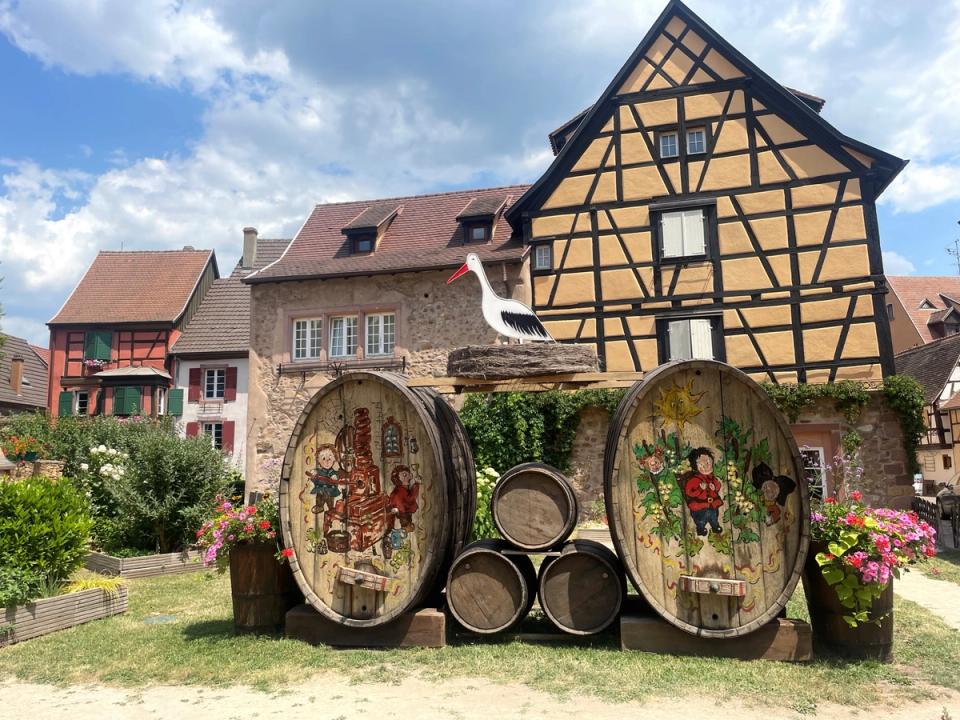
Cycle through the vineyards and villages of Alsace from Strasbourg to Colmar and along the famous Alsace Wine Route on this relaxed 7 day cycling holiday.
When to go: Late September and early October is harvest — the most atmospheric time, with tractors on the roads and the smell of fermenting must from cellar doors. Spring (April to May) offers quiet roads and green vines. The Christmas markets in Strasbourg and Colmar in December are genuinely extraordinary, but the cycling season is effectively over by then.
Getting there: Strasbourg has a direct TGV connection from Paris Gare de l'Est (1h50). Eurostar to Paris, then onward by train, is a straightforward trip from London.
To browse all cycling holidays in France, including every Alsace tour, visit the Pedal Ventures France page.
Yes — Alsace has over 2,500km of marked cycle routes, most of them connecting vineyard villages on quiet agricultural roads and dedicated cycle paths. The terrain along the wine route is flat to gently rolling, making it accessible for most fitness levels. Difficulty ratings on our Alsace tours are mostly 2 out of 5.
Late September and early October is the grape harvest — the most atmospheric time to be in the vineyards. Spring (April to June) is quieter and offers green landscapes and pleasant temperatures. August is warm but the most popular villages can be busy with summer visitors.
Yes. Northern Alsace (hop country, Haguenau, Villa Meteor) and the southern wine route are connected by Strasbourg, which makes a natural base for combining both. The most straightforward approach is to spend the first half of your trip on the beer route and the second half heading south through the wine villages.
Most routes are rated difficulty 2 out of 5 — genuinely manageable for recreational cyclists who ride occasionally. The terrain is mostly flat along the Rhine plain, with gentle climbs into the Vosges foothills. E-bikes are available to hire on most tours if you want additional assistance.
The easiest route is Eurostar to Paris (2h15 from London St Pancras), then TGV to Strasbourg (1h50 from Paris Gare de l'Est). Total door-to-door from central London to central Strasbourg is around 5–6 hours, with no flying required.