Bike tour
The Waterways of Venice - 4* Ave Maria
Cycle Northern Italy by 4* barge – Discover Venice, the Po Delta, Ferrara & Mantua on this relaxed bike & boat holiday with cultural highlights and easy daily rides.

Rob
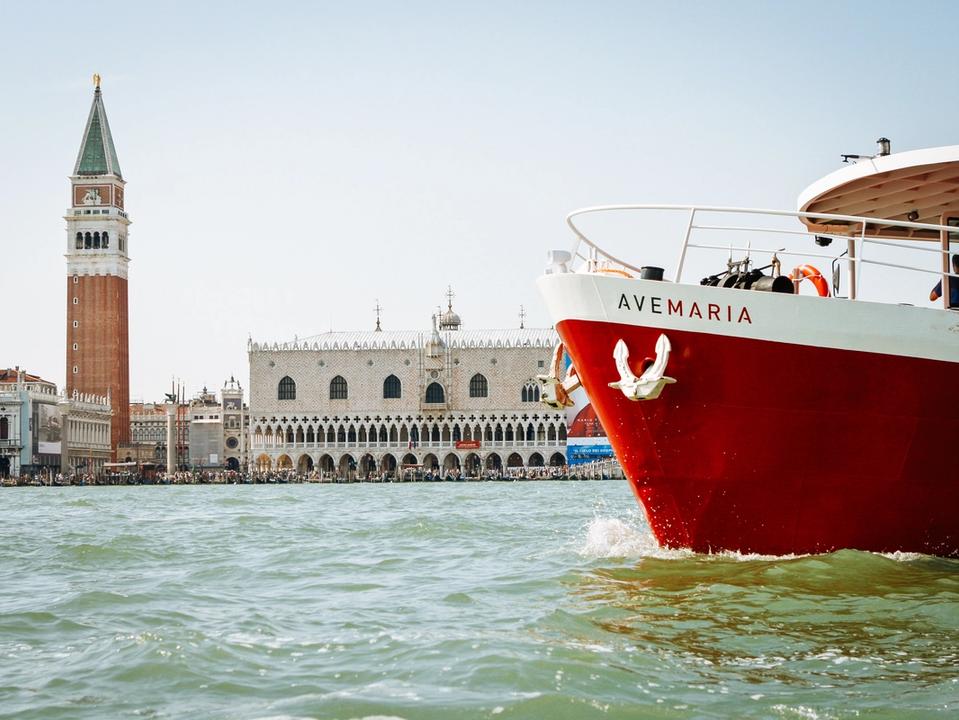
It is late afternoon and the boat is moving across open water. Bikes are racked on deck, your bags are already in the cabin, and ahead of you the campanile of San Marco lifts slowly out of the lagoon. Somewhere across that same water a train is emptying its carriages into Santa Lucia station, and a few hundred people are wrestling suitcases onto a vaporetto. You are doing none of that. You are arriving in Venice the way it was always meant to be approached — by water, with the day's riding behind you.
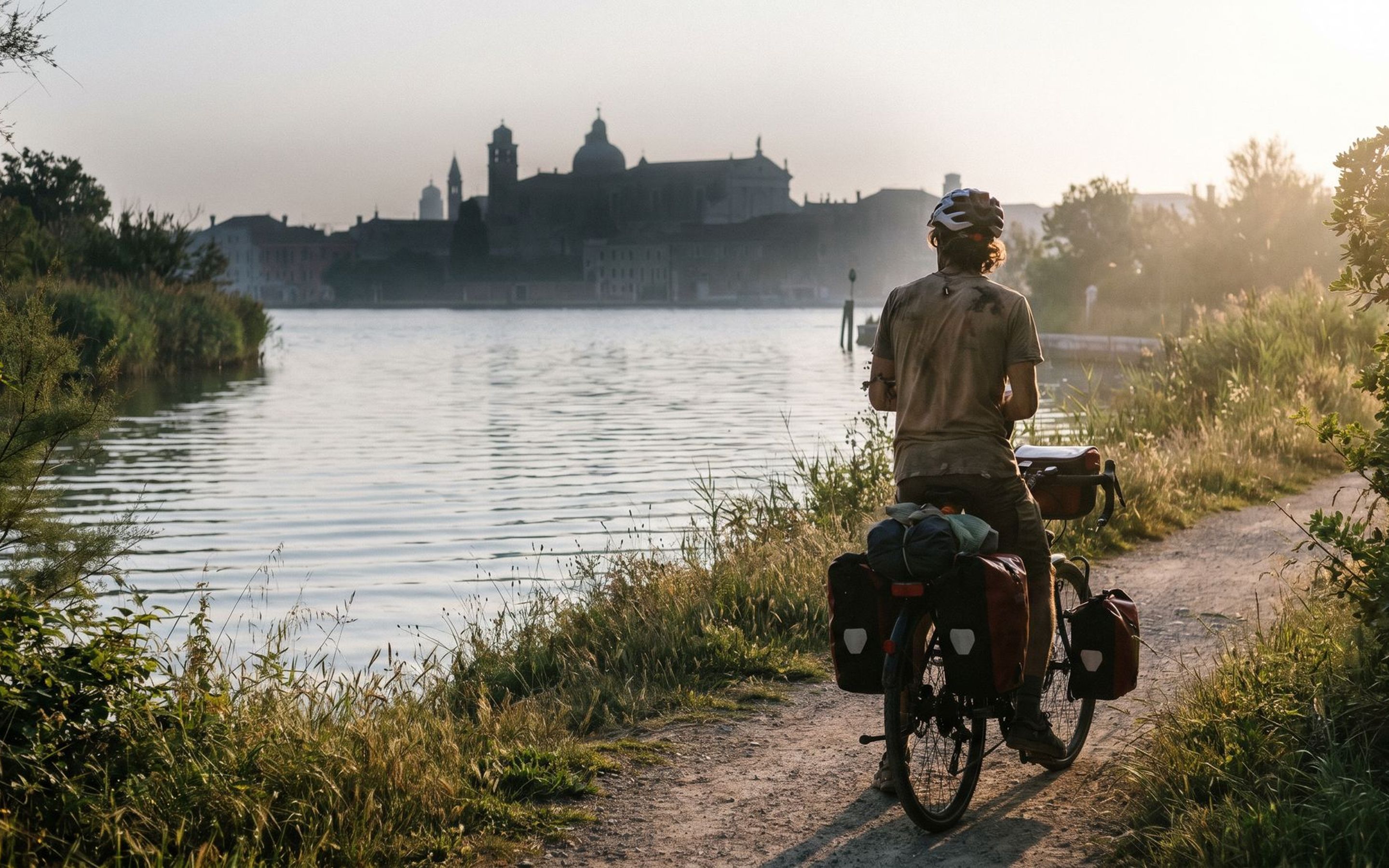
Rewind two or three days and you were on a po delta cycling holiday: flat, near-silent riding along the embankments of the Po Delta and the Venetian Lagoon, with reed channels on one side and salt pans on the other. This guide covers where the delta is, what the riding is honestly like, the food and the wildlife, when to go, and who the route suits. If you want Italy without the climbing and Venice without the arrival ordeal, this is the trip to understand.
The Po is Italy's longest river, and as it nears the Adriatic it fans out into a wide delta on the coast between Ravenna and Venice, straddling Emilia-Romagna and the Veneto. The Po Delta Park is a UNESCO Biosphere Reserve: protected wetlands of lagoons, reed channels, salt pans and sandbars, with names like the Sacca degli Scardovari and the Po di Volano. North of the delta lies the Venetian Lagoon, and at its head, Venice itself.
The bike & boat format fits this landscape almost perfectly, for three concrete reasons.
This is one of the few European bike & boat routes where the water crossing is the finale, not just the accommodation. On most trips the boat is where you sleep. Here, the boat is also how you arrive.
Think of the journey as a steady progression from the southern delta up into the lagoon and across to Venice. Exact routings vary by operator, and some days are deliberately shorter rides with longer boat repositioning, so treat the following as the shape of the trip rather than a fixed itinerary.
A few real place names anchor it. Chioggia is the working fishing town at the southern edge of the Venetian Lagoon — sometimes called "Little Venice", with its own grid of canals and one of Italy's largest fish markets — and it makes a natural staging point. Comacchio, further south in the Valli di Comacchio, is a bridge-laced lagoon town famous for eel and its tangle of waterways. Between and around them, the Po di Volano and the other distributary channels offer quiet riding past reed beds and the pine forest of the Mesola.
Then the landscape opens into the Venetian Lagoon proper. You ride the lagoon edge and the littoral before the boat carries you across the water, with Burano, Murano and the lagoon islands in view as Venice draws closer.
For a sense of how this plays out as a real package, "The Waterways of Venice – Ave Maria" is a confirmed bike & boat tour on these waters. If the format itself is new to you — sleeping on a boat that moves while you cycle — our guide to bike-and-barge holidays explains how a typical day fits together before you commit.
Cycle Northern Italy by 4* barge – Discover Venice, the Po Delta, Ferrara & Mantua on this relaxed bike & boat holiday with cultural highlights and easy daily rides.
Here is the part most operator pages skate over. The Po Delta is genuinely easy, and that honesty is the point — leisure and foodie cyclists need to know whether the riding fits them before they book.
This maps cleanly to our Leisurely difficulty tier. It suits leisure riders, foodie cyclists, and couples who want the holiday to be about the place and the evenings rather than the metrics on a head unit.
If you fancy pairing it with another flat northern-Italy river, the Adige reaches the Adriatic at Chioggia, on the delta's doorstep — our Adige River guide covers that route. And if you actually want climbing or 80km days, this is the wrong trip: head for hillier Italy instead, which you can browse on our Italy cycling page.
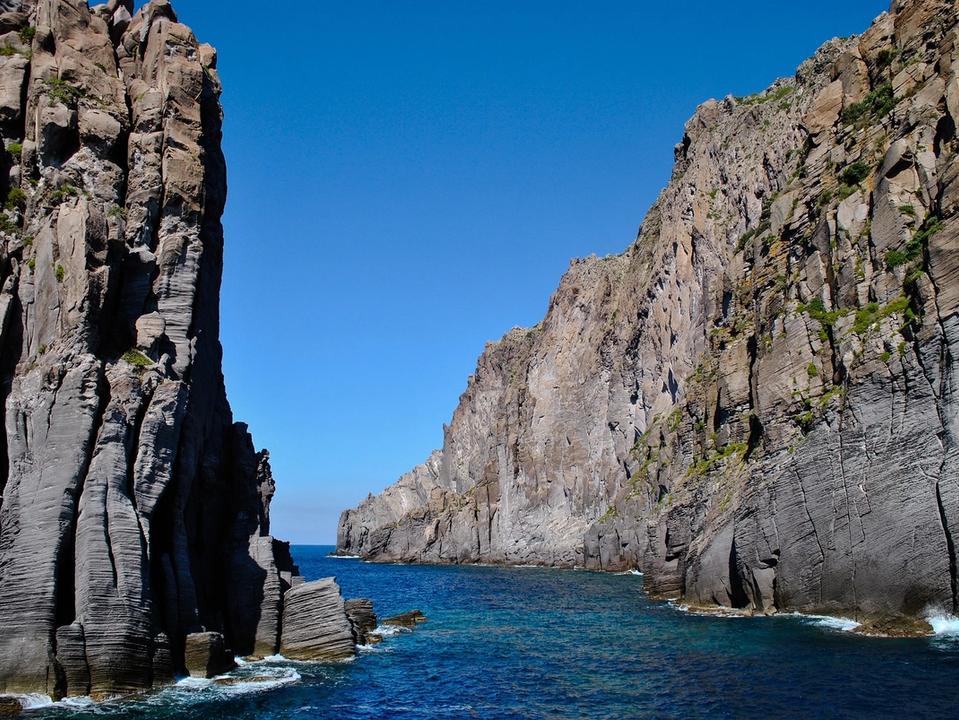
Explore Sicily’s Aeolian Islands by bike and on foot. Discover Vulcano, Stromboli, Salina and Lipari from a traditional sailing boat.
If the cycling gives the day its shape, the food and the evenings give it its soul — and on the Po Delta the eating is reason enough to come. This is one of Italy's great seafood larders, and the menus are local rather than generic.
Start at the source: Chioggia's fish market, where much of the day's catch is landed. From there the delta and lagoon kitchens deliver the eel (anguilla) of the Valli di Comacchio, clams (vongole), and, in season, the lagoon's moeche — soft-shell crabs that appear for only a few weeks. You will meet sarde in saòr, the classic Venetian sardines in sweet-and-sour onion; risotto al nero di seppia, the inky cuttlefish risotto; thick bigoli pasta; and frittura di pesce from a canalside trattoria.
There is rice, too, and not as a cliché. The delta and the Po plain are rice country, so risotto here is a regional staple grown in the same wetlands you are riding through. The connection between the water and the plate is direct.
The wine follows the region. Prosecco comes from the Conegliano–Valdobbiadene hills further inland — a glass on deck as the boat repositions — alongside Soave, Bardolino, and the Raboso and refreshing whites of the delta plain. Once you reach Venice, the early-evening ritual is an ombra (a small glass) and cicchetti, the city's bar snacks. The rhythm of the trip is built around all this: lunch is the long event, a canalside trattoria mid-ride, and dinner is on or near the boat.
For a deeper read on the region's table, see our forthcoming Veneto food and wine piece: [CONFIRM LINK].
The Po Delta is one of Europe's most important wetlands for birds, and the riding puts you right in it. Greater flamingos now breed in the delta's lagoons and salt pans, which means a flush of pink across the water is a genuine sight from the saddle rather than a brochure promise. Alongside them you will see herons, egrets, avocets and black-winged stilts, plus large numbers of overwintering and migrating waterfowl.
The quiet is what makes it work. Car-free embankments mean the soundtrack is reed warblers and wingbeats, not traffic, and the richest birdwatching windows — early morning and late afternoon — happen to be the best riding light as well. Bring binoculars if you have a pair.
This is a protected biosphere, so the etiquette is simple: stay on the tracks and keep your distance from nesting birds. Do that and the delta rewards you. For anyone wondering whether the Po Delta is good for birdwatching by bike, the short answer is that few European cycling routes put you this close to breeding flamingos with this little traffic around you.
Now the payoff. Most people arrive in Venice into Santa Lucia station or the Tronchetto car park and surface straight into the crowds. Arriving by water across the lagoon is a different entrance entirely: the city rising out of the water, the campanile and the domes ahead, approached along the route Venice was built to be reached by.
The practical truth matters as much as the romance. Your bike and bags are already on the boat, so there is no hauling luggage over bridges or wrestling it onto a packed vaporetto. You step off rested and ready, rather than frazzled and looking for your hotel.
Give yourself a day or two in the city and the lagoon opens up: Burano's painted houses, Murano's glass, a cicchetti crawl, and the early mornings before the day-trippers arrive. The lagoon is a hub rather than an endpoint, too — if you want to keep going, the confirmed Venice to Poreč route carries the bike & boat format on across the northern Adriatic into Croatia. For the nuts and bolts of timing a Venice arrival, see our logistics piece: [CONFIRM LINK].
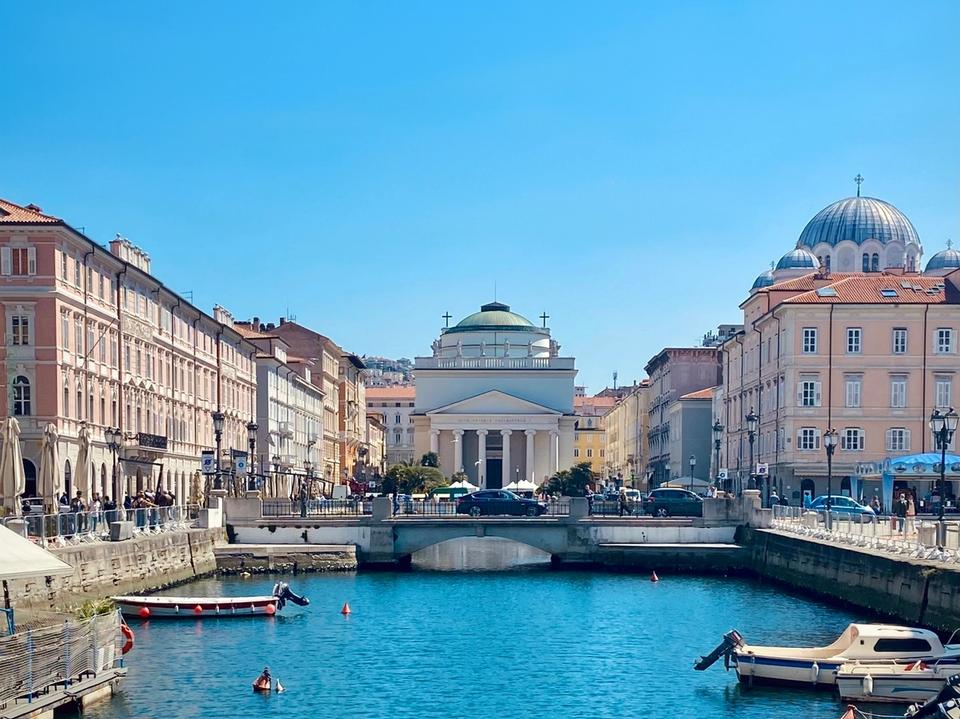
Cycle from Venice to Porec through Italy, Slovenia, and Croatia. Discover UNESCO towns, coastal scenery, and rich history on this unique bike and boat adventure.
The delta is flat, exposed and watery, so the calendar matters more here than on a sheltered inland route. There are two clear windows, and two periods to approach with eyes open.
For a wider view of how the months stack up across the continent, our month-by-month guide to cycling in Europe sets the delta in context against other regions.
Some routes try to be for everyone and end up being for no one. This one knows what it is.
It suits foodie cyclists; couples who want a flat, low-effort holiday led by place, food and birdlife; first-timers and nervous cyclists who want car-free riding; anyone who likes the idea of accommodation that moves with them; and travellers who want Venice without the arrival ordeal.
It suits less well riders chasing distance, climbing or a physical challenge; people who want to cover a wide geographic spread, since the delta and lagoon are a contained area; and anyone who would simply rather stay on dry land than spend time on a boat. If that is you, hillier Italy or a land-based tour will serve you better.
It pairs well, too. Tack on the Adige River route, or a few days inland in the Prosecco hills, and you have a longer northern-Italy trip without ever facing a serious gradient.
Pedal Ventures is a marketplace. We connect cyclists to handpicked local operators who run these delta and lagoon routes — we do not run the tours ourselves, which is exactly why we can be straight with you about which channels are quiet and which sections run alongside a road. Every booking is covered by PTS financial protection, so your money is protected if Pedal Ventures or the operator fails. At a typical bike & boat booking of around £3,000, that is a genuine reason for confidence rather than a line of small print.
Ready to ride the embankments and arrive in Venice by water? Browse bike & boat holidays in Italy →
The Po Delta is on Italy's Adriatic coast between Ravenna and Venice, where the country's longest river fans out into a wide expanse of lagoons, channels and salt pans straddling Emilia-Romagna and the Veneto. It sits just south of the Venetian Lagoon.
It is easy. The terrain is flat with effectively no climbing, and riding days are typically 25–45km. The only real variable is the wind off the Adriatic across open embankments, and e-bikes are available if you would rather not battle a headwind.
Both. You ride the flat, car-free embankments of the delta and lagoon edge, and then the boat carries you across the open water of the Venetian Lagoon into the city. The water crossing is the finale of the trip, not a substitute for riding.
May to June and September to early October are the two best windows: warm, settled weather, active birdlife and manageable crowds. July and August are hot, humid and mosquito-prone on the wetlands, and winter is largely outside the bike & boat season.
Yes. Greater flamingos now breed in the delta's lagoons and salt pans, and you can see them from the saddle, along with herons, egrets, avocets and black-winged stilts. Early morning and late afternoon are the best viewing windows.
Adriatic seafood above all: eel from the Valli di Comacchio, clams, cuttlefish risotto, sardines in saòr, and the fish landed at Chioggia's market. The delta is also rice country, so risotto is a local staple, paired with Veneto wines such as Prosecco, Soave and Bardolino.
Yes. The riding is flat, the distances are short, and much of the route is car-free, which makes it one of the more reassuring choices for first-timers and nervous cyclists. E-bikes are available, and your luggage stays on the boat throughout.