Bike tour
Luxury Highlights of Istria - Island Hopping & National Parks
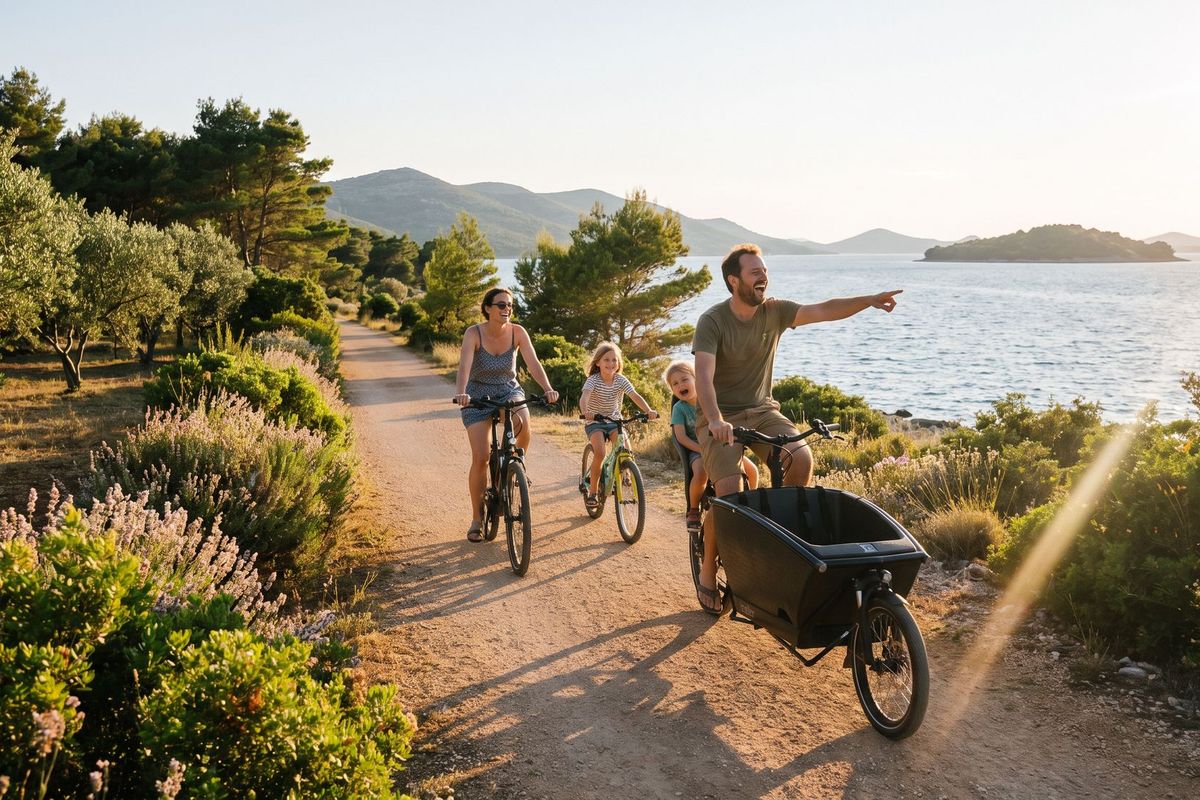
Cycle through coastal towns, hilltop villages and vineyards on this scenic Croatia bike and boat holiday across Istria and its islands.

Rob
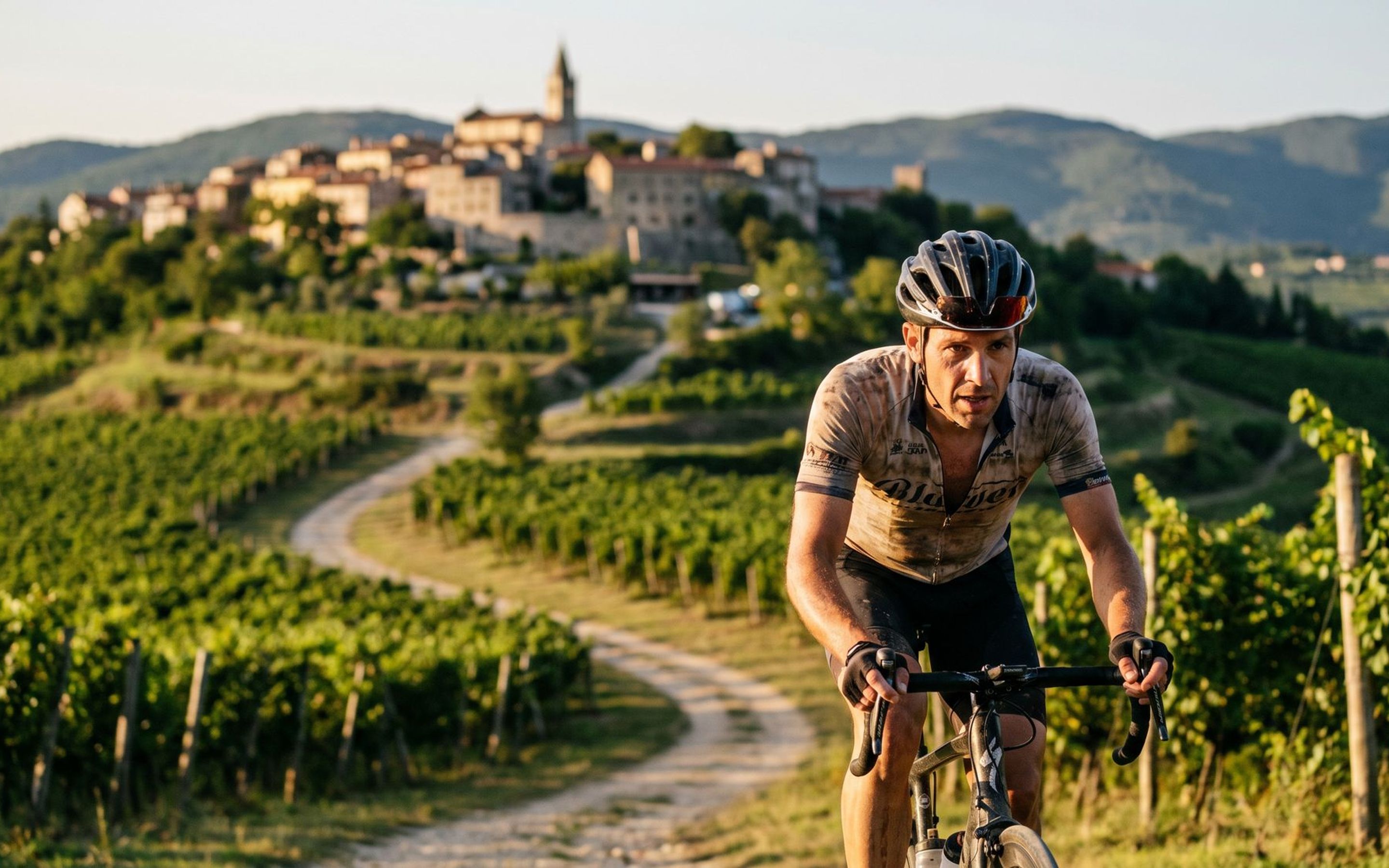
You arrive in Motovun in the late afternoon, when the light has turned the vineyards below the town to bronze and the day's heat has started to lift. Your bike is propped against a stone wall that has stood since the town was Venetian. From an open door along the lane comes the smell of pasta and shaved truffle, and the couple at the next table are speaking Italian to the waiter, who answers in Croatian, and nobody thinks this is strange. This is the feeling that defines an istrian peninsula cycling holiday: you are unmistakably in Croatia, and yet Italy is everywhere — in the food, the architecture, the wine, and the names on the map.
This guide is for cyclists who care as much about where they eat dinner as where they ride. Over the next few thousand words we will cover the routes worth riding, how hard the cycling actually is, when to go month by month, what to eat and drink in the evenings, and how the practical side works — flights, transfers, and the two ways most people choose to cycle here. Istria is a heart-shaped peninsula at the top of the Adriatic, shared today between Croatia, a sliver of Slovenia, and a whisper of Italy. It is one of the more rewarding places in Europe to spend a week on a bike, and one of the least understood.
Most people who picture cycling in Croatia picture the Dalmatian Coast — Split, Dubrovnik, island-hopping under a hard blue sky. Istria sits at the opposite, northern end of the country, and it is a genuinely different proposition. The clue is in the map. Towns here carry two names: Rovinj is also Rovigno, Poreč is also Parenzo, Vodnjan is also Dignano. Istria was governed by Venice for five centuries, then Austria, then Italy right up until 1947, when it passed to Yugoslavia and, later, to Croatia. That history has not been tidied away. Road signs are bilingual. Older residents in the interior still speak an Istrian dialect of Italian at home.
For a cyclist, this duality is not a footnote — it shapes the whole trip. The interior feels like Tuscany or Umbria, all cypress-lined ridges and medieval hill towns, but with a fraction of the traffic and a fraction of the price. The coast has the clear Adriatic water you would expect of Croatia, but the harbours look Venetian because they were built by Venetians. You ride past olive groves and vineyards that would not look out of place in Friuli, then stop for a coffee that costs half what it would across the border.
Compared with the Dalmatian Coast, Istria is quieter, greener, and more food-focused. Dalmatia is about the sea and the islands; Istria is about the land as much as the water. If you have already ridden the Dalmatian islands — or you are weighing the two — it is worth reading the wider Croatia cycling holidays collection to see how the regions compare. Istria is the choice for the cyclist who wants the ride to be the frame and the food, wine and hill towns to be the picture.
Cycle through coastal towns, hilltop villages and vineyards on this scenic Croatia bike and boat holiday across Istria and its islands.
Istria packs a lot of variety into a small peninsula, and the routes fall into three broad characters: the old railway greenway, the coast, and the interior hills.
The signature ride is the Parenzana, a former narrow-gauge railway that once ran from Trieste in Italy, through Slovenia, to Poreč on the Istrian coast. The line closed in 1935; the route has since been reborn as a cycling and walking greenway of roughly 120 kilometres, threading through all three countries. Because it follows an old railway bed, the gradients are gentle and steady rather than sharp, and it carries you through some of the most memorable engineering on the peninsula — stone viaducts, and a series of tunnels bored through the hills, a few of them long enough that you will want a light. The Croatian tourist board and the Parenzana's own custodians have restored long, car-free sections, and it passes directly beneath hill towns like Motovun and Grožnjan. You can read more about the route's history and current condition on the official Parenzana trail site. For many riders the Parenzana is the reason they come.
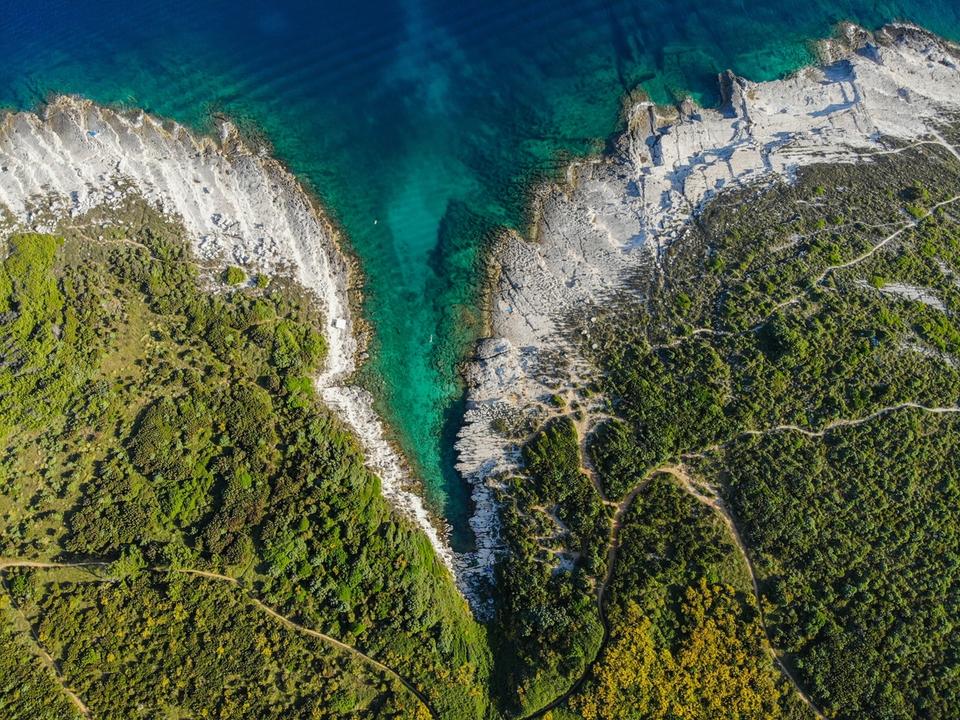
The western coast between Poreč and Rovinj is the gentle, sea-facing side of an Istrian holiday. Here you ride quiet lanes and cycle paths past Roman ruins, olive groves, and cliffside coves, with the Adriatic on your right for much of the day. Poreč itself is worth a slow morning — its sixth-century Euphrasian Basilica is a UNESCO World Heritage Site, its mosaics still intact. Rovinj, further south, is the postcard town everyone photographs: a huddle of pastel houses climbing to a Venetian bell tower on a small peninsula. The coastal riding is easy and unhurried, which makes it ideal for building a day around a long lunch and an afternoon swim.
Inland, the character changes. The Motovun–Grožnjan–Oprtalj triangle is the heart of the interior: three fortified towns on three hills, looking across the Mirna valley at one another. Grožnjan is now a town of artists and galleries, almost entirely traffic-free. Oprtalj is quieter still. The riding between them is rolling, with short, honest climbs to reach each town gate, and the reward at the top is always the same — a view over vineyards and the dark oak forests where the truffles grow. This is the Istria that feels most like the Italian hill country, and it is where the peninsula's food and wine culture is at its most concentrated.
Roman Pula sits at the southern tip, and it earns a day of its own. Its first-century amphitheatre is one of the best preserved in the world — the sixth largest surviving Roman arena anywhere — and it still hosts concerts under the stars in summer.
This is the question that decides whether Istria is right for you, and it deserves an honest answer rather than reassurance. Istria is not flat, but it is not the Dolomites either. The difficulty depends entirely on where you ride.
On the coast and along the Parenzana, the cycling is gentle. Gradients are shallow, surfaces are mostly good, and daily distances on a typical guided holiday sit in the range of roughly 20 to 45 miles, with plenty of stops built in. This is riding that a reasonably fit person who cycles occasionally at home can manage comfortably. In the interior, the hills are real but short — you climb to reach a town, enjoy it, and descend the other side. There are no sustained mountain passes.
For context, Istria is hillier than the pancake-flat cycling of the Netherlands or Denmark, gentler than the Dalmatian Coast further south, and broadly comparable to riding in Tuscany — rolling rather than mountainous. E-bikes change the calculation entirely, and they are widely available across Istria; on an e-bike, the interior climbs stop being a consideration at all and the whole peninsula opens up to almost any fitness level.
Pedal Ventures rates difficulty on a clear scale, and it is worth using it. The Highlights of Istria bike-and-boat tour sits at difficulty 3 — moderate, with a mix of coastal and inland riding on hybrid or e-bikes. The gentler Luxury Highlights of Istria tour is rated difficulty 2, an e-bike holiday designed to be taken at a relaxed pace. Neither requires you to be a serious cyclist. Both ask only that you enjoy being on a bike for a few hours a day with the promise of a good lunch at the end.
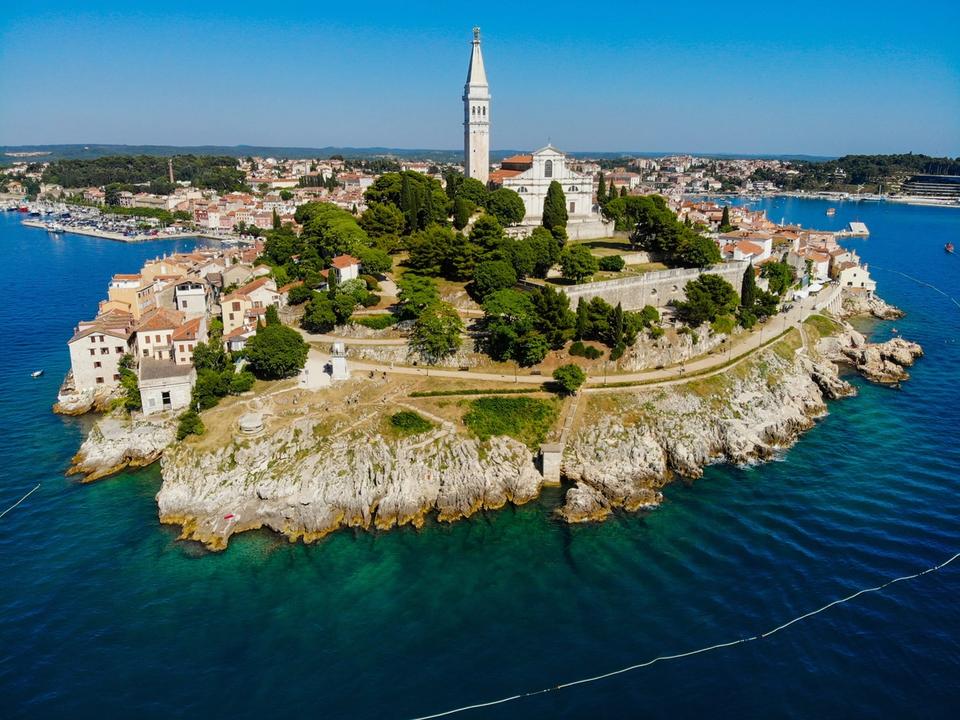
Discover Istria by bike and boat on this Croatian island-hopping tour with coastal rides, national parks, and historic harbour towns.
Istria has a long, forgiving cycling season, but the peninsula changes character sharply through the year, and the shoulder seasons are where it is at its best.
April and May are quiet and green. Wildflowers cover the Mirna valley, the interior is at its most vivid, and the crowds have not yet arrived. Daytime temperatures are comfortable for climbing, and accommodation is easier to come by. The sea is still cool for swimming, but this is prime riding weather.
June brings warmth and the start of the summer truffle season, when the smaller Istrian black truffle begins to appear on menus. The coast is lively but not yet overwhelmed. For many, June is the ideal balance of long days, warm water, and manageable crowds.
July and August are hot and busy. The coastal towns of Rovinj and Poreč fill with holidaymakers, temperatures can climb into the mid-30s, and the middle of the day becomes too hot for hard riding. If you come in high summer, ride early, rest through the afternoon, and treat the swimming as part of the itinerary rather than an extra.
September and October are, for many cyclists, the best months of all. The sea is still warm from the summer, the heat has softened, the vineyards are being harvested, and — crucially — this is the peak of the prized white truffle season around the village of Livade. The light is golden, the crowds have thinned, and the interior smells of fermenting grapes and damp oak. If you can choose any month, choose late September.
In short: come in the shoulder seasons if you can. Spring for the wildflowers and the quiet, autumn for the harvest, the truffles, and the warm sea.
This is the section that sells the evenings, and in Istria the evenings are the point. The Italian–Croatian crossover that shapes everything else on the peninsula is at its most delicious on the plate.
Start with truffles. The oak forests around Livade and the Motovun valley are among the richest truffle grounds in Europe — the region produced one of the largest white truffles ever recorded. In autumn, the white truffle is shaved over everything: over fuži, the hand-rolled Istrian pasta quill; over scrambled eggs at breakfast; over a simple plate of local cheese. In summer, the earthier black truffle takes its place. You do not have to seek this out. In the interior, truffle is not a special occasion — it is the house style.
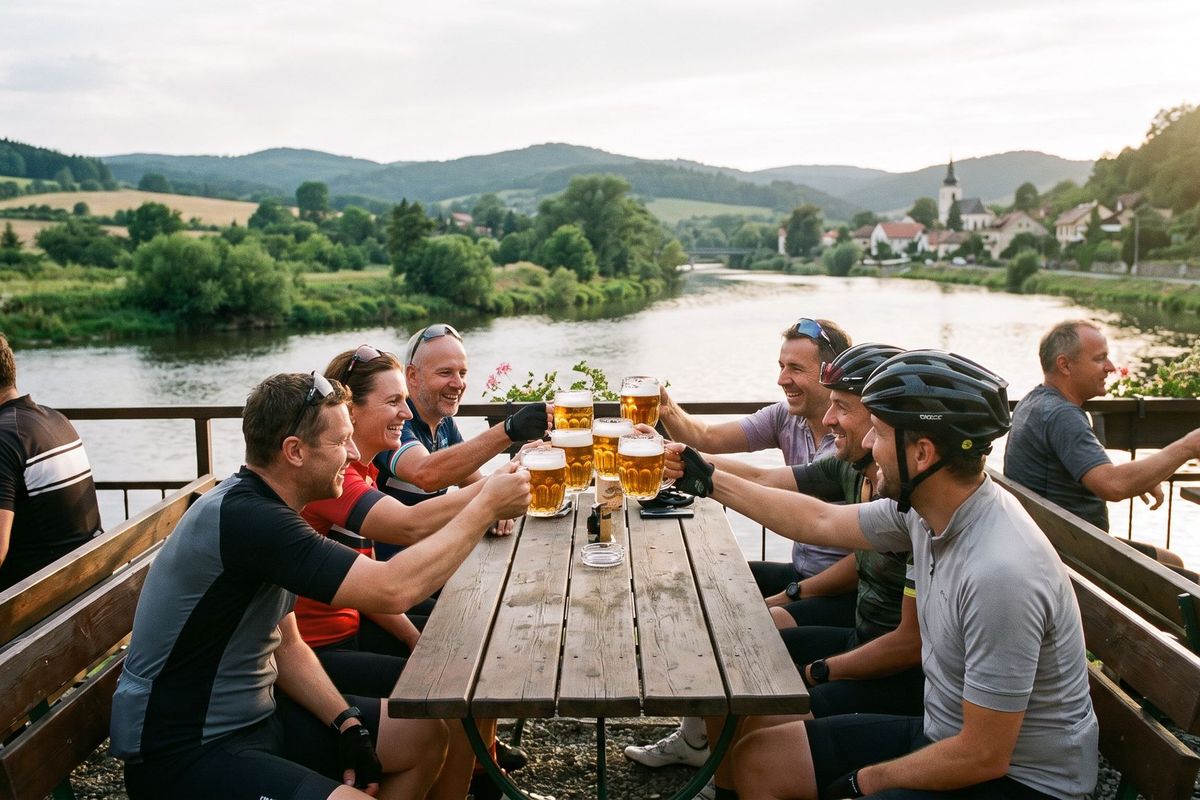
Then the wine. Istria's signature white is Malvazija Istarska, a crisp, mineral wine from an indigenous grape that pairs perfectly with the coast's seafood. Its red counterpart is Teran, darker and more rustic, grown on the red iron-rich soil the locals call terra rossa. Small family wineries dot the interior, and many welcome cyclists for a tasting — a civilised way to end a day's ride. Istrian olive oil deserves equal billing: the peninsula's oils regularly rank among the best in the world in international guides, and a tasting flight of single-estate oils is a genuine local experience.
On the coast, the food turns to the sea — fresh Adriatic fish, grilled simply, and scampi from the Kvarner gulf. Inland, look for maneštra, a hearty bean-and-vegetable soup that is Istria's answer to minestrone, and ombolo, a cut of pork loin often served with sauerkraut. The common thread is Italian technique meeting Croatian ingredients: the pasta is Italian in spirit, the game and the truffles and the soups are firmly Istrian. Eat in a konoba, the traditional family-run tavern, and you will taste the whole story of the peninsula in a single meal.
Getting to Istria is straightforward. The nearest airport is Pula, at the southern tip of the peninsula, with seasonal flights from the UK. Many travellers also fly into Trieste in Italy, or Venice, and transfer south — the drive from Trieste to the Istrian coast takes only a couple of hours and forms part of the peninsula's cross-border character. From either arrival point, transfers to the coastal towns and the interior are simple to arrange.
There are two main ways to cycle Istria, and they suit different travellers.
The first is bike-and-boat, which is especially well suited to this coastline. You sleep aboard a small ship that serves as a floating hotel, cycle each day from a different harbour, and rejoin the boat for relaxed afternoon sailing and swim stops in the bays. You unpack once. Both of Pedal Ventures' handpicked Istria holidays use this format, combining coastal rides with inland excursions and the comfort of a cabin each night.
The second is self-guided on land, staying in boutique hotels and converted stone houses in the hill towns and coastal resorts, with your luggage moved ahead for you and your route mapped in advance. This suits travellers who want to linger in a single town, or who prefer a hotel bed to a cabin.
A quick word on how Pedal Ventures works, because it matters at the point of booking. Pedal Ventures is a marketplace, not a tour operator — we connect cyclists to carefully vetted local operators who actually run the holidays, the people who know which lanes are scenic and which are best avoided. Every holiday on the site is handpicked; if we would not book it ourselves, it is not there. And because a cycling holiday of this kind typically represents an investment of around £3,000, every booking is financially protected through PTS, so your money is safe if something goes wrong with the operator or with us. That protection is worth having on a trip that crosses international borders.
If the cross-border story appeals, one holiday captures it better than any other: the Venice to Poreč tour rides from the Venetian lagoon through Italy, Slovenia, and into Croatia, following the shared history of the old Republic of Venice all the way to the Istrian coast.
Yes. Istria is one of the more rewarding cycling destinations in Europe for anyone who values food, wine, and culture alongside the riding. It offers gentle coastal routes, a famous car-free railway greenway in the Parenzana, and rolling interior hills linking medieval towns, all within a compact peninsula. Distances are manageable, the traffic is light, and the Italian–Croatian food culture makes the evenings a highlight in their own right.
The full Parenzana runs roughly 120 kilometres from Trieste in Italy to Poreč in Croatia, passing through Slovenia on the way. Most cyclists ride it over two to four days, depending on how much time they spend in the hill towns along the route. Because it follows a former railway line, the gradients are gentle throughout, which makes it accessible to riders of moderate fitness and a good candidate for an e-bike.
No, but it helps in the interior. The coastal routes and the Parenzana greenway are gentle enough for any reasonably fit cyclist on a standard hybrid. The interior hill towns involve short climbs, and an e-bike removes the effort entirely, opening the whole peninsula to almost any fitness level. E-bikes are widely available across Istria, and several holidays — including the Luxury Highlights of Istria tour — are built around them.
Istria has two truffle seasons. The summer black truffle appears from around May through September, while the prized white truffle season runs from roughly September to December, peaking in October and November around the village of Livade. Autumn is therefore the best time to visit if truffles are a priority, and it coincides with the grape harvest and warm sea temperatures.
Yes, particularly on the coast and the Parenzana, and especially on an e-bike. The gentler holidays are rated at the easier end of the difficulty scale, with short daily distances and plenty of stops. Bike-and-boat holidays add flexibility, because you can choose to sail rather than ride on any given afternoon. Complete beginners should look at the lower-difficulty, e-bike-based options.
Istria is a settled, welcoming region with light traffic on its rural lanes and a growing network of dedicated cycle routes. As with any cycling holiday abroad, check the latest FCDO travel advice for Croatia before you go, carry travel insurance that covers cycling, and make sure any holiday you book is financially protected. Booking through a marketplace with PTS protection adds a layer of security to what is, for most people, a significant purchase.
Istria rewards the cyclist who comes for more than the miles. The riding gives the week its shape — the gentle coast, the old railway line, the climbs to Motovun and Grožnjan — but the truffles, the Malvazija, and the two languages spoken across one café table are what people talk about when they get home. It is a peninsula where Italy and Croatia have grown into each other over centuries, and there is no better way to feel that than from the saddle.
When you are ready to plan, browse the handpicked Istria cycling holidays on Pedal Ventures, or explore the wider Dalmatian Coast if you want to combine the two ends of Croatia. Every holiday is run by a vetted local operator, every booking is PTS-protected, and every route has been chosen because it is genuinely worth riding. For more on the region and the network of long-distance routes that connect it to the rest of Europe, the EuroVelo cycle network and the Croatian National Tourist Board are good places to start.
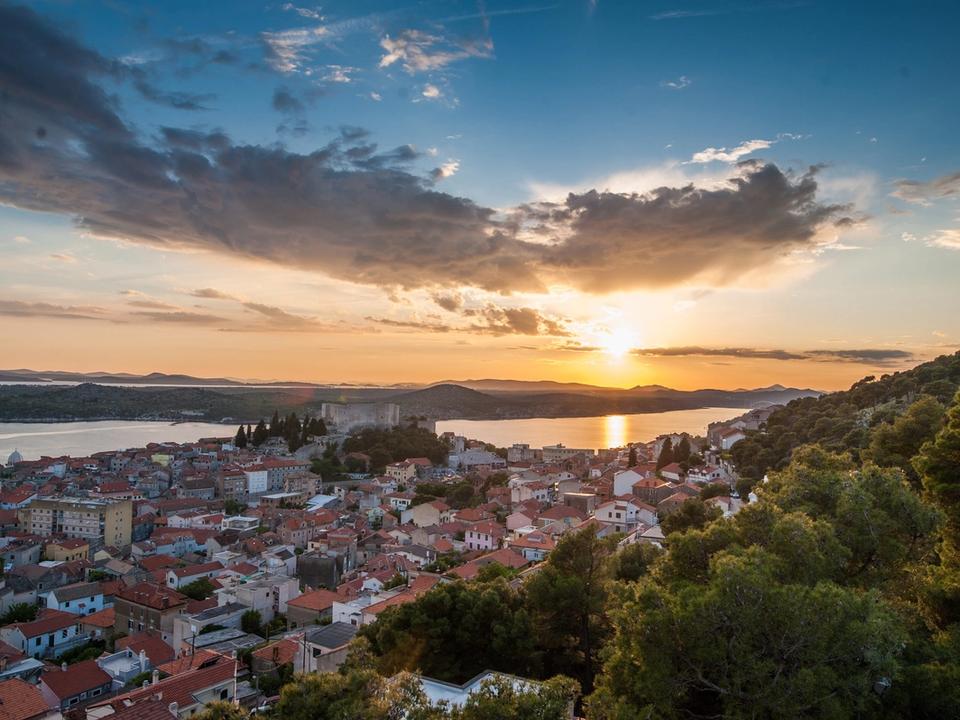
Discover Croatia by e-bike and boat. Ride through national parks, swim in clear seas and visit historic towns along the Dalmatian Coast.