Bike tour
Denmark & Sweden - Sail & Cycle Øresund
Cycle and sail through Denmark and Sweden. Explore the Øresund Strait, coastal towns, Ven Island, and UNESCO-listed Stevns Klint.

Rob
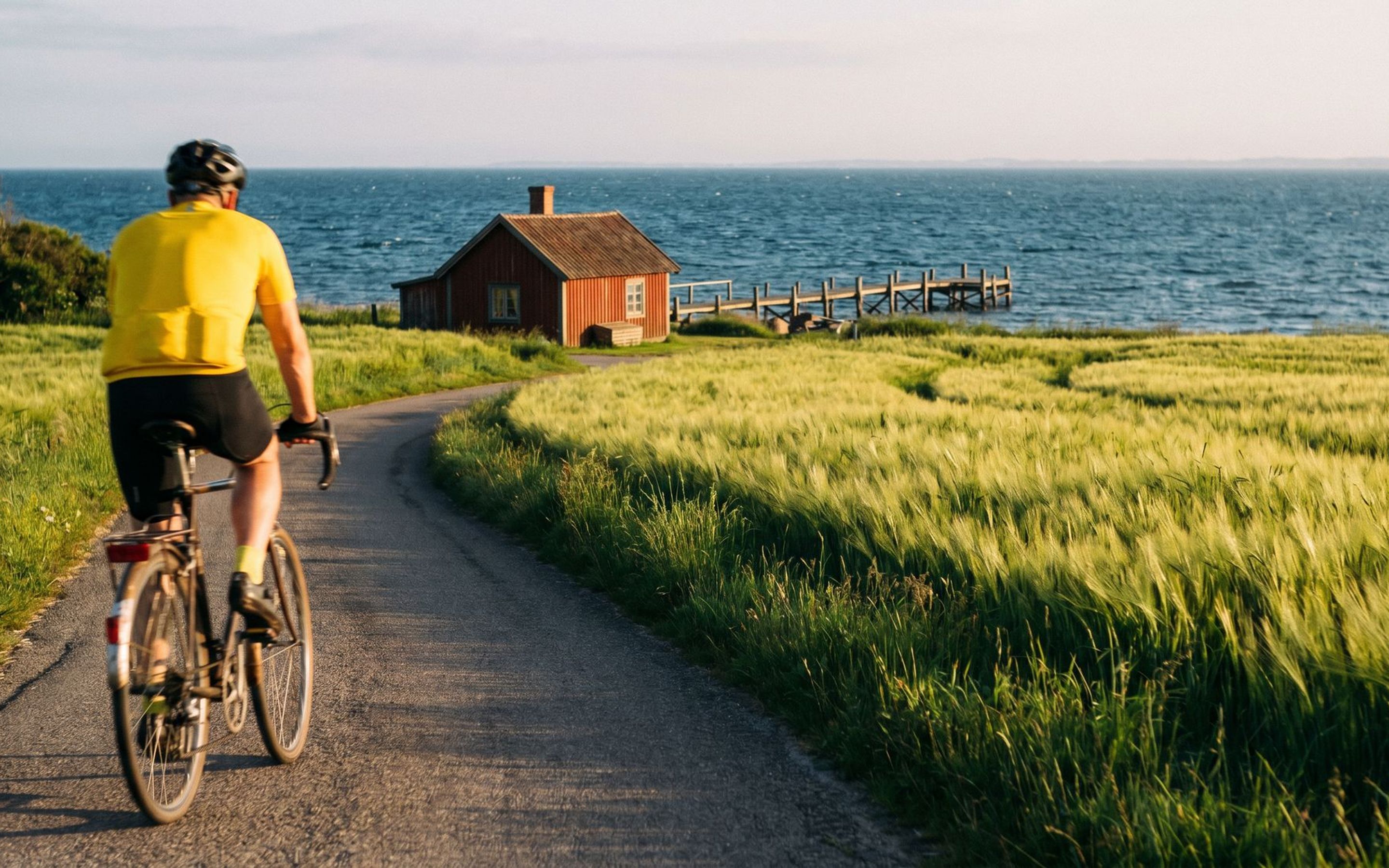
It is six in the evening on the Skåne coast in July, and the light has barely moved. A single-track lane runs between a barley field and the sea, and you have not passed a car in twenty minutes. Somewhere behind you is a red timber cottage with a jetty; somewhere ahead is a harbour town with a bakery still open and a bench facing the water. This is the part of a Swedish cycling holiday that photographs badly and stays with you for years — the sheer quiet of it, and the feeling that the day is in no hurry to end.
Sweden is one of the calmest places to ride a bike in Europe, and most people underestimate it. If you are weighing up cycling holidays in Sweden, this guide sets out what the riding is actually like, where to go, when to visit, and how hard it is — so you can decide whether it is the trip for you before you commit. The short version: the flat, sea-level south is easier and more rewarding than most cyclists expect, and it is the Sweden most UK holidaymakers really want.
Two things make Sweden ride differently from the Mediterranean. The first is space. Sweden is a large country with a small population, most of it concentrated in a handful of cities, which leaves the rural road network almost empty for long stretches. The second is culture. Swedes take outdoor life seriously — there is a word for it, friluftsliv, meaning open-air life — and cycling is treated as a normal way to spend a day rather than a sport reserved for the fit.
The result is a country built for unhurried riding. Southern Sweden in particular is laced with quiet asphalt lanes, dedicated cycle paths and signed national routes, and the traffic that does exist is used to sharing the road with bikes. For the Active Couple who want a holiday with a rhythm rather than a challenge, and for anyone nervous about riding near cars, this is a gentler introduction to European touring than France or Italy.
You also get long days. In June and July the far south enjoys around seventeen or eighteen hours of usable daylight, which changes how a cycling holiday feels: there is no need to rush a lunch or race the light, and an evening ride after dinner is entirely normal.
Here is the decision most guides skip. Sweden is not one cycling destination but two, and choosing the wrong one is the commonest mistake UK riders make.
The wild north — Lapland, the fells, the midnight sun — is genuinely remote. It is long-distance, often on gravel, with big gaps between services and weather that demands respect. It suits experienced tourers and gravel riders looking for an expedition, not a relaxed week.
The flat south — Skåne, Halland, the west coast, the island of Gotland — is the opposite. It is sea-level, densely served with towns and cafés, and threaded with easy signed routes. Daily distances are entirely in your control, the climbs are short where they exist at all, and you are never far from a harbour, a bakery or a station.
For the great majority of UK holidaymakers — couples, friends groups, first-time European tourers, foodie cyclists — the south is the answer. The rest of this guide focuses there, because that is where a comfortable, scenic, well-supported Swedish cycling holiday lives.
If Sweden has one route that defines relaxed coastal cycling, it is the Kattegattleden. It runs 390 kilometres up the west coast from Helsingborg in the south to Gothenburg in the north, and it was Sweden's first route to earn national cycle route status — a designation that signals quality of surface, signposting and safety rather than distance alone. You can read the official stage-by-stage guide on the Kattegattleden route site.
What makes it matter for a holiday is how it is built. The route is divided into eight stages, the greater part of it runs on asphalt, and long sections are on dedicated cycle path or quiet minor road rather than shared with traffic. Halmstad sits roughly at the halfway point, so the route breaks naturally into a southern and northern half if you do not want the full distance.
Most riders take four to seven days to complete the whole thing, which puts it squarely in cycling-holiday territory: comfortable daily distances of 50 to 70 kilometres, flat to gently rolling, with fishing harbours, long beaches and small resort towns spaced out as natural overnight stops. It is the kind of route where the logistics — luggage moved ahead, a bed booked, the way marked — matter more than fitness, which is exactly why it works well as an organised trip rather than a self-planned expedition.
Gotland, Sweden's largest island, is one of the best places in the country for easy touring, and it is a strong choice for anyone who wants their whole holiday on quiet roads. The island is genuinely flat — its highest point is only around 82 metres — with a well-developed network of cycle paths and very little traffic on the minor roads once you leave the main routes.
You reach it by ferry from Nynäshamn, south of Stockholm, arriving at Visby: a walled medieval Hanseatic town that is a UNESCO World Heritage Site and a fine base for a few days. From there, typical touring days work out at around 60 kilometres, though the flat terrain means you can easily do less. The riding takes in limestone coastline, pine forest, wide beaches, nature reserves and the small stone churches the island is known for.
Gotland suits the slower traveller especially well. There is no pressure to cover ground, plenty of places to stop for coffee and cinnamon buns, and enough within a short ride of Visby that you can make a whole holiday out of loops rather than long point-to-point days. For a foodie or a couple who want cycling to be the frame rather than the focus, it is hard to better.
Skåne is Sweden's southernmost province, and its coastline is where a lot of the country's most relaxed riding is found — wild in places, dotted with bakeries and harbour cafés, and close enough to Copenhagen to combine two countries in one trip. The Öresund coast region sits just across the bridge from the Danish capital, which makes it unusually easy to reach: you can fly to Copenhagen and be riding on the Swedish side within an hour or two.
Cycle and sail through Denmark and Sweden. Explore the Øresund Strait, coastal towns, Ven Island, and UNESCO-listed Stevns Klint.
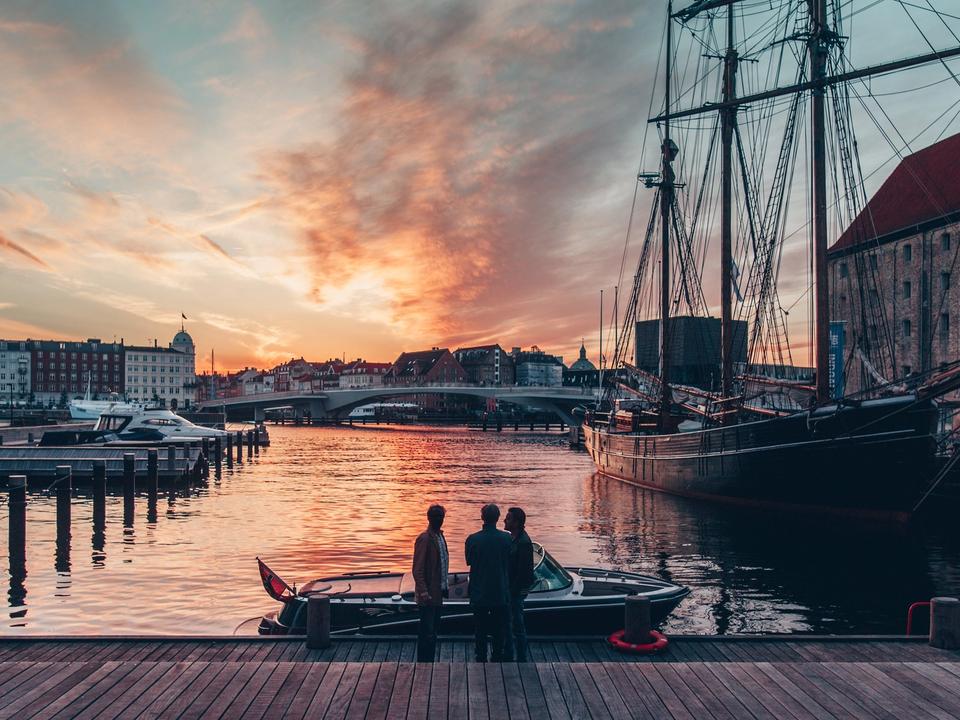
This is also where Pedal Ventures' handpicked Swedish riding currently centres. The Denmark and Sweden Sail and Cycle Öresund tour is a guided trip that pairs cycling with sailing: you ride coastal paths and leafy lanes between Copenhagen and Malmö while a tall ship acts as your floating hotel, sailing overnight between stops. Highlights along the way include Ven island, castles and the UNESCO-listed cliffs at Stevns Klint. It is fully guided, full-board on board, with luggage carried and optional e-bikes, and it is rated difficulty level 3 — moderate distances with the occasional short climb and gravel track.
It is a good illustration of how southern Sweden tends to work as a holiday: the cycling is comfortable, the logistics are handled, and the days are shaped as much by what you stop for — a harbour lunch, a swim, a walk on the cliffs — as by the kilometres themselves.
One thing genuinely sets Sweden apart from most of Europe: allemansrätten, the right of public access, sometimes translated as the freedom to roam. Enshrined in Swedish law, it gives everyone the right to walk, cycle, ride and camp across most uncultivated land, provided you keep away from homes and gardens, respect crops and wildlife, and leave no trace. The Swedish Environmental Protection Agency sets out the detail on its right of public access pages.
For a cyclist, this quietly improves the whole experience. It means you can stop almost anywhere for a picnic without wondering whether you are trespassing, wander down to a lakeshore or a stretch of coast, pick berries in late summer, and generally treat the landscape as somewhere you belong rather than somewhere you are tolerated. Cycling itself is covered by the right, including on many hiking and jogging trails, as long as there is no specific restriction and you give way to walkers.
It is a small legal fact with a large effect on how a Swedish holiday feels. The country is set up on the assumption that you will be outdoors, and that assumption shapes everything from café culture to the way rural roads are maintained.
The season is short and clear: June to August is prime, with late May and early September as shoulder options for those who prefer fewer people and cooler air.
Midsummer, around the third weekend of June, is the high point of the Swedish calendar and the moment the long light is at its most extraordinary — worth planning around if you want to experience the country at its most characterful, though accommodation books up. July and August bring the warmest, most settled weather and water warm enough to swim, which matters more than you would think on a coastal route where an afternoon dip becomes part of the day.
Outside those months the picture changes quickly. Daylight shortens dramatically through autumn, many seasonal cafés and guesthouses close, and by winter the south is cold and dark. Unlike southern Europe, Sweden is not a year-round cycling destination, so the planning question is less whether to go in summer and more which weeks of summer suit you. For a broader view of how the seasons compare across the continent, our guide to the best time to cycle in Europe puts Sweden in context.
This is where honesty matters more than reassurance. In the flat south, the cycling is easy. The Kattegattleden and Gotland are close to flat, surfaces are good, and the challenge on any given day is the distance you choose rather than the terrain. A rider who is comfortable with 50 to 70 kilometres on the level, with cafés along the way, will find southern Sweden well within reach — including many riders who would not describe themselves as fit.
Difficulty rises with two things: distance and remoteness. Longer point-to-point days, headwinds off the sea, and stretches of the far north or the interior with gravel and few services all move the needle. The guided Öresund trip described above is rated difficulty level 3, which reflects moderate daily distances and the occasional short climb or gravel track rather than anything demanding.
E-bikes change the calculation again. They flatten headwinds and long days, and they are widely available on organised Swedish trips, which makes the country a realistic option for mixed-ability couples and friends groups where one rider is stronger than another. If you are unsure where you sit, choosing a route with an honest difficulty rating — and the option to add an e-bike — matters more than raw fitness.
Both formats work in Sweden, and the right one depends on how much you want handled.
Guided trips, like the Öresund sail-and-cycle, suit riders who want company, local knowledge and nothing to think about — someone else navigates, the group sets a rhythm, and in the case of the sailing trip your accommodation moves with you. It is a sociable, low-effort way to see the coast, and a good choice for solo travellers who would rather not ride alone. You can see the wider guided cycling holiday format explained separately.
Self-guided trips suit couples and small groups who want independence. On a self-guided cycling holiday the route is mapped and loaded to GPS, your bags are transferred between hotels, your accommodation is booked, and a support line is there if something goes wrong — but you ride at your own pace and stop where you like. Sweden's excellent signposting and quiet roads make it one of the more forgiving places to ride independently. If the idea appeals, our guide to cycling holidays in Denmark — Sweden's flat, cycle-friendly neighbour across the strait — is a useful companion read, since the two countries share a coast and a cycling culture.
Sweden also connects into the wider European network for those who want to extend a trip: four EuroVelo long-distance routes pass through the country, including the north–south Sun Route and Pilgrims Route, as set out on the EuroVelo Sweden pages.
Pedal Ventures is a marketplace, not a tour operator. We do not run the trips ourselves or own the hotels and boats; we connect you with handpicked local operators who do, and we only list trips we would be happy to book ourselves. For a country like Sweden, where the difference between a well-run coastal tour and a poorly organised one comes down to local knowledge — which lanes are genuinely quiet, which harbour guesthouses are worth the stop — that curation is the point.
Because a cycling holiday is a considered purchase, booking confidence matters. Every booking made through Pedal Ventures is covered by PTS financial protection, which means your money is protected if either Pedal Ventures or the operator were to fail. At an average booking value around £3,000, that protection is worth having in writing rather than assuming.
Before you travel, it is also worth checking the current FCDO travel advice for Sweden for entry requirements and any practical updates, and the national tourism board at Visit Sweden for regional detail as you plan.
Yes, particularly the flat south. Skåne, the west-coast Kattegattleden and the island of Gotland offer sea-level, well-signposted riding on quiet roads, with cafés and harbour towns spaced for comfortable daily distances. It is one of the calmest and most beginner-friendly touring countries in Europe. The far north is a different proposition — remote and demanding — and suits experienced tourers rather than holidaymakers.
The Kattegattleden runs 390 kilometres up Sweden's west coast from Helsingborg to Gothenburg, divided into eight stages. Most riders complete it in four to seven days, at daily distances of roughly 50 to 70 kilometres. Halmstad sits near the halfway point, so it splits naturally if you want a shorter trip.
June to August, with late May and early September as quieter shoulder options. Midsummer in late June brings the longest daylight; July and August are the warmest and best for swimming. Outside summer, daylight shortens sharply and many seasonal cafés and guesthouses close, so Sweden is a summer cycling destination rather than a year-round one.
In the south, yes. The terrain around Skåne, the Kattegattleden and Gotland is flat, surfaces are good and traffic is light, which makes it well suited to less experienced riders. E-bikes are widely available on organised trips and make longer days and headwinds far more manageable for mixed-ability couples and groups.
Yes. Sweden's signposting and quiet roads make it one of the easier places to ride independently. On a self-guided trip the route is mapped to GPS, luggage is transferred between hotels, accommodation is arranged and a support line is available, while you ride at your own pace. Guided options, including sail-and-cycle trips on the Öresund coast, are available for those who prefer company and support.
No. Sweden's right of public access, allemansrätten, allows everyone to cycle, walk and camp across most uncultivated land without a permit, as long as you keep clear of homes and gardens, respect crops and wildlife, and leave no trace. It is one of the features that makes cycling in Sweden feel so open.
Southern Sweden rewards riders who want a holiday shaped by quiet roads, long light and slow evenings rather than by hard climbs or high mileage. If that sounds like your kind of week, browse cycling holidays in Sweden to see what is currently on the site, and use the difficulty ratings and route detail to find the trip that fits.