Bike tour
Prague to Dresden
Cycle from Prague to Dresden – Discover castles, river valleys, and medieval towns on this scenic ride through Bohemia and Saxony along the Elbe Cycle Path.

Rob
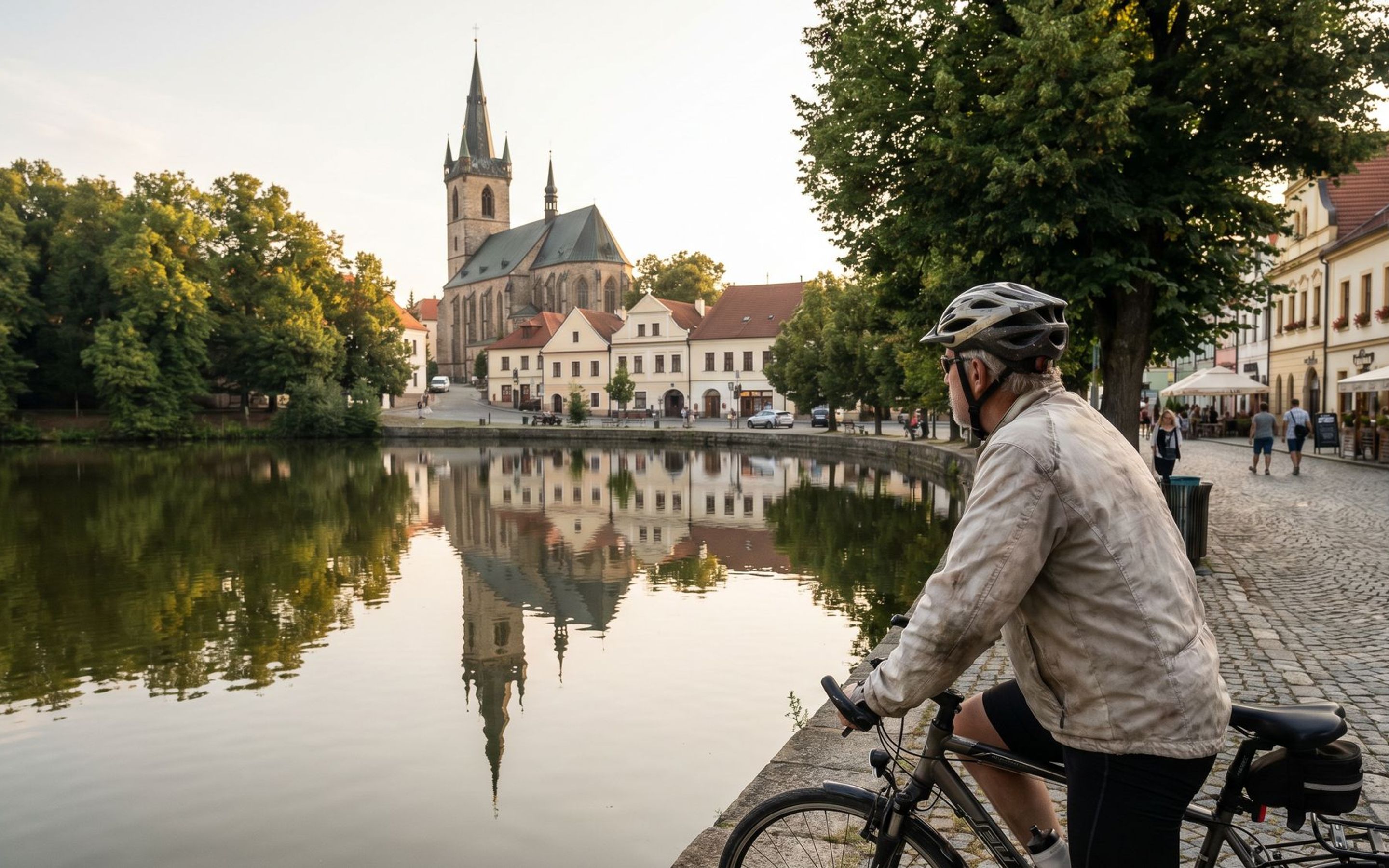
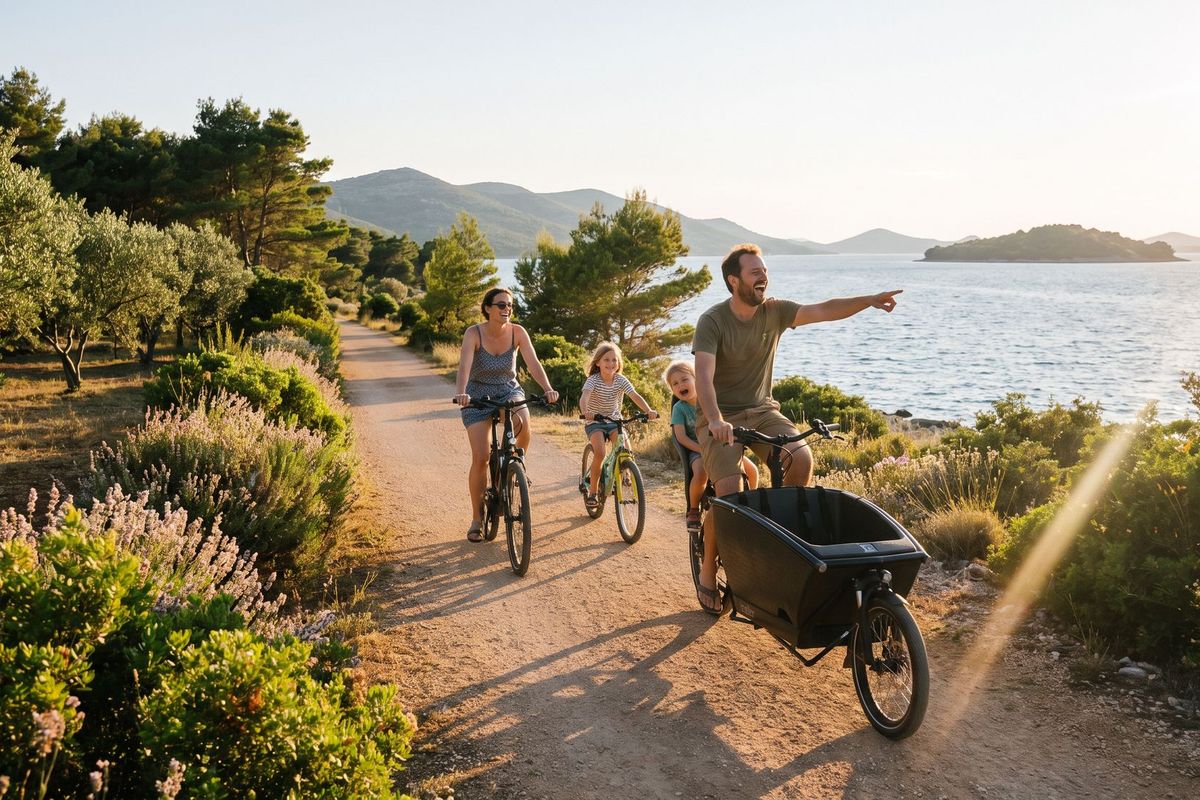
You reach the edge of a South Bohemian town in the late afternoon, the kind with a market square, a church spire and a fishpond glinting at its back. Your legs have done maybe forty easy kilometres of riverbank and forest track. Your bag is already at the hotel, carried ahead while you rode. Ahead of you is a beer that costs less than a coffee back home, a plate of something slow-cooked, and a walk around cobbled streets emptying of day-trippers. This is what a cycling day in the Czech Republic tends to feel like: unhurried, quietly historic, and gentler on the body than the castle-topped hills would suggest.
That gentleness is the thing most guides miss, and it is the reason to plan Czech Republic cycling holidays around water. Almost every great route here follows a river downstream — the Vltava out of Bohemia, the Elbe towards Germany — so the current does much of the work. This guide covers where to ride (Prague, South Bohemia, Moravia), when to go, how hard it actually is, and the three journeys that use Prague as their hub. If you have been weighing the Czech Republic against France or Italy, this should tell you quickly whether it is right for you.
The short answer: it offers the scenery and history of Central Europe on some of the calmest, best-signed cycle paths on the continent, at prices well below Western Europe. The country has more than 40,000 kilometres of marked cycle routes, one of the densest networks anywhere, and a good share of it runs traffic-free along rivers and disused railway lines.
The longer answer is about how the landscape is shaped. Bohemia and Moravia are gently rolling rather than mountainous, and the rivers cut natural low-gradient corridors through them. Ride the Vltava or the Elbe and you spend the day beside water, passing Renaissance towns, baroque chateaux and dark pine forest, with the hills as a backdrop rather than an obstacle. The Elbe Cycle Route alone runs some 1,200 kilometres from the Czech Republic to the North Sea and is regularly rated among Europe's finest long-distance rides.
There is also the density of things to stop for. In a single day you might pass a UNESCO-listed old town, a Gothic ruin, a working brewery and a chain of medieval fishponds. Four EuroVelo routes — 4, 7, 9 and 13 — thread roughly 2,100 kilometres across the country, so the Czech network also connects neatly into wider European tours. You can read more about the national picture on EuroVelo's Czechia pages.
The Czech cycling season runs from May to September, and for most riders the sweet spots are May–June and September. Late spring gives you flourishing countryside, long daylight and quiet paths before the summer holidays; early autumn brings warm afternoons, the first young wine in Moravia and thinner crowds in Český Krumlov and Prague.
July and August are perfectly ridable and warmest, but they are also the busiest months in the honeypot towns, so book accommodation early if you travel then. The shoulders of the season — April and October — can be lovely, but pack layers: mornings can be cold and the weather less settled. Winter is not a cycling proposition here.
If you are combining the Czech Republic with a wider Central European trip, the same window suits Austria and Germany, which is why the cross-border routes described below run on similar calendars. Before you travel, it is worth a quick check of the FCDO's Czech Republic travel advice for entry requirements and any local updates.
Three areas do most of the work for visiting cyclists: Prague as a base and gateway, South Bohemia for river-and-castle riding, and Moravia for wine. Each has a different character, and knowing which one you are drawn to makes choosing a trip far easier.
Yes — both as a city to ride and as a launch pad. Prague has over 400 kilometres of marked cycle routes, from riverside paths along the Vltava to leafy park trails and quiet lanes above the castle. It is one of Europe's fastest-improving cycling cities, and a day of easy Prague bike tours — Old Town, the river islands, the parks of Petřín and Stromovka — is a fine way to shake off the flight before a longer route begins.
Cycle from Prague to Dresden – Discover castles, river valleys, and medieval towns on this scenic ride through Bohemia and Saxony along the Elbe Cycle Path.
Just as important, Prague is where the country's best point-to-point journeys start or finish. That makes a Prague cycling tour easy to bolt onto a wider trip: fly in, spend a day or two in the city, then ride out along the river. Almost every itinerary below either begins or ends here, so you rarely need complicated internal transfers.
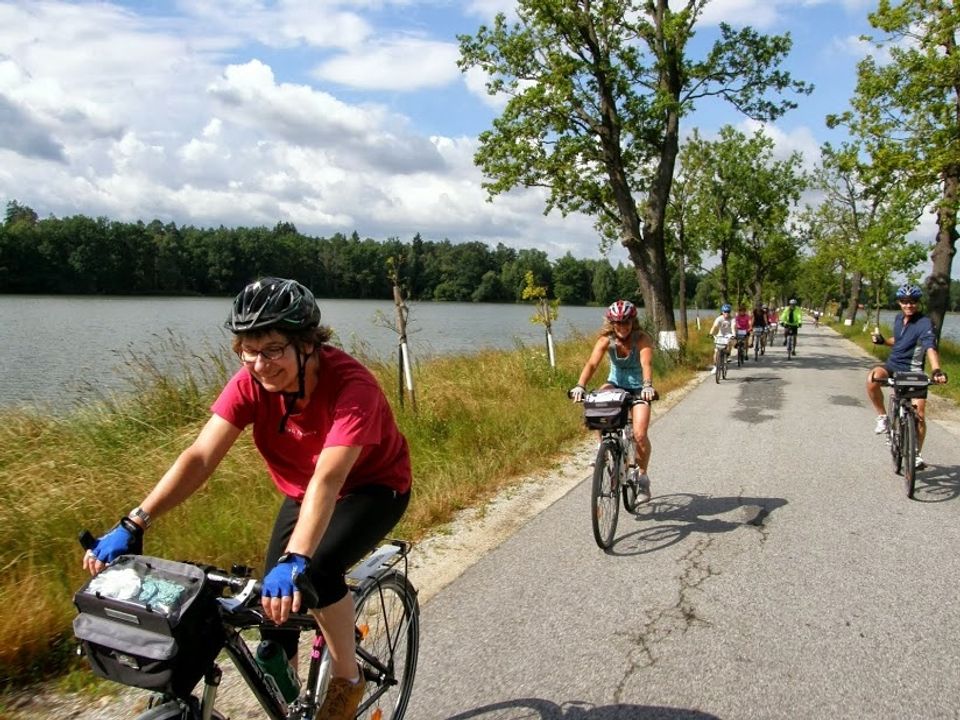
South Bohemia is the region most people picture when they imagine cycling here, and with reason. It is a landscape of wide rivers, dark forest, storybook villages and, unusually, water: the region holds more than 7,000 artificial fishponds, many dug in the Middle Ages and now stitched into the cycle network. Riding here means flat-to-gentle terrain, glassy reflections, and a stop every few kilometres worth getting off the bike for.
At its heart is Český Krumlov, a UNESCO World Heritage town wrapped in a loop of the Vltava beneath a huge castle. A cycling holiday in Český Krumlov in the Czech Republic tends to use the town as either a start or an overnight highlight rather than a base for loops — the joy is riding to and from it along the river. The regional capital, České Budějovice, is the home of the original Budweiser Budvar brewery, which tells you something about how the evenings go.
If the food and the glass matter as much as the ride, Moravia is the region to target. The east of the country is Czech wine country, and the Moravian Wine Trails form a network of more than 1,200 kilometres of dedicated cycle paths linking vineyards, cellars and historic towns — one of the most extensive wine-cycling regions in Europe, developed steadily since 1999. Around Mikulov, beneath the limestone Pálava hills, the riding is gentle and the cellar doors are frequent.
Cycle from Prague to Vienna – Explore the Czech Republic and Austria by bike on this scenic Greenways route through forests, castles, and UNESCO-listed towns.
Moravia rewards a slower pace: shorter days, a long lunch, an afternoon tasting, and a quiet borderland with Austria that sees few crowds. It suits couples and small groups who want the cycling to give shape to the day without dominating it. This is the region for the Foodie and Wine Cyclist who wants to ride through the vineyards and actually drink the wine.
Here is where the Czech Republic's geography pays off. Because the great routes follow rivers, the classic bike trips from Prague are point-to-point journeys that run mostly downhill in feel, if not in strict elevation. Every tour on Pedal Ventures is handpicked from local operators who know these paths, and three stand out. They are listed easiest first.
If you want the most relaxed introduction to the country, the Prague to Dresden route is it. Rated difficulty 1 — the gentlest tier — this five-night ride follows the Vltava and then the Elbe out of the Czech capital, across the German border and into Saxony. The daily distances are short, the terrain is mostly flat, and you are beside water for much of it.
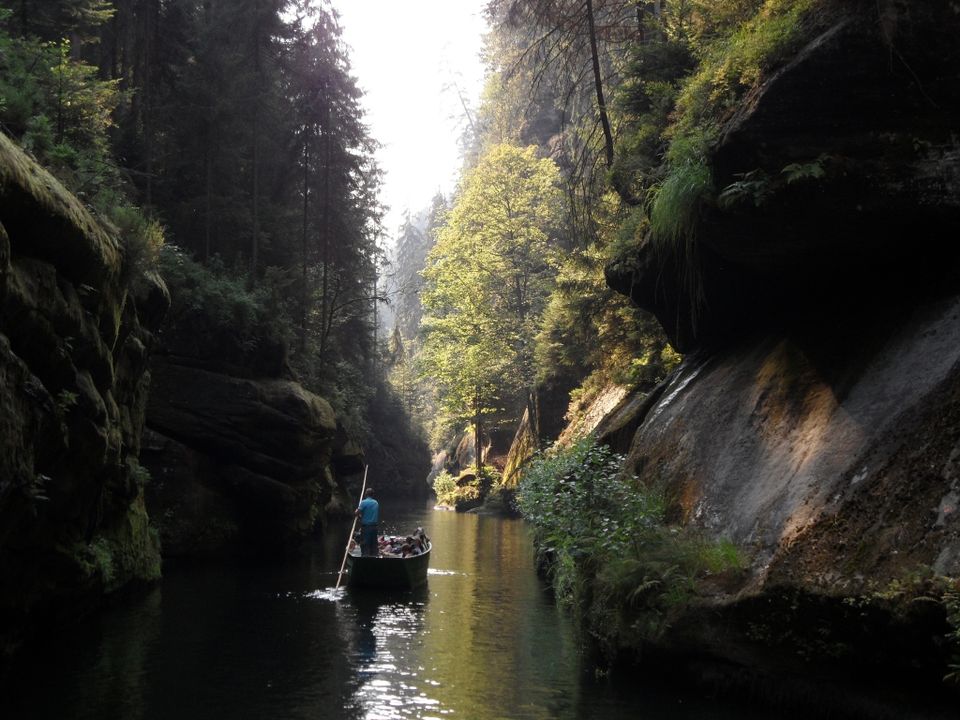
The scenery does not stay tame despite the easy riding. You pass the fairytale castles of Central Bohemia, the wooded Czech Middle Mountains, and the sandstone towers of the Czech-Saxon Switzerland National Park, where you can walk beneath Pravčická brána, the largest natural rock arch in Europe. There is history too: the sobering Terezín Fortress, and the mighty Königstein above the Elbe. The route finishes in Dresden, with its restored baroque skyline. It is ideal for first-timers, older riders and anyone who wants light days with genuinely big scenery.
The Greenways from Prague to Vienna is the country's signature long-distance ride and, at difficulty 2, a step up but still comfortably within reach of most leisure cyclists. The Prague–Vienna Greenway links the two capitals across roughly 450 kilometres, with typical daily stages in the region of 55 to 60 kilometres, through Renaissance towns, deep forest, lakeside trails and vineyard hills.
The highlights read like a tour of Central Europe in miniature: Český Krumlov early on, the tranquil woodland of "Czech Canada" along the Austrian border, the Renaissance squares of Třeboň, Telč and Znojmo, wine in South Moravia, and finally the grand avenues of Vienna. It is a fortnight's worth of variety in a week or so of riding, and it connects naturally to the wider Danube network — if you have ridden the Wachau Valley in Austria, this is the route that reaches it. The national tourism board has a good overview of the Greenways Prague–Vienna if you want to dig into the stages.
For the most rewarding week of riding, the Bohemian Rivers and Castles route from Český Krumlov to Prague turns the country's geography around and follows the Vltava north over seven nights. Rated difficulty 3, it has moderate daily distances on quiet or traffic-free routes, and it packs in an extraordinary run of landmarks for the effort.
You start in UNESCO-listed Český Krumlov and ride through České Budějovice — the beer capital — past the romantic Hluboká Chateau, over the historic bridges of Písek and through the mining town of Příbram. The final stretch crosses the quiet backroads and former military tracks of the Brdy Hills, passes Gothic ruins, and overnights near the iconic Karlštejn Castle before a scenic riverside run into Prague. It is the trip for couples and small groups who want their days to feel like a proper journey, arriving somewhere different each evening.
Easier than most people expect, provided you pick the right route. This is the honest part that vague guides skip. Pedal Ventures uses a numbered difficulty scale, and the three Czech journeys sit neatly across the gentle end of it: Prague to Dresden at 1, the Greenways at 2, and Český Krumlov to Prague at 3. None of them is a mountain challenge.
What makes the country genuinely accessible is the terrain. Riding downstream along the Vltava and Elbe means long, low-gradient stretches rather than sustained climbs, and much of the surface is dedicated cycle path or quiet lane. The hills are there — this is Central Europe, not the Netherlands — but they are rolling rather than alpine, and the rivers route you around the worst of them.
If your fitness or your group's range is a concern, this is a good place to consider e-bikes, which flatten the occasional rise and let mixed-ability groups ride together comfortably. Bikes and helmets can be hired through the local operators, so you do not need to fly your own out. For the Active Couple weighing a first European tour, or a Friends Group with a spread of abilities, the Czech Republic is one of the more forgiving places to start.
Most Czech routes are offered both guided and self-guided, and both are well supported. On a self-guided cycling holiday your luggage is transferred ahead each day, you navigate with GPX files and offline maps on your phone, your accommodation is booked and mapped, and there is a 24/7 assistance hotline if anything goes wrong. You ride at your own pace and stop where you like, which suits couples and independent travellers. Guided versions add a tour leader and a support minibus for those who prefer company and a safety net.
Either way, the planning complexity is taken off your plate — luggage transfers, hotels and route notes are sorted, so the day is just the riding and the places. A few practical notes worth knowing: flights, travel insurance and a small local accommodation tax of roughly one to two euros per person per night are not included in tour prices, and bikes and helmets are hired locally rather than supplied as standard.
One point that matters at this price. Pedal Ventures is a marketplace that connects you to handpicked local operators rather than a tour operator running its own trips, and bookings are protected by PTS financial protection — so your money is safe if either Pedal Ventures or the operator were to fail. On a holiday that typically runs to a few thousand pounds, that protection is worth having, and it is the kind of reassurance that lets you book with confidence.
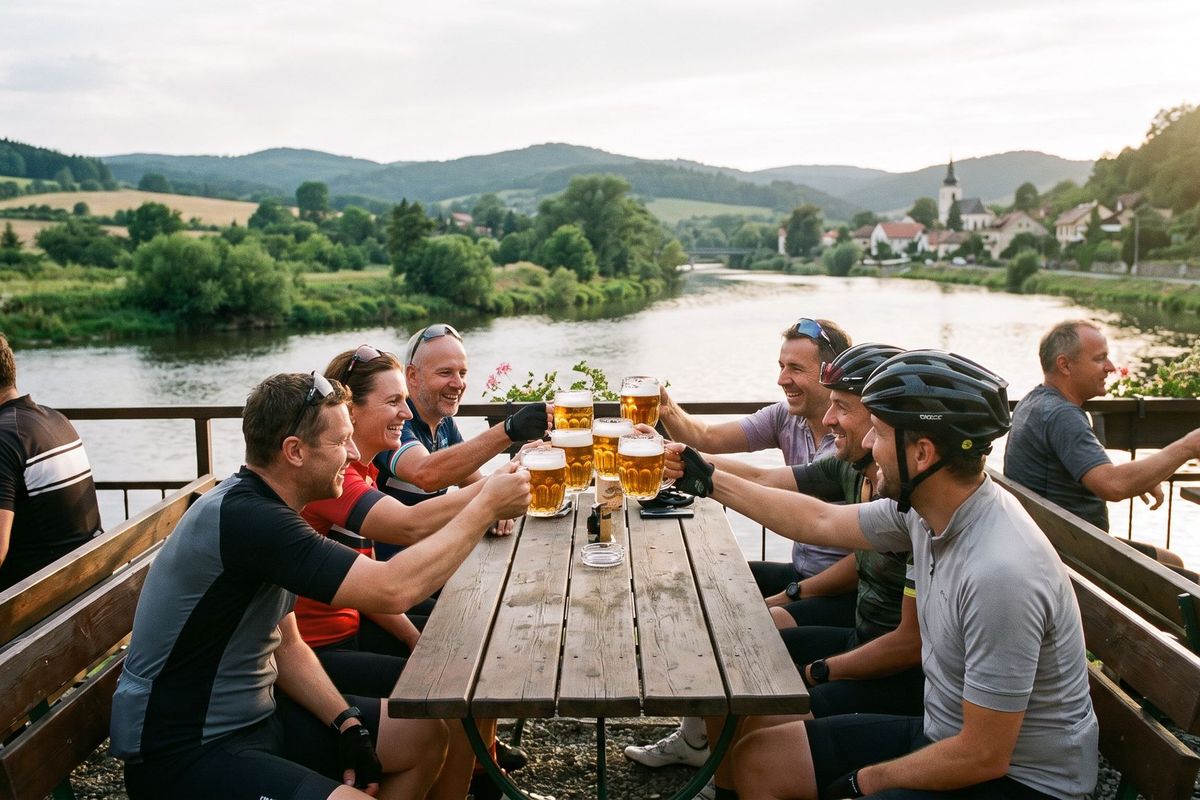
This is where the Czech Republic quietly outperforms. Beer is central to the culture and genuinely good: České Budějovice is the home of the original Budvar, and most South Bohemian towns have a brewery or a beer garden where a well-earned pint costs a fraction of what it would in Western Europe. The food is hearty and made for hungry cyclists — slow-cooked meats, dumplings, hot soups in a bread bowl — the kind of plate that tastes exactly right after forty kilometres on the bike.
Cross into Moravia and the emphasis shifts to wine. The vineyards around Mikulov and the Pálava hills produce crisp whites and easy reds, poured in cellar doors that sit right on the cycle trails. The rhythm of a Moravian day — ride in the morning, lunch and a tasting in the afternoon, roll gently to the next town — is the clearest expression of what these holidays are really about. The cycling gives the day its shape; the food, the wine and the evenings give it its substance.
If any of this sounds like your kind of trip, you can browse cycling holidays in the Czech Republic and compare the routes side by side.
Yes. It has one of the densest and best-signed cycle networks in Europe — more than 40,000 kilometres of marked routes — with gentle river-valley terrain, UNESCO towns, castles and low prices. Because the best routes follow the Vltava and Elbe downstream, it rides more easily than its landscape suggests, which makes it a strong choice for first-time and leisure cyclists.
For the easiest introduction, the Prague to Dresden route along the Vltava and Elbe is hard to beat, rated at the gentlest difficulty tier. For a classic long-distance journey, the Greenways from Prague to Vienna links two capitals over around 450 kilometres. For a week of castles and rivers, the Český Krumlov to Prague route is the most rewarding.
Yes. The Prague–Vienna Greenway is a waymarked long-distance route of roughly 450 kilometres, usually ridden over about a week with daily stages of 55 to 60 kilometres. It passes Český Krumlov, the Renaissance towns of Třeboň, Telč and Znojmo, and the wine country of South Moravia before reaching Vienna.
You do not need a car. The signature Czech trips are point-to-point journeys that start or finish in Prague, with luggage transferred between hotels each day and transfers arranged to and from the start and end points. On self-guided trips you navigate with GPX files and offline maps, so you simply ride from town to town.
May to September is the cycling season, with May–June and September usually the most pleasant for South Bohemia and Moravia — warm but not crowded, with spring countryside or early-autumn wine. July and August are warmest and busiest, so book accommodation early if you travel then.
Prices vary by route, length and whether you choose guided or self-guided, but the Czech Republic is generally better value than France or Italy. Tour prices usually exclude flights, travel insurance, bike hire and a small local tax of around one to two euros per person per night, so factor those in when you compare options.