Find it cheaper, we’ll match the price
Pedal Ventures

Luxury Cycling Holidays: Premium Bike Tours Across Europe

The Evolution of High-End Travel: Solving the Luxury Cycling Paradox

Luxury cycling holidays represent a genuine fusion of athletic ambition and five-star hospitality — a pairing that, until recently, most travellers assumed was impossible to achieve.

The core tension is real. Rigorous climbs, long days in the saddle, and sweat-soaked jerseys sit awkwardly alongside Michelin-starred dinners, boutique château stays, and marble bathrooms. This is the luxury paradox: physical exertion and elite comfort seem to cancel each other out. In practice, however, the friction comes not from incompatibility but from poor execution.

Common pain points travellers report include logistical chaos (wrong bike sizes, no support vehicles), inadequate nutrition on the road, and the jarring mismatch between a tour's marketing imagery and its on-the-ground reality. Generic group tours — built around volume, not experience — consistently underdeliver for performance-minded riders who refuse to sacrifice comfort.
The market has responded with a decisive shift. The segment now centres on hyper-curated, performance-oriented itineraries where every logistical detail is resolved before a guest clips into a pedal. Explore what genuinely elevated cycling experiences look like when curation replaces compromise. The next question is: what specific elements actually define that standard?

The Core Elements of an Elite Cycling Experience

Elite luxury cycling holidays are defined by three non-negotiable pillars: equipment precision, seamless on-road support, and intelligent curation. Without all three working in concert, the experience collapses into an expensive guided ride.

Mechanical excellence sets the foundation. Access to high-modulus carbon fibre frames and electronic shifting — the same components professionals race — transforms how riders interact with demanding terrain. Whether climbing Tuscan switchbacks on cycling holidays in Italy itineraries or descending Alpine passes, precision equipment removes friction between intent and performance.

Pro-level support elevates the experience further. Sag wagons shadowing the route, on-road nutrition delivered at calculated intervals, and expert mechanics available at a moment's notice mirror the infrastructure of professional racing teams — applied to the civilian rider.

Curation, however, is what truly separates elite operators from volume-based tour companies. Hand-picked routes and boutique property selections prioritise authenticity and flow over sheer mileage. A well-curated day builds rhythm — challenging climbs rewarded with meaningful descents, stopping points chosen for scenery rather than convenience.

Taken together, these elements point toward a broader question: what does "luxury" actually mean once you've left the hotel lobby and clipped into the pedals?

Defining Luxury in the Context of Sport

True luxury in cycling isn't about thread counts — it's about frictionless logistics that remove every obstacle between you and peak performance.

Frictionless logistics define what separates premium luxury bike tours from standard guided experiences. Route permits, vehicle transfers, bike fitting appointments, and hotel check-ins are handled invisibly, so riders focus entirely on the road. Personalised pacing plans and dedicated support vehicles mean no cyclist is left managing details mid-ride.

The after-ride recovery environment is equally non-negotiable. Sports massage, compression therapy, and thermal spa access aren't indulgences — they're performance infrastructure that keeps riders fresh across consecutive days in the saddle.

The culinary component completes the picture. Michelin-starred dinners offer technical brilliance, but authentic regional dining — a family-run trattoria, a cave-aged cheese producer — often creates the most memorable experiences. The smartest itineraries balance both.

This layered definition of luxury — logistical, physical, and gastronomic — sets the framework for understanding why certain destinations consistently outperform others, a question worth exploring through the lens of Europe's most celebrated riding corridors.

Anatomy of a Premier European Route: Geography of Excellence

Europe's top cycling destinations endure as the gold standard because geography, climate, and culture align in ways no engineered route can replicate.

The region you choose defines the entire character of your ride. Cycling holidays in Mallorca attract serious riders for precisely this reason — the island's Serra de Tramuntana delivers lung-searing elevation and technical switchbacks within minutes of smooth coastal rollers. Tuscany and Provence offer a counterpoint: undulating terrain manageable for a wide fitness range, framed by vineyards and medieval hilltowns that reward a slower pace.

Contrast that with the Dolomites, where sheer vertical gain demands genuine climbing legs, against Portugal's Douro Valley, where terraced vineyards and river-valley gradients suit riders seeking scenic challenge without the alpine brutality.

Seasonal timing is non-negotiable. Southern Europe's optimal riding windows run April–June and September–October — mild temperatures, minimal tourist congestion, and dry roads.

One practical approach gaining traction is routing through lesser-known corridors; gentler wine-country riding in regions like Bordeaux exemplifies how off-the-beaten-path itineraries deliver genuine luxury through exclusivity rather than prestige alone. This diversification trend is accelerating across premier European programmes. The next logical stop on any serious European cycling itinerary brings us squarely to the Iberian Peninsula.

Cycling Holidays in Mallorca and Spain

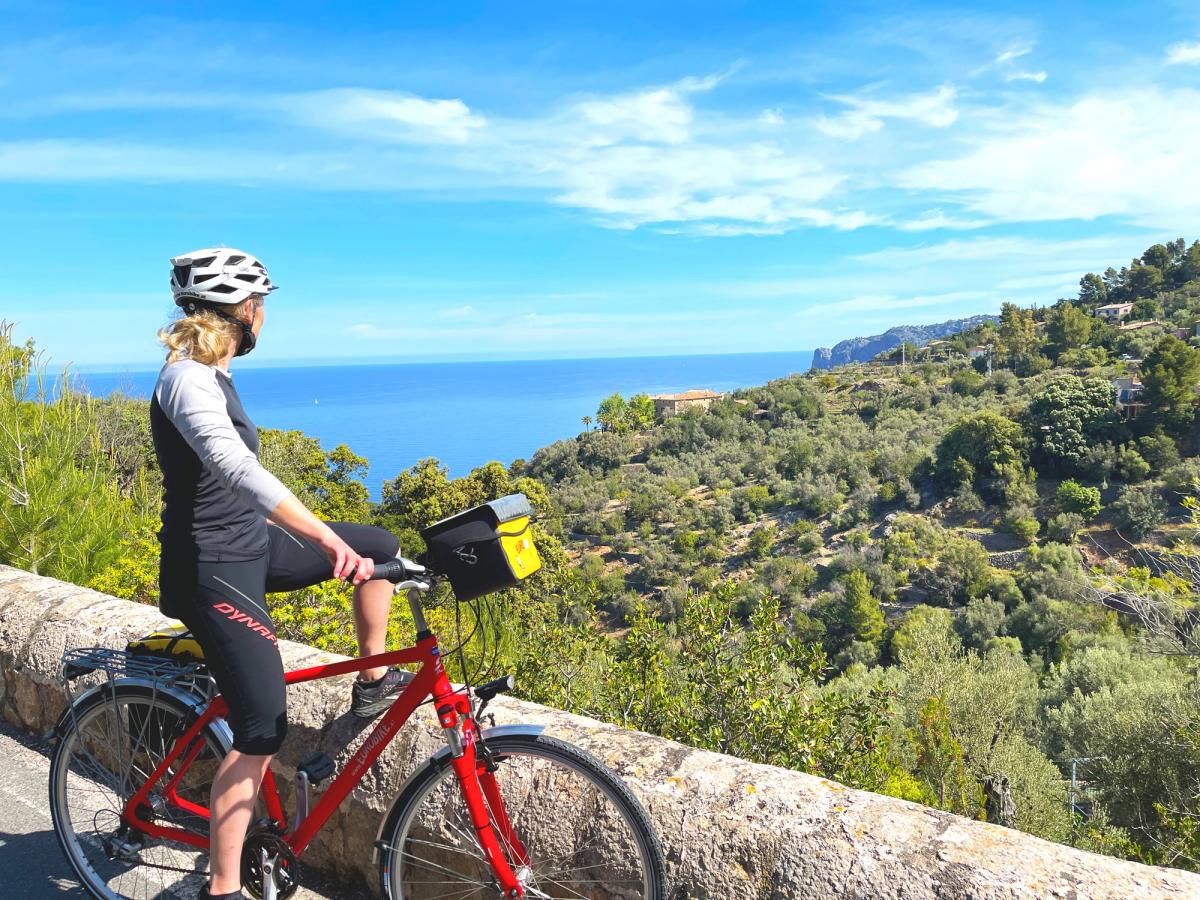
Spain's Mediterranean coastline and mountain terrain make cycling holidays in Spain among the most sought-after on the continent — combining dramatic climbs with year-round rideable conditions.

Sa Calobra in the Tramuntana Range is a bucket-list climb for serious luxury travellers, delivering 9.5 kilometres of technical switchbacks and 685 metres of elevation gain within a UNESCO World Heritage landscape. Girona, meanwhile, has become the professional peloton's adopted home base, its cobbled streets and iconic café culture shaping a local riding scene that blends elite athleticism with relaxed Mediterranean rhythm. Spring (March–May) and autumn (September–October) offer ideal temperatures — cool enough for sustained effort, warm enough for post-ride terrace dining. Whether you prefer guided or independent riding, Spain rewards both approaches generously. The Italian and French classics offer a comparable depth of culture and terrain — explored next.

The Italian and French Classics

Italy and France define the gold standard for luxury cycling holidays, where Renaissance art, Alpine grandeur, and world-class cuisine converge on the same route.

Tuscany's Strade Bianche — those famous white gravel roads winding past cypress-lined estates — combine raw, challenging terrain with access to boutique wine country hotels that charge upward of £500 per night. Cycling holidays in France, meanwhile, carry the gravitational pull of Tour de France mythology: climbing Alpe d'Huez or rolling through Provence's lavender fields delivers an experience no itinerary description fully captures. Premium-supported European cycling tours typically range from £4,000 to £10,000+ per person per week, reflecting five-star accommodation, private vehicle support, and curated gastronomy. That cost differential — versus a self-guided trip — is precisely where provider quality becomes the deciding variable.

A New Framework: The 'Tiered Support' Evaluation Methodology

Genuine luxury cycling holidays are defined by infrastructure, not itinerary descriptions. As the European market has expanded — from the sun-baked climbs of Mallorca and Tuscany to emerging routes like cycling holidays Portugal — the gap between operators using luxury as a marketing label and those delivering it operationally has widened considerably.

Evaluating a provider starts with three measurable tiers:

  • Fleet quality: High-performance rental bikes should include current-model carbon frames, electronic groupsets, and precise fit protocols — not last season's alloy inventory
  • Guide-to-rider ratio: Meaningful support means one guide per six to eight riders, not one per fifteen
  • Local vs. global expertise: Regional specialists often outperform large global operators on route intelligence, hotel relationships, and real-time problem-solving

Local expertise is frequently the deciding variable. A guide who has ridden a specific valley for a decade understands micro-weather patterns, road surface changes, and off-menu lunch stops that no head-office briefing document captures.

In practice, distinguishing genuine luxury from polished brochure language requires looking past photography and directly at service metrics — staff ratios, bike specifications, and verifiable guest reviews. Those metrics are precisely where the next evaluation layer begins.

The Support-to-Rider Ratio Benchmark

Full support on guided cycling holidays is defined by numbers, not narrative. The benchmark standard is one guide per eight to ten riders, a dedicated sweep vehicle, and at minimum one trained mechanic embedded in the group.

  • Lead guide: Sets pace, navigates, manages group dynamics
  • Sweep guide: Trails the last rider — no one is left behind
  • Forward-scout vehicle: Pre-positions luggage, snacks, and mechanical support at planned stops

The sweep role is the clearest signal of genuine infrastructure. Community-sourced tour reviews consistently highlight sweep coverage as the metric most correlated with rider satisfaction — above accommodation ratings.

Bold callout: If a company can't specify its sweep protocol, treat that as a red flag.

When researching providers, filter reviews for mentions of "mechanical support," "wait times," and "vehicle availability" rather than scenery descriptions. Those service-layer details reveal true operational depth — and they matter just as much on a multi-day Central European route as on a marquee Alpine tour. The quality of the bikes themselves, examined next, is equally revealing.

Technical Fleet Standards

The bicycle fleet defines the luxury tier as clearly as the hotel does. At the premium level, operators are expected to provide bikes built around Shimano Ultegra or SRAM Rival groupsets at minimum, with carbon wheelsets and professional fit sessions conducted before the first day's ride.

Groupset level is a reliable quality proxy — a Tiagra-equipped rental signals a mid-market operation regardless of how the brochure reads. Saddle height, cleat position, and stem length adjustments should be standard, not an upsell.

Premium E-bikes have become increasingly central to the luxury segment, particularly for family cycling holidays and mixed-ability groups where one rider's fitness shouldn't cap another's itinerary. Well-configured E-bikes allow varied pace without splitting the group.

For those shipping personal bikes internationally, logistics require careful coordination — airline damage waivers, transfer timing with the support vehicle, and compatible tool kits. These details carry real financial weight, which brings us naturally to the broader question of what premium cycling actually costs.

Financial Planning: The Real Cost of Premium Pedalling

Premium cycling holidays demand honest budget planning before the first kilometre is ridden. The price gap between self-guided and fully-supported luxury tours is substantial — fully-guided packages typically run £400–£700 per person per day, while self-guided alternatives sit closer to £150–£280.

Hidden costs routinely catch first-timers off guard. Gratuities for guides and support staff typically add 10–15% to the total, specialised cycling travel insurance runs £60–£150 per trip, and alcohol supplements at luxury properties can add £40–£80 per night beyond the stated rate.

Regional pricing across Europe also varies meaningfully. Western destinations — Provence, Tuscany, the Dolomites — command the highest premiums. Central European routes, such as cycling the Danube corridor, offer comparable service quality at noticeably lower daily rates, making them worth serious consideration. Understanding where your budget actually lands shapes every other decision that follows.

Average Daily Spend and Budgeting

Luxury active holidays command a wide price band, and knowing the realistic daily figures prevents sticker shock at checkout. For 2025–2026, five-star cycling packages typically run £400–£950 per person, per day on an all-inclusive basis — covering premium accommodation, gourmet meals, guide fees, and bike rental. Fully custom or private departures push that ceiling higher.

All-inclusive pricing is almost always the better value metric. À la carte touring, where you pay for meals, transfers, and guiding separately, can appear cheaper upfront but routinely lands in the same range once itemised. A self-guided luxury route through Austria's lake district, for example, illustrates how accommodation and bike costs stack quickly on a multi-day itinerary.

Single-occupancy supplements represent one of the sharpest hidden costs in premium cycling travel — typically adding 30–50% to the per-person daily rate. Private custom departures carry an even steeper premium, often £250–£500 extra per day, reflecting dedicated guide time and exclusive venue buyouts. Budgeting for these variables from the outset determines whether a trip is genuinely affordable or financially stressful mid-tour — a critical calculation that feeds directly into the broader question of how self-guided and fully-supported formats compare on total value.

Self-Guided vs. Fully-Supported Economics

The choice between self-guided and fully-supported touring reshapes your entire budget equation. A support vehicle, daily luggage transfer, and on-call mechanic typically add £120–£240 per person per day — but that figure buys genuine peace of mind on a route like a Provence cycling holiday, where a mechanical failure on a remote lavender-lined climb could otherwise derail the afternoon entirely.

Self-guided luxury makes sense when flexibility outweighs security. Riders who prefer setting their own pace, skipping a stage, or lingering over lunch without a group schedule benefit most from self-guided formats. The trade-off is real, though: you carry responsibility for navigation errors, bike issues, and luggage logistics yourself.

Beyond the core support question, premium operators increasingly bundle value-adds that shift the calculus further:

  • Professional photography packages (£150–£400 per trip) deliver edited images without disrupting your ride
  • GPS device rentals (£12–£25 per day) reduce navigation anxiety on unfamiliar terrain
  • Daily laundry service eliminates overpacking and lightens your load considerably

For multi-stage routes — including riverside itineraries through Central Europe — luggage transfer alone can justify the fully-supported premium. Once you've clarified which model fits your travel style, the next challenge is matching that choice to the right route and operator.

Decision Criteria: Choosing Your Ideal Route and Operator

Selecting the right route and operator is the single most important decision you'll make when planning bespoke cycling holidays — it determines satisfaction far more than any hotel upgrade.

Matching ability to difficulty starts with an honest self-assessment. Before committing, cross-check your weekly mileage against the tour's stated daily averages, review total elevation gain per stage, and confirm whether e-bike options exist for harder days. Reputable operators publish granular difficulty ratings — treat anything vague as a red flag.

Group dynamics shape the luxury experience profoundly. Smaller groups (typically 8–12 riders) allow guides to calibrate pace and foster genuine camaraderie. Independent reviews consistently show that group size is among the top satisfaction factors cited by premium tour riders.

The non-cycling partner problem is real, and elite operators solve it proactively — offering dedicated cultural itineraries, spa access, and private transfers so non-riders feel equally valued rather than sidelined. A scenic alpine cycling route with a parallel sightseeing programme, for example, keeps mixed-ability couples travelling together comfortably.

Vetting safety protocols deserves equal scrutiny. Key criteria include:

  • Emergency response: Does the operator carry first-aid certified guides on every ride?
  • Mechanical support: Is a support vehicle within 20 minutes of the group at all times?
  • Insurance clarity: Are riders covered under the operator's policy, or must they arrange their own?
  • Evacuation plans: Is there a documented protocol for medical or weather emergencies?

Once you've confirmed an operator meets these benchmarks, the next logical question becomes whether the terrain itself matches your physical capacity — which is where understanding elevation data and fitness-based route planning becomes essential.

Matching Terrain to Ability

Terrain compatibility is the most underestimated variable in planning luxury cycling holidays — get it wrong and even a five-star itinerary becomes a slog. When evaluating routes, distinguish between total elevation gain and gradient percentage. A route with 900 metres of cumulative climbing spread across gentle rollers is manageable for most riders; that same gain concentrated in sustained 8–10% gradients is a different proposition entirely.

On self guided cycling holidays, this distinction matters even more, since there's no guide to moderate pace or redirect struggling riders. A practical approach is to map daily elevation profiles before committing, targeting no more than 600–750 metres of gain per day for recreational fitness levels.

Short-cut and extra-loop options are the quiet hallmark of well-designed itineraries — they let stronger riders extend mileage while others take a direct route into town, keeping groups intact without compromising anyone's experience.

The Social and Cultural Component

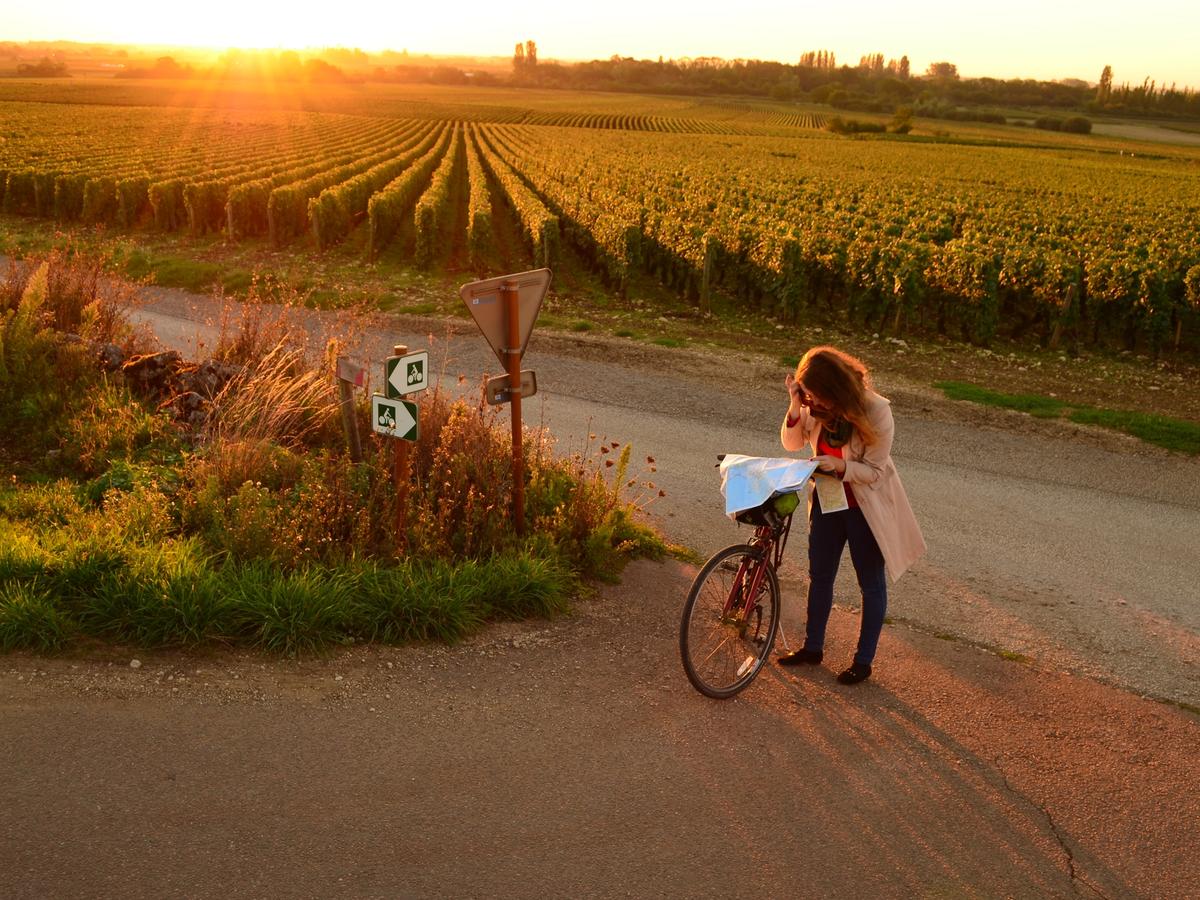
The group dynamic you ride with shapes the entire experience — terrain and hotels matter, but so does whether your fellow cyclists are chasing segment times or stopping to photograph vineyard sunsets.

Performance-focused vs. leisure-focused groups is a real distinction operators make at booking. Scheduled departures on popular cycling holidays in Europe often attract mixed ability levels, so reviewing the operator's stated pace — measured daily mileage and elevation gain — helps you self-select accurately.

Private tours remove that uncertainty entirely. When the group is your own, the itinerary bends to your priorities: longer cultural stops, spontaneous restaurant detours, or harder climbing days when the mood strikes. For groups of four or more, the price premium over scheduled departures frequently narrows to less than 15%.

Sport-sightseeing balance is the sweet spot most riders actually want. The best operators structure itineraries with morning rides followed by afternoon cultural immersion — a rhythm that satisfies both the athlete and the traveller. That balance, however, requires honest self-assessment before you book. Every element of the experience — from pacing to cultural depth — ultimately works within real-world constraints worth examining closely.

Limitations, Considerations, and Trade-offs

Luxury packaging doesn't eliminate the physical demands of cycling — a thread count upgrade won't shorten a mountain pass or soften a headwind. Before committing to any itinerary, understanding the real trade-offs is essential.

The climbs stay the same regardless of the hotel rating. A Douro Valley bike tour routes through steep vineyard gradients that no amount of premium amenities softens on the bike. Curated safety — sweep vehicles, route marking, guided pacing — reduces risk but can also dilute the raw adventure that many cyclists actively seek.

Environmental cost is a genuine consideration. Support vehicles running daily, combined with long-haul flights to reach destinations, generate a meaningful carbon footprint. Responsible operators increasingly offset emissions, but travellers should ask questions directly before booking.

Seasonal windows narrow sharply at altitude. High-mountain routes in the Alps or Pyrenees are typically accessible only between June and September — poor timing can transform a dream itinerary into a weather-compromised slog.

That tension between controlled comfort and unfiltered discovery runs deeper than logistics alone — and it connects directly to how fully you actually experience the destination you've travelled so far to reach.

The 'Bubble' Effect

Luxury insulation can quietly sever the cultural thread that makes a destination worth visiting in the first place. Staying exclusively within international five-star chains risks replacing genuine local texture with a globally standardised comfort formula — the same marble lobby, the same breakfast buffet, whether you're in Tuscany or Provence.

This tension surfaces most sharply on luxury family cycling holidays, where itinerary control often prioritises predictability over spontaneity. The trade-off is real: a curated route through a region's scenic highlights may bypass the unmarked village café, the Saturday farmers' market, or the winemaker who rarely receives organised tour groups. Operators who embed locally owned maisons d'hôtes or boutique agriturismos into their accommodation mix tend to navigate this better than those defaulting to chain properties alone. Those physical and logistical realities — how fatigue accumulates and how environmental conditions complicate even the best-designed routes — deserve equally honest examination next.

Physical and Environmental Realities

Luxury packaging cannot override physiology — fatigue accumulates regardless of how elegant the recovery environment is. In all inclusive cycling holidays, the temptation to push harder because support is close can quietly accelerate overreaching. High expectations often become the hidden obstacle: when guests feel obligated to complete every staged ride, minor fatigue compounds into genuine injury risk. A well-designed tour builds mandatory rest into the itinerary rather than treating it as failure.

The carbon footprint of international cycling travel is a legitimate consideration operators are increasingly addressing. Long-haul flights to reach a trailhead can dwarf the emissions saved by cycling itself. Some providers now offer carbon offset programmes or route designs centred on rail-accessible destinations within Europe, reducing the environmental cost without sacrificing quality.

When bikepacking — self-sufficient, lightweight, route-flexible travel — better fits a rider's temperament and budget, a structured luxury tour isn't the right answer. The two formats serve fundamentally different needs, and recognising that distinction is itself a mark of informed planning. With those realities acknowledged, the core principles that define a worthwhile premium cycling experience are worth distilling clearly — which the key takeaways ahead address directly.

What You Need to Know: Key Takeaways

The true measure of a luxury cycling holiday isn't the thread count on the hotel pillows — it's the quality of support, equipment, and local integration surrounding every mile you ride.

Luxury is support, not just surroundings. Premium bike fit, a well-stocked support van, and knowledgeable guides contribute more to a genuinely exceptional experience than a five-star lobby ever could. On well-run small group cycling tours, that professional-grade logistics infrastructure is what consistently separates a memorable trip from a frustrating one.

Terrain matching is non-negotiable. As covered in the physical realities section, aligning route elevation and daily mileage to your current fitness level is the single most critical planning decision you'll make. No amount of luxury recovery amenities compensates for a route that's fundamentally mismatched to your capabilities.

Budget accordingly. Daily costs for premium European tours typically range from £500 to £950, depending on destination, accommodation tier, and group size. Understanding that range upfront prevents disappointment during the selection process.

With these principles clearly in mind, the next step is knowing exactly which questions to ask a tour operator — and how to apply a practical pre-trip checklist that locks in the right fit before you ever clip in.

Summary of Selection Criteria

Choosing the right luxury cycling tour comes down to asking the right questions before you commit. Whether you're planning cycling holidays for couples or a solo adventure, operators should clearly answer: What is included in the daily support structure? How are bikes fitted and maintained? What is the maximum group size? How much flexibility exists in daily routes? And what happens if weather or injury disrupts the itinerary?

Pre-trip preparation matters equally. Confirm your bike fitting appointment at least two weeks before departure, pack cycling kit suited to variable conditions, and communicate fitness levels honestly with your operator.

The growth of luxury cycling as a travel segment reflects a broader shift — riders increasingly demand both physical challenge and genuine comfort, and the market has responded accordingly.

Frequently Asked Questions

Luxury cycling holidays are designed for curious travellers first, athletes second — not elite competitors chasing podium finishes.

You don't need to be a professional cyclist. Most tours cater to a wide fitness spectrum, with route options graded from leisurely to challenging. Operators explicitly design itineraries around enjoyment and cultural immersion.

Timing matters. Late spring (May–June) and early autumn (September–October) are widely regarded as the optimal windows for European bike touring — mild temperatures, thinner crowds, and better availability at premium properties.

E-bike vs. road bike comes down to terrain ambition and fitness confidence. E-bikes democratise hilly routes; standard road bikes reward riders seeking unassisted challenge. Many operators now offer both within the same group departure.

For deeper guidance on specifications, certifications, and regional regulations governing these choices, the next section points to authoritative resources worth consulting.

Related holidays

Search holidays

Recent posts

View all posts