Bike tour
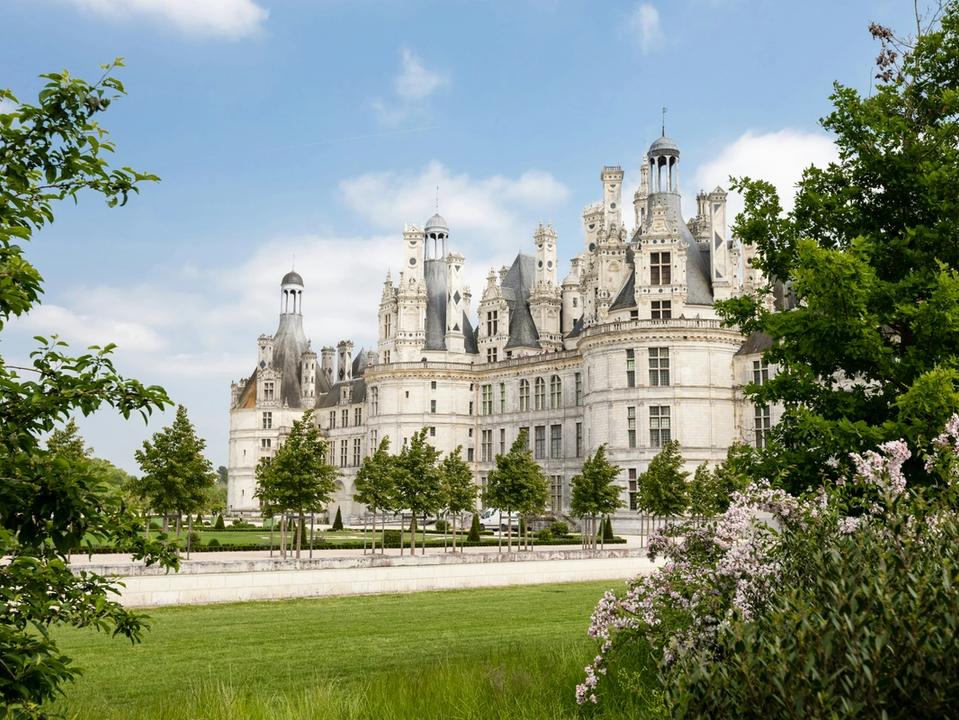
Castles of the Loire Valley
Cycle through the Loire Valley – Discover France’s most iconic châteaux, riverside paths, and historic towns on this relaxed, scenic bike tour.

Rob
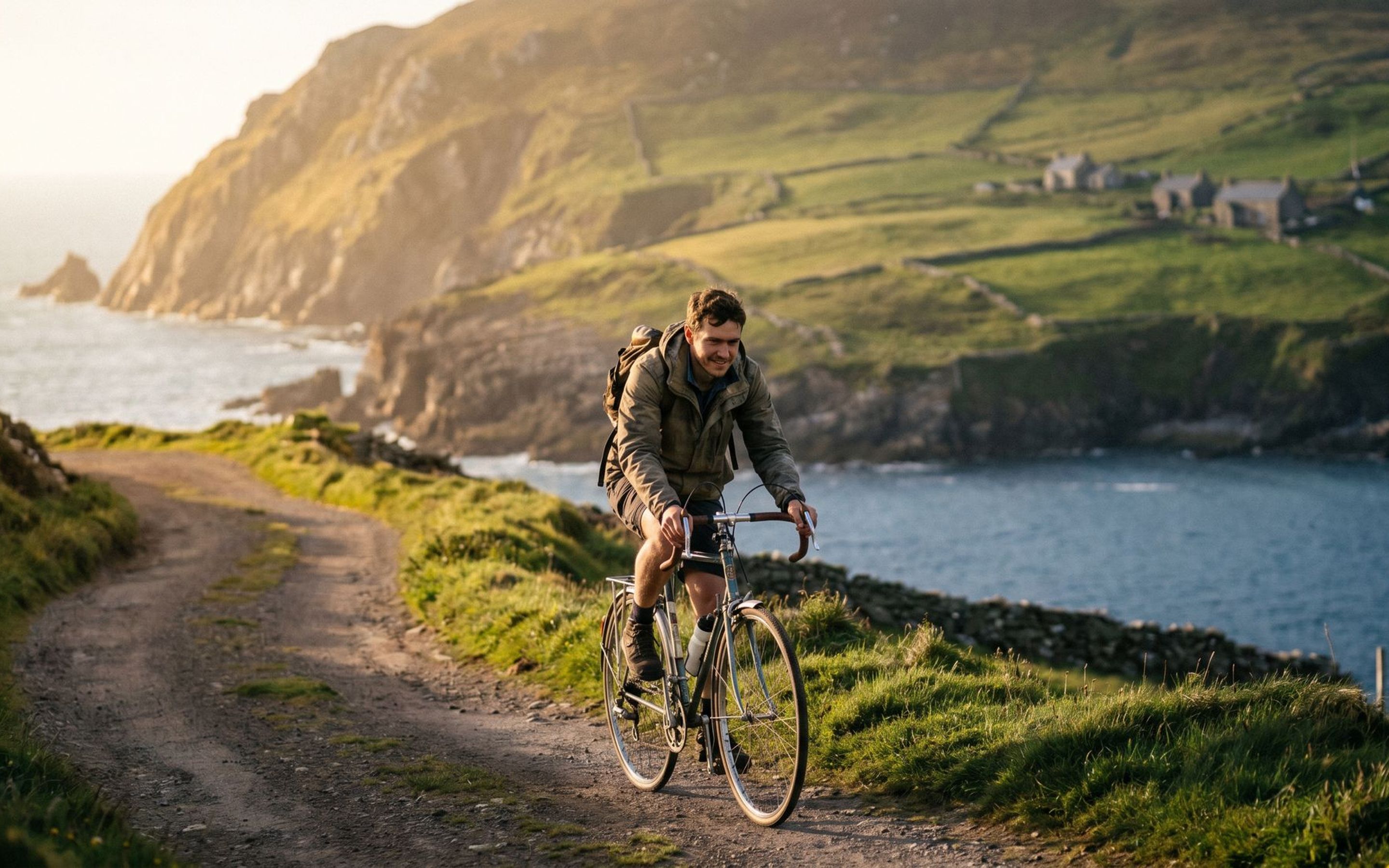
Most people planning a cycling holiday in France think first of the Loire Valley or Provence. Both are excellent choices. But there is a corner of France that does not get mentioned nearly as often as it deserves — a region with more coastline than any other part of the country, a food culture anchored entirely in the sea, and a cycling infrastructure that has been built up over decades to serve tourists who arrive on bikes and stay for a week.
Brittany does not look like the rest of France. It sounds different, cooks different, and weathers different. That is precisely the point. Cycling holidays in Brittany suit cyclists who want something with genuine character — not the France of lavender fields and sun-baked terraces, but the France of Atlantic horizons, fishing villages, cider with every meal, and a Celtic heritage that sits alongside the French one without quite blending in.
This guide covers the best routes, the honest weather picture, when to go, and what to eat. If you already know you want to go, browse Brittany cycling holidays to see what's available.
The first thing to say about Brittany is that it is not a compromise. Cyclists sometimes choose it as a softer alternative to Provence or Burgundy — flatter, easier, less intimidating. That is partly true, but it undersells what Brittany actually offers.
The coastline here is extraordinary in a way that is unlike anything else in France. The Pink Granite Coast in the north — the Côte de Granit Rose — has rock formations that turn deep salmon-pink in the morning light, scattered across a sea that is genuinely Atlantic: cold, clear, dramatic. The Gulf of Morbihan in the south is a sheltered inland sea, dotted with small islands, still enough on calm days to reflect the sky perfectly. The Finistère coast in the far west faces open ocean, where the wind comes straight off the Atlantic with nothing in its way since Ireland.
The cycling routes follow these coastlines closely. This is not countryside cycling with occasional sea views — it is coastal cycling in the proper sense, with the smell of salt and seaweed present for hours at a time.
Inland Brittany offers something different again: bocage country, small fields divided by dense hedgerows on earth banks, quiet lanes connecting medieval market towns. The terrain rolls gently, the roads are nearly empty, and the pace of life slows in a way that the more tourist-heavy regions of France never quite achieve.
Distance: Around 80km. Difficulty: Easy to moderate.
The northern coast route runs through Perros-Guirec and along the most visually distinctive stretch of Brittany's coastline. The rock formations here — massive boulders in shades of pink and ochre, smoothed by thousands of years of Atlantic weather — make this one of the most photographed cycling routes in France. The road is quiet, the gradient gentle, and the stops frequent: small harbours, seafood restaurants, and viewpoints over the sea.
This is the right route for a first trip to Brittany, or for cyclists who want a manageable daily distance with high visual reward. Expect 25–40km per day depending on how much time you spend in the villages.
Distance: Around 65km. Difficulty: Moderate.
The southern route circles the Gulf of Morbihan — a vast sheltered bay that feels more like an inland lake than a tidal estuary. Vannes, the gateway town, has a well-preserved medieval centre; from there the route loops around the gulf through small fishing villages and past oyster beds that supply restaurants across France. The Île-aux-Moines sits in the middle of the bay, accessible by a short ferry crossing, and worth an hour's detour.
The Morbihan coast is known for its Belon oysters — flat, slightly metallic, quite unlike the Pacific oysters that dominate most restaurant menus in the UK. If you eat oysters, this route is a reason in itself to visit.
Distance: Around 100km. Difficulty: Moderate to challenging.
For cyclists who want more distance and more drama, the southern coastal route through Carnac — home to the famous megalithic stone alignments, over 3,000 standing stones arranged in rows across open moorland — continues along clifftop paths to the Ria d'Etel, a winding tidal inlet that floods twice daily. The cycling here is more demanding, with coastal headlands that require genuine climbing, but the reward is proportionate: views back along the coast, small harbours where fishing boats unload directly onto the quay, and the sense that this is a stretch of Brittany that most visitors never reach.
Brittany forms the northern section of the Vélodyssée, a signed EuroVelo route that runs 1,200km down the French Atlantic coast from Roscoff to the Spanish border. Cyclists tackling this as a complete journey pass through Brittany in the first few days; those visiting Brittany specifically can use sections of the route as the spine of a self-guided holiday, combining coastal paths with inland detours into the bocage.
Brittany's coastal routes are among the more manageable in France. Most days on the Pink Granite Coast or the Gulf of Morbihan can be kept to 25–40km with minimal significant climbing. The southern coastal routes are harder; inland bocage riding rolls more than it climbs. Cyclists returning to long-distance riding after a gap will find the northern coastal routes particularly well-suited.
Brittany is the wettest region in France. Not consistently wet — the weather changes quickly, and a morning of rain often gives way to an afternoon of clear Atlantic light that makes the coast look extraordinary. But if you are planning a Brittany cycling holiday expecting guaranteed dry days, you will be disappointed.
The honest advice: pack a decent waterproof, treat the rain as part of the experience rather than a problem to be solved, and choose the time of year carefully. May and June give long evenings and the highest likelihood of settled spells. July and August are warmer but busier. September brings quieter roads, lower prices, and the start of the cider-pressing season — arguably the best month of all.
Brittany works particularly well for the Active Couple who want an active holiday without a punishing itinerary, and who would rather spend an afternoon in a fishing village than log another 30km. It is also an excellent destination for friends groups where abilities vary — the flat coastal routes accommodate different paces without anyone feeling held back or left behind. The food culture is a genuine draw for Foodie Cyclists, though the emphasis here is on seafood and cider rather than wine.
The food culture in Brittany is built around the sea, and it is one of the strongest regional food identities in France. Eat here as the locals do: simple, very fresh, with little decoration.
Oysters from Cancale — Cancale, on the northern coast near Mont Saint-Michel, is the oyster capital of Brittany. The oysters are grown on beds visible from the shore at low tide and eaten within hours of leaving the water. Find them at the market stalls along the Cancale harbourfront, eat them standing up with a squeeze of lemon, and pay very little for them.
Moules marinières — Mussels cooked in white wine, garlic, and shallots with a side of frites. Available everywhere, extremely good everywhere. This is the dish that fits the cycling day perfectly: substantial enough to recover on, light enough not to slow you down the next morning.
Coquilles Saint-Jacques — Brittany's scallops, harvested from the Bay of Brest and the waters around the Cotentin Peninsula. Served in their shells with a simple butter sauce or roasted with a herb crust. October through April is the season; if you visit in the autumn you will eat these at their best.
Crêpes and galettes — Brittany invented them. A galette is a savoury buckwheat crêpe; a crêpe is the sweet version. Both appear everywhere and are eaten at any time of day. A galette with ham, egg, and cheese is a perfectly reasonable cycling lunch stop.
Breton cider — The apple orchards of inland Brittany produce a cider that is drier and more complex than most English equivalents. Served cold in ceramic bowls at any crêperie, it is the default drink of a Brittany cycling holiday and one of the better arguments for including it in your plans.
Kouign-amann — A Breton cake made from bread dough folded with butter and sugar, baked until the exterior caramelises and the interior stays soft. Buy it from any boulangerie in the region and eat it at room temperature, ideally after a morning ride.
Brittany has invested seriously in cycling infrastructure over the past two decades. The signed routes are well-maintained, the maps are detailed, the accommodation network is used to cyclists arriving with bags rather than cars, and luggage transfer services operate throughout the main tourist season. You do not need a guide to navigate Brittany by bike.
A good self-guided cycling holiday in France gives you pre-booked accommodation in key villages, GPS routes, and luggage moved between stages. In Brittany this format is particularly well-suited because the coastal routes are linear — you move from harbour to harbour in sequence, stopping where the evening looks appealing, with your bags waiting when you arrive.
Pedal Ventures connects you to the local operators who build these itineraries in Brittany. We do not run tours ourselves — we are a marketplace — but every operator on the platform is handpicked, and the tours listed have been verified to meet the standard we would expect to book ourselves.
By ferry from the UK: Brittany Ferries run direct crossings from Plymouth and Poole to Roscoff, and from Portsmouth to Saint-Malo. Roscoff sits on the northern tip of Brittany's Finistère coast — you can cycle directly from the ferry terminal. Saint-Malo places you at the gateway to the northern coast, with Cancale a short 15km ride east and Mont Saint-Michel within a day's cycling.
For cyclists who want to travel with their own bikes, the ferry is often the most practical option for Brittany — no disassembly required, no airline restrictions, and you arrive at sea level ready to ride.
By Eurostar and TGV: London to Paris by Eurostar (2.5 hours), then TGV to Rennes (approximately 1.5 hours from Paris Montparnasse). Rennes is Brittany's capital and a natural starting point for inland routes; for coastal routes, connect by TGV or local train to Brest, Quimper, or Vannes.
Every cycling holiday booked through Pedal Ventures carries PTS financial protection — your money is protected if Pedal Ventures or the tour operator fails. At around £3,000 per booking, this protection is worth understanding before you pay any deposit. Check that any cycling holiday you book elsewhere carries equivalent cover.
Yes — particularly the northern coastal routes around the Pink Granite Coast and the Gulf of Morbihan. Daily distances of 25–35km on flat to gently rolling terrain suit cyclists returning to longer rides or those who want to prioritise the experience over the distance. E-bikes are widely available through operators for anyone who wants additional range.
The Pink Granite Coast (Côte de Granit Rose) is the most visually striking and the most accessible for cyclists of most abilities. For a longer, more varied route, the Gulf of Morbihan circuit offers more variety — inland sections, island crossings, and one of the best oyster-producing coastlines in France.
May, June, and September. May and June offer long days, lower prices than high summer, and the highest probability of settled weather. September brings quieter roads, the start of the cider season, and autumn light on the coast that can be genuinely exceptional. July and August are perfectly fine but busier and more expensive.
Yes, and the Brittany Ferries crossings from Plymouth and Poole make this straightforward — bikes travel with you on the boat without disassembly or a specific bag. Most operators offering cycling holidays in Brittany also provide high-quality hire bikes if you prefer not to travel with your own.
Different experiences. The Loire Valley is flatter and more sheltered, with châteaux to visit and wine to drink — it suits cyclists who want consistent easy terrain and the classic French river valley setting. Brittany is more exposed, more weather-dependent, and more distinctly itself — it suits cyclists who want coast, seafood, and a genuinely different character.
Cycle through the Loire Valley – Discover France’s most iconic châteaux, riverside paths, and historic towns on this relaxed, scenic bike tour.
Yes, with route selection. The northern coastal routes are manageable for older children and teenagers; the Gulf of Morbihan's calm waters and sheltered paths work well for families with younger riders. The island crossings and seafood culture add interest beyond the cycling, which helps with younger members of the group who need more than distance to stay engaged.
Browse cycling holidays in Brittany or explore all cycling holidays in France to find the right tour.