Bike tour
Mallorca Highlights
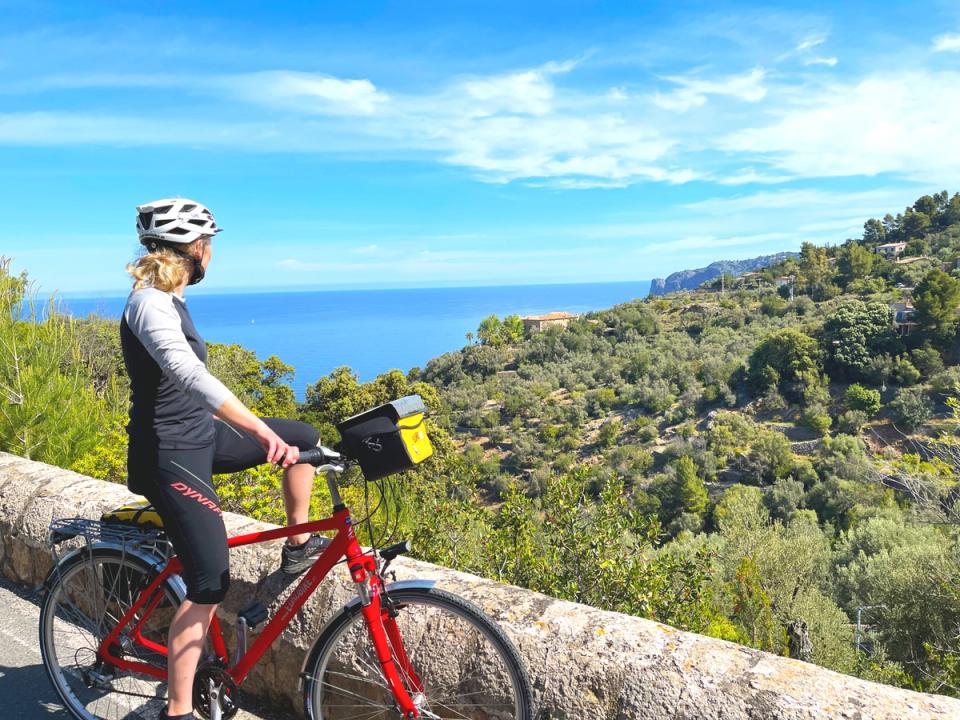
Discover Mallorca’s top cycling trails, combining coastal beauty, mountain landscapes, and welcoming hotels for a relaxing yet adventurous cycling holiday.

Rob
In January, the default is the turbo trainer. The garage. The Zwift course you have done forty-three times. This is fine — but it is also unnecessary if you know where to go.
A handful of European destinations have temperatures between 13 and 20°C in January and February. Their cycling infrastructure is excellent. Their roads, which in August require patience and concentration, are in winter almost entirely yours. The winter sun cycling holidays that UK cyclists talk about most — Mallorca, Lanzarote, Portugal's Algarve — are not a compromise for people who could not get away in summer. They are, for cyclists who know them, genuinely preferable.
This guide covers the five destinations that work consistently in winter, what each one is actually like in January and February, and how to choose between them.
The case for cycling in winter is simpler than it is usually presented. In the destinations listed here, January temperatures sit between 13°C and 20°C — comfortable for sustained cycling, and cool enough to cover real distance without heat exhaustion. The roads are quieter than at any other time of year. Accommodation costs less. Operators run smaller groups.
The cycling that felt crowded and expensive in September is, in January, spacious and considerably cheaper. The only thing you give up is the certainty of wall-to-wall sunshine — these are Mediterranean and Atlantic destinations, not the tropics — and a small amount of daylight at each end of the day.
What you do not give up is the quality of the riding. The Tramuntana road in Mallorca does not become less good because it is February. The Algarve coastal path does not change because it is November. The conditions that make these destinations outstanding for cycling are present year-round; it is the crowds and the prices that shift.
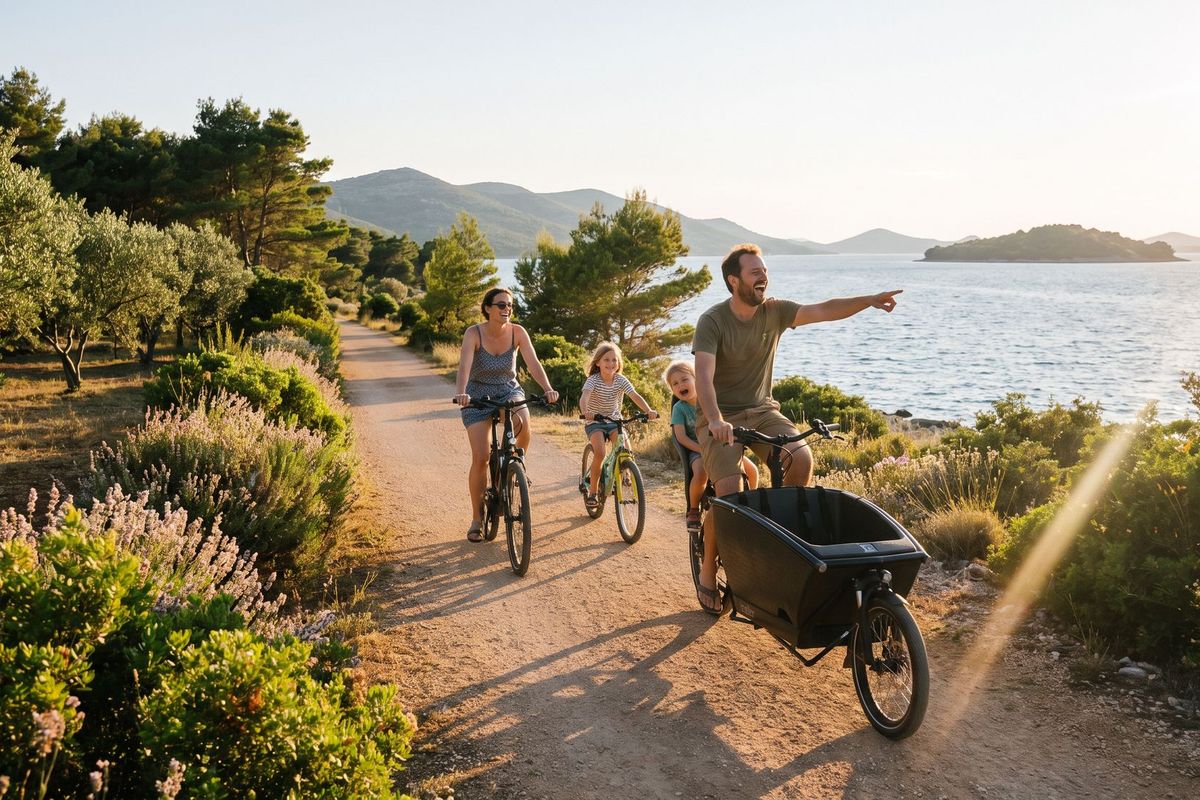
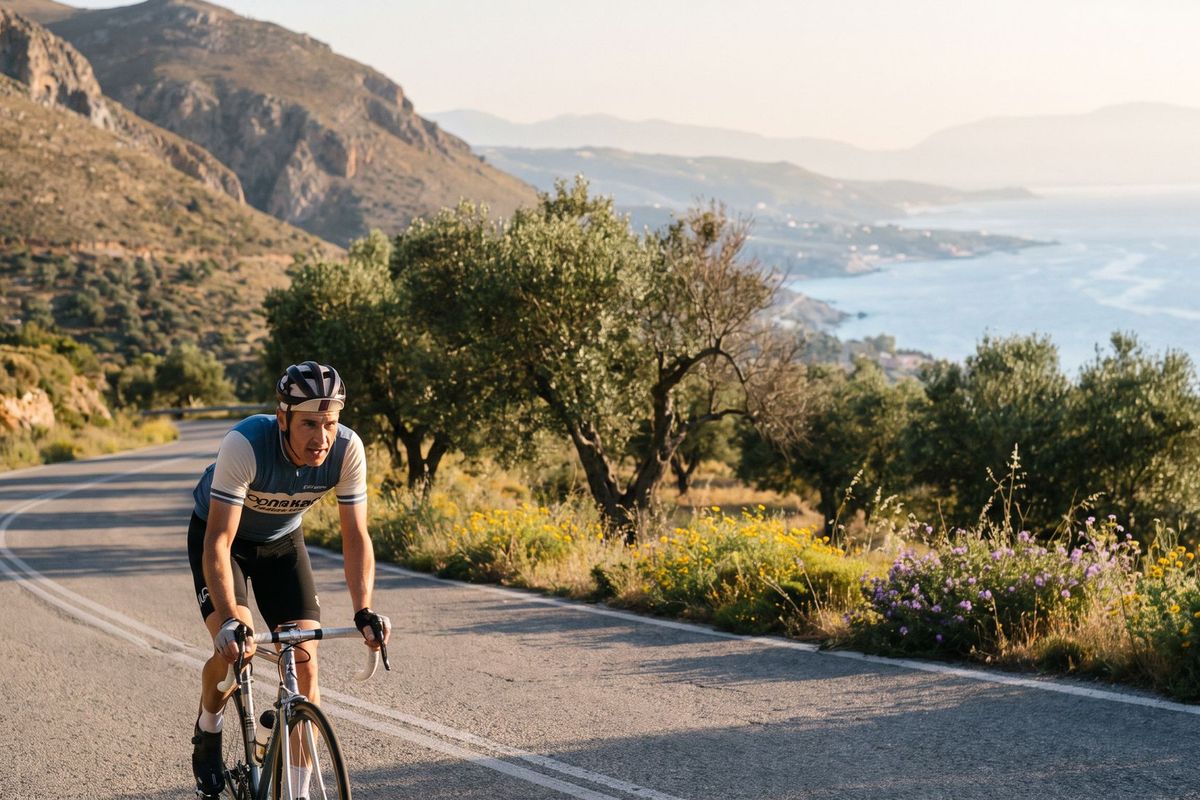
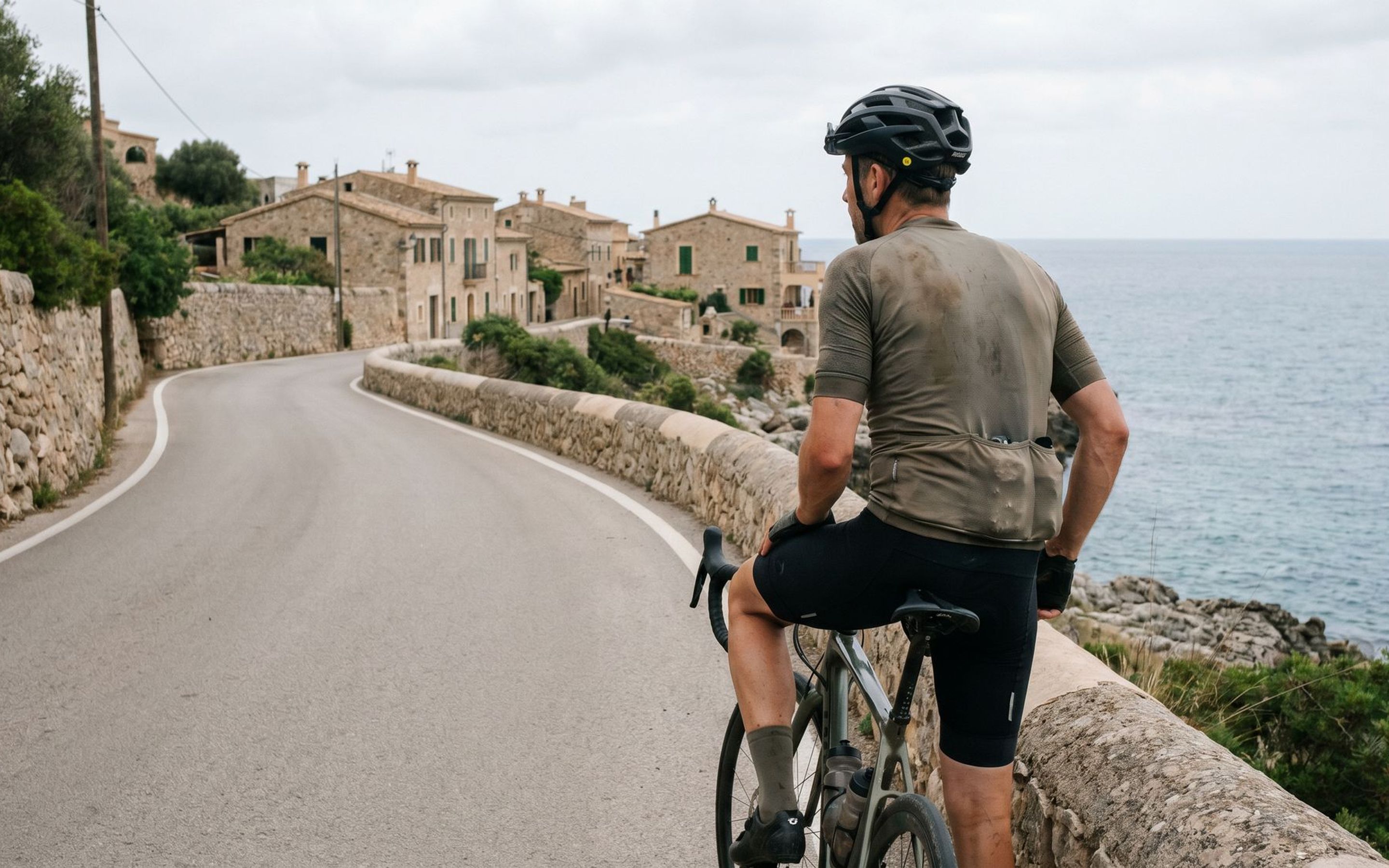
Mallorca is the most popular winter cycling destination for UK cyclists, and the reputation is deserved. Average January temperature in the south of the island: 14°C. February–March: 15–17°C. The island's road cycling infrastructure is excellent — the Tramuntana mountain range in the north provides challenging climbing, and the flat southern coastal routes offer straightforward mileage in either direction.
Discover Mallorca’s top cycling trails, combining coastal beauty, mountain landscapes, and welcoming hotels for a relaxing yet adventurous cycling holiday.
In February and March, the island fills with professional cycling teams on pre-season training. This is worth knowing because it means certain cafés become more peloton pit stop than quiet terrace. It also means the cycling culture on the island in winter is concentrated and serious in a way that some leisure cyclists find energising and others find slightly overwhelming. January is quieter.
The honest caveats: January in Mallorca can include several days of rain. The north of the island is cooler and more prone to cloud than the south. February is the sweet spot — consistently better weather than January, not yet as busy as March. For detailed route information: cycling holidays in Mallorca — why this island is a cyclist's paradise.
Best for: road cyclists who want quality climbing and coastal roads; couples; solo cyclists who want company on the route; anyone who wants the most established cycling infrastructure in the Mediterranean.
If guaranteed warmth is the priority, Lanzarote is the answer. Average January temperature: 18–20°C. The island does not have a cold month. The volcanic landscape — black lava fields, ochre mountains, the roads through Timanfaya National Park — is unlike anywhere else in Europe, and the cycling infrastructure is good enough to support serious endurance training.
The honest caveats: Lanzarote is exposed. The trade winds that make the island pleasant in summer can, in winter, make certain routes genuinely difficult — headwinds strong enough to turn a flat road into an effort. Check wind forecasts before planning long exposed routes; routes sheltered by the island's topography will be more consistently manageable.
Best for: cyclists who want warmth above all else; endurance riders who want winter training mileage; those who have done Mallorca and want something visually different. Not ideal as a cultural or food-focused holiday — the infrastructure for cycling is excellent; the restaurant scene is more limited.
The Algarve offers the same broad appeal as Mallorca — warm winter temperatures, good cycling infrastructure, scenic coastal and inland routes — at lower cost and with less of the cycling-specific crowd. Average January temperature: 15°C. The southern coastal routes are flat and well-surfaced. The interior is hillier and more demanding but rewards the effort with dramatic inland landscapes that the coast-focused tourist trail largely ignores.
The food and wine justify the trip independently of the cycling. The Algarve's seafood, the local medronho brandy, the unhurried pace of winter in a town that is not performing for tourists — these are real pleasures. Cycling the Algarve coast and wine country covers the routes specifically.
The honest caveats: the Algarve gets more rain in winter than the Canary Islands. January averages 4–6 rainy days a month — not prohibitive, but worth knowing. The interior roads can be quiet to the point of lonely in midwinter. Some accommodation and restaurants in smaller towns operate reduced winter hours.
Best for: budget-conscious cyclists; couples who want culture and food alongside the riding; cyclists who prefer a quieter alternative to the Balearic Islands. Also: year-round cycling — Portugal is genuinely good to ride all year, and winter has a specific appeal that summer does not.
Tenerife has the warmest and most reliable winter weather of any easily accessible European cycling destination. Average January temperature in the south: 19–21°C. The island's defining cycling feature is Mount Teide — a 3,718m volcano whose approach roads offer some of the most sustained climbing available in Europe without requiring an Alpine summer. The ascent from the south takes cyclists through five distinct climate zones.
The infrastructure in southern Tenerife — around Las Américas and Los Cristianos — is established and cyclist-friendly. Flights from most UK airports are direct and frequent. The island is significantly more accessible logistically than Lanzarote for riders coming from outside London.
The honest caveats: the north of Tenerife can be cloud-covered even when the south is clear — the weather divides sharply along the central ridge. Southern resort areas have excellent cycling access but a more generic holiday atmosphere. Teide is extraordinary, but it requires genuine fitness — the altitude above 2,000m makes the final section physically demanding in a way that the rest of the island does not.
Best for: ambitious cyclists who want altitude and serious climbing; those who want guaranteed warm winter sun; anyone combining a cycling holiday with other travel (the island is large enough to justify a week without a bike).
Sicily in winter is not for everyone, and that is precisely its appeal. Average January temperature: 13–14°C — cool, and occasionally wet — but the island is largely empty of tourists, cycling at its most unhurried. The roads through the interior hill towns and along the north coast are quiet in a way that the island's growing summer cycling reputation has made harder to find in peak season.
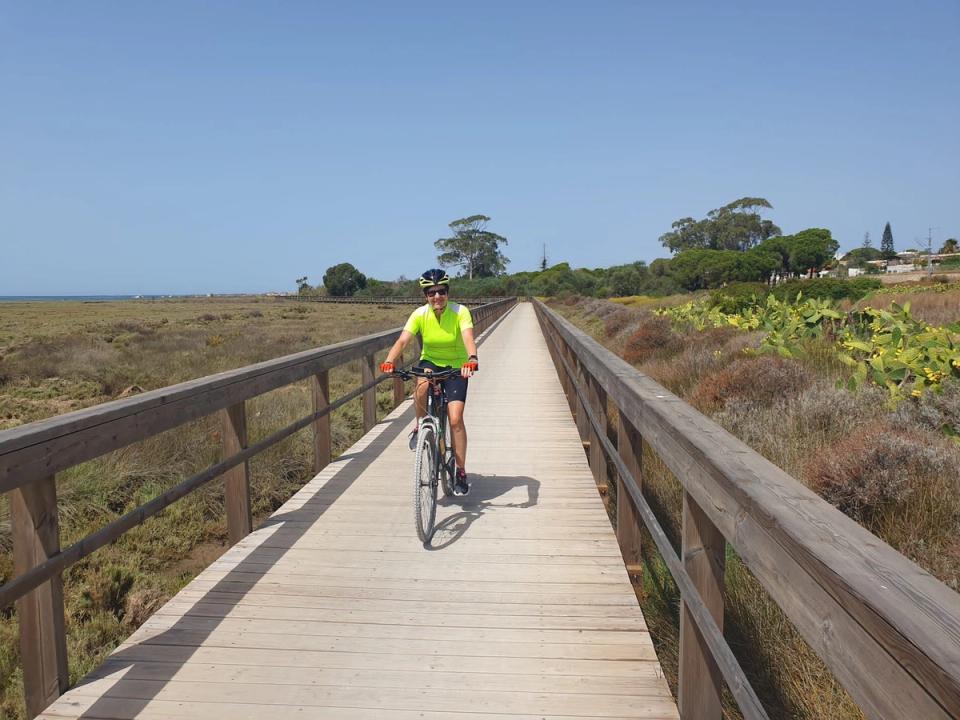
Cycle Portugal's Eastern Algarve: 4-day self-guided tour through Tavira, Olhão, and Ria Formosa, featuring coastal views and cultural stops.
The food and historical sites are the strongest argument for Sicily in winter. The Valley of the Temples at Agrigento, the mosaics at Villa Romana del Casale, the hill towns of the interior — all are better visited in January than in August. The cycling connects them. Bike tours in Sicily — discover Italy's historical island covers the routes.
The honest caveats: road surfaces in rural Sicily can be poor — not dangerous, but uneven. Some accommodation in smaller towns closes in January. This is not a destination for cyclists who want smooth roads and comprehensive services; it is a destination for those who want atmosphere and do not mind some roughness in exchange.
Best for: culturally curious cyclists; foodie cyclists who want the best food in the winter sun destinations; solo adventurers who want somewhere genuinely different; those for whom the experience beyond the cycling matters as much as the riding.
For guaranteed warmth: Lanzarote or Tenerife.
For the best cycling infrastructure: Mallorca.
For culture and food alongside riding: Sicily or Portugal.
For the best value: Portugal (mainland) or Tenerife via direct low-cost flights.
For first winter cycling holiday: Mallorca — the infrastructure, the routes, and the concentration of other cyclists make it the most supported environment.
For something different from the crowd: Sicily.
For a complete month-by-month view of European cycling timing: best time to cycle in Europe — a month by month guide.
The window for November–March travel typically books out between September and October. Departure dates in January and February — particularly in Mallorca and Tenerife — sell ahead for the good reason that the same cyclists return each year. If you are planning a winter cycling holiday, book in autumn rather than waiting until December.
Group sizes are smaller in winter than in peak season. This is a practical advantage: operators are more attentive, guides have more time for each rider, and self-guided itineraries are more flexible. The experience of a supported cycling holiday in January is materially different from the same holiday in July.
Christmas and New Year: Tenerife and Lanzarote are the most popular choices for the Christmas–New Year window, with reliable warm weather and good direct flight connections. Book well ahead for the festive period — availability is limited.
Every cycling holiday booked through Pedal Ventures comes with PTS financial protection — your money is protected if Pedal Ventures or the tour operator fails. Booking months ahead for a winter holiday is a meaningful financial commitment, and protection matters before any deposit is paid.
For a broader overview of the destinations we cover: winter sun cycling holidays in Europe — the best destinations.
Mallorca is the most established choice — reliable temperatures, excellent road cycling infrastructure, and strong operator support. Lanzarote and Tenerife offer warmer and more guaranteed sun. Portugal's Algarve is the strongest mainland option.
Yes — in the right destinations. Mallorca, Lanzarote, Tenerife, Portugal, and Sicily all have January temperatures comfortable for cycling (13–21°C depending on the island). Roads are quieter and accommodation cheaper than in peak season.
Yes. Mallorca is one of Europe's most popular winter cycling destinations, with professional teams training there from January onwards. February–March is the sweet spot for weather and road conditions; January is quieter but can include more rain.
Yes — Tenerife and Lanzarote are the most popular choices for Christmas and New Year cycling, with reliable warm weather and direct flights from most UK airports. Book early; the festive window fills quickly with returning regulars.
For cyclists who know which destinations to choose, yes — often more so than the same destinations in summer. Quieter roads, lower prices, no heat exhaustion, smaller groups. The quality of the cycling is not seasonal; the crowds and prices are.