Bike tour
Dolomites to Lake Garda, Verona & Venice
This cycling holiday through South Tyrol to Lake Garda and Venice through the rolling vineyards of Veneto offers a perfect blend of nature, history, and culture.

Rob
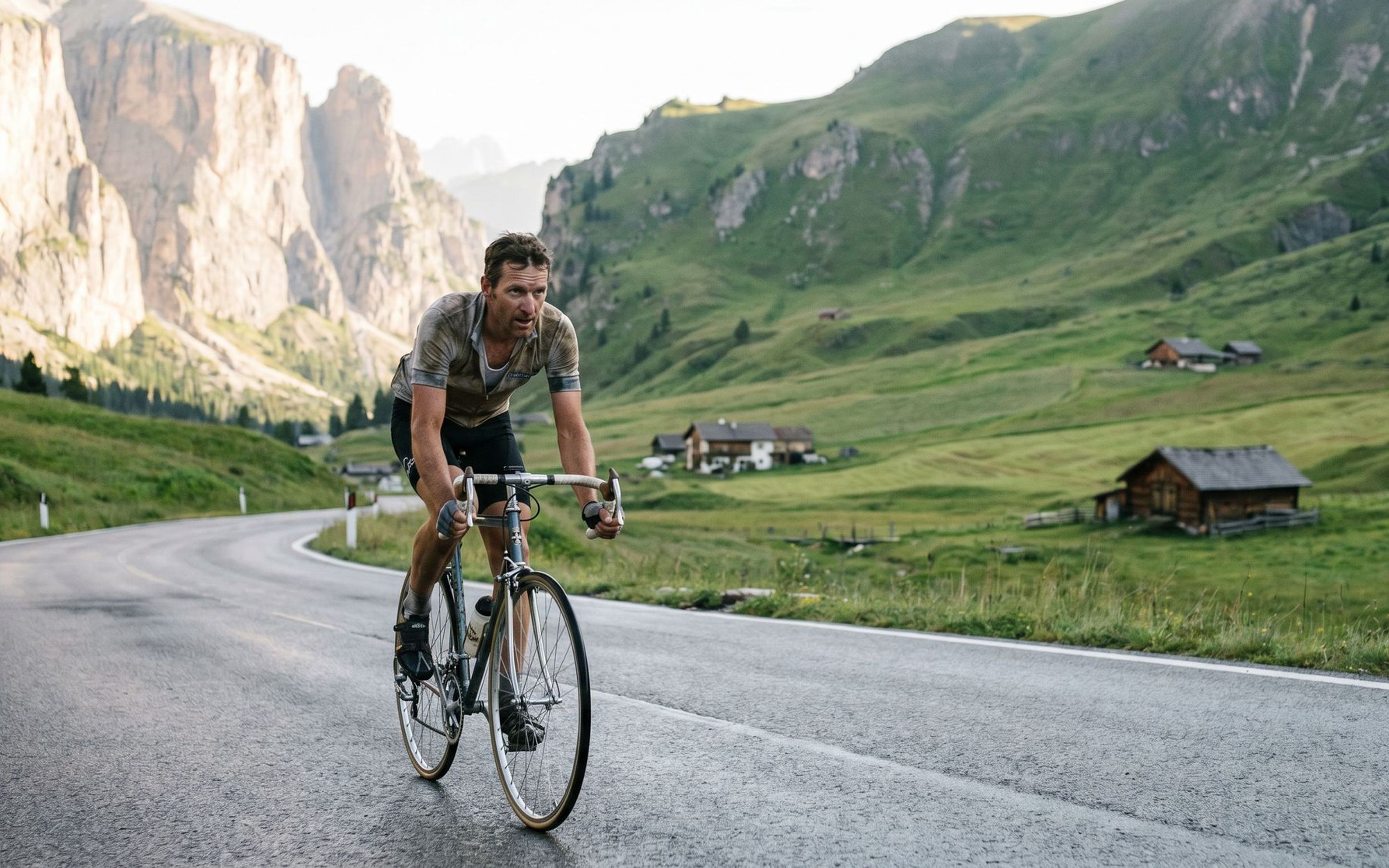
The road drops away beneath you. To the left, a wall of pale limestone rises vertically into a sky so blue it looks artificial. To the right, the valley floor is a thousand metres below — green meadows, scattered farmhouses, and the thread of a river catching the sun. Your brakes are doing most of the work. The descent from the pass is long, fast, and absurdly beautiful. Ten minutes ago you were grinding up the final switchback. Now you are freewheeling into a village where the language switches between Italian and German mid-sentence and the local beer is as good as the local wine.
This is the Dolomites — Italy's most dramatic cycling destination. But here is what most cycling content will not tell you: the Dolomites are not just for serious road cyclists chasing legendary passes. The valleys below those peaks have some of Italy's finest leisure cycling routes — flat, paved, traffic-free, and accessible to anyone who can ride a bike.
This cycling holiday through South Tyrol to Lake Garda and Venice through the rolling vineyards of Veneto offers a perfect blend of nature, history, and culture.
Two holidays exist in the same mountain range. This guide covers both.
The Dolomites split into two distinct cycling experiences, and understanding this is the key to planning the right holiday.
The names resonate through road cycling history: Stelvio, Passo Sella, Pordoi, Giau, Fedaia. These are the climbs that feature in the Giro d'Italia, with gradients of 7–12% sustained over 15 to 25 kilometres. They demand serious cycling fitness, a good bike, and the willingness to spend two to three hours ascending before the reward of a spectacular descent.
If you are an experienced road cyclist who trains regularly and enjoys climbing, the Dolomite passes are among the greatest rides in Europe. The scenery is genuinely extraordinary — pale rock towers, alpine meadows, and a sense of scale that dwarfs anything else in Italy.
But be honest about your fitness. These passes are not achievable on a whim. If you cycle 150+ kilometres per week with regular hill work, you will love them. If you ride occasionally on flat terrain, they will break you.
Below those dramatic peaks, a network of dedicated cycle paths follows rivers through alpine valleys. These routes are flat or gently downhill, paved, largely traffic-free, and surrounded by the same extraordinary mountain scenery — viewed from below rather than above.
The Adige Cycle Route from Bolzano to Verona is the signature example. Rated difficulty 2 out of 5, this five-day route follows the Adige River through South Tyrol's wine country, past vineyards and medieval villages, over a ferry crossing of Lake Garda, and into Verona — the city of Romeo and Juliet. The Dolomite peaks form a constant backdrop, but the riding itself is gentle.
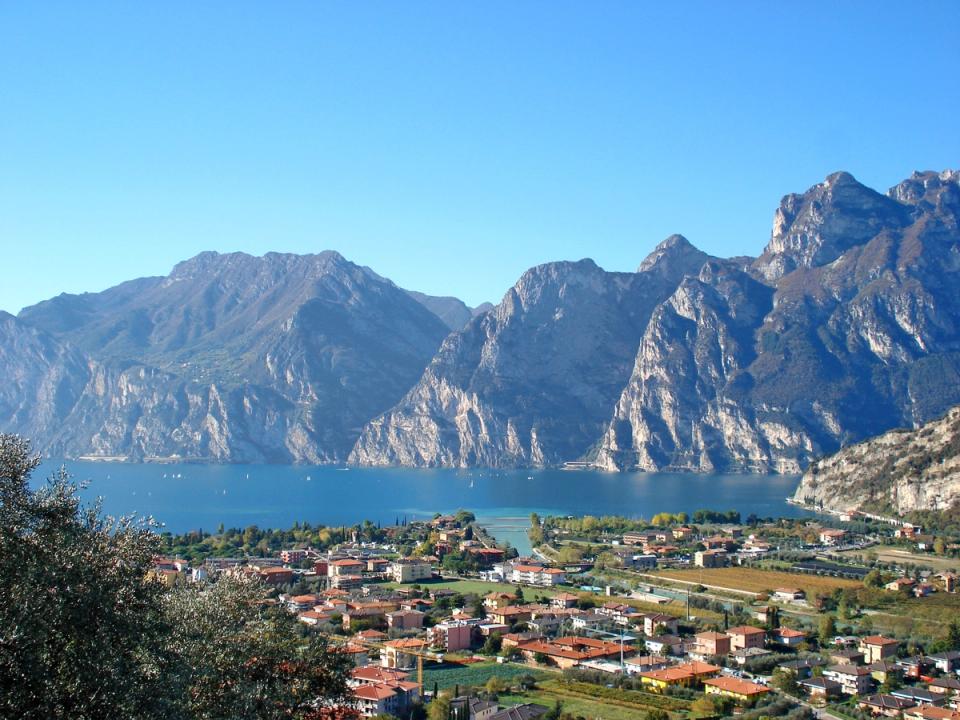
Explore the Adige Cycle Route: 5 days of cycling through South Tyrol's landscapes, historic towns, and the beauty of Lake Garda.
The Dolomites to Venice route extends this further — from the South Tyrolean Wine Route through Lake Garda, across the Veneto plain, past Palladio's villas in Vicenza, and into Venice itself. Difficulty 2, with the option to shorten stages by train.
These valley routes let you experience the Dolomites' scenery, culture, and food without needing climbing legs. They are the cycling holiday most people do not know exists in this region.
The Dolomites are a UNESCO World Heritage Site, and the designation is earned. The pale limestone peaks — formed from ancient coral reefs pushed skyward by tectonic forces — create a skyline unlike anything else in Europe. They glow pink at sunrise and sunset (the Enrosadira phenomenon), change character with every shift in light, and provide a backdrop so dramatic it barely looks real.
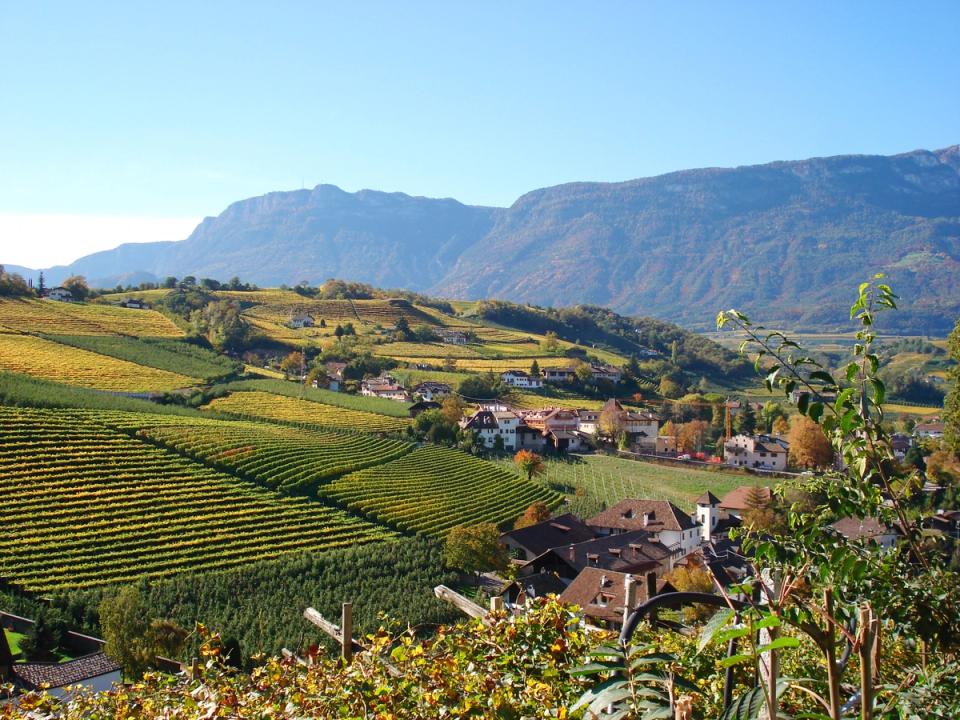
South Tyrol is where Italy meets Austria. Until 1919, this region was part of the Austro-Hungarian Empire, and that heritage persists. Road signs are bilingual. Restaurants serve both Wiener schnitzel and pasta. The architecture mixes alpine chalets with Italian piazzas. The wine comes from steep terraced vineyards (Gewürztraminer, Pinot Grigio, Lagrein), and the beer from local breweries that rival Bavaria's.
This cultural blend gives the Dolomites a character no other Italian region can match. You cycle through it, eat both sides of it, and the linguistic switching becomes part of the holiday's charm. The South Tyrol tourism board has detailed information on the region's cycling routes, events, and visitor services.
South Tyrol has invested more in cycling infrastructure than almost any region in Europe. The Adige Cycle Path, which runs the length of the valley from the Austrian border to Verona, is meticulously maintained — smooth tarmac, clear signage, separated from traffic, with regular service points. It forms part of the wider EuroVelo network of long-distance European cycling routes. It is cycling infrastructure built for tourism, not an afterthought.
For valley routes (April to October): The valley floors warm up from mid-April. May to June and September to October are ideal — comfortable temperatures (18–26°C), clear skies, and manageable tourist numbers. Summer (July–August) is warm and busy but rideable.
For high passes (mid-June to September): The passes open when the snow melts, typically in mid to late June. July and August offer the most reliable weather. September is quieter but cooler, with shorter days and occasional early snow.
For the South Tyrolean Wine Route (year-round): The lower valley routes are accessible from March through November, with the wine harvest (September–October) providing particular atmosphere and purpose.
Duration: 5 days | Difficulty: 2/5 | Daily distance: 40–65km
The accessible Dolomites experience. Start in Bolzano — a vibrant city with excellent museums (including Ötzi the Iceman), strong coffee culture, and mountain views from every street. Follow the Adige River south through the wine route — passing castles, thermal towns, and vineyards producing some of Italy's finest white wines — before a spectacular descent to Lake Garda. Cross the lake by ferry, then continue to Verona.
Highlights: South Tyrolean Wine Route, Passo di San Giovanni descent to Lake Garda, ferry crossing of Lake Garda, Verona's Roman arena.
Who it suits: Couples, first-time cycle tourers, wine enthusiasts. Anyone who wants mountain scenery without mountain climbing.
Duration: 8 days | Difficulty: 2/5 | Daily distance: 35–60km
The extended Dolomites journey. From Bolzano through Lake Garda and onward across the Veneto to Venice — passing Palladio's Renaissance villas, the medieval cities of Verona and Vicenza, and ending at the Venetian lagoon. Flat to gently rolling, with train options to shorten stages.
Highlights: Lake Garda ferry, Brenta Riviera's Venetian villas, arrival in Venice, ice cream in Vicenza (included in the tour).
Who it suits: Riders who want a longer, more diverse journey. Couples who love the idea of starting in the mountains and ending in Venice.
Duration: 7 days | Difficulty: 2/5 | Daily distance: 30–50km
The family-friendly alternative. From Bolzano down through apple orchards, past the submerged bell tower of Lake Resia, through Merano's spa town, and along Europe's largest apple plantations to the northern tip of Lake Garda. Mostly flat with occasional short climbs, suitable for families and first-timers.
Highlights: Lake Resia's submerged church tower, Merano's thermal spas, cycling through apple orchards in bloom, Lake Garda's northern shore.
Who it suits: Families, leisure cyclists, and anyone who wants the Dolomites' beauty at the gentlest possible pace.
Valley routes (difficulty 1–2): Genuinely easy. The cycle paths are flat or gently downhill, paved, and traffic-free. If you can cycle 30–50 kilometres on flat ground, you can ride these routes. E-bikes are available but barely necessary on the valley floor.
High passes (difficulty 4–5): Genuinely hard. Expect sustained gradients of 7–12% over 15–25 kilometres per climb. Multiple passes in a single day is standard on guided road cycling tours. You need regular training and genuine climbing fitness. These rides are spectacular but they are not leisure cycling.
The honest advice: If you are researching "cycling holidays dolomites" and you are not already a regular road cyclist who enjoys climbing, you almost certainly want the valley routes. They are every bit as scenic — the peaks are above you rather than beneath you — and the holiday is relaxed rather than punishing.
Yes — on the valley routes. The Adige Cycle Path and similar river-following routes are flat, paved, and suitable for anyone with basic cycling confidence. The high passes are emphatically not for beginners.
On valley routes, e-bikes add comfort but are not essential. On the high passes, e-bikes can make the difference between completing a climb and not — though the sense of achievement is different. Many operators offer them as an option.
Bolzano is the natural hub — well-connected by train, with excellent restaurants and the Adige Cycle Path starting from the city. For pass-chasers, Corvara or Selva di Val Gardena provide direct access to the Sella Ronda loop. For lake-focused riding, Riva del Garda works well.
Fly to Verona, Innsbruck, or Venice. All have good transport links to Bolzano (1–2 hours by train). Bolzano is also directly accessible by train from Munich (3.5 hours) for those travelling overland. Check the latest FCDO travel advice for Italy for up-to-date entry requirements before you travel.
Absolutely. The Dolomites to Venice route does exactly this — eight days of riding from the mountains to the lagoon, all at difficulty 2.
Valley routes enjoy a Mediterranean-continental climate — warm summers, pleasant spring and autumn, and clear skies. Mountain passes are more unpredictable — afternoon thunderstorms are common in summer, and temperatures drop significantly at altitude. Bring layers and a rain jacket regardless of season.
Ready to ride the Dolomites? Browse Dolomites cycling holidays on Pedal Ventures, or read the full cycling holidays in Italy guide for a region-by-region comparison.
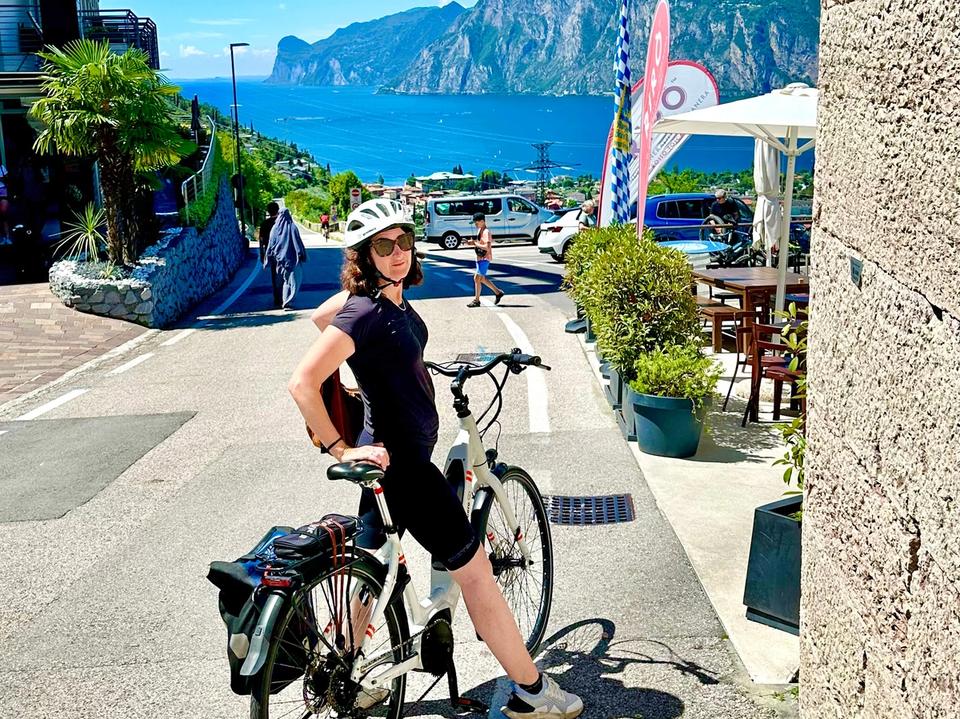
A 4-day self-guided cycling extension from Bolzano through the Dolomites and Lake Garda to Mantua, before boarding the Waterways of Venice bike-and-boat cruise.