Bike tour
River Danube through the Iron Gates
Cycle through six countries along the Danube, from Vienna to the Iron Gates, exploring castles, vineyards, and vibrant cities.

Rob
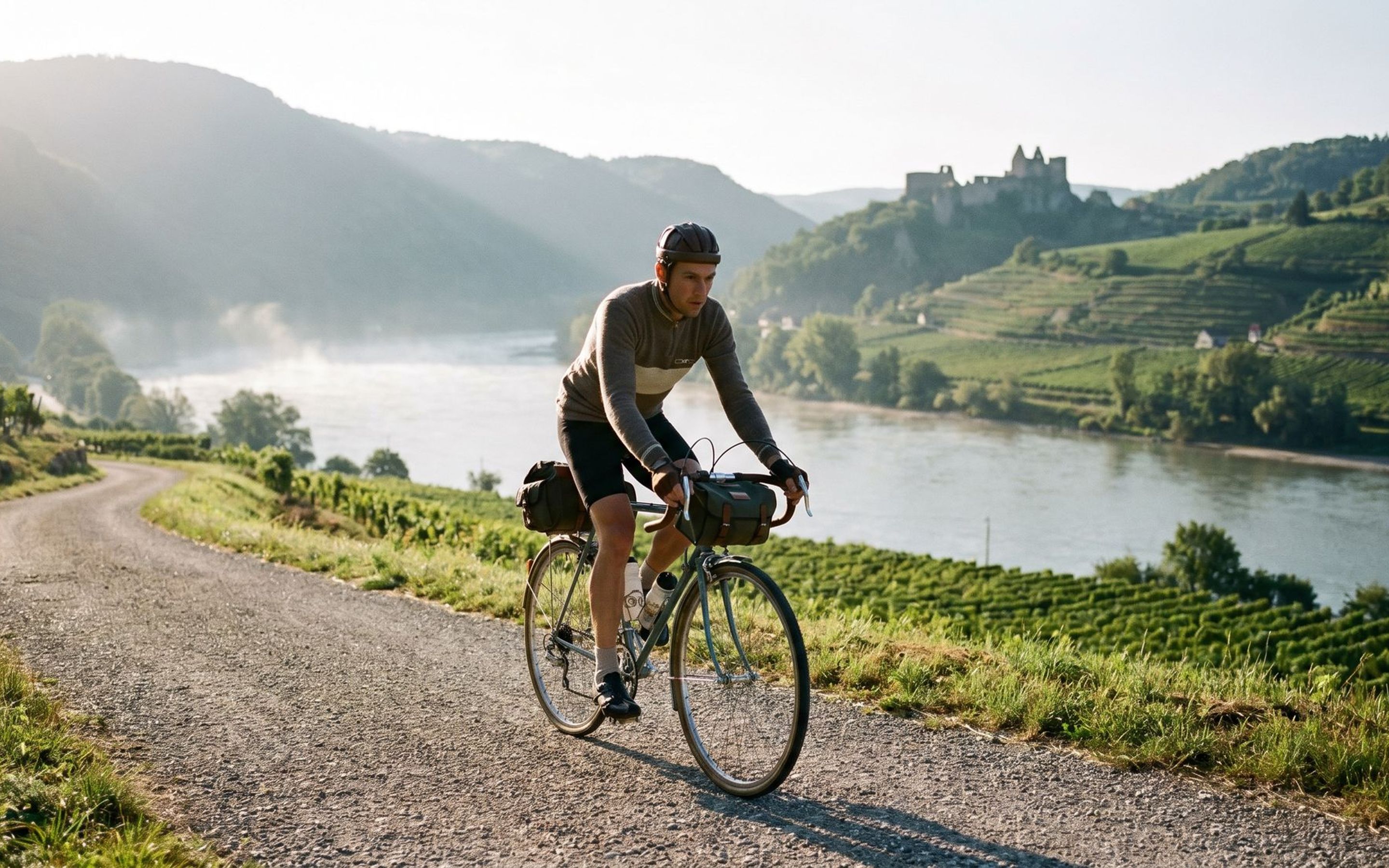
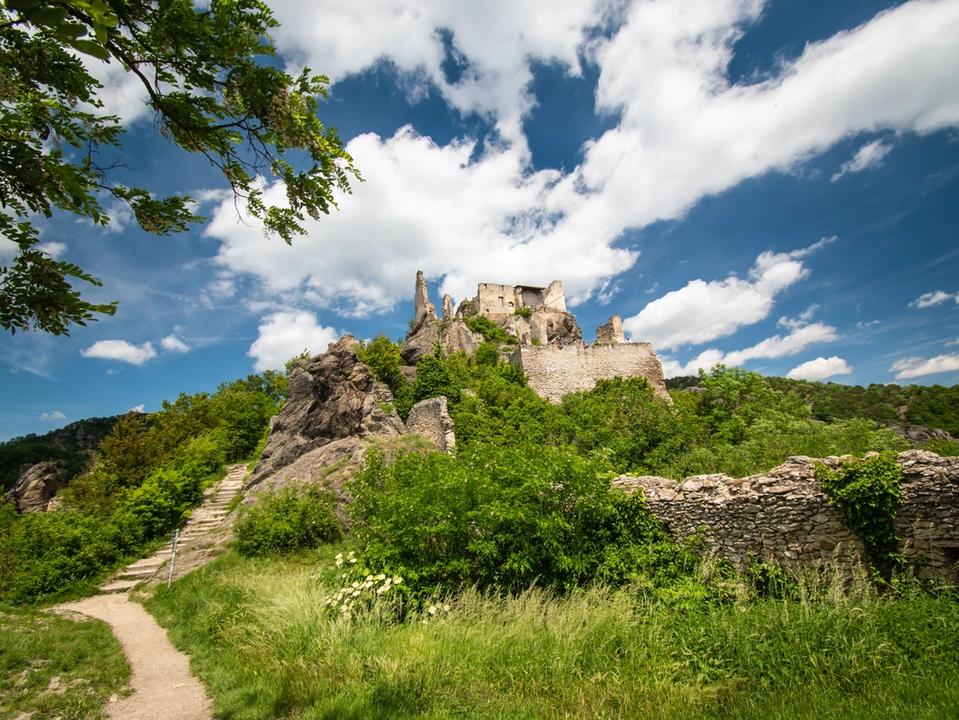
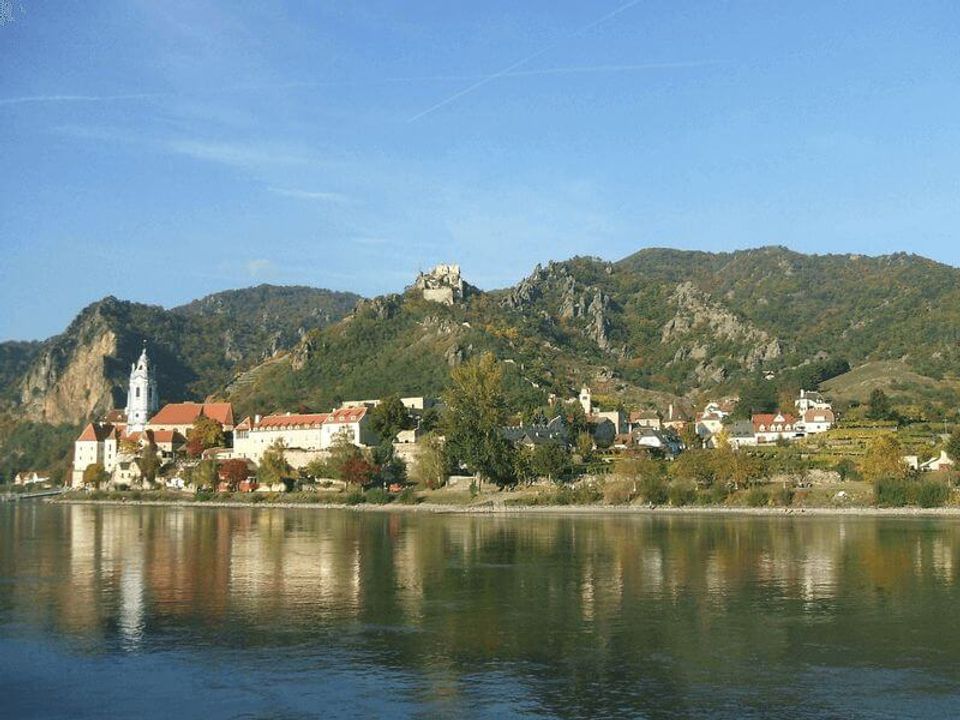
Somewhere between Spitz and Krems, roughly on day four of a Passau-to-Vienna itinerary, the river bends and the Wachau opens up. Vineyard terraces rise on both banks, a castle ruin sits on the ridge above Dürnstein, and the cycle path runs alongside the water with nothing between you and the view. It is one of those stretches of cycling that makes the case for itself without assistance.
The Danube is Europe's most popular long-distance cycling route — and one of the most frequently Googled. But most of the content about it tends toward the inspirational: photographs of the Wachau, descriptions of the wine. Less common is the practical answer to the question most people actually have: how do I plan this, which section should I ride, and what does a week on the danube cycling holidays route actually involve?
This guide covers the decisions, not the scenery.
The Donauradweg — as it is known in German — runs roughly 2,800km from the Black Forest in Germany to the Black Sea. The section that UK cyclists typically book is a fraction of that: the classic stretch runs from Passau, on the German-Austrian border, to Vienna or on to Budapest.
Technically, the Danube route forms part of EuroVelo 6, the Atlantic to Black Sea long-distance cycle route. In practice, the Passau–Vienna section is what most people mean when they say they are cycling the Danube — and it is the section with the best infrastructure, the most scenic riding, and the most established operator support.
The path is predominantly off-road or on dedicated cycle lanes. Road crossings are minimal. Surface quality ranges from smooth asphalt on the busiest sections to well-maintained gravel on quieter stretches. Getting lost is rare: Donauradweg signage is consistent and well-maintained.
This is the first decision, and it matters more than most planning content acknowledges. The three main options for UK cyclists:
The classic, and the one to ride first. Passau itself earns an evening before you clip in — a baroque city at the confluence of three rivers, with a cathedral organ that is among the largest in the world. The route leaves Passau through the Danube gorge, a narrow and dramatic section where the river carves through forested hills before opening at Grein. Between Linz and the Wachau, the town of Mauthausen warrants a stop: the former concentration camp memorial is sombre and important, and the contrast with the surrounding countryside is not easily forgotten.
Then the Wachau begins. The stretch between Melk and Krems carries UNESCO World Heritage status, produces some of Austria's finest Grüner Veltliner, and is consistently cited as the most beautiful cycling in Central Europe. Melk Abbey sits above the river at the western entrance — approaching it by bike, with the baroque towers rising above the vineyards, is one of the more theatrical arrivals on any cycling route in Europe. Dürnstein, where Richard the Lionheart was imprisoned in 1192, is at the eastern end. In between: apricot orchards, medieval village terraces, and a riverside café approximately every 15km. The route finishes in Vienna — one of the great cycling cities in Europe, with excellent cycling infrastructure within the city itself.
For more on the Wachau specifically: cycling the Wachau Valley — vineyards, castles and culture.
Flatter, faster, and culturally more varied. The route leaves Vienna through the Donauinsel — an artificial island in the middle of the river that serves as one of the city's main recreational areas — before crossing into Slovakia. Bratislava arrives quickly: a genuinely underrated capital, compact and walkable, with a restored old town, a commanding hilltop castle, and a food and bar scene that has improved markedly in recent years.
East of Bratislava the terrain changes. The Danube Bend in Hungary is the scenic highlight of this section — at Visegrád, the river turns sharply south and the views across the bend from the hilltop citadel are exceptional. Esztergom follows, with Hungary's largest cathedral sitting above the river on a dramatic escarpment. Budapest arrives as a fitting conclusion: the Chain Bridge, the thermal baths of Széchenyi and Gellért, the ruin bars of the Jewish Quarter. Few cycling routes end in a city this rewarding.
This section suits cyclists who have already done Passau–Vienna and want the city-to-city narrative arc, or those who prefer the cultural variety of three countries over the concentrated scenery of the Wachau.
Both sections combined. The complete journey suits cyclists with two weeks available and solid multi-day experience. Self-guided is the most practical format for the full route; some guided operators cover it, though the group structure is harder to maintain across a fortnight. The rhythm of the full route — Bavaria, Austrian Alps, Habsburg towns, Slovak capital, Hungarian plains — builds into something more than the sum of its sections. Excellent for experienced tourers; not recommended as a first long-distance cycling trip.
Cycle through six countries along the Danube, from Vienna to the Iron Gates, exploring castles, vineyards, and vibrant cities.
On the Pedal Ventures difficulty scale, the Danube rates Leisurely to Moderate — making it one of the more accessible long-distance routes in Europe for cyclists who are fit but not racing fit.
The Upper Danube between Passau and Linz has some gentle gradient as the river descends from the Bavarian hills. Nothing technical, but enough to notice on a loaded bike. Below Linz, and throughout the Wachau and beyond, the route is predominantly flat: the valley floor follows the river, and the path stays on it.
Daily distances on a standard itinerary are 45–65km. Leisurely itineraries, which most family or mixed-ability groups choose, cover 35–50km. The surface handles well in all conditions — good gravel and asphalt throughout the main sections — though the path after Bratislava can become muddy after significant rain.
E-bikes are widely available and increasingly common on the route. They are not necessary for the main Wachau section, but useful for the hillier stretches between Passau and Linz, and for cyclists who want to preserve energy for the evenings. For more on e-bike options across Europe: e-bike holidays in Europe — electric assistance, unlimited possibilities.
Who is this route for? Cyclists comfortable covering 40–60km on consecutive days, with some multi-day experience, though genuine beginners can complete it on a leisurely itinerary. The flat-to-gently-rolling terrain means the limiting factor is usually saddle endurance rather than cardio fitness.
Cool temperatures (15–20°C), apple blossom in the Wachau, quiet paths, full operator schedules, and accommodation available throughout the route. This is the correct answer for most cyclists, and the month to target if you have the flexibility. Book early: May fills fast, particularly for guided tours departing the first two weeks.
The harvest month in the Wachau. Grapes are picked in late September and early October; many guesthouses and wine cooperatives along the route have their new vintage open for tasting by the time cyclists arrive. Slightly cooler than August; significantly less crowded; marginally better value. A stronger choice than August for almost any cyclist.
Peak season: warm, long daylight, full services. Also the busiest period on the path, particularly the Wachau section. The path between Spitz and Krems can feel congested on summer weekends with river cruise passengers joining cyclists for short sections. Book accommodation well ahead for any June–July departure.
The month most people assume is best. It is also the hottest (30°C+ on some days in the Wachau), the most crowded, and the most expensive. Not a bad time to cycle the Danube — the route is beautiful regardless — but May and September offer a meaningfully better experience for comparable effort.
Most Radlerfreundlich (cyclist-friendly) accommodation on the route closes for winter. Some sections become muddy or icy. Operator schedules are largely suspended. October is the outer edge of the viable season; after that, wait until spring.
The complete month-by-month European cycling guide covers the broader picture: best time to cycle in Europe.
Cycle and sail the Danube from Passau to Vienna. Discover Wachau vineyards, Linz, and Vienna’s imperial charm on this unforgettable bike and boat tour.
The Danube route is self-guided by default for most UK cyclists, and with good reason. The path is so well-marked that navigation requires minimal effort. Operators provide luggage transfer between hotels, pre-booked Radlerfreundlich accommodation, route notes, and an emergency support line. You have the route, the logistics, and the freedom — without needing a guide to make it work.
For detail on how luggage transfer works in practice: cycle holidays with luggage transfers — what to expect.
Self-guided is the right choice for: confident cyclists with some multi-day experience; couples or small groups who prefer to set their own pace; those for whom the independent rhythm of the ride is part of the appeal.
A guided tour adds a local leader who manages the day, provides cultural and historical context (the Wachau has a great deal of both), and handles any issues that arise on route. Group sizes are typically 8–16 people. Evenings often include shared meals, which suits cyclists who want the social dimension.
The Danube route rewards guides who know it well — the history of the Wachau, the wine culture, the Habsburg architecture in Vienna — in a way that not every route does. A knowledgeable guide genuinely adds to the experience here.
Guided is the right choice for: first-time long-distance cyclists; those who want cultural context embedded in the day; solo travellers who prefer a group structure; cyclists who are less confident with route navigation.
Some operators offer fully all-inclusive Danube packages — accommodation, meals, bike hire, transfers — with no additional cost on route. These suit cyclists who want zero logistical overhead and a fixed total cost before departure.
River cruise boats also operate on the Danube, with passengers cycling sections of the route and re-boarding the boat at the next town. This is a softer introduction to the route for those uncertain about daily distances or who want to combine cycling with river travel. Distances are shorter, the boat handles luggage and accommodation, and non-cycling days are straightforwardly possible.
Getting there: Fly to Munich (closest major airport to Passau), from which Passau is approximately 2 hours by train. Vienna has direct flights from most UK airports and makes an equally logical start point if you ride the Vienna–Budapest section. Budapest to London direct flights are straightforward for the return journey if you ride the full route.
Bike hire: Available in Passau, Linz, Vienna, Bratislava, and Budapest. Operators typically provide hire bikes as part of the package — confirm the bike type (road, hybrid, or e-bike) and the inclusion of a pannier or handlebar bag at booking.
Accommodation: Predominantly family-run Gasthäuser (guesthouses) and small hotels with Radlerfreundlich certification — meaning they are specifically set up for cyclists: bike storage, early breakfast, drying rooms, and basic tools. The Wachau has some genuinely outstanding boutique options. Vienna is a major city with all hotel categories; book early for May and September.
Language: German throughout Austria and Germany. Slovak briefly around Bratislava. Hungarian approaching and in Budapest. English is widely spoken on the tourist route from Passau to Vienna; less reliably so east of Bratislava.
Currency: Euros in Germany, Austria, and Slovakia. Hungarian Forint in Hungary. Cards widely accepted; carry a small amount of cash for rural cafés and Heurigen (Austrian wine taverns).
For general guidance on cycling in Austria: why cycling in Austria could be your next holiday.
The Passau to Vienna section — the classic UK booking — takes 6–8 days at a leisurely pace of 35–55km per day. Vienna to Budapest takes a further 5–7 days. Most UK cyclists do one section in a one-week holiday. The full Passau to Budapest route requires 12–14 days.
Yes. The Danube is one of the most beginner-friendly long-distance routes in Europe. The terrain is predominantly flat, the path is clearly marked, and the Radlerfreundlich infrastructure handles the logistics of multi-day cycling effectively. A leisurely itinerary of 35–45km per day is manageable for any cyclist who can ride comfortably for 3–4 hours.
Passau to Vienna — specifically the Wachau valley between Melk and Krems — is widely considered the most scenic and rewarding section. It is the consistent recommendation for first-time Danube cyclists and the section most likely to justify a return trip.
Yes, and e-bikes are increasingly common on the route. They are not necessary on the flatter sections but are useful between Passau and Linz, and for cyclists who want to reduce effort on loaded bikes. Most operators offer e-bike hire as part of the package or as an upgrade.
May and September are the best months. May offers blossom in the Wachau and cool temperatures with quiet paths. September brings the grape harvest and slightly lower prices. August is the most crowded and expensive period and is generally overrated by content that defaults to recommending summer.
The Danube route is as good for eating and drinking as it is for cycling. In the Wachau, Grüner Veltliner and Riesling from producers in Dürnstein, Spitz, and Weissenkirchen are worth stopping for — the Heurigen (farm wine taverns) along the route serve their own wine with simple cold plates of cheese, bread, and charcuterie. Wachauer Marillenknödel — apricot dumplings made with the valley's famous apricots — are the regional dessert and worth seeking out in every village. Austrian cuisine along the upper route runs to Wiener Schnitzel, Tafelspitz (boiled beef), and excellent bread. Around Bratislava, Slovak pastries and dumplings appear on menus. Approaching Budapest, Hungarian goulash, lángos (fried dough), and the wine of the Tokaj region make the final days as rewarding gastronomically as the cycling.
The route is predominantly off-road or on dedicated cycle paths with minimal road interaction. It is one of the safest long-distance cycling routes in Europe, regularly completed by solo cyclists and older riders. Standard travel insurance covering cycling is recommended.
Pedal Ventures lists vetted operators running self-guided and guided Danube tours, with PTS financial protection on every booking — your money is protected if the operator or Pedal Ventures fails. Browse the Austria cycling holidays section or speak to our team about which section and format suits your group.
For inspiration on what the route looks and feels like: cycling the Danube — a journey through time, culture, and pure wonder.