Bike tour
Dalmatian Coast - National Parks and Islands
Discover Croatia by e-bike and boat. Ride through national parks, swim in clear seas and visit historic towns along the Dalmatian Coast.

Rob
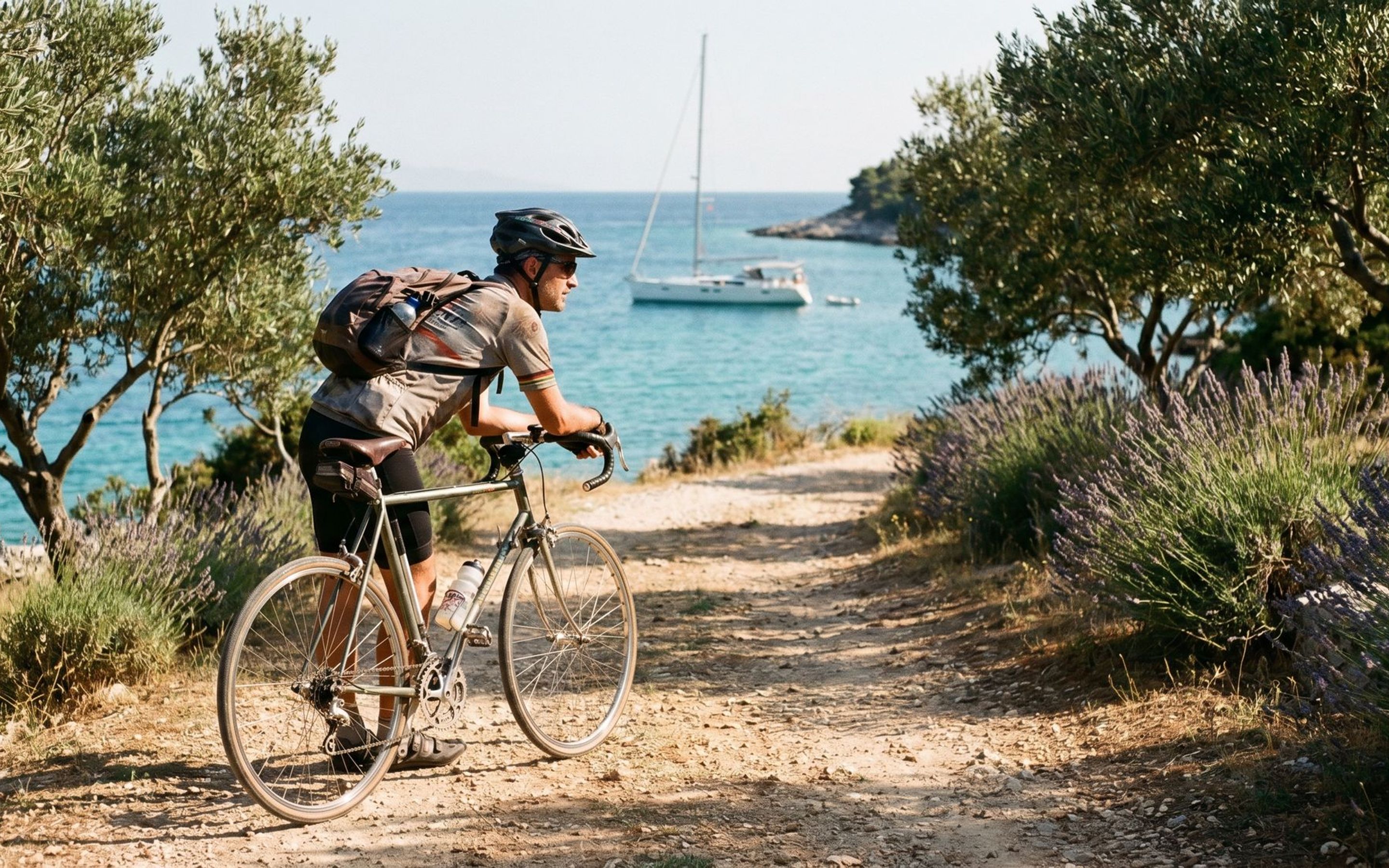
It is quarter past four in the afternoon, and you are standing at the back of a motor yacht in your cycling kit, looking down at water so clear you can count the pebbles on the seabed six metres below. Thirty seconds ago you were on your bike, finishing a 25-mile ride across a Croatian island you had never heard of before breakfast. Now you are jumping in. The Adriatic is warm, the sun is still high, and somewhere on the upper deck someone is pouring cold Grasevina into glasses. This is a Croatia cycling holiday — and it is nothing like you imagined.
Most people picture cycling holidays as hotel-to-hotel affairs: ride all day, check in, repeat. Croatia does things differently. The bike-and-boat format that dominates the Dalmatian Coast puts you on a yacht that serves as your floating hotel, moving between islands while you sleep or swim. You cycle the islands by day, exploring quiet roads through olive groves, lavender fields, and pine-scented coastal paths. Then you return to the boat, and it takes you somewhere new overnight. No packing. No checking in. No navigating luggage between hotels. Just ride, swim, eat, sail.
Discover Croatia by e-bike and boat. Ride through national parks, swim in clear seas and visit historic towns along the Dalmatian Coast.
This guide covers everything you need to know about cycling the Dalmatian Coast — the routes, the islands, the format, the practicalities, and why bike-and-boat Croatia has become one of the most talked-about cycling holidays in Europe.
Croatia's geography makes it almost purpose-built for this kind of holiday. The Dalmatian Coast stretches roughly 400 miles from Zadar in the north to Dubrovnik in the south, but its defining feature is not the mainland — it is the islands. More than a thousand of them scatter the Adriatic, from large inhabited islands like Hvar and Korcula to tiny uninhabited outcrops where the only visitors are seabirds.
Cycling between these islands by road would be impossible. Ferry schedules are infrequent, accommodation options vary wildly, and the logistics of moving bikes and bags from island to island would consume more time than the riding itself. The boat solves all of this. It carries you, your bike, and your luggage from one island to the next. You unpack once, on day one, and never think about logistics again.
This is what separates Croatia from most other cycling holiday destinations in Europe. In Tuscany or Provence, the landscape is the draw and the format — hotel to hotel — is functional. In Croatia, the format is part of the experience. The yacht is not just transport; it is your base, your social hub, and your front-row seat to the Adriatic.
A cycling holiday on the Dalmatian Coast follows a rhythm that feels unhurried even on riding days. Mornings start with breakfast on deck, usually in a harbour where the boat docked the night before. After a briefing from your guide, you set off on the day's ride — typically between 17 and 31 miles, depending on the tour and the terrain.
The cycling itself is varied. Some days follow flat coastal roads with the sea on one side and dry-stone walls on the other. Others climb into island interiors through vineyards, olive groves, and small villages where the pace of life has barely changed in decades. On the Dalmatian Coast - National Parks and Islands tour, the terrain is mostly hilly, but with an e-bike — which is standard on this route — the gradients are manageable for anyone with a reasonable level of fitness.
By early afternoon, the riding is done. This is when the second half of the day begins: swimming in secluded bays, exploring a harbour town, or simply sitting on the sun deck with a book and a cold drink. The boat moves to a new mooring point in the late afternoon or evening, and dinner is served on board or at a waterfront konoba (a traditional Croatian tavern) in whatever town you have docked in.
The daily distances are not long by cycling holiday standards, and that is deliberate. The point is not to rack up miles. It is to arrive somewhere beautiful with enough energy and daylight left to enjoy it.
The specific islands depend on the tour and the season, but Dalmatian bike-and-boat routes typically cover a mix of well-known and lesser-visited islands. Here are some of the highlights.
Dugi Otok sits in the Zadar archipelago and feels genuinely remote. Its name means "long island," and its 45-kilometre length is mostly quiet roads through Mediterranean scrubland, with dramatic cliffs on the seaward side and sheltered bays on the landward side. The Telascica Nature Park, at the island's southern tip, is a particular highlight — a deep, sheltered inlet surrounded by steep cliffs, with a salt lake a short walk from the shore.
Pasman is smaller and less well known, connected to the mainland by a short ferry crossing. Cycling here is gentle and peaceful. The interior is all olive groves and stone walls, and the coastal road offers views across to the Kornati archipelago — one of the most striking island chains in the Mediterranean, with over 140 mostly uninhabited islands.
Hvar is the most famous of the Dalmatian islands, known for its lavender fields, vineyards, and the Venetian-era harbour town of Hvar Town. The interior cycling is excellent — quiet roads climb through agricultural landscapes that smell of rosemary and wild herbs. The coast is where the glamour is, but the island's real character is inland.
Korcula is sometimes called "mini Dubrovnik" for its walled old town, though it has a personality entirely its own. Marco Polo is claimed as a native son, and the island produces some of Croatia's best white wine, Posip. Cycling here takes you through pine forests, past secluded beaches, and along ridgeline roads with views across the Peljesac Channel.
Brac is home to Zlatni Rat, probably Croatia's most photographed beach — a narrow spit of white pebbles that shifts shape with the currents. Beyond the beach, Brac offers varied terrain for cycling, from coastal flats to the climb up towards Vidova Gora, the highest point on any Adriatic island at 778 metres.
Not every tour visits every island, and itineraries are shaped by weather, harbour availability, and the operator's local knowledge. EuroVelo maps the long-distance cycling routes that connect Croatia's coastline to the wider European network. This flexibility is one of the advantages of the bike-and-boat format — the captain can adjust the route to find the best conditions.
This is one of the most common questions about cycling holidays in Croatia, and the honest answer is: it depends on the tour and the bike.
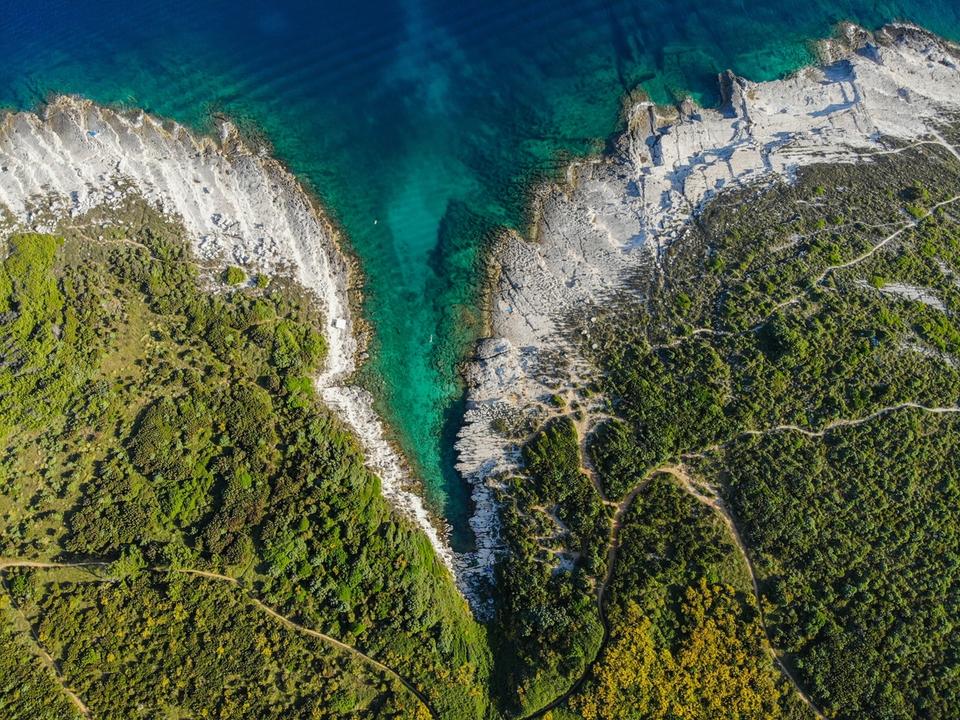
Cycle through coastal towns, hilltop villages and vineyards on this scenic Croatia bike and boat holiday across Istria and its islands.
The Dalmatian Coast is not flat. Island roads climb and descend, sometimes steeply, and the terrain is genuinely hilly in places. But most bike-and-boat tours in this region are designed around e-bikes, which transform the experience. With an e-bike, a difficulty rating of 2 out of 5 is realistic for most riders — you need a reasonable level of fitness and the ability to cycle for three to four hours, but you do not need to be a trained cyclist.
Daily distances on the Dalmatian Coast - National Parks and Islands tour range from 17 to 31 miles. The rides are guided, so there is always someone who knows the route and can adjust the pace. If a particular ride feels too ambitious, you can often return to the boat early and let it pick you up at the next port — another advantage of the format.
For experienced cyclists who prefer a standard bike, some tours allow this, though you should be confident on hills and prepared for a harder physical day. The e-bike option is not a compromise — it is the way most people ride these routes, and it means you arrive at the viewpoints and the swim stops with enough energy to enjoy them.
Most cycling holidays are sociable to a degree — you share a route with other riders, you eat together in the evening, you swap stories over dinner. But the bike-and-boat format in Croatia takes this further, and it is worth understanding why if you are considering travelling solo or with a group of friends.
On a hotel-to-hotel tour, the group disperses each evening. People go to their rooms, eat at different restaurants, and the social element is largely confined to the hours on the bike. On a boat, the dynamic is different. You are living together. Breakfast is communal. The sun deck is shared. The swim stop is a group event. Dinner is around the same table, on deck or ashore. The boat creates a natural social environment without forcing it — there is always somewhere to retreat to if you want quiet time, but the default setting is togetherness.
This makes bike-and-boat Croatia one of the best cycling holidays for solo travellers. You are not alone — you are part of a group from day one, and the shared experience of cycling, swimming, and eating together builds connections quickly. Several Pedal Ventures customers have described it as the holiday where they made friends they still travel with years later.
For groups of friends, the format is equally well suited. A group of four to eight people can effectively take over a section of the boat, and the mix of cycling, sailing, and socialising creates a holiday that works for different energy levels and interests within the group. Not everyone has to ride every day. Not everyone has to cycle at the same pace. The boat is the constant, and the cycling is the daily adventure.
The Dalmatian cycling season runs from April to October, but the best months depend on what you are looking for. The Croatian National Tourist Board has seasonal guides and regional information worth checking before you travel.
April and May offer warm temperatures (typically 18-24 degrees), quiet roads, and wildflowers across the islands. The sea is still cool for swimming — around 17-19 degrees in April, warming to 20-22 degrees by late May — but the cycling conditions are close to ideal. This is the sweet spot for riders who want comfortable temperatures and fewer crowds.
June is excellent. Temperatures climb into the high twenties, the sea is warm enough for proper swimming, and the islands have not yet reached peak season. Lavender is in bloom on Hvar, which adds a visual and olfactory dimension to the riding.
July and August are hot — regularly above 30 degrees — and the coast is at its busiest. Cycling in the heat of the day is harder work, and popular harbours can be crowded. That said, the early mornings and late afternoons are beautiful, and the long daylight hours mean you can ride early and swim late.
September and October are strong choices. The sea is at its warmest (24-26 degrees in September), the air temperatures are comfortable, and the summer crowds have thinned. The light in September is particularly good — low and golden, the kind that makes every photograph look better than you remember.
Croatian food on the Dalmatian Coast is Mediterranean in the best sense — fresh, seasonal, and unfussy. On bike-and-boat tours, meals alternate between the boat's galley and local restaurants ashore. On board, expect fresh fish, grilled vegetables, local cheeses, and simple salads dressed with Croatian olive oil. Ashore, the waterfront konobas serve grilled sea bass, octopus salad, black risotto made with cuttlefish ink, and pasticada — a slow-cooked beef stew that is Dalmatia's signature dish.
The wines are worth paying attention to. Croatia has more than 130 indigenous grape varieties, many of which you will not find anywhere else. On the islands, look for Posip (a dry white from Korcula), Grk (another white, grown almost exclusively on Korcula's Lumbarda peninsula), and Plavac Mali (a robust red related to Zinfandel). Most tours include at least one wine tasting, and the boat's bar is typically well stocked with local options.
For foodie cyclists, this combination of on-board dining and shoreside exploration is one of the real pleasures of the format. You do not need to research restaurants or make reservations — the guide knows which konobas are worth visiting, and the group eats together.
Croatia occupies a distinctive niche among European cycling holidays. It is not trying to compete with Tuscany on cuisine or Provence on wine-country charm. Its advantage is the format — the combination of cycling, sailing, and island-hopping that no hotel-to-hotel destination can replicate.
If you are considering a coastal cycling holiday in Croatia versus, say, the Amalfi Coast or the French Riviera, the comparison is not really route-to-route. It is experience-to-experience. In Croatia, the water is part of the holiday in a way it simply is not on a mainland coast ride. You swim every day. You watch the islands from the deck. You fall asleep to the gentle movement of the boat at anchor.
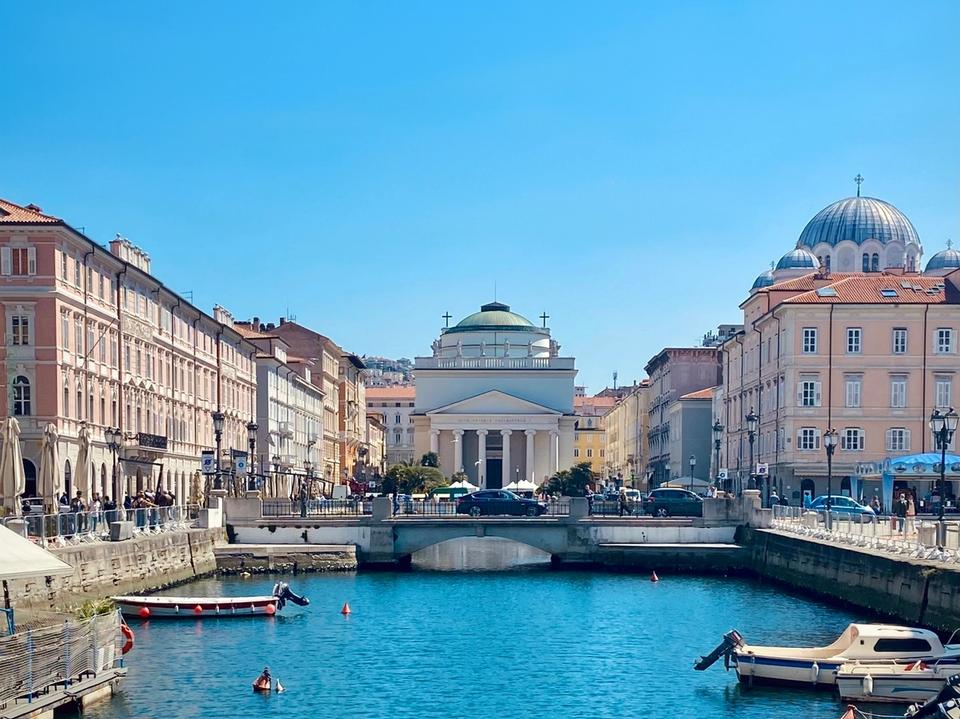
Cycle from Venice to Porec through Italy, Slovenia, and Croatia. Discover UNESCO towns, coastal scenery, and rich history on this unique bike and boat adventure.
For families considering the bike-and-boat format more broadly, our guide to family-friendly bike and boat tours in Europe covers other destinations where the format works well, including the Netherlands and Italy.
And if you are drawn to the Istrian Peninsula in northern Croatia — gentler terrain, truffle country, Roman and Venetian heritage — the Highlights of Istria - Island Hopping and National Parks tour offers a bike-and-boat experience with a different character: more gastronomic, more cultural, and slightly less island-focused.
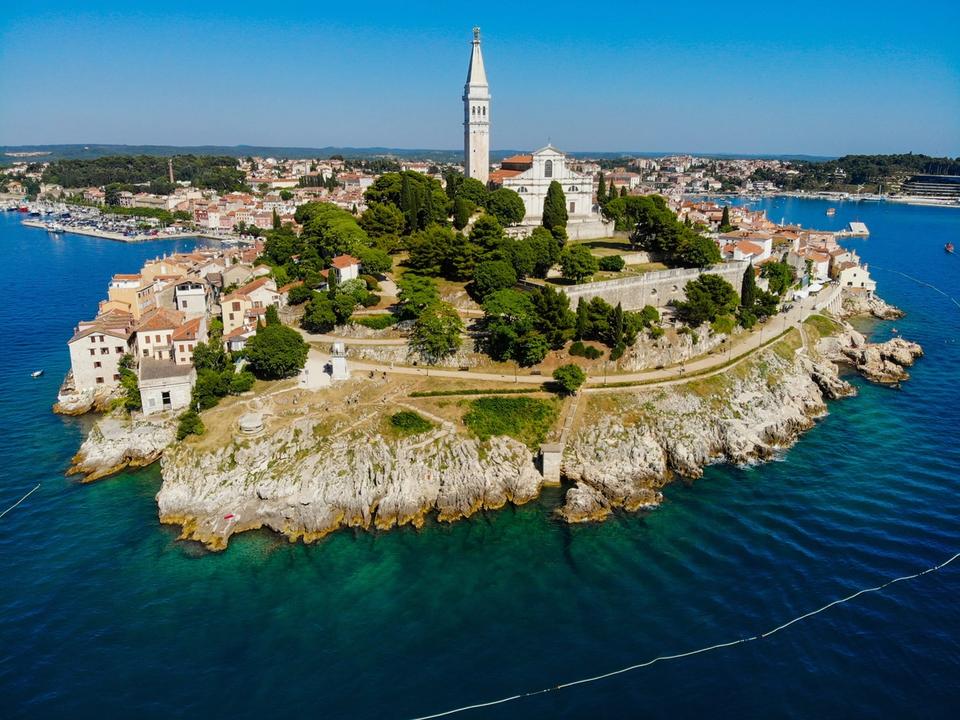
Discover Istria by bike and boat on this Croatian island-hopping tour with coastal rides, national parks, and historic harbour towns.
Flights. The main gateways for Dalmatian bike-and-boat tours are Split and Zadar, both well served by direct flights from the UK (typically 2.5 hours). Some tours start and finish in the same city; others are point-to-point, so check the itinerary before booking flights.
Fitness. You do not need to be a trained cyclist. If you can ride a bike for three to four hours with breaks, and you are comfortable with hills (remembering that e-bikes flatten them significantly), you will manage. The guided format means nobody gets left behind.
What is included. On the Dalmatian Coast tours available through Pedal Ventures, the package typically covers eight days on a motor yacht with crew, a mix of full board and half board, an English-speaking guide, guided cycling tours, cabin cleaning, bed linen and towels, and entrance fees to national parks on group visits. Bikes are available to hire but are not included in the base price — check the listing for current rates. Flights, transfers, and travel insurance are not included.
Financial protection. Holidays booked through Pedal Ventures are protected by PTS (Protected Trust Services), which means your money is protected if Pedal Ventures or the operator fails. At an average booking value of around £3,000, this matters — and it is worth checking whether any other platform you are comparing offers equivalent protection.
Solo travellers. Most tours welcome solo bookings. You will typically share a twin cabin (with another solo traveller of the same gender) unless you pay a single supplement for a private cabin. The group sizes on these boats are usually 16-20 people, which is large enough to meet a range of people and small enough that everyone knows each other by day two.
Browse all Croatia cycling holidays on Pedal Ventures to see current tours, dates, and availability.
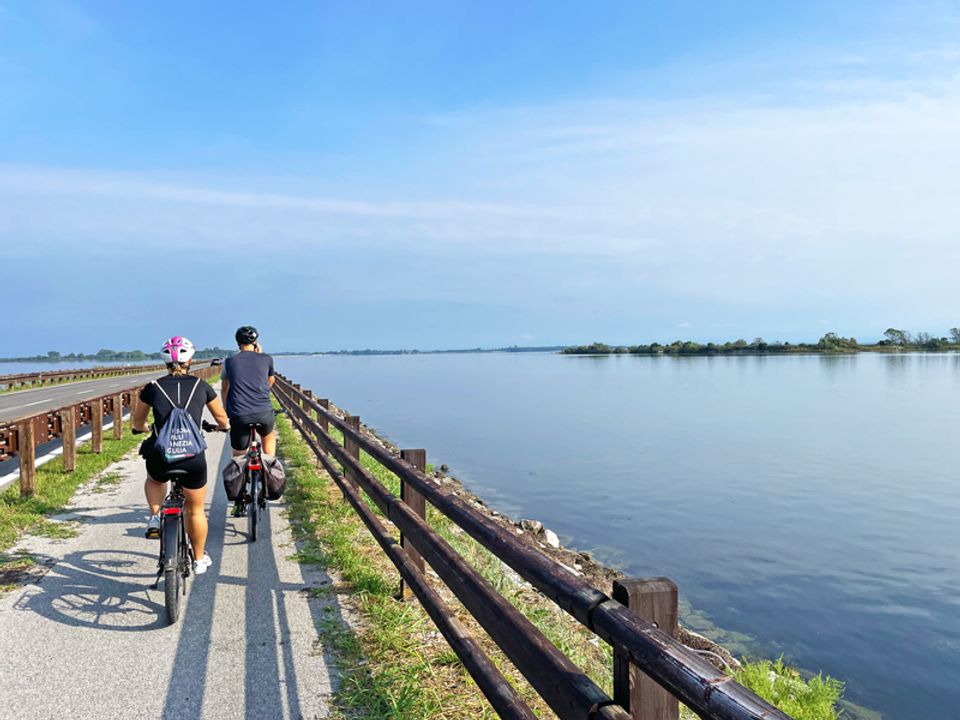
Explore Friuli-Venezia Giulia by bike on this 8-day loop from Udine. Discover hidden Italy through vineyards, Adriatic coast, lagoons and medieval towns.
You need a reasonable level of general fitness — enough to cycle for three to four hours across hilly terrain. However, most Dalmatian Coast tours use e-bikes as standard, which significantly reduces the physical demand. Daily distances range from 17 to 31 miles, and the pace is set by a guide who adjusts for the group. If you cycle recreationally at home — weekend rides of 15-20 miles, for instance — you will be well prepared.
Most operators supply e-bikes or hybrid bikes as part of the hire package. Bringing your own road bike is usually possible but comes with logistical challenges — limited storage space on the yacht, the need for a bike box on your flight, and the fact that road bikes are less suited to the mixed surfaces you will encounter on island roads. For most riders, hiring is the simpler and better option.
Croatia is widely regarded as a very safe destination for solo travellers, including women. The bike-and-boat format adds an extra layer of reassurance — you are cycling with a group and a guide during the day, and sleeping on a crewed yacht at night. The FCDO travel advice for Croatia rates the country as generally safe, with no specific concerns for solo travellers.
May, June, and September are the most popular months, and for good reason. Temperatures are warm but not oppressive (22-28 degrees), the sea is swimmable, and the islands are not at peak-season capacity. April and October are cooler and quieter, appealing if you prefer fewer people and do not mind slightly cooler water.
Prices vary by tour, cabin type, and season, but you can expect to pay in the region of £1,500-£3,000 per person for a week-long tour. This typically includes accommodation on the yacht, most meals, a guide, and access to the day's cycling routes. Bike hire, flights, and transfers are usually extra. Check current pricing on the Pedal Ventures Croatia page.
No. On most tours, you are free to skip a ride and stay on the boat instead. The yacht moves between ports regardless, so you will still arrive at the next destination. Some passengers alternate cycling days with rest days, which works well on longer or hotter tours. The flexibility is one of the format's strengths.
The Adriatic has one of the best weather records in the Mediterranean, and rain during the cycling season (April-October) is relatively rare. If conditions do turn, the captain can adjust the route to find more sheltered waters, and the guide can shorten or reroute the cycling. The boat itself provides a comfortable refuge — it is not like being stuck in a hotel room watching the rain.
Yes, and this is surprisingly common on bike-and-boat tours. One partner cycles while the other relaxes on the boat, swims, reads, or explores the harbour town independently. You reunite for lunch or the afternoon swim. It is one of the few cycling holiday formats that genuinely works for couples with different activity preferences.