Bike tour
The Champagne Getaway
Cycle through the heart of Champagne from Reims to Épernay and back. Explore vineyard landscapes, UNESCO sites and charming villages while learning how the region’s famous sparkling wine comes to life.
Most people arrive on the Avenue de Champagne by taxi from the train station. You pull up outside Moët & Chandon, walk through the gates, descend into the chalk cellars, taste a glass, and leave. It is a perfectly reasonable way to spend a Tuesday afternoon in Épernay.
There is another way to arrive. You come from the west, on a bike, having spent eight days pedalling from Paris along the Marne Valley. You have already been through Brie country, past the WWI memorials at Château-Thierry, up to the abbey at Hautvillers where Dom Pérignon is buried. By the time you coast down the Avenue de Champagne for the first time, you understand something about where you are that a taxi ride does not give you. This is what a champagne cycling holiday France can be at its best.
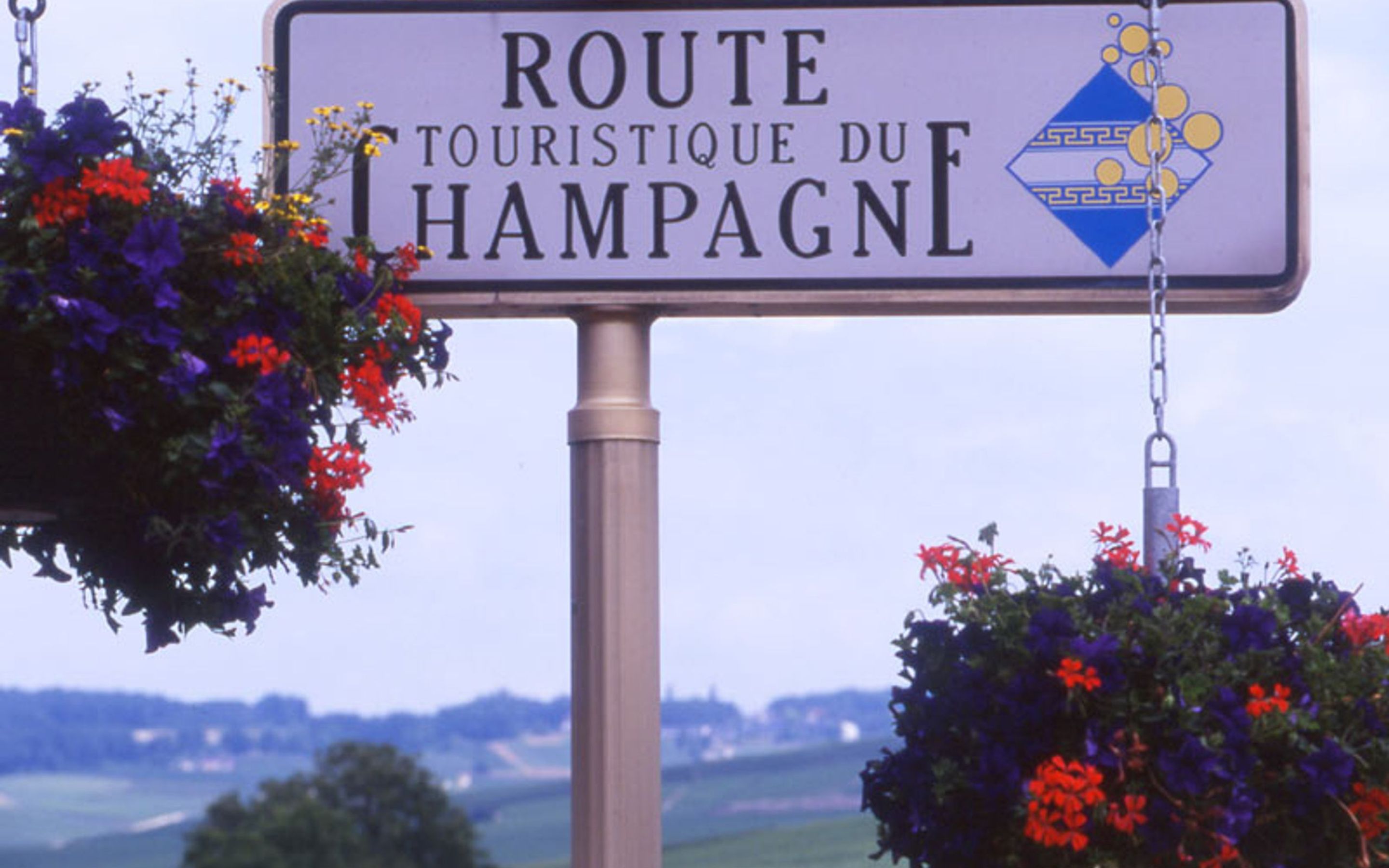
The street is 3km long, lined on both sides by the great houses — Moët & Chandon, Perrier-Jouët, Pol Roger. Beneath it, stretching for more than 100km under the town, are the chalk cellars where 200 million bottles are ageing at 12°C. When you arrive on a bike, after eight days in the landscape that produces every one of those bottles, it lands differently.
Champagne is the most famous wine region in the world and one of the least written-about cycling destinations. That is partly because the name travels so far beyond the place that most people never think to actually go there. And partly because the cycling — which is genuinely good — has been overshadowed by the wine tourism.
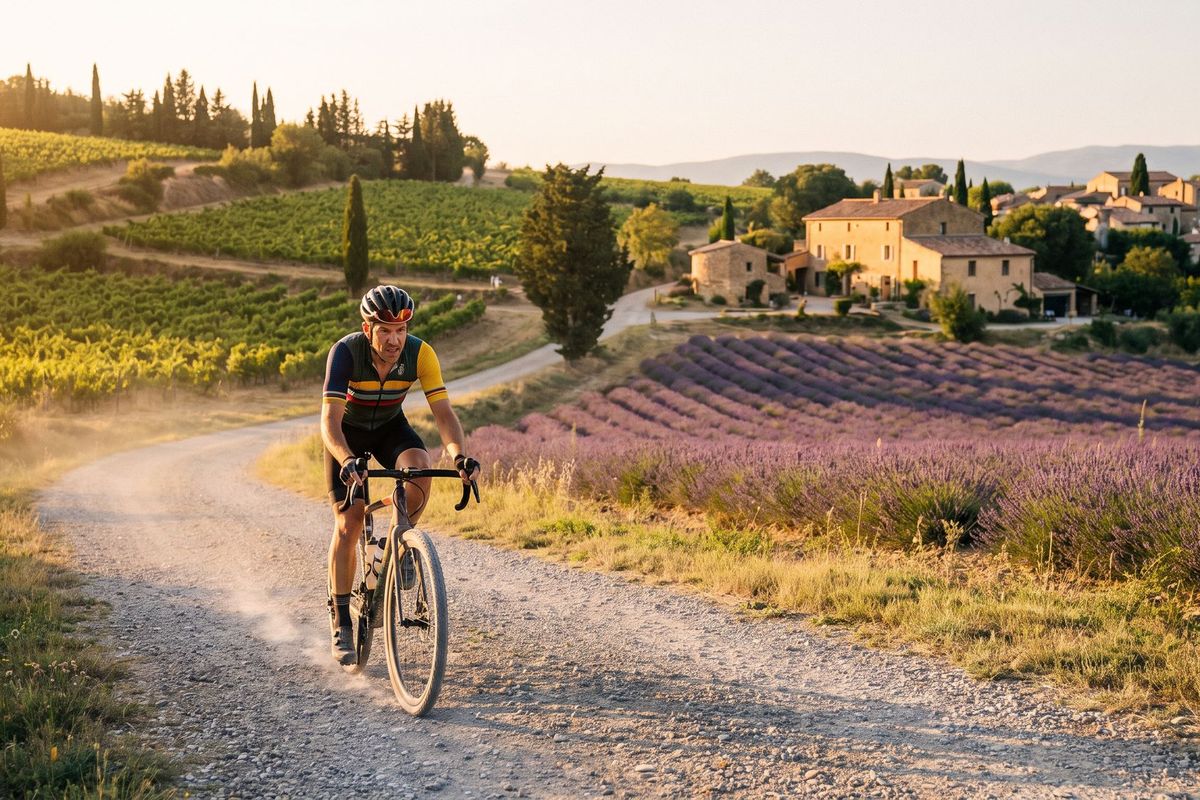
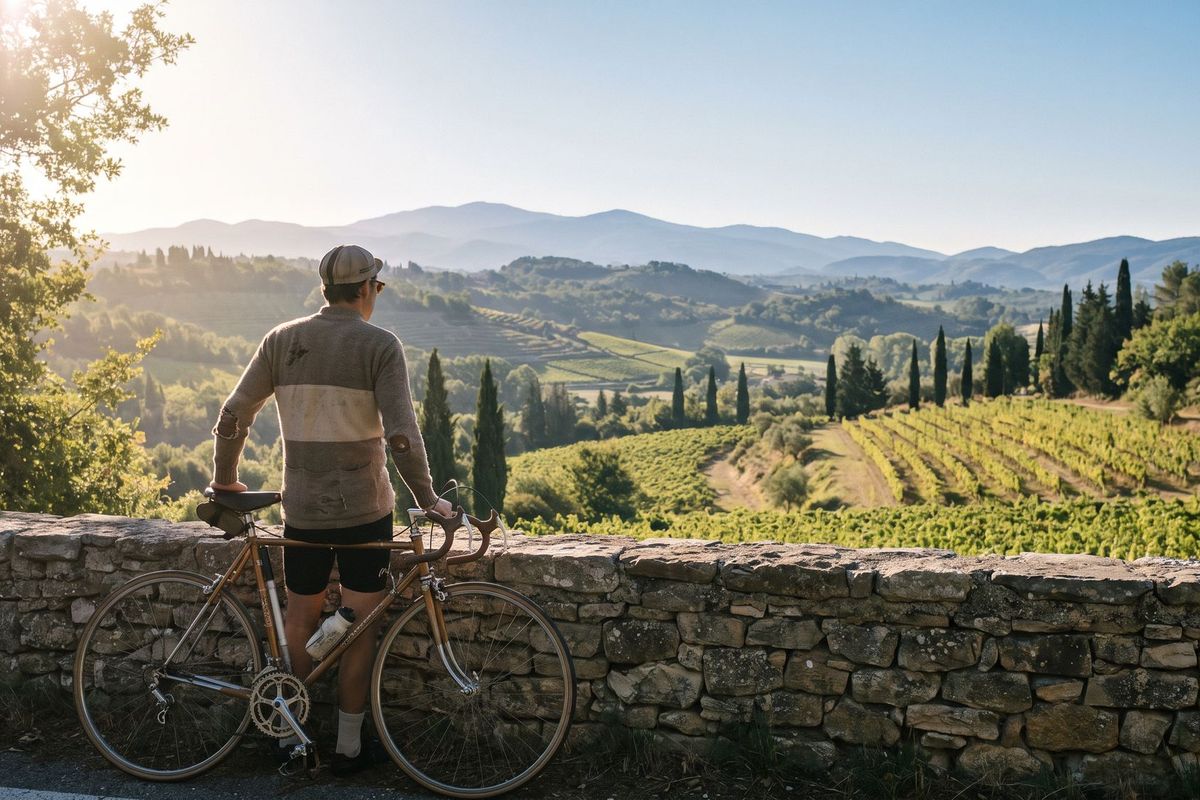
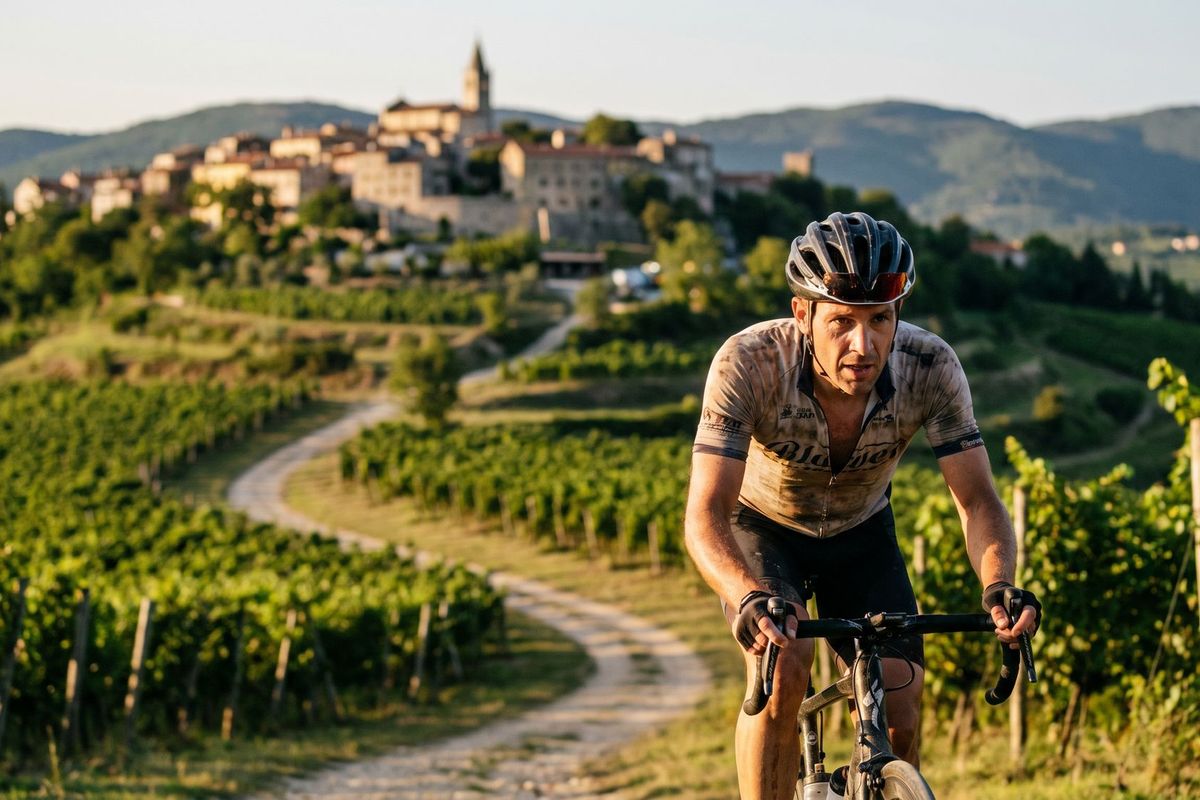
The terrain is not Alpine. The Marne Valley is gentle and rolling; the Montagne de Reims, the chalk ridge that separates the valley from the plain to the north, has some elevation but nothing that an occasional cyclist would find difficult. On an e-bike, the hillier sections become easy. The Côte des Blancs, the south-facing chalk ridge running south from Épernay, is flat enough to ride at a conversational pace while watching the Chardonnay vines scroll past.
The region has two things that most cycling destinations don't. First, the sensory element of the harvest: in late September, the Champagne vineyards come alive with pickers, tractors on the narrow roads, and the sharp smell of fermenting juice from open cellar doors. You can't get that from a wine tour bus. Second, a history that has nothing to do with champagne. The Marne was one of the defining fronts of the First World War — Reims Cathedral was shelled repeatedly, the American Expeditionary Forces fought here at Château-Thierry, the landscape is still marked by cemeteries and rebuilt towns. A cycling route that moves between Michelin-starred cellar visits and WWI memorials in the same afternoon is doing something unusual.
For everything we offer across cycling holidays in France, the Champagne region stands apart for the range of experiences it compresses into a small area.
Cycle through the heart of Champagne from Reims to Épernay and back. Explore vineyard landscapes, UNESCO sites and charming villages while learning how the region’s famous sparkling wine comes to life.
The most distinctive product in our Champagne portfolio is also the most distinctive product we have anywhere in France. The Champagne - Paris to Épernay by E-Bike tour runs for eight days. You cycle by day; a barge moves along the canal and river network to meet you each evening. Your luggage is already in your cabin. You go to bed surrounded by vineyard. No hotel check-ins, no panniers, no logistics.
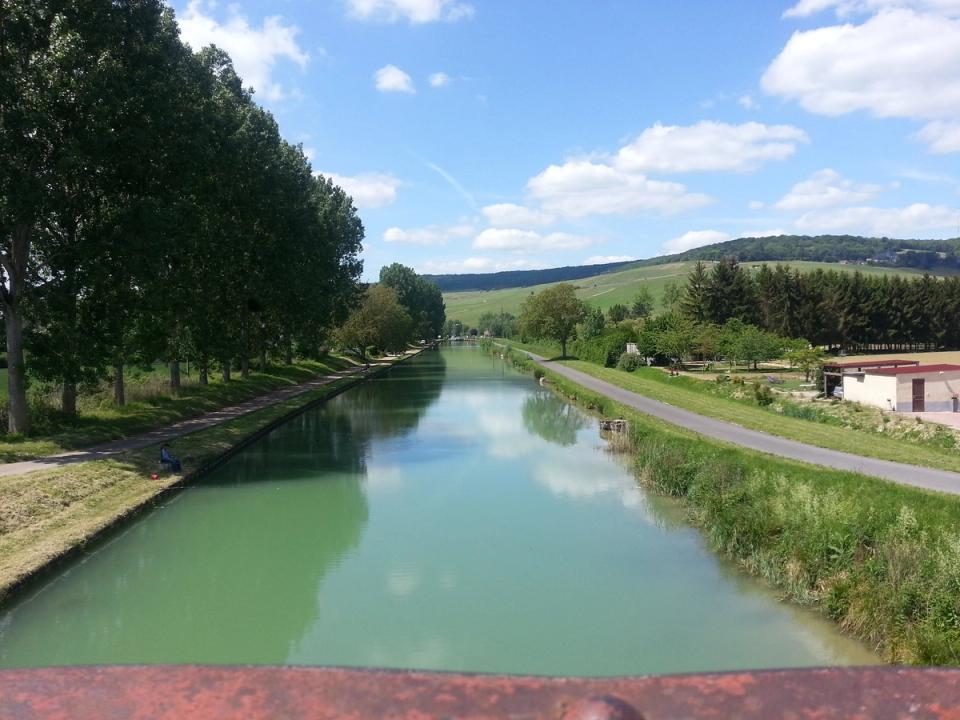
Explore Champagne by e-bike & barge. From Paris to Épernay, sip bubbly, cycle vineyard trails, and sleep on a floating hotel.
It helps to know what a bike and barge holiday actually involves if you haven't done one before. The barge is not a camping boat — it's a proper floating hotel with en-suite cabins, a dining room, and a deck for the evenings. Most nights are moored in small canal towns or alongside the vineyard itself. Meals are included on board, prepared by the barge chef. The cycling is guided, with daily briefings and a tour leader, and e-bikes are available to hire, which makes the format genuinely accessible regardless of fitness.
The journey runs roughly like this:
Paris. You start in the capital and cycle out through the eastern suburbs onto the Canal de l'Ourcq towpath — one of the better cycling exits from any major European city. The canal path is traffic-free and flat.
Meaux. A medieval cathedral city that most visitors skip entirely on the way to Champagne. Worth a slower look: the cathedral is exceptional, the Saturday market fills the square around it, and this is the first night on the barge.
Jouarre. Brie de Meaux country. The tasting at a local fromagerie is included — this is an AOC cheese with a protected origin, and the difference between Brie bought from a supermarket and Brie from a dairy 10km from where it's made is significant enough to remember.
Château-Thierry. The mood shifts here. The Aisne-Marne American Cemetery sits on a hillside above the town — 2,289 American soldiers buried here, mostly men of the 3rd Division who held the Marne line in the summer of 1918. The memorial overlooking the valley is one of the most affecting things you'll see in this region.
The Marne Valley. The river widens east of Château-Thierry, the vine-covered hills begin to close in from both sides, and you understand that you are entering the Champagne appellation. The limestone and chalk that define the wines here are the same geology that produced the chalk landscape of the Côte des Blancs — visible in the road cuttings and the bright soil under the vines.
Hautvillers. Dom Pérignon's abbey stands above the village — the Benedictine monk who perfected the secondary fermentation in the bottle, turning still Champagne wine into a sparkling one, is buried in the abbey church. The visit is included. It's not a museum in the conventional sense; it's a working monastic building with a genuine sense of the history.
Épernay. The final day. The Avenue de Champagne and a cellar visit and tasting at one of the great houses. By this point you have ridden 200-odd kilometres through the landscape that surrounds the town, which makes descending into those chalk cellars rather more meaningful than the taxi version.
Difficulty 1 throughout. All meals included except one dinner and drinks. The e-bike option removes any barrier from the hillier days.
Eight days is not always possible. The Champagne region works well for a 3–5 day break as well, with two specific tours built around that format.
The Épernay Short Break is the most self-contained option. You base yourself in Épernay for three nights and take two contrasting loop rides from the town. The first follows the Marne Valley west — the river, vine-covered slopes, small wine villages. The second heads south onto the Côte des Blancs, the chalk ridge where Chardonnay grapes produce the great Blanc de Blancs Champagnes: steelier, more austere, higher in acid than the blend of Pinot Noir and Chardonnay in most prestige cuvées. Between rides you have time to explore the town at your own pace, visit cellars, walk the Avenue de Champagne in the evening. Difficulty 2. Self-guided. The most relaxed introduction to the region.
Tour link: Épernay Short Break
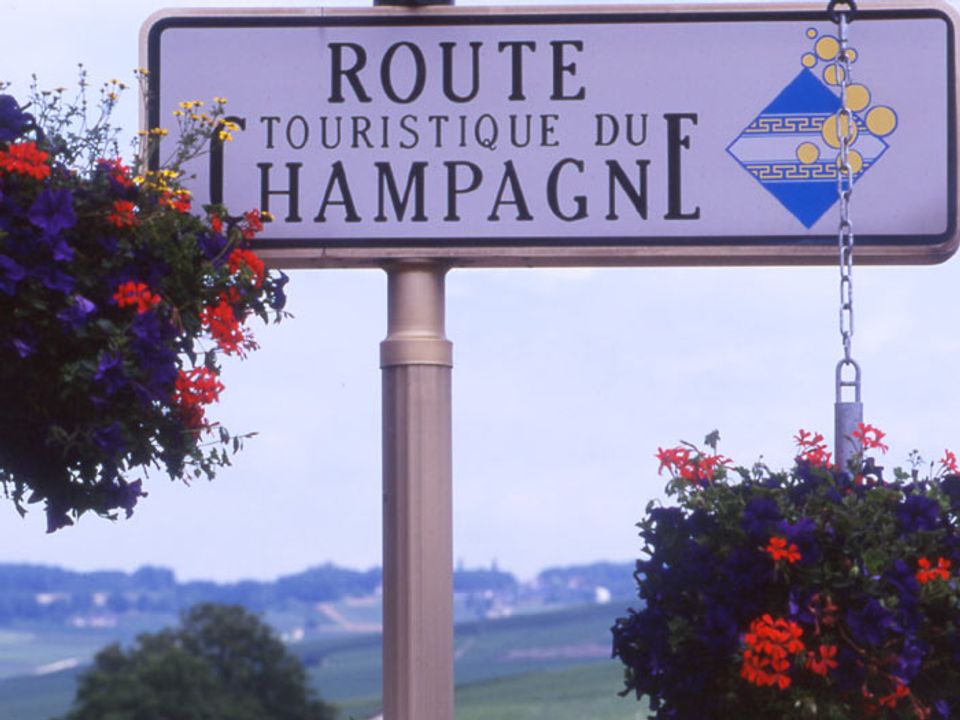
Base yourself in Épernay for a relaxed Champagne cycling break. Enjoy two scenic loop rides through the Marne Valley and the Côte des Blancs with time to explore cellars, villages and vineyards.
The Champagne Getaway is a longer, more demanding circuit: Reims to Épernay and back, covering the Montagne de Reims Natural Park, the UNESCO-listed Gothic Cathedral in Reims (one of the finest Gothic buildings in France, rebuilt after severe shelling in WWI and still not entirely finished), and the vineyards of the Vallée de la Marne. The route includes meeting growers in the Marne Valley — small producers who are often doing more interesting things than the grandes maisons. Difficulty 3: the most challenging of the three Champagne options, and the most geographically comprehensive.
Tour link: The Champagne Getaway
Timing: Late September is the grape harvest — the most atmospheric time in any French wine region, and Champagne is no exception. The picking crews are in the vines from dawn, tractors move slowly on the narrow roads between villages, and the smell of fermenting juice hangs over the whole valley. Cellar doors are busier than usual, but that also means there is more energy in the region. The trade-off is worth it.
June and early October offer similar weather with fewer visitors. Spring (April to May) is excellent — the vines are leafing out, the roads are quiet, the light is good. Avoid August if you want the popular villages to yourself.
Getting there: Eurostar runs direct from London St Pancras to Paris (2h15). The Paris to Épernay barge tour starts from Paris — no flying required. For those joining in Épernay directly, there are direct trains from Paris Gare de l'Est (1h20). Total door-to-door from central London to central Épernay by train is around 4 hours.
For all our Champagne cycling holidays, including the full barge tour and both shorter breaks, the region page has current availability and pricing.
Cycle the Champagne region from Reims, riding through the Montagne de Reims vineyards to Epernay and the birthplace of champagne. A self-guided wine tour.
Yes — the terrain is gentler than most people expect. The Marne Valley is flat to gently rolling, and the Côte des Blancs is a relaxed ridge route. The Montagne de Reims has more elevation but nothing that an occasional cyclist finds unmanageable. E-bikes are available on all three of our Champagne tours, which makes the hillier sections genuinely easy.
A bike and barge holiday combines cycling by day with sleeping on a barge at night. The barge moves along the canal or river network while you cycle; it's moored when you arrive each evening. Your luggage is already on board — there's no panniers, no hotel check-ins, no logistics to manage. Meals are usually included on board. The format is popular in the Netherlands and Belgium, and the Paris to Épernay route is one of the few genuinely exceptional versions in France.
The easiest route from the UK is Eurostar from London St Pancras to Paris (2h15), then either continue on the barge tour from Paris, or take a direct train from Paris Gare de l'Est to Épernay (1h20). No flying required.
Late September is the harvest — the most atmospheric time, with picking crews in the vines and the smell of fermenting juice from cellar doors. June and early October offer similar weather with quieter roads. Spring (April to May) is excellent: green vines, quiet roads, pleasant temperatures.
No — but it helps on the hillier routes. The Marne Valley sections are flat enough for any fitness level on a standard bike. The Montagne de Reims (on the Champagne Getaway) has more climbing, where an e-bike makes a noticeable difference. The Paris to Épernay barge tour is rated difficulty 1 and entirely manageable without one; e-bikes are available to hire if you'd prefer the extra assistance.