Bike tour
Prague to Dresden
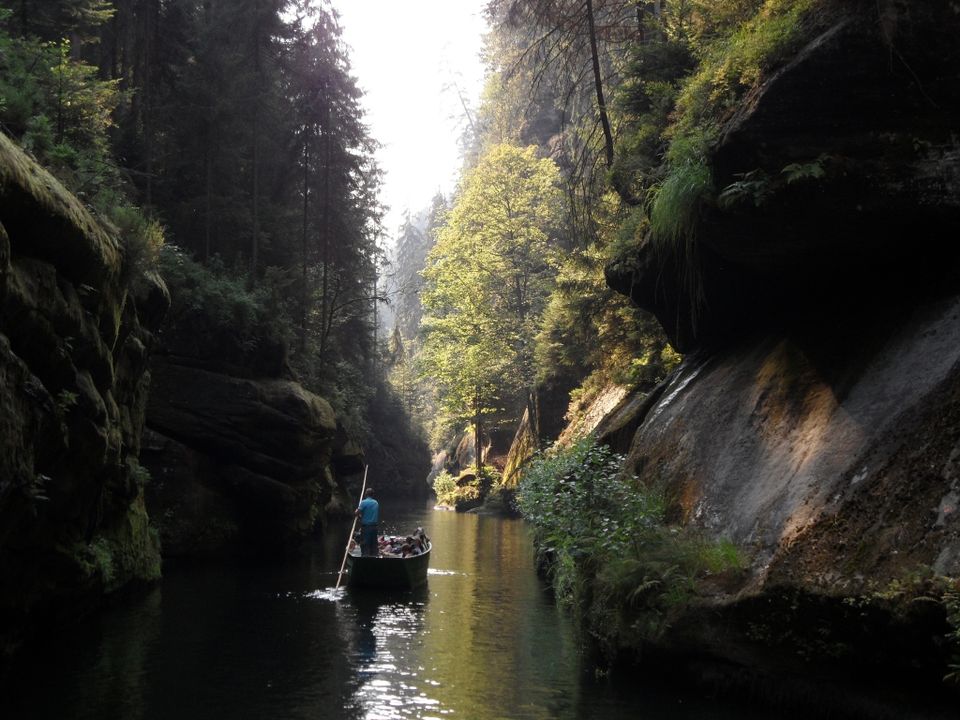
Cycle from Prague to Dresden – Discover castles, river valleys, and medieval towns on this scenic ride through Bohemia and Saxony along the Elbe Cycle Path.

Rob

No nation on earth drinks more beer per head than the Czechs. Even after a long decline — from a peak of 163 litres per person in 2005 to around 130 litres in 2024 — the country still tops the world table, and has done for three decades. Beer here is not a weekend treat or a tourist novelty. It is tap water with an opinion: cheaper than a soft drink in most pubs, brewed in the town you are standing in, and poured with a care that borders on ceremony.
That makes the Czech Republic one of the most rewarding places in Europe to combine two wheels with a well-earned glass — which is exactly what a cycling holiday in the Czech Republic tends to become. The terrain helps. This is a country of wide river valleys, flat fishpond plains and gentle Bohemian hills, threaded by more than 40,000 kilometres of marked cycle routes. You are rarely working hard enough to be too tired for the reward at the end. The riding gives the day its shape; the beer gives the evening its point.
Cycle from Prague to Dresden – Discover castles, river valleys, and medieval towns on this scenic ride through Bohemia and Saxony along the Elbe Cycle Path.
Every pale lager in the world — the golden, clear, fizzy stuff that fills most of the planet's glasses — traces back to one brewery in one Bohemian city. In 1842, the Bavarian brewmaster Josef Groll brewed the first batch of pale lager in Plzeň (Pilsen), and beer was never the same again. Pilsner Urquell is still made there, by the same method, in a brewery whose nine kilometres of cellars you can walk before tasting the unfiltered beer straight from an oak barrel — something you cannot do anywhere else.
Western Bohemia around Plzeň rides gently, on quiet lanes between hop fields and forest. It also happens to be the corner of the country richest in spa towns, which brings us to a peculiarly Czech way to end a day in the saddle — but more on that below. If you only understand one thing about Czech beer, understand that it started here, and that the locals will correct you, kindly, if you call any of it "just a lager."
Head south and you reach České Budějovice, the town the German speakers called Budweis. Its brewing pedigree is older than almost anywhere: the town was granted royal brewing rights in 1265, and by the early 16th century most of its revenue came from beer. The modern Czech brewery, Budějovický Budvar, was founded in 1895 and has been quietly exporting its deep, bready lager — and arguing over the Budweiser name with a much larger American company — ever since.
South Bohemia is the region I would send a first-time visitor. The landscape is flat to gently rolling, stitched together by thousands of medieval fishponds and the kind of quiet back roads that make you forget you are covering distance at all. Rides link storybook towns — none more so than Český Krumlov, whose UNESCO-listed old town coils around a bend in the Vltava beneath a painted castle. This is the terrain our South Bohemia routes are built on, and it is beer country to its bones: every town of any size has a brewery, and most have had one for centuries.
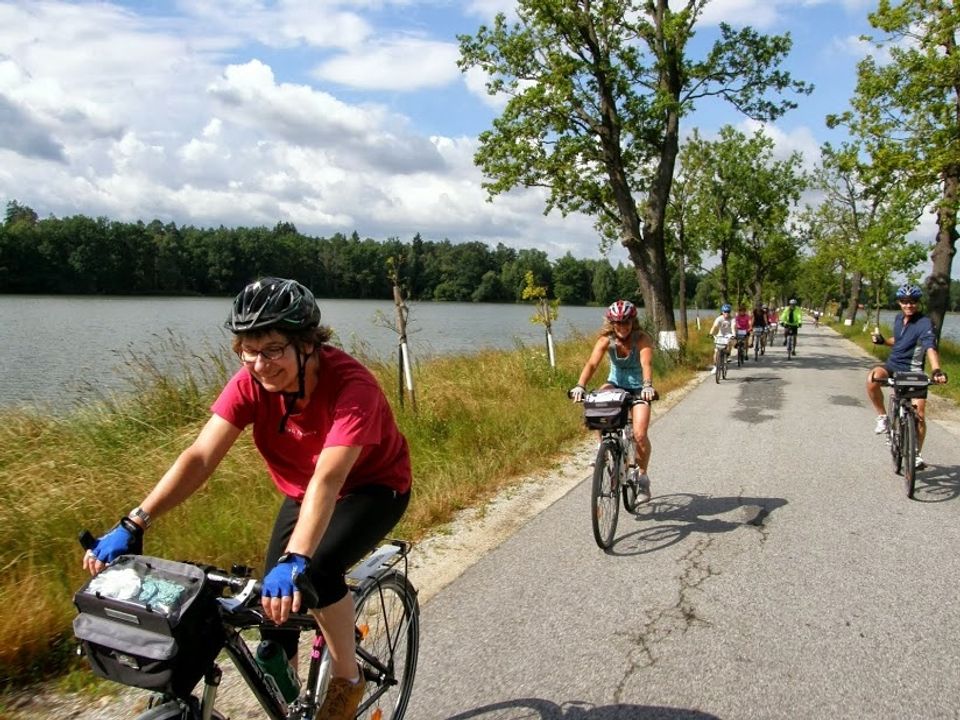
Cycle from Prague to Vienna – Explore the Czech Republic and Austria by bike on this scenic Greenways route through forests, castles, and UNESCO-listed towns.
Most trips begin or end in Prague, and the capital rewards a day off the long-distance route. It has more than 400 kilometres of marked cycle paths, many of them following the Vltava, so you can ride from the old town out to the leafy edges of the city almost entirely by the water.
The reward is the beer garden. On a warm evening, half of Prague decamps to Letná, the park on the hill above the river, where long communal benches look out over the bridges and the beer is poured by the half-litre. It is the most sociable way to drink in the country, and a natural fit for the Prague leg of a Czech cycling trip: ride the river in the afternoon, roll up to the garden as the light goes, and let the city do the rest.
Part of what makes Czech beer worth cycling towards is that the Czechs take the serving of it as seriously as the brewing. Order a pivo in a good hospoda — the neighbourhood pub that anchors every Czech town — and you may be asked how you want it poured. A hladinka is the standard: a smooth, creamy head about three fingers deep. Ask for a mlíko — "milk" — and you get a glass filled almost entirely with soft foam, sweet and short-lived, the kind of thing you drink once out of curiosity and then, often, again. Much of the best beer is tankové pivo, tank beer, delivered unpasteurised to the pub and served within days.
The food is built for a day of riding. Czech kitchens deal in the kind of cooking that puts your legs back together: beef svíčková in a creamy root-vegetable sauce, goulash mopped up with bread dumplings, roast pork with sauerkraut. For a lighter stop there is nakládaný hermelín, a soft cheese pickled in oil and spices, or utopenci, sausages soused in vinegar — both invented, more or less, to be eaten slowly alongside a second beer. None of it is delicate, and after 50 kilometres none of it needs to be.
Here is the correction most beer-minded visitors need. Cross into Moravia, the country's eastern third, and the culture changes. This is wine country — home to the Moravian Wine Trails, a network of more than 1,200 kilometres of cycle paths linking cellars, vineyards and villages around towns like Mikulov. The riding is lovely and the cellars are welcoming, but if beer is your reason for coming, plan your route through Bohemia rather than the far east.
It is a distinction worth making before you book. A trip built around Moravia's vineyards is a different holiday from one built around Bohemia's breweries — both excellent, but not interchangeable. Knowing which one you actually want is half the planning.
There is one Czech tradition that sounds like a joke and turns out to be sincere: the beer spa, or pivní lázně. You lower yourself into a wooden tub filled with warm water, hops, yeast and malt extract — the ingredients of beer, not the finished pint — while a tap beside the bath pours you the drinkable version to sip as you soak. The B vitamins and hops are said to be good for the skin and the muscles; whether or not that holds up, it is a deeply pleasant way to unknot a pair of cycling legs.
Beer spas turn up across the country, from breweries like Purkmistr near Plzeň to the grand West Bohemian spa towns of Karlovy Vary and Mariánské Lázně. After a few days in the saddle, an hour in a bath of hops is not the strangest thing you will do on a Czech cycling holiday, and it may be the one you talk about most when you get home.
The classic beer-and-bike itinerary follows the Greenways Prague–Vienna, the oldest long-distance trail in the country. It runs 470 kilometres on deliberately quiet, low-traffic paths, leaving Prague, threading South Bohemia's ponds and castle towns, and only tipping into Moravian wine country near the border — which means you can ride the Bohemian, beer-rich two-thirds and stop before the vineyards begin.
You do not need to be a strong cyclist to do it. The terrain is forgiving, the days are as long or short as you make them, and a good self-guided set-up handles the parts that are genuinely tedious to organise yourself: bikes waiting, luggage moved on to the next town, routes loaded to your phone, breweries and beer gardens marked along the way. Every operator we list is handpicked and financially protected, so a £3,000 trip is a decision you can make with your eyes open.
For a wider look at how the food and drink shapes a ride, our guide to food and cycling holidays is a good next read. But the short version is simple: come to Bohemia, ride the river valleys, and treat the beer not as a reward at the finish but as the culture you are cycling through.
Ready to plan a trip? Browse our Czech Republic cycling holidays and find the route that ends at the right glass.