Bike tour
Denmark & Sweden - Sail & Cycle Øresund
Cycle and sail through Denmark and Sweden. Explore the Øresund Strait, coastal towns, Ven Island, and UNESCO-listed Stevns Klint.

Rob
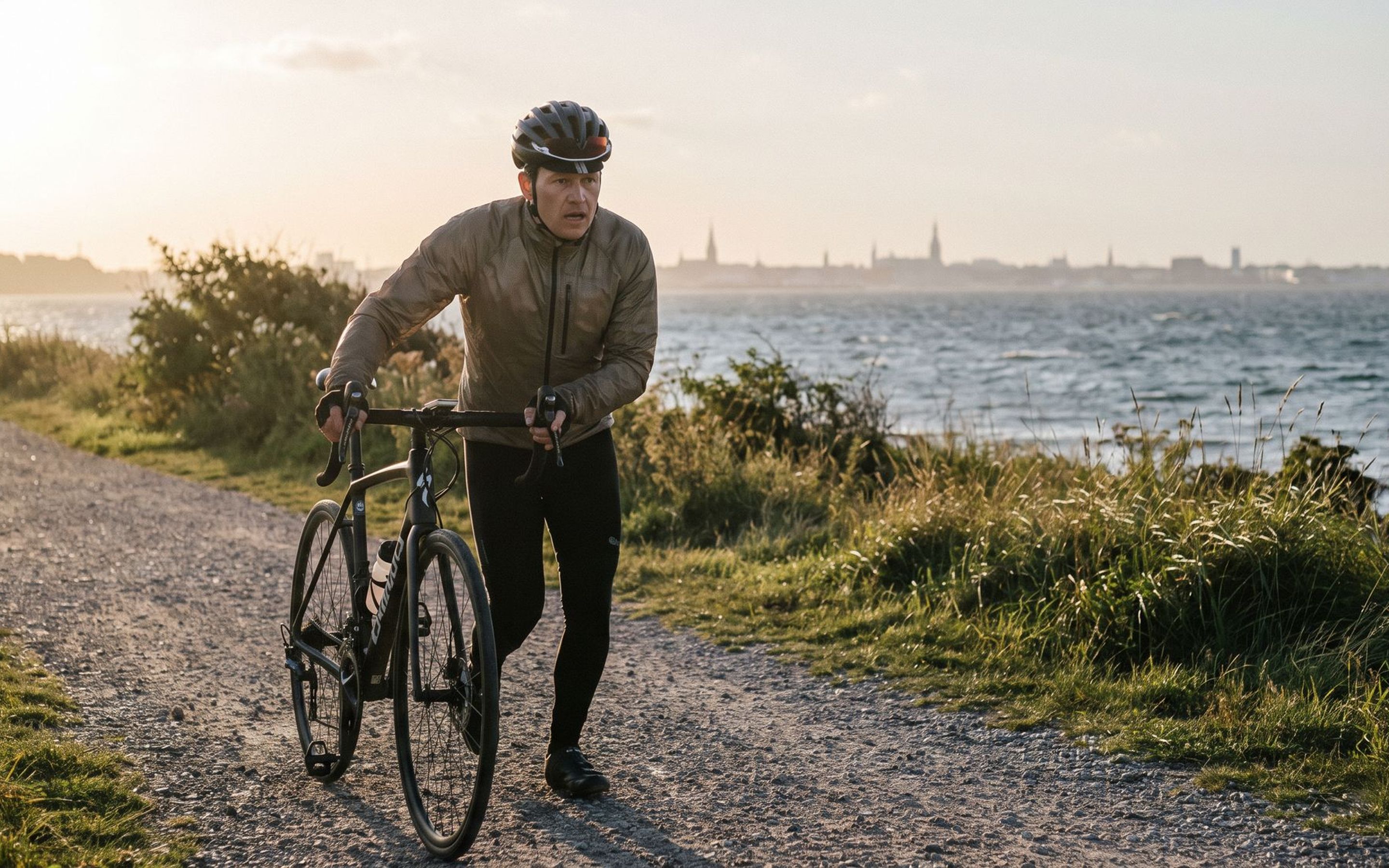
A cycling holiday in Denmark sounds like it should be the gentle one — flat, tidy, over before you have broken a sweat. The Øresund version quietly ignores that script. The flatness is real and welcome, but it is not the point. The point is the water: a narrow, busy strait with Denmark on one shore and Sweden on the other, close enough to see across, and a holiday built around moving between the two.
This is a route you ride in two countries and sail between, rather than grind out in one. On a cycling holiday in Denmark built this way, a boat does the work a luggage van does elsewhere — carrying you and the bikes across the strait and down the coast while you ride the good bits on either side. You can breakfast on a pastry in Copenhagen and watch the evening come in over a Swedish fishing harbour, all on the same pair of wheels. What follows is how the route hangs together, what you ride on each shore, and when to go.
The Øresund is one of Europe's great maritime pinch-points. At its narrowest, barely four kilometres separate the Danish town of Helsingør from Helsingborg in Sweden, and the whole strait has been a crossing place for centuries — the Helsingør–Helsingborg ferry is still among the busiest in the world, and for four hundred years Danish kings taxed every ship that passed, the Sound Dues that built Kronborg. Copenhagen and the Swedish city of Malmö sit about sixteen kilometres apart, now joined by the Øresund Bridge: a 7.8-kilometre span that dives into a tunnel at the artificial island of Peberholm, carrying road and a double-track railway between the two countries, and familiar to a generation from the Nordic-noir series that took its name.
You will not cycle the bridge itself — bikes are not allowed on it — and that is rather the charm. For a cyclist, the strait is crossed the older way, by boat, which is where the sail-and-bike trip across the Øresund comes in. A small ship becomes your moving hotel: it repositions between harbours while you ride a fresh coastal stretch each day, so there is no repacking and no long transfer. The water is not an obstacle to be got over. It is the thread the holiday is strung on.
Cycle and sail through Denmark and Sweden. Explore the Øresund Strait, coastal towns, Ven Island, and UNESCO-listed Stevns Klint.
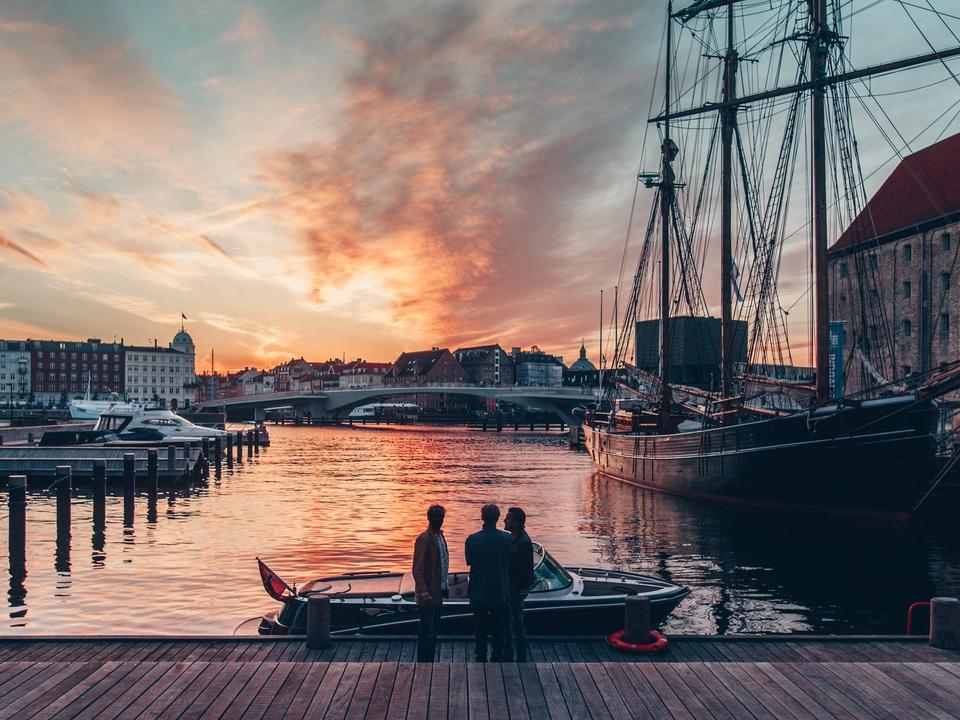
You start in the most cycle-friendly capital on earth. Copenhagen is a city where well over half of residents commute by bike, where segregated lanes are the default rather than the exception, and where riding out of the centre feels calm in a way few capitals manage. It is worth a day on its own before you point north — the harbour baths, Nyhavn, the long waterfront — and it makes a reassuring, flat start for anyone easing into the trip. The Copenhagen routes all lean on this same easy infrastructure.
North of the city runs the Danish Riviera, a coast road of beech woods, bathing jetties and tile-roofed villages looking out at Sweden. It is only about forty-five kilometres from central Copenhagen to Helsingør at the top, and the stretch is studded with reasons to stop — the yacht harbour at Rungsted and Karen Blixen's old home at Rungstedlund, the bathing town of Hornbæk — with two anchors in particular. The Louisiana museum at Humlebæk hangs its modern art above the water on one of the finest gallery sites anywhere, with a sculpture garden children can roam while you look. And at the top sits Kronborg, the Renaissance castle at Helsingør that Shakespeare used as Elsinore in Hamlet, a UNESCO World Heritage Site since 2000, which stages the play outdoors against its own ramparts each summer and makes a fittingly dramatic place to watch the ferries shuttle across to Sweden. The riding here is almost entirely flat and follows well-made paths — this stretch forms part of the EuroVelo network that threads Denmark, where the Sun Route doubles as national cycle route 9.
Cross the strait and the register changes. The Scanian coast — Skåne, Sweden's southern tip — is a touch wilder and emptier than the Danish shore, a run of long beaches, red fishing cabins and harbour towns where the day ends slowly. North of Helsingborg the Kullaberg peninsula rises into low cliffs above the sea, with the artists' village of Mölle on its flank; it is also a quietly serious food corner, heavy on just-landed fish and roadside farm stalls. Malmö, once you reach it, is a relaxed, walkable city with its own strong cycling culture, the long Ribersborg beach on its doorstep and a skyline bent around the Turning Torso tower.
The quiet highlight sits out in the middle of the water. The little island of Ven, roughly halfway between the two coasts and reached by a short passenger ferry from the Swedish town of Landskrona, is almost made for a day on a bike. It is barely seven kilometres end to end, gently rolling and largely free of through-traffic, ringed by a lane that loops it in an easy afternoon past rapeseed fields, the Backafall cliffs and the ruins of the astronomer Tycho Brahe's observatory, Uraniborg, with wide views back to both countries. It is the kind of place the sailing format reaches easily and a road trip never would. The Swedish Øresund routes and the wider Sweden collection pick up the coast from here if you want to ride further north.
The rhythm is the comfortable part. The ship is small — think dozens of guests rather than hundreds — with simple cabins, a dining room, and the bikes racked on deck. You wake in one harbour, eat breakfast aboard, and set off to ride that day's coastal stage while the boat repositions to the next town under its own steam. By mid-afternoon you roll into a fresh harbour to find the ship tied up and waiting, with an hour to swim or wander before dinner. Evenings alternate between eating on board — often the day's catch, or the open sandwiches the Danes call smørrebrød — and heading ashore into a harbour town. You unpack once, at the start, and never again, which is the whole quiet luxury of the format.
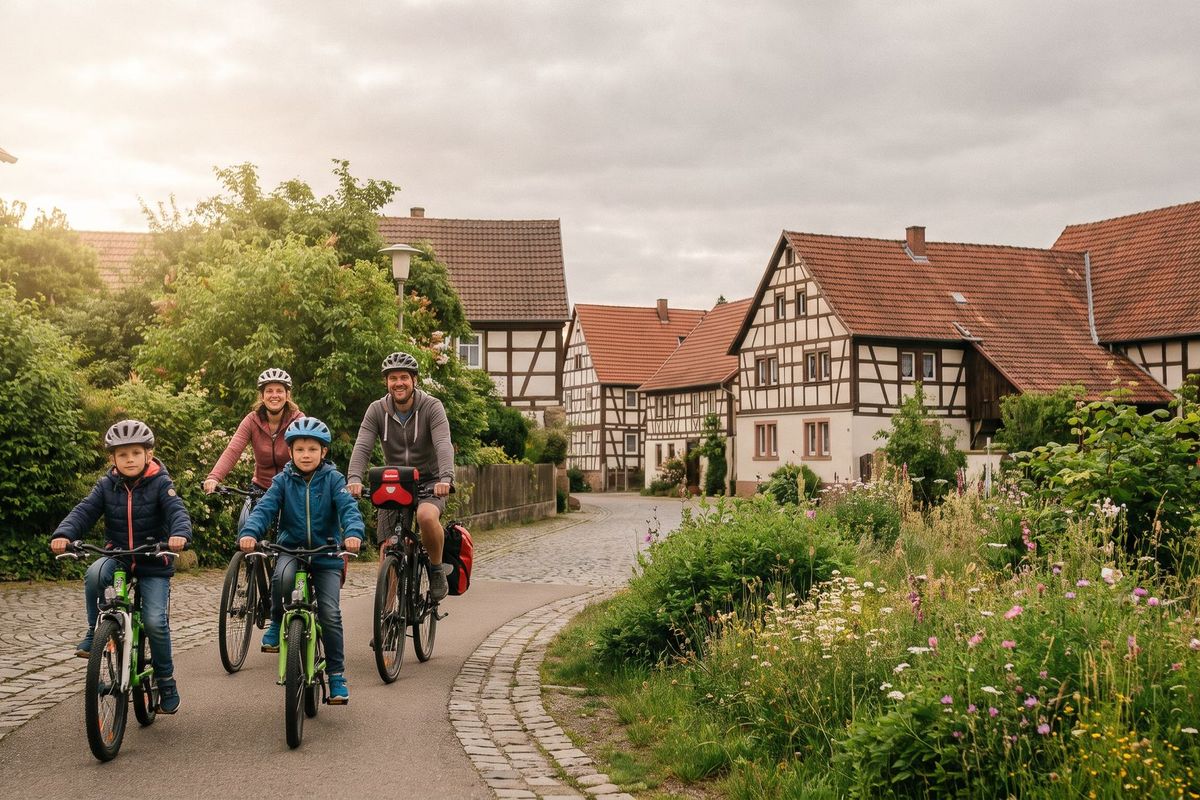
By the standards of European cycling holidays, this is one of the more forgiving. Both coasts are flat to gently rolling, the surfaces are excellent, and because the boat absorbs the longest hops, your daily riding stays within a comfortable, sociable range rather than becoming a transfer slog. That makes it a natural fit for couples, groups of friends with a spread of fitness, and anyone who likes the idea of a trip that is as much about the harbours and the dinners as the distance. An e-bike widens the net further, though the terrain rarely demands one.
The honest caveat is the weather rather than the gradient. This is the North Sea's cooler cousin, open to wind off the water, and a brisk headwind along an exposed coast is the Øresund's version of a hill. It is nothing a windproof layer and a sensible daily distance cannot handle, but it is the thing to plan around, not the climbing.
Getting there is simple, which helps. Copenhagen's airport is a short, flat ride from the city where the trip begins, and once you are aboard there is no route-finding to fret over — the ship carries the logistics and the navigation, so you set out each morning with a map, a day's water and little else to think about. For a family or a mixed group easing into this style of holiday, that removal of hassle is much of the appeal, and it makes the Øresund a gentle first taste of the bike-and-boat format rather than a hard introduction to it.
The season runs from May to September, and it is bracketed by daylight rather than heat. Around midsummer the light barely leaves, which turns long June and July evenings into an unofficial extra hour of riding or harbour-sitting. If you can time it, the Sankt Hans bonfires on the evening of 23 June light up harbours along both coasts, a midsummer ritual worth planning a night around. July and early August are the warmest and liveliest, and the moment the Swedish coast is at its busiest with domestic holidaymakers. For warm days with more room, the May and September shoulders are the quiet-riding months — cooler, breezier, and all the better for a trip where the point is the coast and the water, not a tan.
A sail-and-bike week is a bigger commitment than a weekend away, so it is worth knowing that every trip booked through Pedal Ventures is financially protected under PTS — your money is safe if the operator runs into trouble. With that settled, the appeal is simple: a flat, friendly route with the drama supplied by the sea rather than the hills. Browse the Øresund sail-and-bike trip, or read our wider guide to cycling holidays in Denmark to see where else the flat country leads.