Bike tour
River Danube through the Iron Gates
Cycle through six countries along the Danube, from Vienna to the Iron Gates, exploring castles, vineyards, and vibrant cities.

Rob
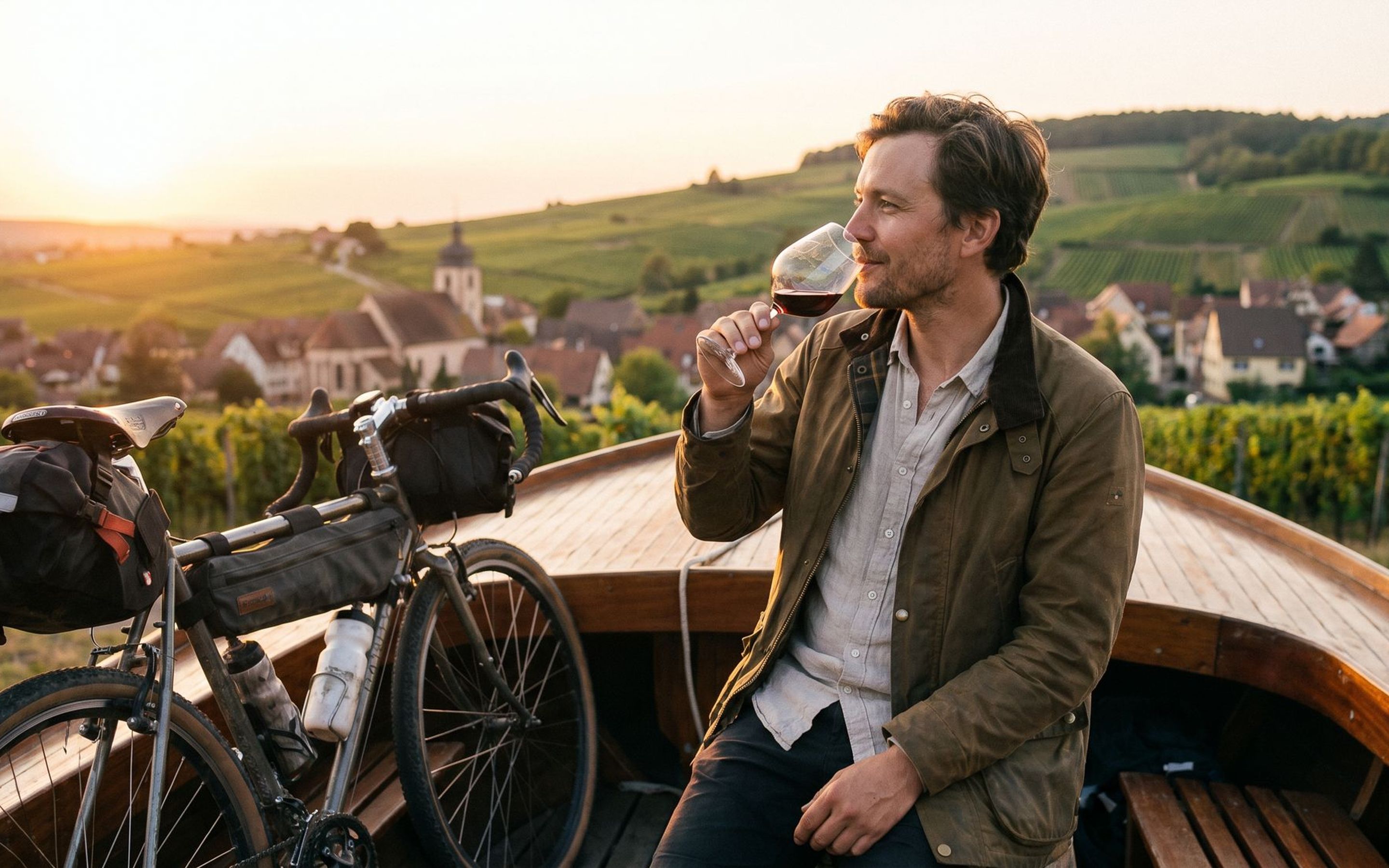
It is late afternoon and the day's riding is behind you. The boat is moored on the quiet edge of a wine village, and the vigneron's cellar is a two-minute walk up the lane. You taste the whole flight without hurrying — the young one straight from the tank, the cask sample the winemaker pulls just for you, the bottle they are quietly proud of. You buy a case, because the only journey it has to make tonight is down the gangway to the hold.
This is the cycling holiday that finally lets a wine lover ride through wine country and actually drink the wine. There is no drive back to a hotel. There is no morning ride to protect. Bike and boat wine holidays remove the one tension every wine-region cyclist knows — that on most trips you either ride well or drink well, but never both freely. The boat is the designated driver, and it moves to the next town while you sleep.
The reader already knows the problem, so it is worth naming honestly. On a standard wine cycling holiday in Europe the day has a built-in conflict. Cellars are at their best at lunch and through the early afternoon — which is exactly when you would otherwise be in the saddle. Taste properly at midday and the afternoon ride becomes unsafe and joyless. Ride first and the good tastings get squeezed into a tired late afternoon, or skipped altogether.
The usual workarounds are all compromises. You sip and spit, leaving the bottle you came for on the table. You ration yourself to a single glass. Or you hire a car and appoint one person in the group to drink nothing and drive everyone between estates. None of these is what the Foodie Cyclist booked the trip for.
This is the specific disappointment that worries committed wine travellers — that a cycling and wine tasting holiday will be too cycling-focused, with no real room for the part they came for. It is a structural problem, not a question of willpower. If you are weighing up the different formats, our wider guide to wine-tasting cycling holidays is worth a read. But one format removes the conflict entirely, and it is worth understanding exactly how.
On a bike and boat holiday your accommodation is a barge or small ship that moves under its own power along the river or canal. You are never cycling home from a tasting, and never driving between estates, so the riding and the drinking stop competing for the same hours. The riding happens in the cooler, clearer part of the day. The tasting happens afterwards, at lunch and into the afternoon, once you are off the bike for good.
Three mechanics make it work:
That last point is the quiet revolution of the format, and we will come back to it. You can see the full range of these trips on our bike and boat holidays page. The freedom here is freedom from logistics rather than licence to overdo it — a distinction worth keeping, and one we return to near the end.
Four waterways stand out, each suiting a slightly different kind of wine traveller.
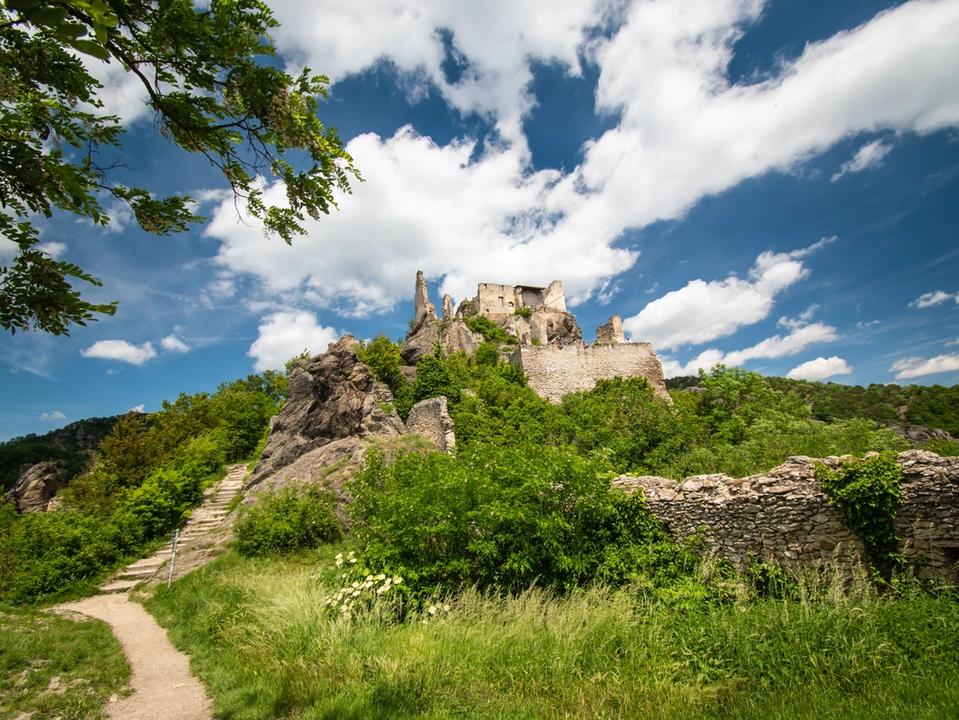
The Wachau, a UNESCO-listed cultural landscape, has terraced Grüner Veltliner and Riesling vineyards that run right down to the river between Melk and Krems. The Danube cycle path here, part of the long-distance EuroVelo 6 Atlantic-Black Sea route, is flat, paved and almost entirely traffic-free, which makes this the classic danube wine cycling stretch: ride the riverbank in the morning, taste in Dürnstein or Spitz in the afternoon, sleep on the boat. May to June and September are the best windows, before and after the high-summer heat. For more on the route itself, see our guide to the Danube cycle path and our Austrian Danube trips.
Cycle through six countries along the Danube, from Vienna to the Iron Gates, exploring castles, vineyards, and vibrant cities.
The Moselle loops through some of the steepest vineyards in Europe, Riesling planted on slate above the river's hairpin bends. The cycling stays flat along the valley floor beneath those dramatic slopes — ideal moselle cycling wine territory, with cellar doors in villages such as Bernkastel a short walk from the moorings. Browse our Moselle trips, and look out for our dedicated Moselle wine-cycling guide [CONFIRM LINK — sibling cluster post not yet live].
Not the Burgundy of fast roads but the quiet canal towpaths threading past the Côte d'Or, within reach of villages whose names you already know from the labels. This is the slower, greener choice, and the most gastronomically rewarding of the four. See our Burgundy trips, with a dedicated Burgundy canals guide to follow [CONFIRM LINK — sibling cluster post not yet live].
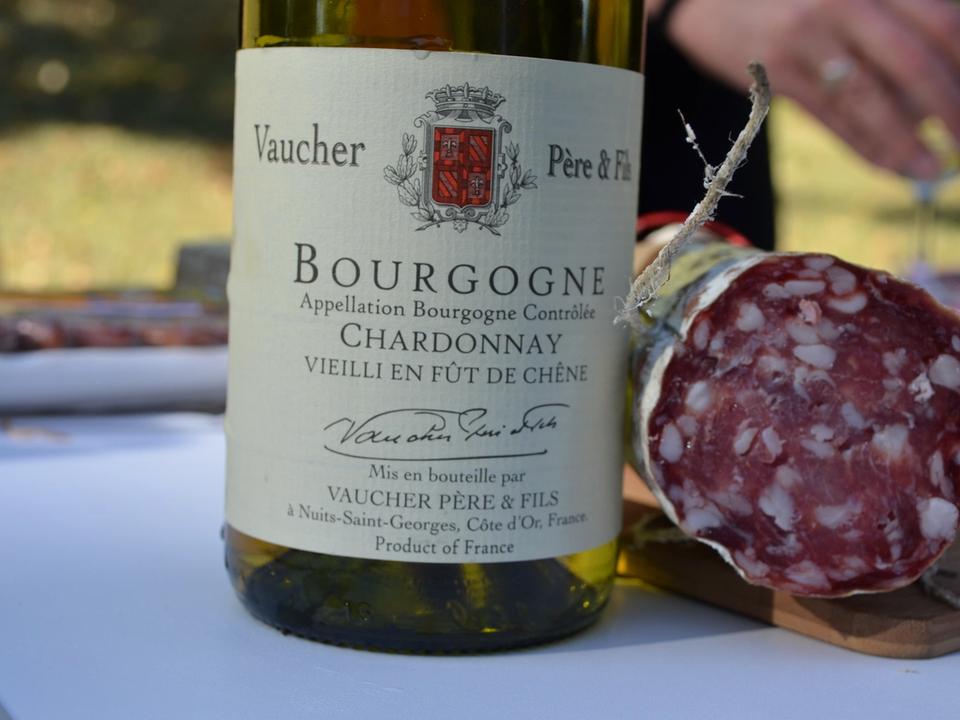
Luxury cycling holiday in Burgundy with scenic backroads, vineyard rides, exceptional food and wine, and stays in beautiful boutique hotels. Slow, indulgent, unforgettable.
The waterways behind Venice and across the Po plain put you among Prosecco and Soave country on entirely flat terrain. It is a strong choice for first-timers who want wine, gentle riding and an Italian setting all at once. Our Venice and Veneto trips cover this ground.
The practical question every planner asks is simple: when does the drinking happen relative to the riding? Most itineraries front-load the cycling. You ride the day's stage in the morning and earlier afternoon while you are fresh, then the boat moors near a wine village or estate for the late afternoon, when cellar visits and tastings take place. Some days build a pre-arranged cellar visit into the route's end point. Others leave the afternoon and evening open for you to walk to a cellar door yourself.
Because the boat is the fixed point, distances stay genuinely optional. Typical days are gentle and flat — in the 30 to 55km range on most waterway routes — and you can shorten a ride and rejoin the boat if you would rather spend longer at a tasting. The rhythm is deliberately the opposite of a sportive: ride to earn the afternoon, then stop.
That is the structural reason the format suits the Foodie Cyclist. The schedule is built around the wine, not around the kilometres. For more itineraries in this vein, our piece on the best cycling wine tours in Europe is a good companion read.
This is the practical payoff. On a self-drive or self-guided wine trip, buying seriously means weight limits, fragile boxes and a trip to the post office. On a bike and boat holiday the boat is a moving cellar — buy a case at a Wachau or Moselle estate and it goes straight to the hold for the rest of the trip. You are not carrying it on the bike and not rationing your luggage allowance against it.
It is worth being honest about the last leg home. The boat solves storage for the duration of the holiday, not the flight back to the UK. The realistic options are to check a sturdy wine case into the hold within your airline's limits, or to arrange UK shipping through the estate or a wine-logistics service. This is also where the format genuinely changes how people behave — they buy the bottle they would otherwise have admired and left behind.
The designated-driver framing is about removing logistics, not about drinking more. You are still cycling each day, often in summer heat, and tastings are best treated as tastings — a few measures across an afternoon, not bottles before a ride. Most itineraries schedule the riding before the serious tasting precisely so the two never overlap, and it is worth keeping it that way.
Drink water alongside the wine, especially in the Wachau or on the Po in high summer. The freedom the boat gives you is the freedom to taste properly once the day's riding is behind you. Used that way, it is the most relaxed way to combine cycling and wine, and the safest.
Pedal Ventures is a marketplace. Every bike and boat wine holiday on the site is handpicked, and your money is protected by PTS if the operator or Pedal Ventures fails. At a typical booking value of around £3,000, that protection is part of why people book a premium format like this with confidence rather than going direct with an unknown operator. You can read how it works on our financial protection page.
Browse bike and boat holidays → pedalventures.com/bike-and-boat-holidays
It is a cycling holiday through European wine country where your accommodation is a barge or small ship that moves along a river or canal. You ride each day's stage, then the boat moors near a wine village for tastings, repositioning to the next town overnight. The boat acts as the designated driver and carries any wine you buy.
Yes — that is the point of the bike and boat format. Because the boat handles all transport, you are never cycling home from a tasting or driving between estates. The riding is scheduled for the morning and earlier afternoon, with tastings afterwards, so you can taste freely once the day's cycling is done.
Austria's Wachau on the Danube, the Moselle and Rhine in Germany, the Burgundy canals in France, and the Po and Veneto in Italy. All four offer flat, low-traffic riding alongside serious wine, with cellar doors a short walk from the moorings.
Most itineraries front-load the riding into the morning and early afternoon, then moor near a wine village for late-afternoon tastings. Distances are gentle — typically 30 to 55km — and optional, so you can shorten a ride to spend longer at a cellar.
Yes. Bottles and cases go straight to the hold and travel with you for the rest of the holiday, with no luggage-weight limits to worry about. The boat solves storage for the trip itself; for the journey home you can check a wine case into the hold or arrange UK shipping.
Yes. The cycling, the food and the riverside scenery stand on their own, and nobody needs to be the designated driver because the captain holds that role. A non-drinker has a full holiday whether or not they visit the cellars.