Bike tour
Highlights of Istria - Island Hopping & National Parks
Discover Istria by bike and boat on this Croatian island-hopping tour with coastal rides, national parks, and historic harbour towns.

Rob
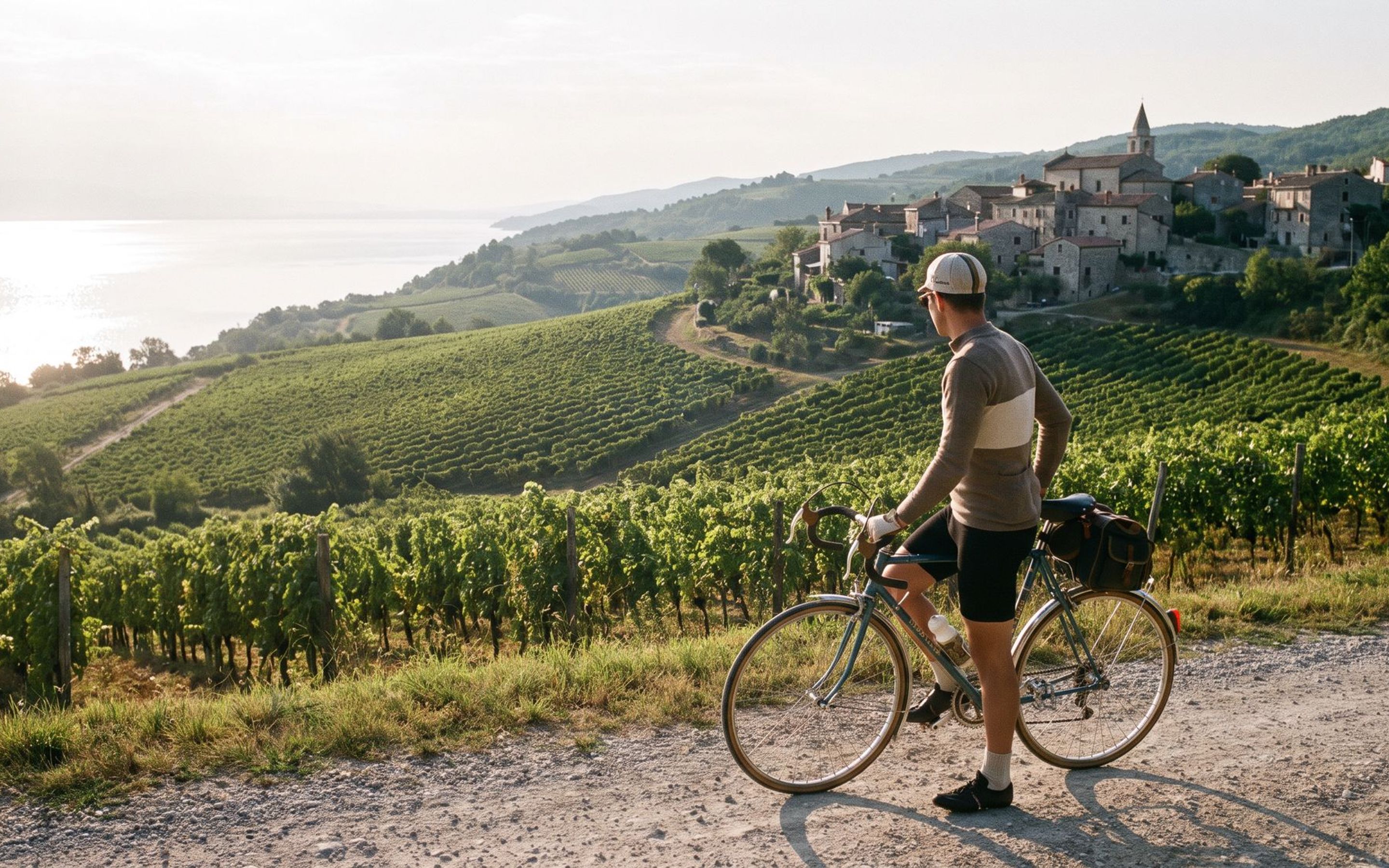
Picture two Croatian mornings. In the first, you roll out of a stone hilltop town through oak woodland and vineyards, the sea a distant blue line twenty minutes downhill, and the only decision of the day is whether to stop for truffles at eleven or wait until lunch. In the second, you wheel your bike off the back of a boat onto a sun-struck island quay, ride a headland above water the colour of a swimming pool, and catch an afternoon ferry to somewhere smaller still. Both are Croatia. Neither is much like the other.
That is the real choice behind most cycling holidays in Croatia: not which country, but which coast. Istria, the peninsula in the north-west, rides like a slice of Tuscany that happens to meet the Adriatic. The Dalmatian coast, stretching south past Split towards Dubrovnik, is about islands, ferries and open sea. This is a guide to the Istria vs Dalmatia cycling decision — how the two actually differ on the bike, and who each one suits.
The quickest way to understand the difference is to look at a map and ignore the coastline for a second. Istria is a compact, self-contained peninsula: hilltop towns a short ride apart, a dense network of quiet inland lanes, and distances that rarely force a long transfer. You can base yourself in one area and reach a great deal of it.
Dalmatia is long and thin, and the best of it is offshore. The islands — Brač, Hvar, Korčula, Vis — are the point, and reaching them means boats. That single fact shapes everything: a Dalmatian cycling week is usually a moving one, hopping island to island, whereas an Istrian week can be far more rooted. If the idea of packing and unpacking repeatedly puts you off, that matters.
Neither coast is flat, and anyone promising you an effortless week on either is overselling it. But they are hard in different ways.
Istria's interior rolls. The climbs are short rather than brutal — you are forever rising to a walled town like Motovun and dropping off the other side — so a day adds up to a fair amount of gentle up and down without any single monster. The standout easy option is the Parenzana, a former narrow-gauge railway converted into a cycle path, which threads the interior on railway gradients through old tunnels and over viaducts. It is about as forgiving as hill-country riding gets.
Dalmatia's difficulty is less about the gradient and more about the heat and the coast road. Ride the mainland shore in July and the sun is relentless and the main coastal route carries traffic. The clever answer is to get out onto the islands, where the lanes are quieter, and to let a boat do the longest, hottest transfers for you. A bike-and-boat trip, in other words, turns Dalmatia from a test of endurance into a series of manageable island loops. On both coasts, an e-bike widens the range of who can comfortably take part — worth considering if your group's fitness varies.
This is where the two part company most clearly.
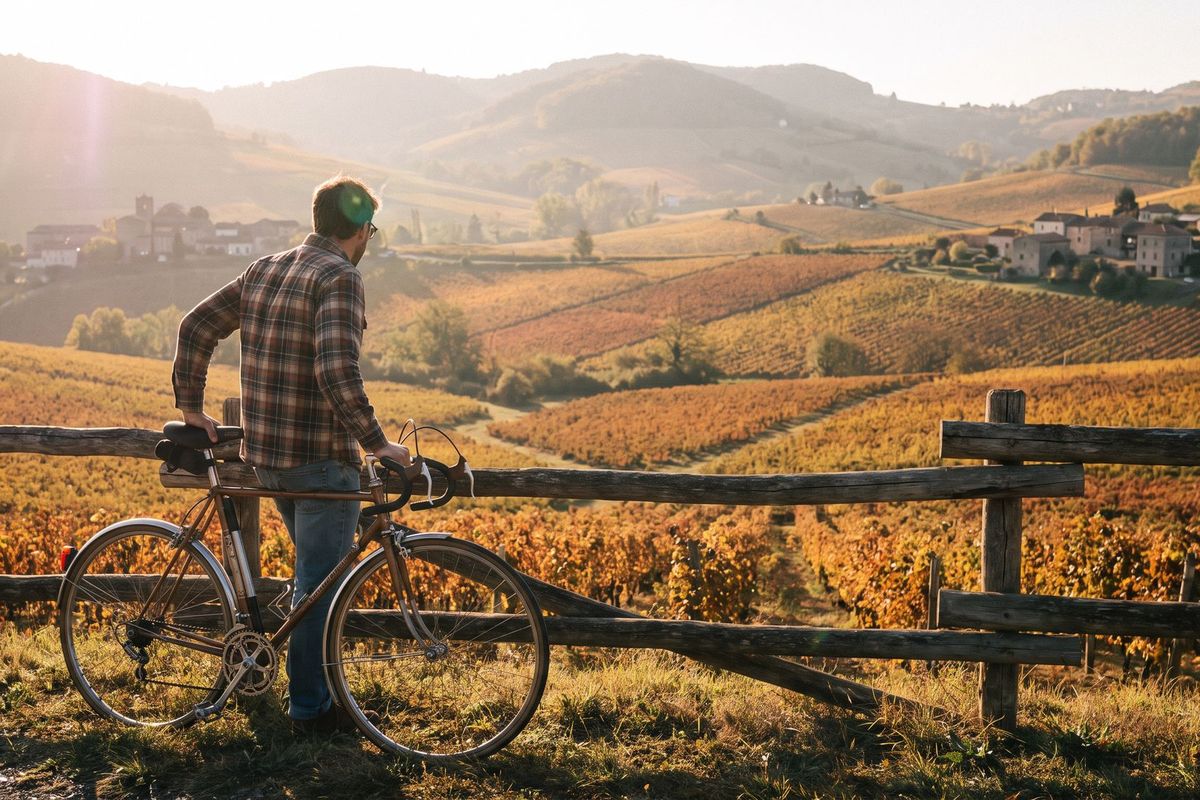
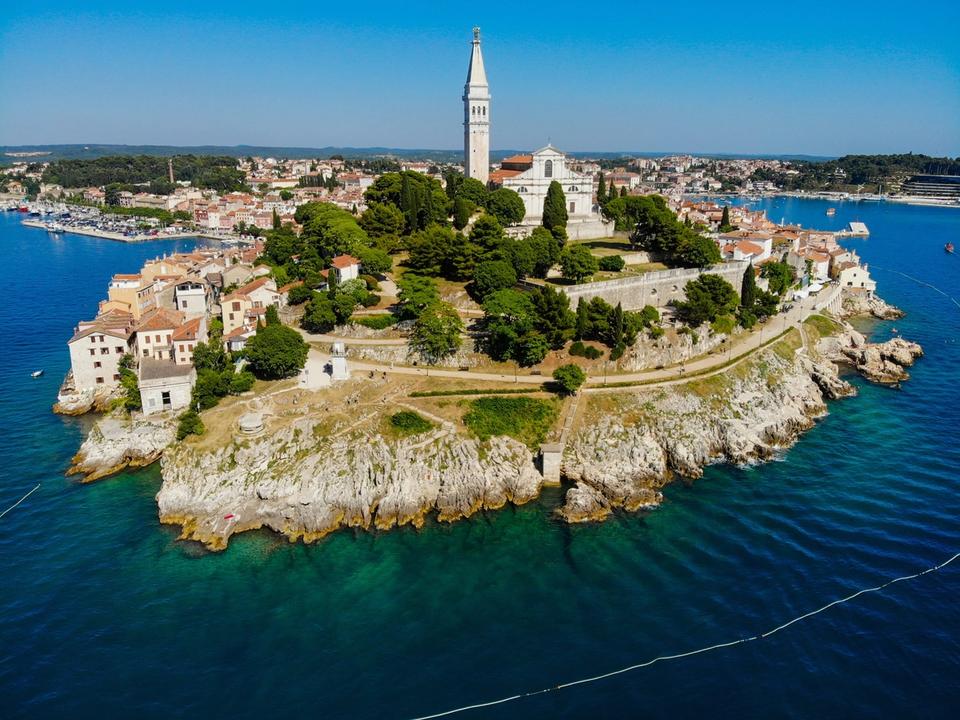
Istria is a landscape of the table and the hill town: vineyards and olive groves, red-earth fields, and fortified villages — Motovun, Grožnjan, Buzet — looking at each other across wooded valleys. On the coast, Poreč and Rovinj give you Venetian-tinged harbours, and Pula has a Roman amphitheatre still standing in the middle of town. Inland Istria genuinely does evoke Tuscany, with a fraction of the crowds and a shorter flight.
Dalmatia is bigger, brighter and more dramatic. The islands each have a character — Hvar's lavender and nightlife, Korčula's walled old town, Vis's end-of-the-line quiet — and the water between them is extraordinary. The inland national parks raise the stakes again: Plitvice Lakes, a UNESCO site since 1979, and the waterfalls of Krka are both within reach of a Dalmatian itinerary. If your holiday photographs are mostly of sea and islands, this is your coast.
For a certain kind of traveller, this section decides it.
Istria is one of the Mediterranean's serious food regions, and it leads with truffles. The oak woods around Motovun and the Mirna valley produce prized white truffles in autumn and black truffles for much of the year, and the region runs festivals around them; the Istria Tourist Board catalogues both the truffle hunts and the cycling routes that link them. Add first-rate olive oil, the crisp white Malvazija and the red Teran, and a lot of small konoba taverns doing all of it well, and Istria becomes a holiday where the riding is almost a way of earning the next meal.
Dalmatia's table is simpler and more maritime: grilled fish straight off the boat, lamb from the islands, peka slow-cooked under a bell of coals, and island wines you rarely see abroad — Pošip and the robust Plavac Mali from Hvar and Korčula. It is less about the formal gastronomy of Istria and more about a long lunch by the water. Poreč's Euphrasian Basilica, a sixth-century UNESCO monument, is a reminder that Istria also carries a denser layer of accessible history between meals.
Both coasts are busiest and hottest in July and August, and Dalmatia feels it most. Split and Dubrovnik take cruise-ship crowds through high summer, and the popular islands fill up. Istria gets busy too, but its inland lanes give you somewhere to escape to that Dalmatia's narrower geography does not.
The shoulder months — May, June and September — are kinder on both, with warm days and thinner crowds. Dalmatia has one quiet advantage here: the sea holds its warmth late, sitting at around 20°C off Split in October, so an autumn island trip still comes with swimming. Istria's reward for going in autumn is the truffle season. Either way, the edges of summer beat its middle.
Istria is the easier logistical proposition for most British riders: it is close to the airports at Pula and Trieste and within driving distance of Venice, transfers are short, and a trip can be built around one or two bases. Dalmatia involves more moving around by design, with ferries stitching the islands together.
That is exactly why the bike-and-boat format has become the signature way to ride this part of Croatia: a small ship is your hotel, it carries you and the bikes between islands overnight, and you ride a fresh loop each day without ever repacking. Pedal Ventures lists this as the Highlights of Istria bike-and-boat tour, with a luxury version on a higher-spec boat, while the Dalmatian Coast national parks and islands tour takes the same idea further south. Because a week like this is a real commitment — Croatia trips tend to sit around the £3,000 mark — it is worth knowing that every booking made through Pedal Ventures is financially protected under PTS, so your money is safe if the operator runs into trouble.
Discover Istria by bike and boat on this Croatian island-hopping tour with coastal rides, national parks, and historic harbour towns.
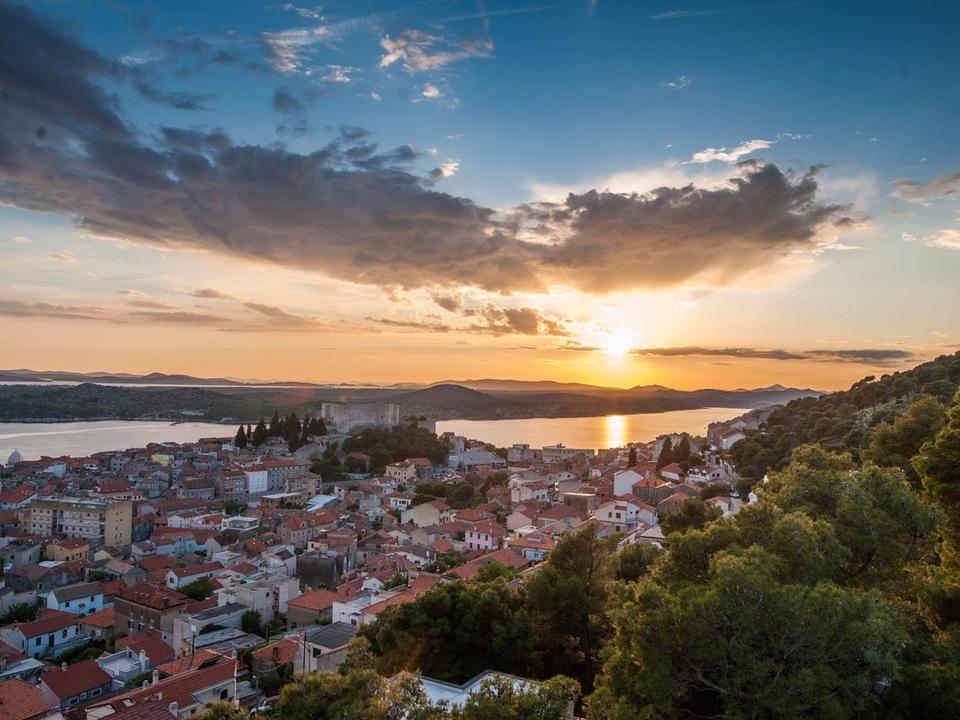
Discover Croatia by e-bike and boat. Ride through national parks, swim in clear seas and visit historic towns along the Dalmatian Coast.
Choose Istria if you want a rooted week rather than a moving one, short transfers and a short flight, gentle-to-moderate hill riding you can soften with the Parenzana or an e-bike, and food and wine doing a lot of the heavy lifting. It suits first-timers, couples and foodie cyclists especially well, and it is the stronger autumn choice if truffles appeal more than a final swim.
Choose the Dalmatian coast if the islands and the open sea are the reason you are going, you like the rhythm of a bike-and-boat trip, and you would rather trade some logistical simplicity for that water. It rewards confident-enough riders who want scenery on a grand scale, and it is the better bet if swimming into October is high on the list.
If you still cannot split them, a useful rule of thumb: Istria is the better first trip to Croatia, and Dalmatia is the one you come back for. Many riders end up doing both, in that order.
Istria, for most people. Transfers are shorter, the flights are quicker, you can ride from one or two bases instead of moving constantly, and the hill riding is manageable — gentler still on the railway-graded Parenzana path. Dalmatia is magnificent but more of an expedition, which is why it often works better as a second visit.
Not if you choose the bike-and-boat format. The boat handles the longest and hottest transfers between islands, leaving you to ride self-contained daily loops that you can keep short or extend. The mainland coast road in high summer is the tiring option; the islands, reached by boat, are far more forgiving — and an e-bike makes either coast accessible to mixed-ability groups.
May, June and September give the best balance of warmth and space on both coasts; July and August are hot and crowded, especially around Split and Dubrovnik. Dalmatia's sea stays swimmable into October, while autumn in Istria brings the truffle harvest — so the ideal month depends partly on which coast you pick.
If you have a sense of which Croatia you are after, the next step is to see the routes side by side. Browse Istria's cycling holidays and the Dalmatian coast trips, and let the one that matches your morning win.
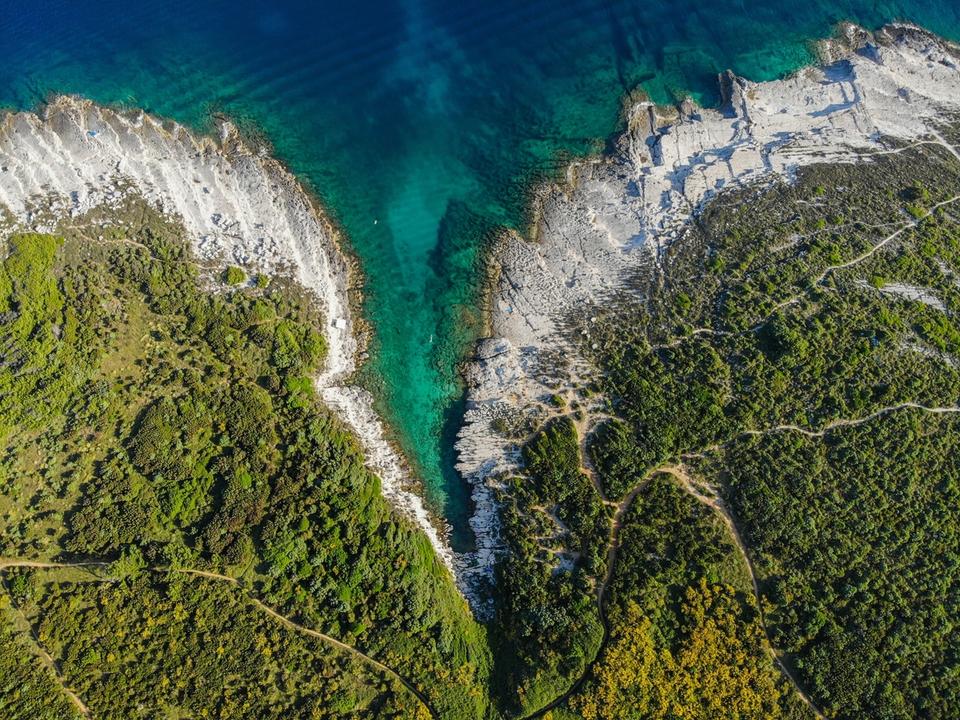
Cycle through coastal towns, hilltop villages and vineyards on this scenic Croatia bike and boat holiday across Istria and its islands.