Bike tour
Brussels, Ghent and Bruges
Cycle through Brussels, Ghent and Bruges. Discover Belgium’s history, canals, beer and culture on this unforgettable cycling holiday.

Rob
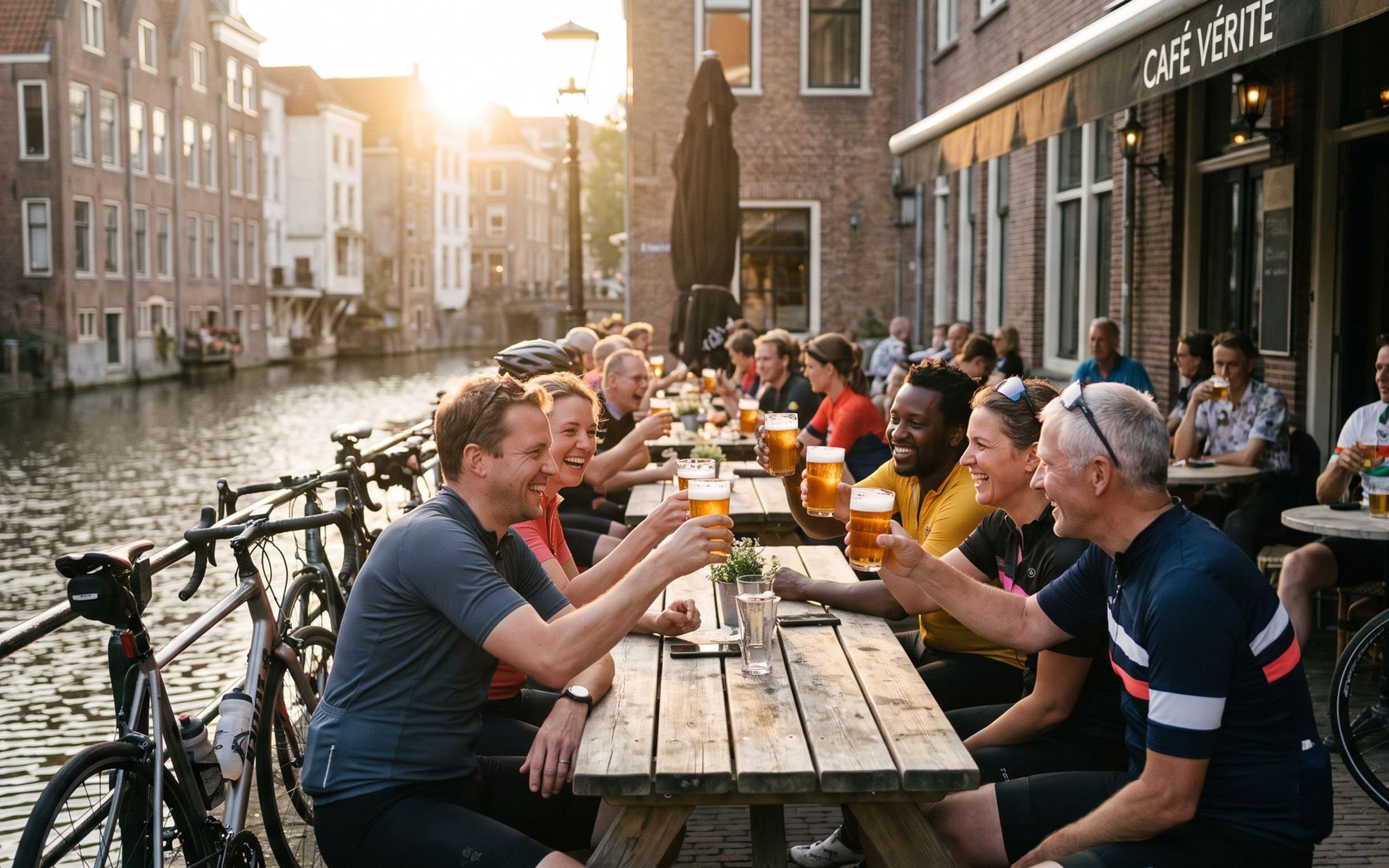
You come off the towpath into Bruges in the late afternoon, the light going gold on the brick, and you find a café terrace by the water before you've even locked the bikes. The waiter brings a list that is less a menu than a slim book, and each beer on it arrives in its own particular glass — a stemmed goblet, a tall flute, a squat tumbler with a wooden stand. You have ridden perhaps forty flat kilometres since breakfast. You have earned none of this through suffering, and all of it through good sense.
This is the quiet argument for a food-led trip here, and it is why cycling and beer in Flanders belong in the same sentence. The riding is gentle enough that the table, not the climb, becomes the point of the day. You are not grinding up cols and then collapsing into a recovery meal. You are pedalling between one good lunch and one good dinner, through a landscape flat enough to let you notice it, with the appetite that only a day on a bike gives you.
Geography does most of the work. Flanders is flat — genuinely, reliably flat — laced with canals and a dense web of signed cycle routes that keep you off traffic and beside water for most of a day. The distances between its great eating towns are short: Bruges to Ghent is around forty-five kilometres of towpath and quiet lane, a morning's ride with a long lunch built into it rather than bolted on at the end.
That changes what a cycling holiday is for. On a mountain route the food is fuel and reward, taken quickly because you are tired. Here the balance tips the other way. You can ride three or four hours in the morning, stop properly at midday, and still roll into your evening town with time for a beer before dinner. Luggage transfers mean you are never carrying more than a day's kit, so there is nothing stopping you ordering the second course or the third beer. The bike sets the rhythm; the table fills it.
It also means the holiday suits people who would not call themselves cyclists. If the riding is easy and the eating is the headline, the trip opens up to the friend who was unsure, the partner who likes the idea of the evenings more than the mileage, the group with mixed legs. Flanders asks very little of your fitness and gives a great deal back at the table.
Start with the fact that it is officially heritage. In 2016, UNESCO added beer culture in Belgium to its Representative List of the Intangible Cultural Heritage of Humanity, recognising something Belgians have always known: that beer here is woven into daily life and festive occasions alike, not treated as a mere drink. That is the context you are riding into. The glassware, the pairing, the café as a social institution — these are the living parts of a tradition a committee in Addis Ababa thought worth protecting.
The headline beers are the Trappists. Only a handful of monasteries anywhere make beer under genuine monastic supervision, and Belgium holds most of them — the names worth knowing are Westvleteren, Chimay, Orval, Rochefort and Westmalle, each brewed within the walls of a working abbey and each with its own character, from Orval's dry, hoppy singularity to the dark, raisined depth of a Rochefort 10. You will not cycle to all of them on one trip — they are scattered, and Westvleteren in particular is a pilgrimage in its own right — but you will find them poured with reverence in any decent café, and that is the easier way to meet them.
Then there is the stranger, older end of the spectrum. Southwest of Brussels, in the Pajottenland and the valley of the Zenne, brewers still make lambic — beer fermented not with cultivated yeast but with the wild microorganisms in the air, cooled overnight in a broad shallow coolship and left to catch whatever the valley gives it. Blend a young lambic with an older one and you get gueuze, which carbonates in the bottle and can age for a decade or more. It is sour, funky, closer to a dry cider or a wine than to anything you would call a session beer, and tasting it a few miles from where it was made is one of the real reasons to point a bike at this corner of Belgium.
What ties all of it together is the café. The Flemish "brown café" — dark wood, no hurry, a regular at the bar — is where the culture actually happens. Each beer comes in its matched glass because the shape is held to flatter it, and nobody treats that as fuss. Order slowly. The ritual is half the pleasure.
Beer is the headline, but it would be a thin trip that stopped there. Bruges and Brussels are chocolate towns in the serious sense — not the airport-gift sense — with chocolatiers who temper and fill by hand and will happily explain the difference between a praline and a ganache while you decide. A box bought in the afternoon is a dangerous thing to carry on a bike; most of it rarely survives to the next town.
The everyday food is just as much a reason to stop. Frites, properly done, are twice-fried, served in a paper cornet from a friterie, and eaten with mayonnaise rather than ketchup — a small national conviction worth respecting. Waffles split into two camps: the lighter, rectangular Brussels waffle dusted with sugar, and the denser Liège waffle studded with pearl sugar that caramelises as it cooks. And the dishes that pair best with the beer you have been drinking are the ones braised in it — stoofvlees, the dark beef stew simmered in brown ale, or a bowl of moules-frites when the season is right. Flemish cooking rewards the same unhurried appetite the riding gives you.
Three towns anchor most food-led trips, and the flat country between them is the holiday. Bruges is the picture everyone comes for — its medieval centre is a UNESCO World Heritage Site, and its canals and squares reward a slow arrival by bike far more than a coach day-trip. Ghent is the livelier, younger counterweight, a student city with a grittier beer-and-music edge and arguably the better bar culture. Brussels brings the lambic country to its doorstep and a chocolate and café scene to match.
On the Pedal Ventures side, two routes suit this kind of trip. The Brussels, Ghent and Bruges tour strings the three great eating cities together on flat, canal-laced riding — the clearest line to draw through Flanders if the table is your priority. The Bruges, Ypres and Flanders Fields route pairs the same gentle terrain with the sombre pull of the Western Front, for travellers who want the history alongside the hospitality. Every operator we list is hand-picked, which in a region this devoted to detail matters more than usual — the right small hotel and the right café recommendation are part of what you are paying for.
Cycle through Brussels, Ghent and Bruges. Discover Belgium’s history, canals, beer and culture on this unforgettable cycling holiday.
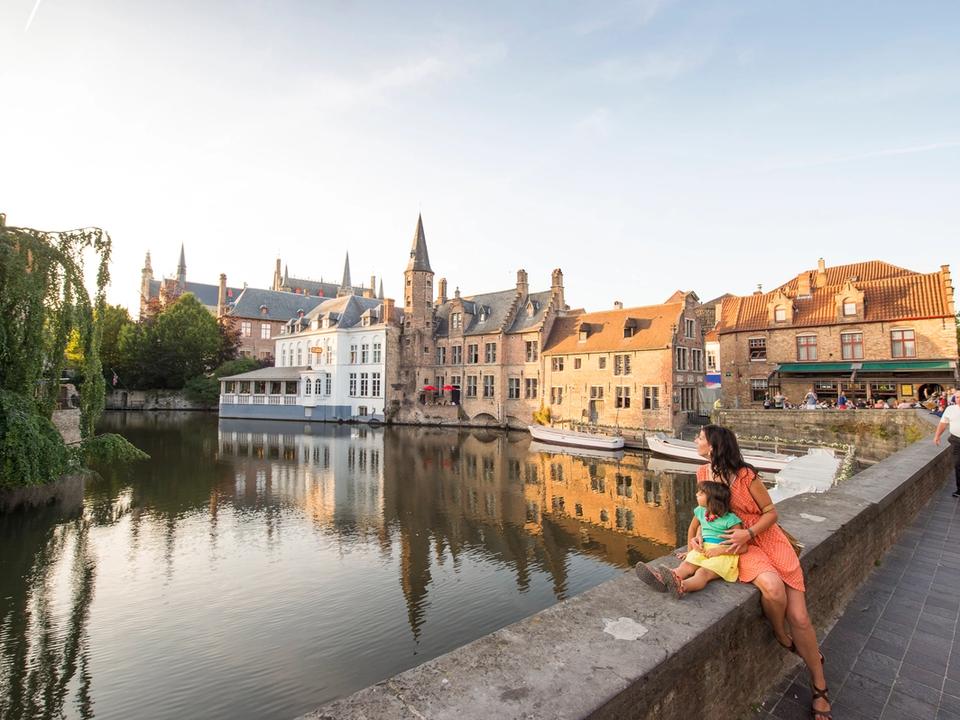
Cycle through West Flanders to explore Bruges, Ieper, and the coast, with WWI history, canals, castles, and Belgian culture.
Resist the urge to ride far. The temptation on an easy route is to add distance because you can; the better instinct is to ride less and stop more. Keep daily distances modest, build in the long lunch rather than treating it as a delay, and leave an afternoon free in each of the big towns for the chocolatier, the brown café and the slow wander.
A couple of practical notes. E-bikes are widely available and worth considering for a mixed-ability group — not because the terrain demands them, but because they take any lingering worry out of the riding and let everyone concentrate on the eating. And plan your beers like you plan your meals: a strong Trappist at lunch and another at dinner is plenty, given most sit well above the strength of a British pint. The point of a food-led holiday is to arrive at every table with an appetite, not to arrive at the last one defeated.
That, in the end, is what Flanders offers the cyclist who travels well — a landscape that hands you the appetite and then, around every canal bend, somewhere worth spending it. Browse the Belgium routes, pick the towns you most want to eat your way through, and let the flat days do the rest.