Bike tour
Ten Lakes and the Sound of Music
Austria’s lake district: 7-day self-guided cycling tour from Salzburg through 10 stunning lakes, charming villages, and Sound of Music sites.

Rob
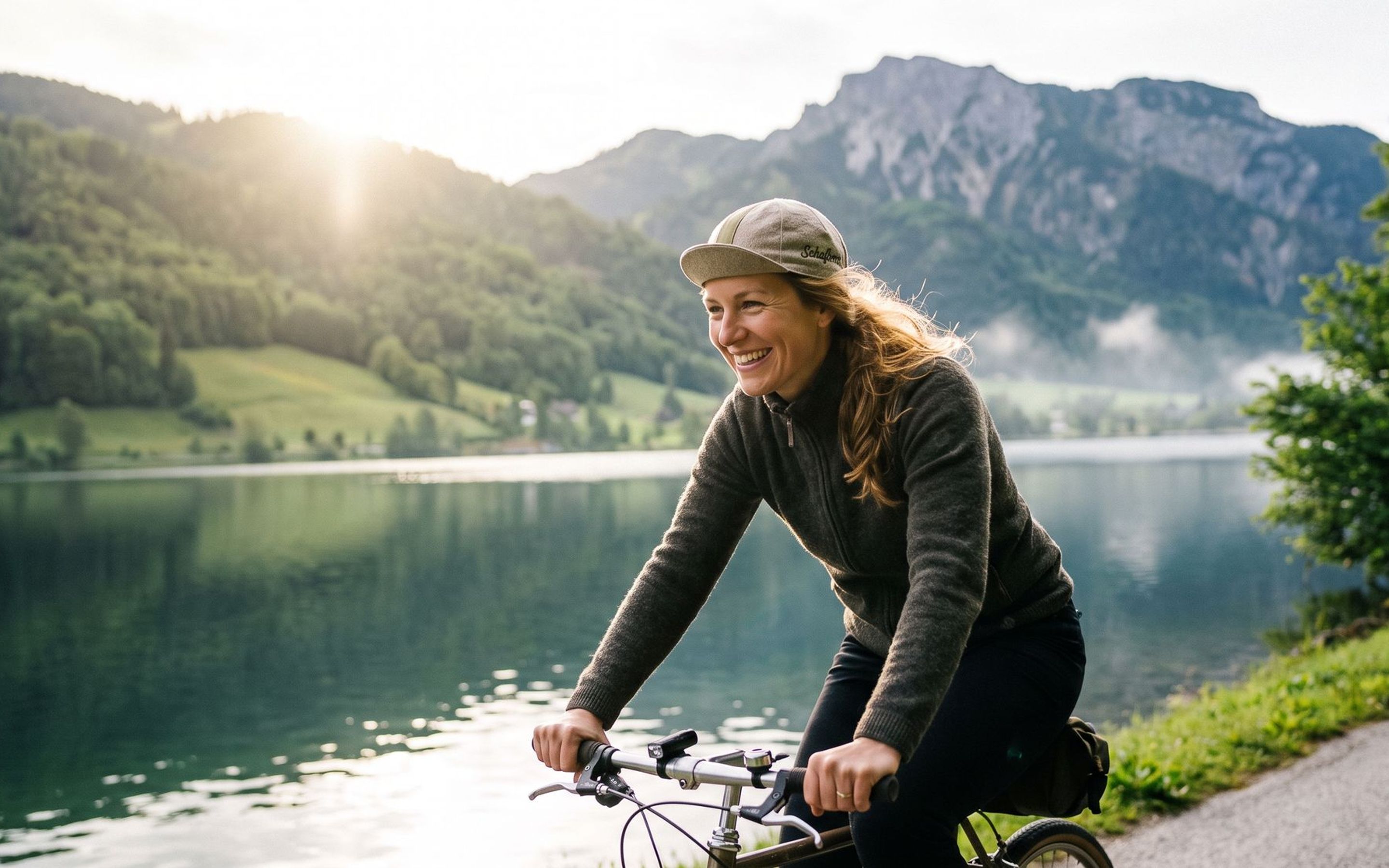
The photographs do the Salzkammergut a quiet disservice. All those steep wooded peaks dropping straight into mirror-still water make the region look like climbers' country, the preserve of people in lycra with very good knees. In fact most of the riding here happens on flat, well-made paths at the water's edge, and the hard climbing is optional. This is one of the gentlest beautiful places to cycle in Austria — you just have to know which bits to ride.
The Salzkammergut is the lake district east of Salzburg, a cluster of glacial lakes strung through the foothills of the Alps. The salt trade made it rich for centuries — the Hallstatt–Dachstein/Salzkammergut Cultural Landscape has been a UNESCO World Heritage Site since 1997 — and today it is a place you cycle for the water, the villages and the long views rather than the kilometres. Here is how the main lakes ride, and how to string them together.
If you ride only one lake, make it the Wolfgangsee. A largely flat, signed path runs close to the shore between the pretty resort villages of St Gilgen and St Wolfgang, with the Schafberg mountain rising behind and lake steamers crossing in front. It is easy, sociable riding, and the kind of place where a mid-ride swim and a long lunch are the actual itinerary. St Wolfgang's lakeside pilgrimage church and the Schafberg cogwheel railway — one of the steepest in Austria — give you reasons to stop.
West of the Wolfgangsee, the Mondsee is warmer and shallower, with a baroque church used in a certain wedding scene that readers of a certain age will place immediately. Beyond it, the Attersee is the largest lake in the region and noticeably quieter, its eastern shore lined with low-key villages and gentle cycle paths. These two make a calmer, less touristed counterpoint to the Wolfgangsee, and the riding between them rolls gently rather than climbs.
Hallstatt is the image everyone has of the region — a village of wooden houses stacked on a narrow ledge between a sheer mountain and a dark lake, so photogenic it has been copied wholesale in China. It is also, in high summer, extremely busy. The trick on a bike is timing: arrive early or late, use the lakeside path and the ferry rather than the road, and you get the view without the crush. The Hallstätter See itself is steeper-sided than the northern lakes, so expect a little more effort to reach it.
This is where honesty helps. The lakeside paths — the ones that make the Salzkammergut such good cycling — are mostly flat and easy. The moment you leave the water to cross from one lake valley to the next, you meet the real Alpine foothills, and some of those connecting climbs are steep. A well-planned route keeps you on the gentle shores and picks its crossings carefully.
For the climbs you cannot avoid, an e-bike changes the region completely — it is hard to think of a landscape better suited to one, and it means a mixed-ability group can ride the whole district together rather than regrouping at the top of every hill. The Salzkammergut on an e-bike is close to effortless; on a standard bike it is a rewarding but occasionally sweaty week.
The pleasure of the region is linking several lakes into a single unhurried trip, swimming in a different one each afternoon. Our Ten Lakes and the Sound of Music tour does exactly that — starting from Salzburg and threading through the Salzkammergut and Trumer lakes, taking in the Wolfgangsee, Mondsee and Hallstatt's UNESCO shores, with the Schafberg and the old imperial spa town of Bad Ischl along the way. It is the tidiest way to see why the region rewards a bike more than a car: you move at the pace of the water.
Austria’s lake district: 7-day self-guided cycling tour from Salzburg through 10 stunning lakes, charming villages, and Sound of Music sites.
Summer is the obvious season — the lakes are warm enough to swim and the high paths are clear — but it is also the busiest, especially around Hallstatt. Late spring and early autumn are quieter and still warm enough for the riding, if a touch cool for a long swim. The region sits under real mountains, so pack a layer for the chance of an alpine shower whenever you come.
If you like the sound of a gentle, scenic introduction to Austrian cycling, the Salzkammergut is hard to better. Browse our Salzkammergut cycling holidays or the wider range of cycling holidays in Austria, and if you are weighing it up as a family trip, our guide to whether Austria suits a family cycling holiday is a good next read.