Reviews
Bike & Boat • Guided
Leisurely
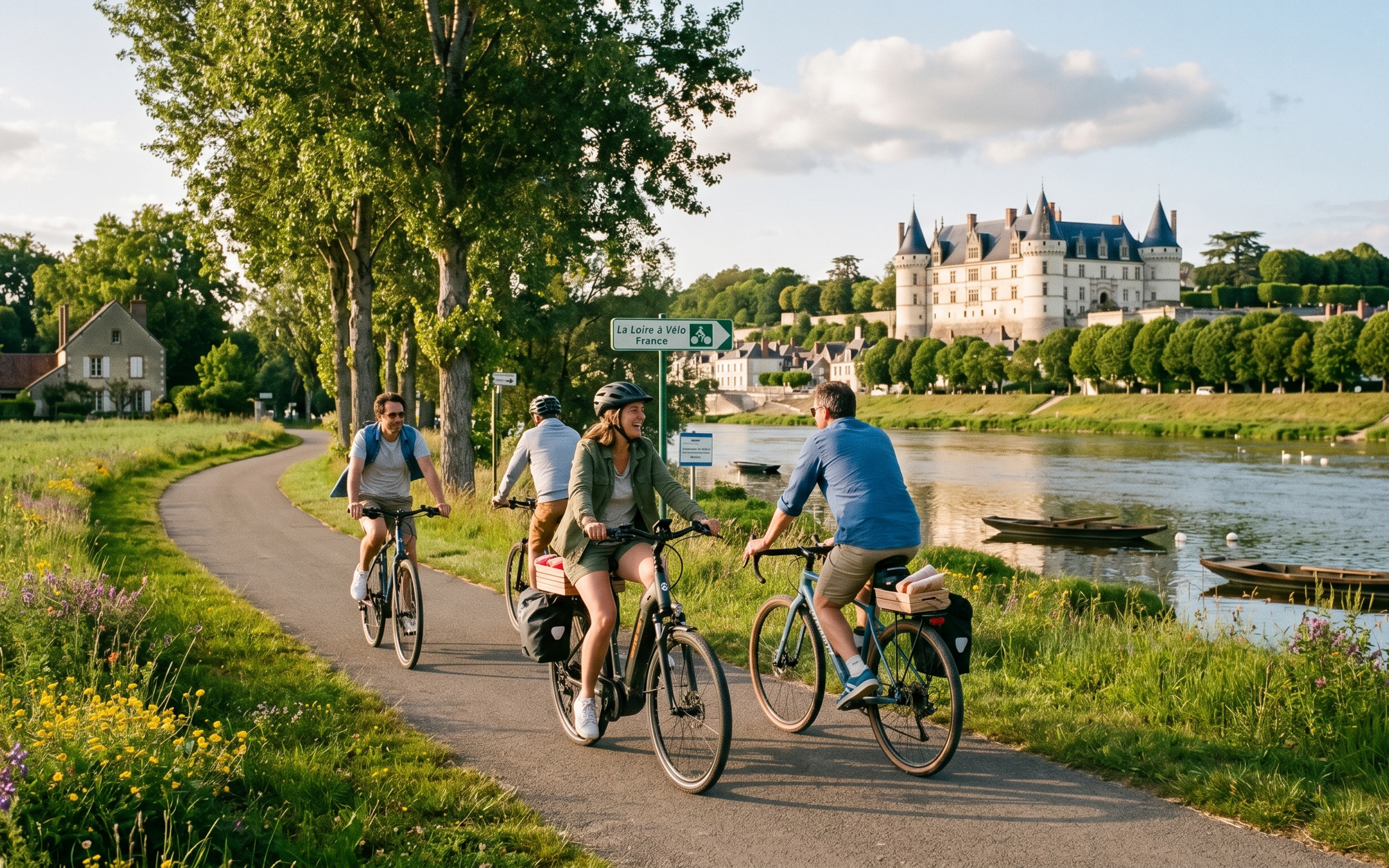
There is a particular quality to cycling in the Loire Valley that is difficult to describe until you have done it. The light on the river in the early morning. The moment when Château de Chambord appears through the trees — not as a photograph you have seen before, but as a real building, enormous and improbable, materialising at the end of a flat cycling path. The unhurried lunch in a village café where the menu is handwritten and the Vouvray is local. The afternoon of easy riding, luggage already waiting at the hotel when you arrive.
The Loire Valley is France's most famous cycling destination, and it earns that reputation. But the reason it keeps drawing people back — and keeps converting first-time cycling holiday guests into long-term enthusiasts — is something more than the châteaux and the wine. It is the gentleness of it. The Loire Valley is one of the few places in Europe where the cycling gives a holiday its rhythm without demanding anything the rider cannot give.
This guide covers everything you need to plan a cycling holiday in the Loire Valley: the route, the highlights, what the days actually look like, and whether it is right for you.
The La Loire à Vélo cycling route runs for 900km along the river from the Massif Central to the Atlantic coast. Most cycling holidays use a section of it — typically a 5 to 7 day stretch between cities like Blois, Tours, Saumur, or Angers — covering 200–280km in total. The path is among the best-maintained and best-signposted cycling routes in Europe. Navigation anxiety, for most guests, evaporates within the first hour.
The terrain is the first thing that surprises people. The Loire Valley is genuinely flat. Daily elevation on a typical touring route is minimal — we are talking about a river valley, not a mountain range. The 35–50km of daily riding that most tours build in is well within reach of anyone who cycles occasionally. This is not a destination where fitness is the main barrier.
What sets the Loire Valley apart from other beginner-friendly cycling destinations is that the flatness does not come at the cost of beauty or cultural interest. The UNESCO World Heritage landscape designation covers the entire valley — the architecture, the vineyards, the troglodyte cave dwellings carved into the soft tufa cliffs, the quality of the light that painters have documented for centuries. You are not compromising on scenery to get the easy terrain. You are getting both.
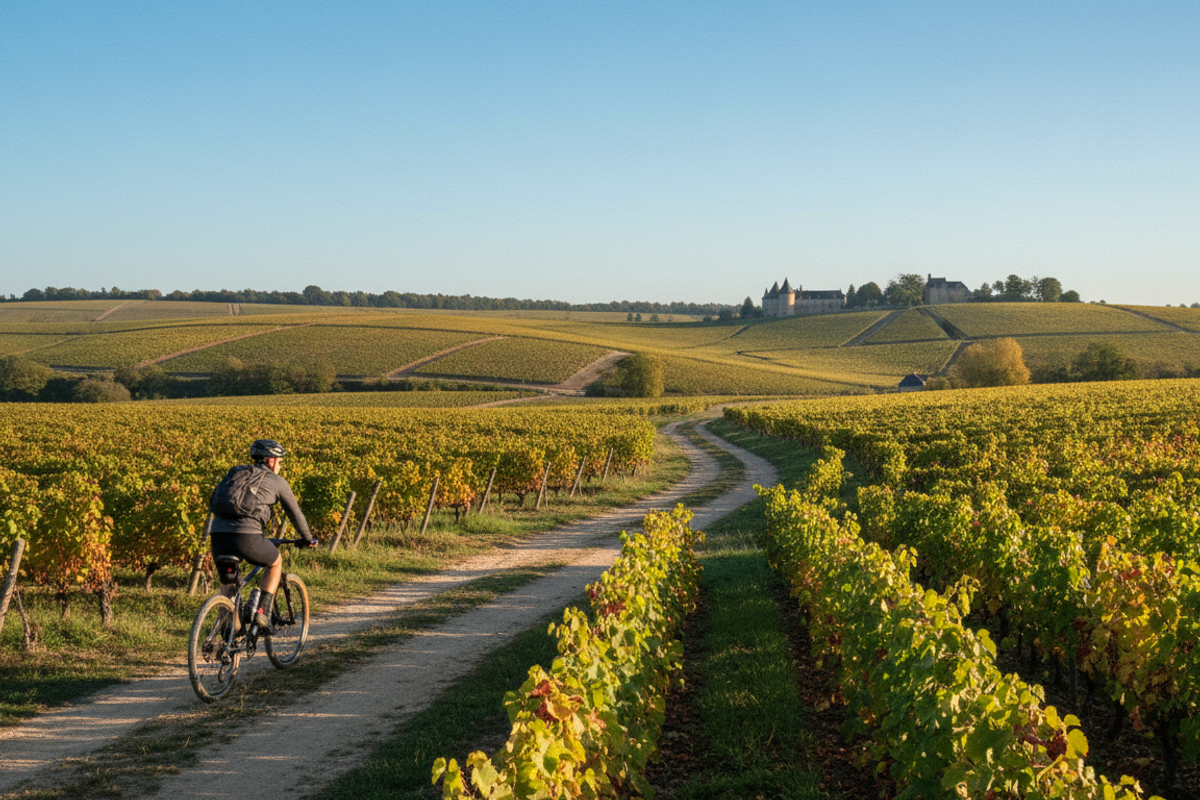
Then there is the wine. The Loire Valley produces some of France's most distinctive and underrated wines — Vouvray (dry to honeyed white, from Chenin Blanc), Chinon and Bourgueil (earthy, cool reds from Cabernet Franc), Sancerre (crisp Sauvignon Blanc), Muscadet (the perfect shellfish wine from the Atlantic end of the valley). Many of these are available to taste directly from producers along the cycling route. The cellar visits are carved into the tufa cliffs themselves — cool, quiet, improbably ancient.
The Loire Valley cycling holiday has a rhythm that builds through the week. Most guests describe arriving cautiously on day one and leaving on day six or seven wishing for more time.
Day 1 — Arrival. Most guests arrive into Tours or Blois by TGV from Paris (under an hour). Bikes are collected from the operator's local point, fitted properly, and loaded with luggage. The first evening is spent walking the old town, choosing a restaurant from the operator's recommendations, and adjusting to being somewhere different.
Days 2–5 — On the Route. Breakfast from around 7:30am, typically included at the hotel. Route notes checked or GPS confirmed. Riding by 9am — the morning is the best time on the Loire, before the afternoon heat builds in summer and while the riverside mist is still clearing.
A typical day on the route: a morning of gentle riding with the river to one side and farmland to the other, a château visit (arrive early — before the coach parties, which start arriving by 11am), lunch at a village café or a vineyard terrace, an afternoon of 15–20km, arriving at the next town by 4pm. Luggage already in the room. Shower. Walk the town. Dinner.
Day 6–7 — Final stretch. Arriving into Saumur or Angers. The sense of having genuinely travelled somewhere rather than merely visited. Most guests find the final day of riding the most satisfying.
The route passes an extraordinary concentration of châteaux. The key is not trying to visit all of them — choose two or three and give them proper time.
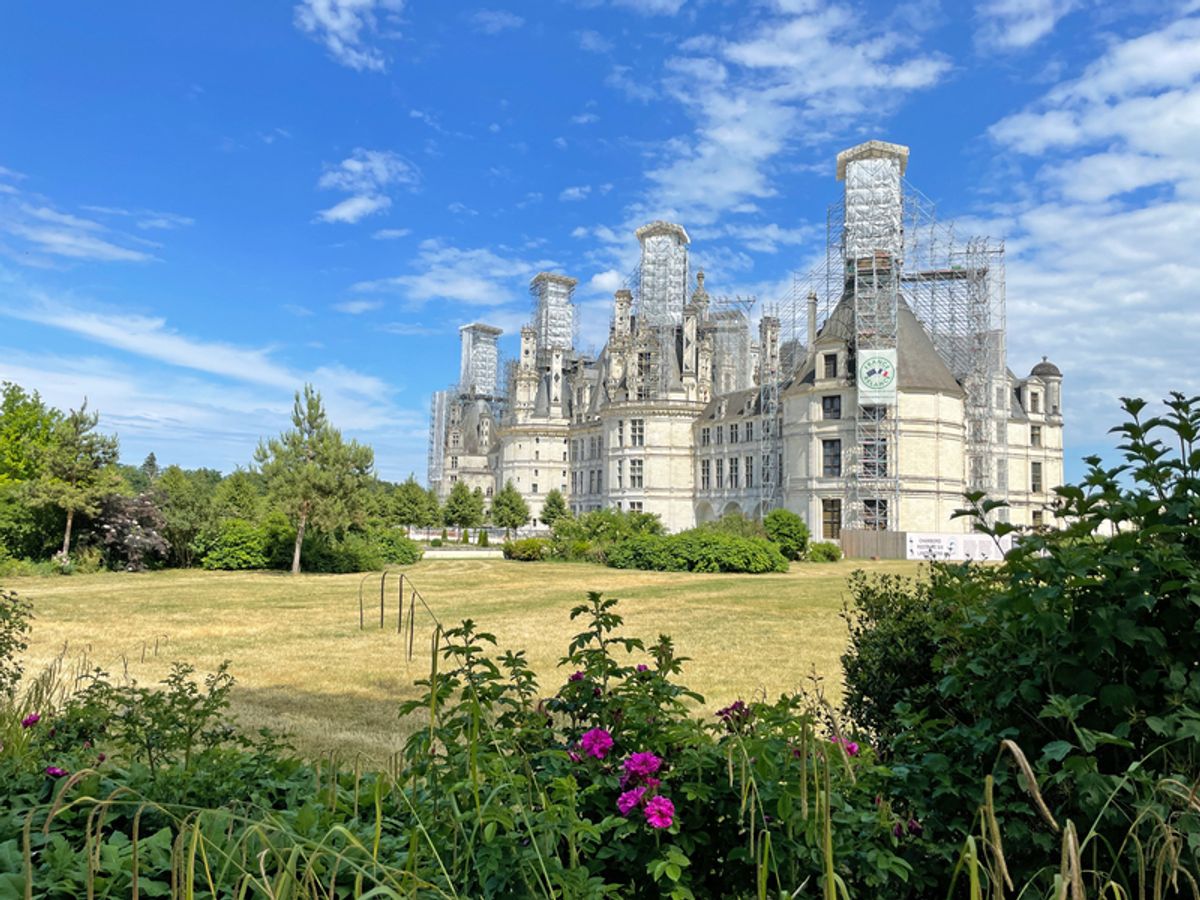
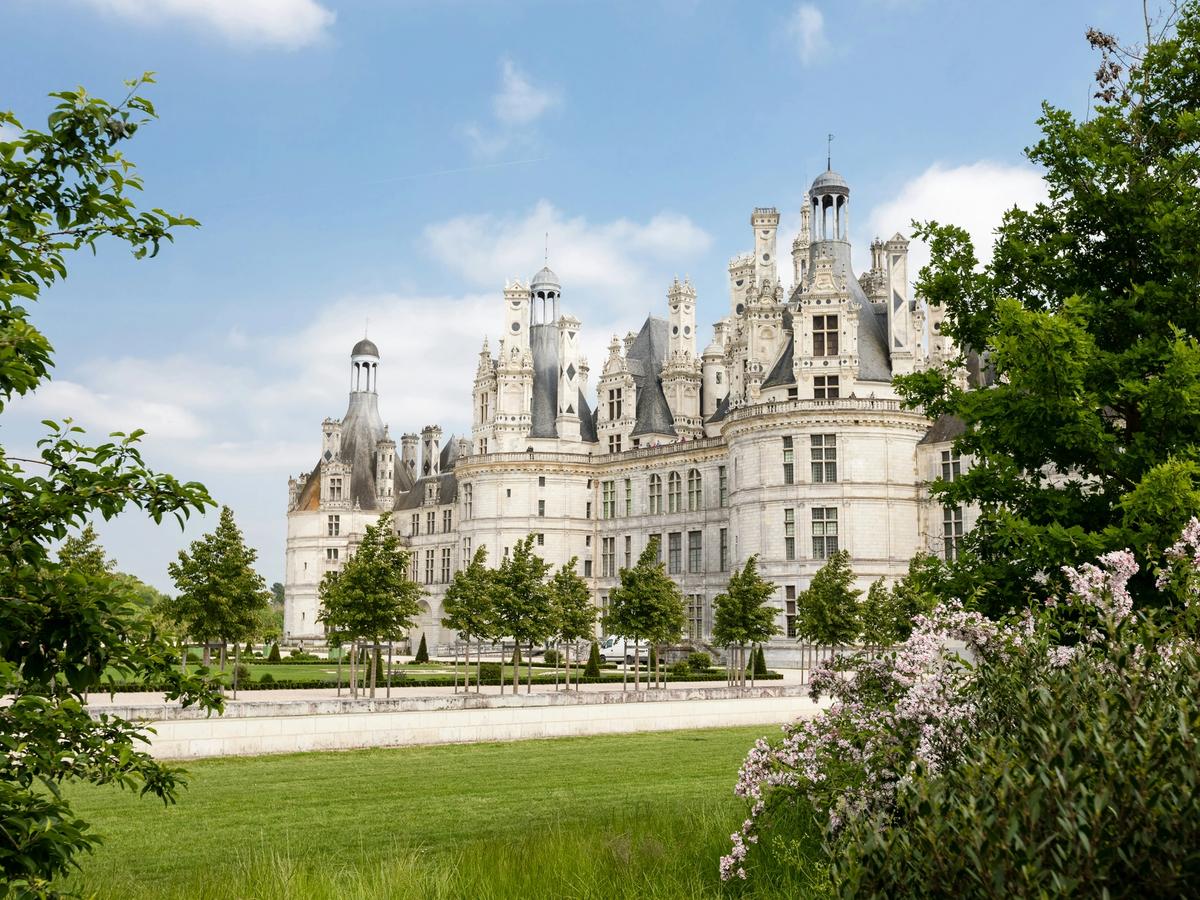
Château de Chambord is the largest and most theatrical. Built by François I in the 16th century, its roofline — a forest of towers, chimneys, and turrets — is one of the great architectural spectacles in France. Cycle up to it from the approach road in the early morning, when the mist is still on the parkland, and you will understand why people keep coming back to the Loire. The interior is worth an hour; the exterior, seen from the cycling path, is the real experience.
Château de Chenonceau spans the river Cher on a series of arched bridges. It is arguably the most photogenic building in France, and the cycling path passes directly in front of it. Arrive early — this is one of the most visited châteaux in France, and the difference between 9am and 11am is significant.
Amboise is the most liveable of the Loire towns — a compact medieval centre, a royal château with views over the river, and the Clos Lucé, where Leonardo da Vinci spent the last three years of his life as a guest of François I. The town has excellent restaurants and is worth a longer evening than most guests give it.
Cheverny is less visited than Chambord or Chenonceau, smaller, and more charming for it. It is also the real-life inspiration for Moulinsart — the Château de Moulinsart of the Tintin books. The interior is beautifully preserved.
Wine stops along the route: Vouvray's cave cellars are carved directly into the tufa cliffs beside the cycling path — many offer tastings with no appointment needed. Chinon, further west, is worth a dedicated evening for anyone interested in the Loire's red wines. Sancerre, at the eastern end of the valley, is a detour worth making for its crisp, mineral Sauvignon Blanc.
May and September are the strongest recommendations for most guests. Both offer excellent weather and far fewer crowds at the major châteaux than July and August.
Route: Most tours follow a section of La Loire à Vélo between Blois and Saumur or Angers. Typical sections cover 200–280km over 5–7 days.
Daily distances: 35–55km. Almost entirely flat. Suitable for anyone who cycles occasionally.
Difficulty: Leisurely — our most accessible tier.
Getting there: TGV from Paris Montparnasse to Tours takes 55 minutes; to Blois around 1 hour 20 minutes. A Paris night before or after combines well.
Self-guided or guided: Self-guided is the most popular format for the Loire Valley, and it is easy to understand why. The route is so well marked that a guide adds less value here than in more complex terrain. Your luggage is transferred daily; your accommodation is pre-booked; your GPS route notes handle navigation. The support helpline is there if needed.
Guided tours are available and suit first-time cycling holiday guests who want local expertise and a built-in social structure — particularly solo travellers and those travelling as a couple who want a ready-made evening group.
Browse Loire Valley cycling holidays →
Self-guided cycling holidays explained →
Yes, if:
Consider elsewhere if:
Yes — it is arguably the most beginner-friendly cycling holiday destination in Europe. The La Loire à Vélo route is almost entirely flat, consistently well-marked, and passes through villages and towns with excellent accommodation every 30–50km. If you have not done a multi-day cycling holiday before, the Loire Valley is the most forgiving place to start.
A week (6 riding days) is ideal and gives you time to visit the key châteaux, linger over lunches, and arrive at the Atlantic end of the route. A shorter 3–4 day break is possible if you focus on one section — Blois to Tours, for example, is a manageable long weekend with a strong concentration of highlights.
Chambord and Chenonceau are the most spectacular. Amboise combines a great château with the best town on the route for an evening. Cheverny is less visited and more intimate. You will not have time to do all of them properly — choose two or three and give them the time they deserve.
May and September. Both offer excellent weather, the châteaux and wine caves are fully open, and the roads and cycling paths are noticeably quieter than July and August. September, with the harvest beginning in the vineyards, is particularly atmospheric.
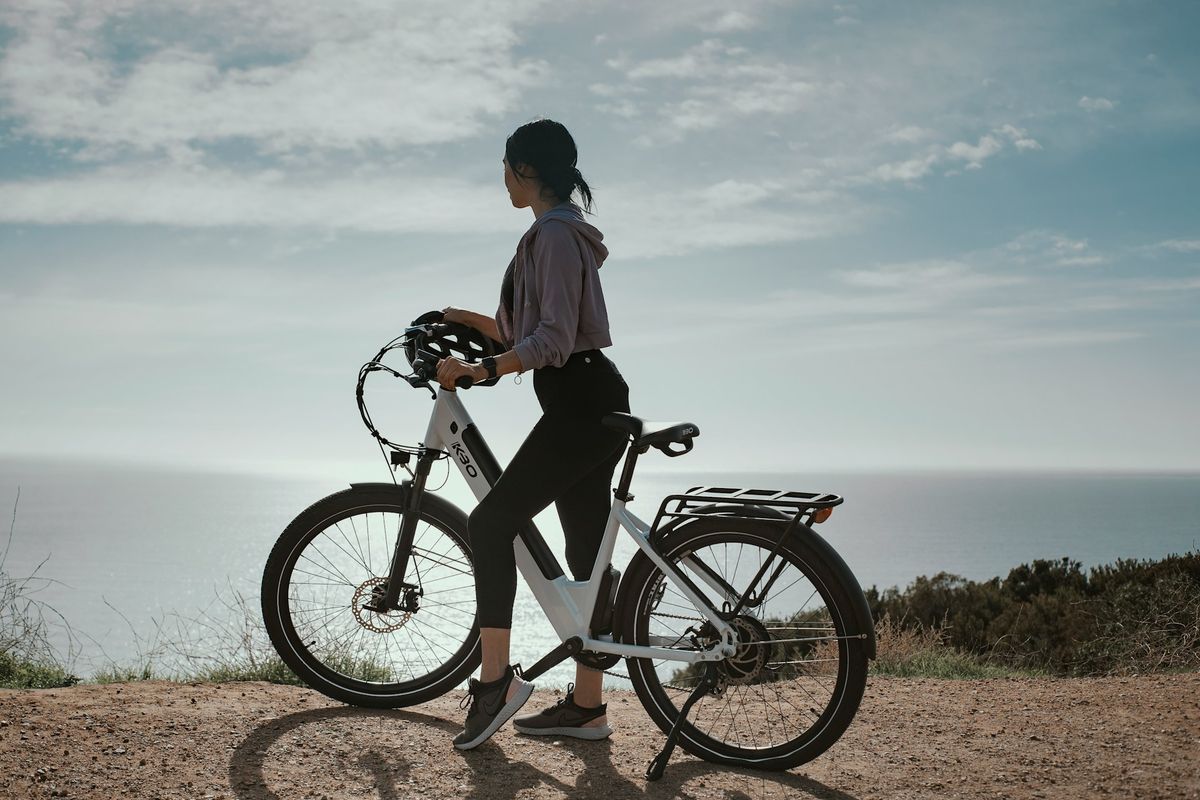
No. Bike hire is available on all Loire Valley cycling holidays we list — well-maintained touring bikes, properly fitted before the trip. E-bike hire is also available on most tours if you prefer electric assistance. If you want to bring your own bike, your operator will advise on transport and storage.
The Loire Valley is the starting point for many people's relationship with cycling holidays — and it tends to be a relationship that lasts. Browse our Loire Valley tours, or get in touch if you would like advice on which section and format is right for you.
Leisurely
Leisurely
Moderate
Leisurely
Leisurely
Leisurely
Moderate
Leisurely