Bike tour
Canal du Midi: Toulouse to Sète
Cycle the Canal du Midi from Toulouse to Sète. Discover vineyards, castles, historic towns, and Mediterranean charm on this 8-day tour.
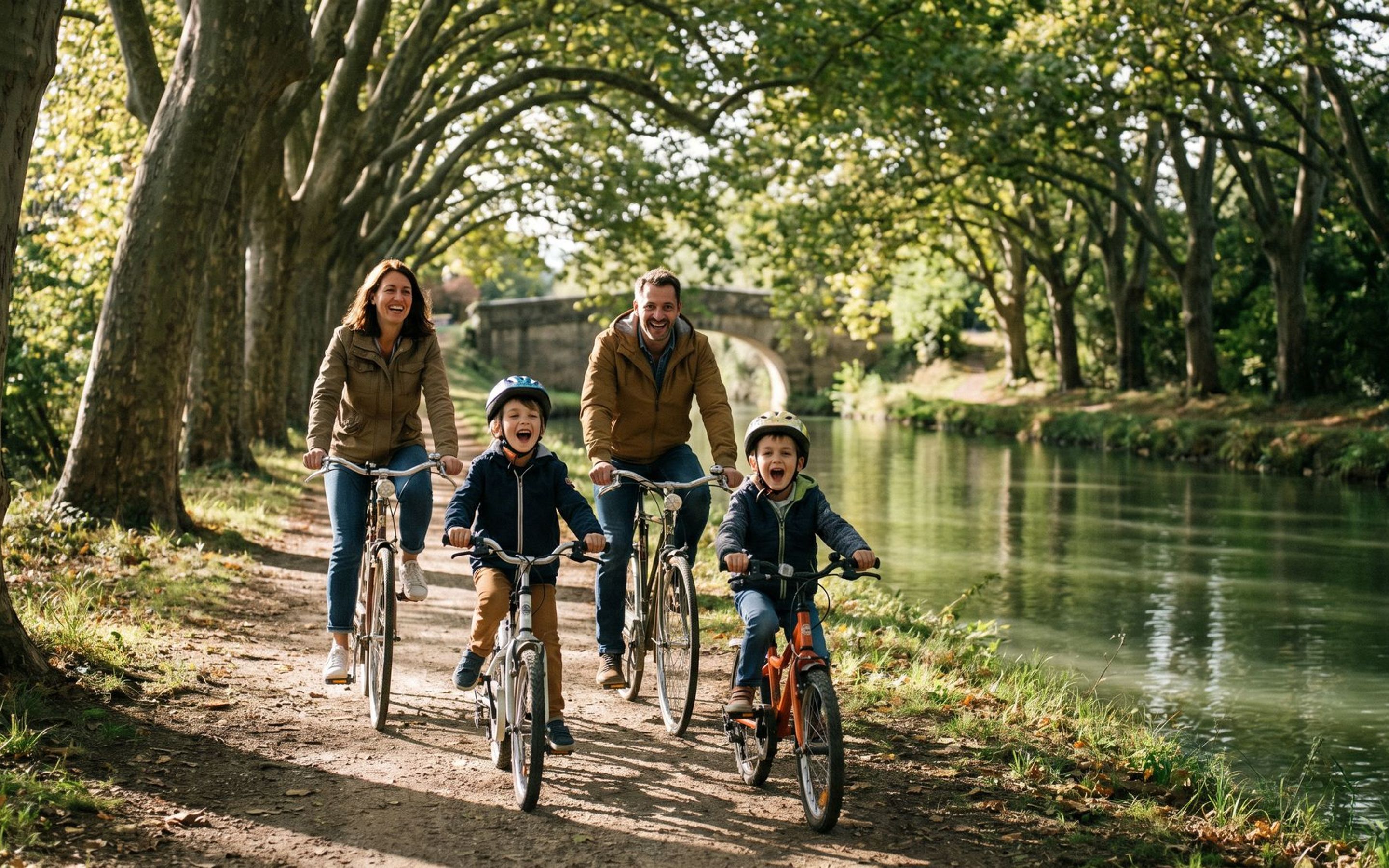
The train from London takes four and a half hours to reach Toulouse. You step off onto the platform, collect your hire bikes from the operator, and ten minutes later you are on a towpath that will not end — not meaningfully, not until the Mediterranean — for 241 kilometres. The Canal du Midi runs through the middle of France like a long corridor of shade. Plane trees, centuries old, form a canopy over the water and the path below it. The surface is flat. The path is car-free. Ahead of you is Carcassonne.
Canal du Midi cycling holidays are among the most consistently underrated in France. The Loire Valley gets the brochure space; Provence gets the Instagram posts. The Canal du Midi gets neither — and for families with children, this is the best route in the country. This guide explains why, and gives you everything you need to plan the trip.
Cycle the Canal du Midi from Toulouse to Sète. Discover vineyards, castles, historic towns, and Mediterranean charm on this 8-day tour.
Three things set the Canal du Midi apart from every other major cycling route in France.
It is completely flat. The canal drops just 50 metres from its high point near Toulouse to the sea — a gradient that, spread across 241 kilometres, is essentially imperceptible on a bike. Children on tag-alongs, adults pulling trailers, families with mixed fitness levels: all of them arrive at the end of each stage feeling like they cycled, not climbed.
It is completely car-free. The towpath is the same path that mule teams used to pull barges in the seventeenth century. It has never been a road. For parents with children who cycle independently, the absence of traffic changes the entire experience — children can ride ahead, drop back, stop at a lock to watch a barge come through, and do none of it with a parent watching for cars.
It is completely shaded. The plane trees lining the canal were planted on Colbert's orders in the 1670s to shade the mule teams and slow water evaporation. They are now enormous — the canopy in high summer is dense enough that cycling the Canal du Midi at midday in July is genuinely comfortable in a way that cycling in Provence or the Dordogne is not.
The canal itself was built between 1667 and 1681 to connect the Atlantic to the Mediterranean, avoiding the long sea route around Spain. It was the largest civil engineering project in seventeenth-century Europe, and it is now a UNESCO World Heritage Site. The 63 locks, the stone bridges, the canal tunnels and aqueducts — all of this is on the landscape you are cycling through. Children who have no interest in history tend to find the locks compelling anyway: watching a barge drop three metres in four minutes, the water rushing through sluice gates, the lock-keeper operating the mechanism — this is something worth stopping for.
The Canal du Midi runs from Toulouse's port de la Daurade to the Étang de Thau at Marseillan, where the canal meets the coastal lagoon that connects to the Mediterranean at Sète. Most families cycle the full route over 10–12 days, or choose a section of 5–7 days. The route divides naturally into three sections:
The opening section begins in the heart of Toulouse — the most liveable of France's major cities, with a food market, a river beach, and a city centre built in warm pink brick. The canal leaves the city quickly and moves into the agricultural plain of the Lauragais, the high ground south of Toulouse that divides the Atlantic and Mediterranean watersheds.
The terrain is open and slightly rolling in the early stages before settling into the flat canal corridor. The payoff at the end of this section is Carcassonne: the largest intact medieval walled city in Europe, its towers and ramparts visible from the towpath several kilometres before you arrive. Children who have shown limited interest in châteaux tend to respond differently to Carcassonne — it is not a château but a city, and arriving at it by bike rather than by car park gives it a different quality. Plan an afternoon for the ramparts and the inner city before continuing.
The most technically interesting section. Near Béziers, the Fonseranes lock staircase drops the canal 21 metres through nine consecutive locks in approximately 300 metres — the most significant piece of canal engineering on the route, and the place where children most reliably ask to stop. Below Fonseranes, the canal crosses the Orb river on an aqueduct, then enters Béziers.
Earlier in this section, the Malpas Tunnel — completed in 1679, the first canal tunnel in France — takes the waterway through a hillside that blocked the original route. The tunnel is 175 metres long; cyclists take the track over the top.
The final section widens as the canal approaches the coast. The Étang de Thau — a vast coastal lagoon, 20 kilometres long and famous for its oyster and mussel beds — marks the end of the canal proper. Families finishing here can spend a day or two at Marseillan, Agde, or Sète on the Mediterranean coast before the journey home.
Most families cycle west to east — Toulouse towards the sea — as the conventional direction and slightly downhill in aggregate. Some prefer to reverse it, finishing in Toulouse for easier rail connections back to Paris and London.
The towpath is suitable for children cycling independently from around age 7. Younger children (4–6) fit comfortably on tag-alongs; the flat surface makes this considerably easier for the adult than a hilly route. Children in trailers are entirely practical — the towpath surface varies between compacted gravel and tarmac, but trailers with robust tyres handle it without difficulty. Confirm with your operator which equipment is available and in which sizes before booking.
Mostly compacted gravel and earth, with tarmac sections near the larger towns. Not suitable for road bikes; the hybrid bikes that operators provide are the right tool. In wet weather, the earth sections can become soft — May and September are more reliably dry than October.
The flat terrain makes e-bikes unnecessary from a gradient perspective. Where they add genuine value on the Canal du Midi is for parents pulling children on tag-alongs or trailers, for whom the additional weight becomes noticeable over a full day. Worth considering if you are cycling with a child under 8 on a tag-along. Cycling UK's guidance on e-bikes for family cycling is a useful starting point if you are unfamiliar with the technology.
May and June are the best months. The plane trees are in full leaf, temperatures are 22–28°C, and the canal is quiet enough that locks are responsive and accommodation is available without booking six months in advance. The evenings are long — cycling typically finishes by 5pm and dinner is not until 8pm, which in June means three hours of evening light.
September is the close second. The summer crowds have gone. The harvest is beginning in the surrounding vineyards. Temperatures are back to 22–26°C after the August heat. For families with school-age children who can travel in September, this is often the better choice.
July and August are viable but carry caveats. The towpath in July and August — particularly in the Carcassonne section — is busy. The heat regularly exceeds 35°C in the afternoon. The practical solution: start cycling at 7–8am, rest between noon and 3pm, cycle again in the late afternoon.
The Canal du Midi runs through Languedoc country — a food and wine culture that is distinct from both Provence and Bordeaux and significantly underrated relative to both.
Cassoulet — the canonical dish of the region. A slow-cooked casserole of white beans, duck confit, Toulouse sausage, and pork. Heavy, warming, and exactly right after a full day's cycling. The version from Castelnaudary (between Toulouse and Carcassonne) is considered the definitive one; the dish appears on menus throughout the canal corridor.
Oysters from the Étang de Thau — the coastal lagoon produces oysters and mussels that supply restaurants across France. In the final section of the canal, these appear on every menu fresh and inexpensive. Order them simply — lemon, bread, a cold glass of Picpoul de Pinet from the lagoon's western shore.
Picpoul de Pinet — a crisp, briny white wine produced specifically in the vineyards beside the Étang de Thau. It costs very little, it is extremely local, and it is the correct drink with the lagoon's oysters.
The Canal du Midi is the most naturally self-guided cycling route in France. There is one path; it follows the canal; getting lost is not a consideration. A good self-guided cycling holiday in France on the Canal du Midi includes pre-booked accommodation in canalside towns and villages, luggage transferred each day by road while you cycle, GPS routes for stage planning, and bike hire collected at the start point. Pedal Ventures connects you to the local operators who build these itineraries — we are a marketplace, not a tour operator. Every operator on the platform has been assessed to the standard we would expect to book ourselves.
By Eurostar and TGV: London St Pancras to Paris Gare du Nord by Eurostar (2.5 hours), then TGV from Paris Gare de Lyon to Toulouse (4h30) or Carcassonne (5h30). Total journey from central London to Toulouse: approximately 7 hours. Bike hire is available at the destination through operators — no need to travel with your own bike.
By air: Toulouse-Blagnac Airport has direct flights from several UK airports. Carcassonne Airport (Ryanair from London Stansted, Manchester, and others) places you directly on the route mid-way — a good option for families who want to cycle only the second half in a shorter trip.
Every cycling holiday booked through Pedal Ventures carries PTS financial protection — your money is protected if Pedal Ventures or the tour operator fails. At around £3,000 per booking, this protection is worth understanding before you pay any deposit. Check that any cycling holiday you book elsewhere carries equivalent cover.
The full 241km from Toulouse to Marseillan takes most family groups 10–12 days at 20–35km per day. Families who want a shorter trip typically choose one section — Toulouse to Carcassonne (95km, 4–5 days) or Carcassonne to the sea (145km, 6–7 days).
From around age 4, using a trailer or tag-along. Children cycling independently typically manage the towpath comfortably from age 7 upward. Confirm with your operator which children's equipment they carry and in what sizes.
Yes — it is arguably the most suitable long-distance cycling route in France for families with young children. The flat terrain, traffic-free towpath, and consistent shade make it appropriate for children in trailers, on tag-alongs, and beginning to cycle independently.
Mostly compacted gravel and earth, with tarmac sections near towns. It varies in quality — some sections are smooth and firm; others are rougher after wet weather. Hybrid bikes (which operators provide) are the correct choice. Road bikes are not appropriate.
Different strengths. The Loire Valley is better for families with children under 7 who need very flat, smooth cycling paths and châteaux as constant visual interest. The Canal du Midi is better for summer holidays (the shade is a genuine advantage in July and August), for children who are engaged by the canal engineering and locks, and for families who want a route with more of a destination feel at the end (Carcassonne, the Mediterranean coast).
Yes — most operators can accommodate your own bike if you prefer. For families travelling by Eurostar and TGV, bike transport requires boxing your bike or booking a specific bike space on the train service. Hiring at the destination is simpler for most families.
Browse cycling holidays in the South of France or explore all cycling holidays in France to find the right tour.
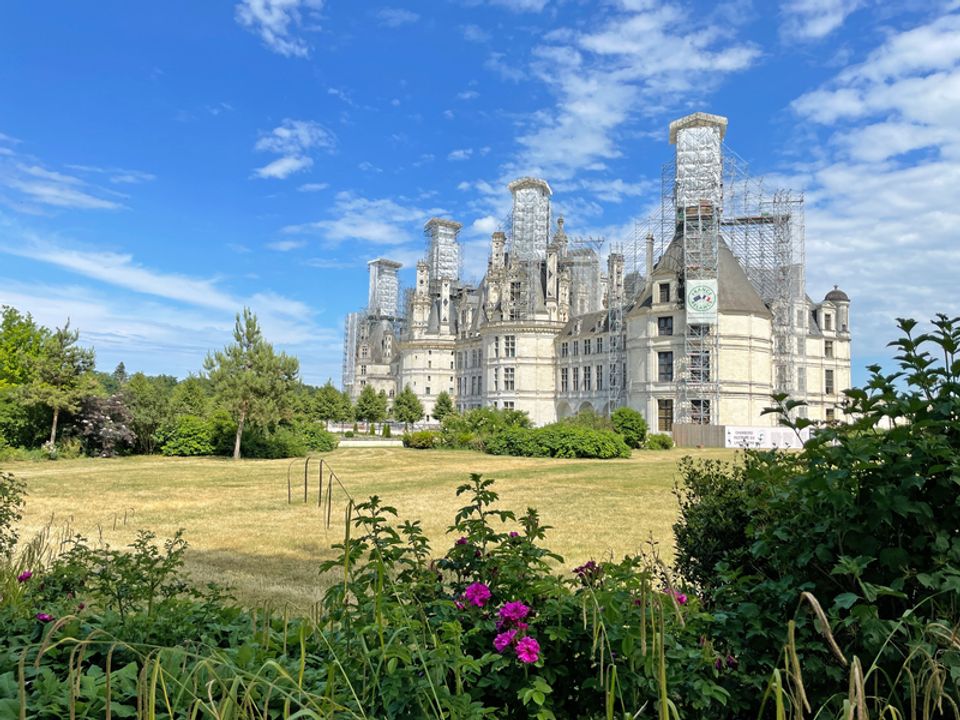
Cycle through the Loire Valley discovering its famous châteaux, vineyards and river landscapes on this 8 day cycling holiday from Blois.