Bike tour
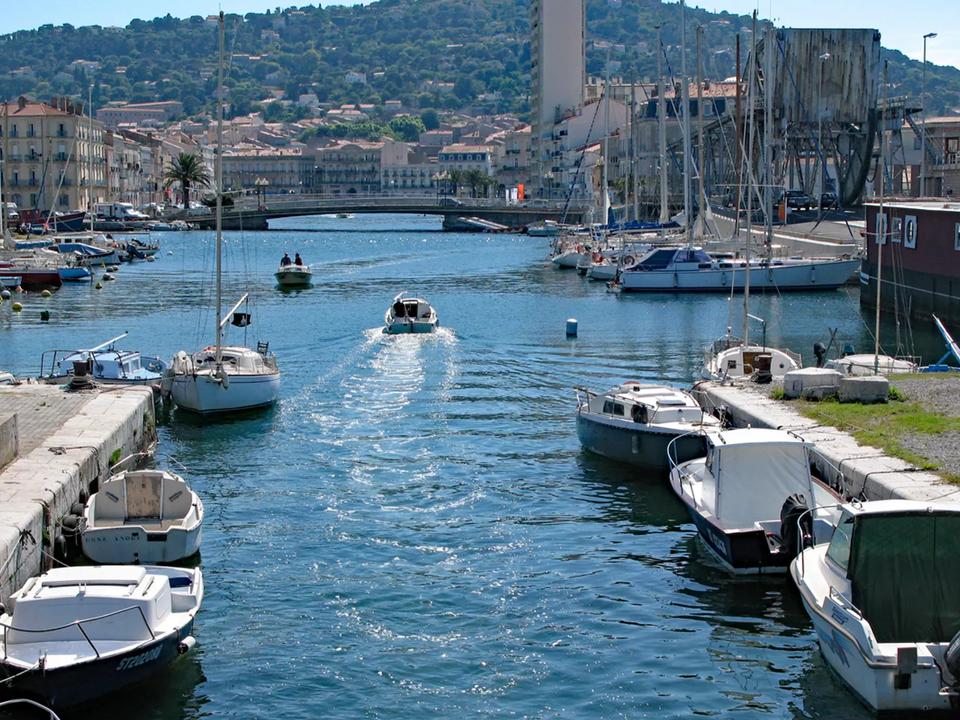
Canal du Midi: Toulouse to Sète
Cycle the Canal du Midi from Toulouse to Sète. Discover vineyards, castles, historic towns, and Mediterranean charm on this 8-day tour.
There is a version of a cycling holiday where you pack your bags every morning, check out of one hotel, cycle to the next town, check in to another, and repeat this for seven days. It is a perfectly good holiday. It is also, for families with young children, a considerable amount of daily administration on top of the cycling.
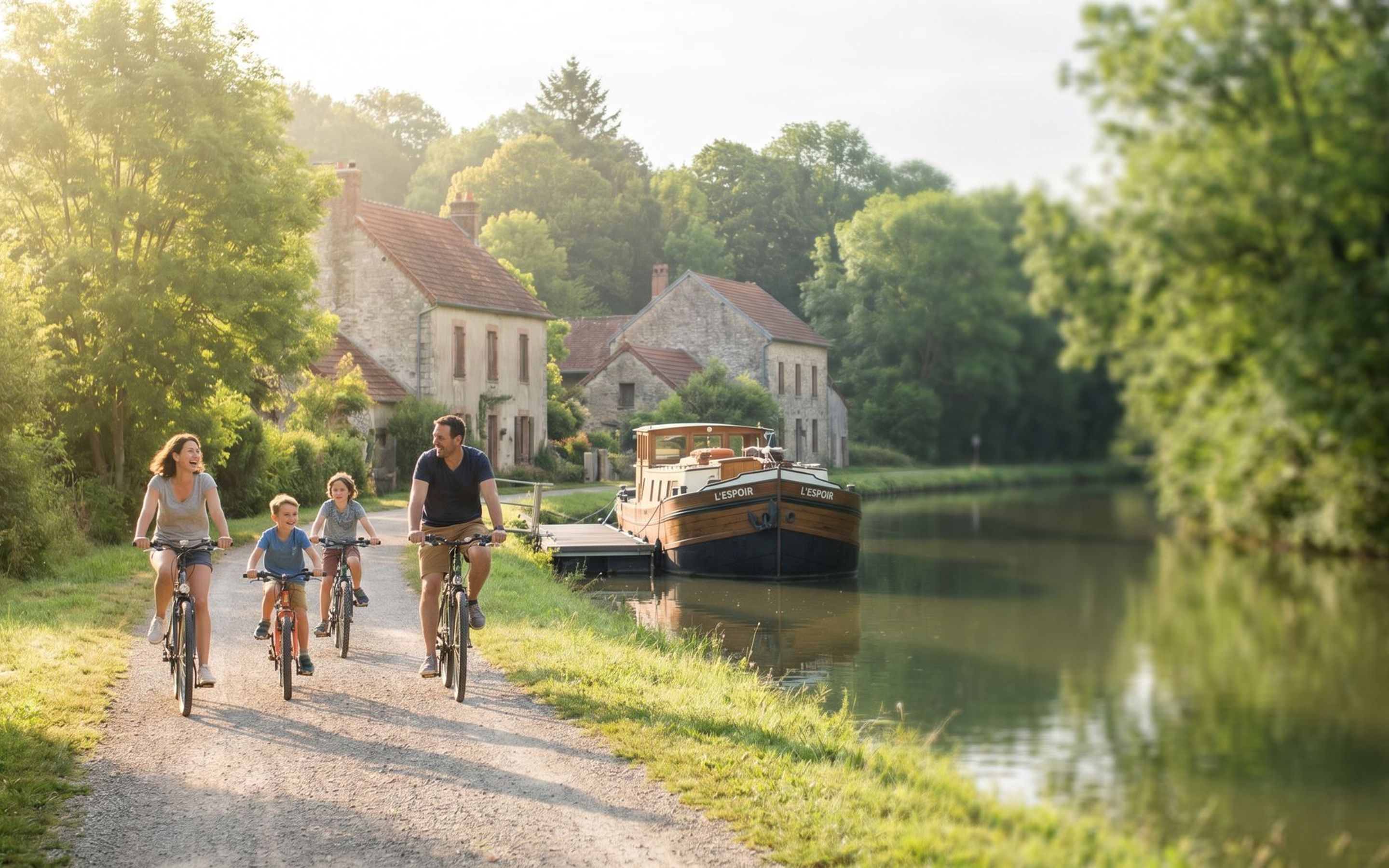
A bike and barge family holiday removes the administration entirely. The barge is home for the duration of the trip. You cycle from the morning mooring, the barge moves along the canal and meets you at the next stop, and you sleep in the same cabin — with your same belongings, in the same bed — every night until the last day. Nobody packs anything after day one.
This is the format's primary appeal for families: not the cycling (which is the same quality as any other self-guided holiday), but the elimination of the logistical friction that families find most wearing. This guide explains how it works, where it works best, and who it suits.
The barge: A hotel barge — typically accommodating 6–12 passengers in private cabins — is your moving home for the holiday. The barge has a crew (captain, chef, and usually one deck hand) who handle navigation, mooring, cooking, and maintenance. Meals are provided on board: breakfast and dinner at minimum, with lunch typically as a picnic box supplied by the barge or eaten at a canalside café. Your cabin is your room; you do not pack it, move it, or leave it behind.
The cycling: Each day, passengers cycle sections of the canal route at their own pace. Daily distances are typically 20–50km. The barge tracks your progress and meets you at agreed mooring points. If you finish early, wait at the lock; if you cycle slowly, the barge waits. There is no fixed clock; the pace is flexible within the day's route.
The key difference from a standard cycling holiday: On a standard self-guided holiday, a transfer service moves your luggage by road from one hotel to the next. On a barge holiday, there is no luggage transfer because there is no new hotel. Everything you brought is on the boat. You cycle with a light daypack; your bags stay in your cabin.
No nightly accommodation change. On a barge, children sleep in the same cabin for the entire holiday. The bedtime routine is the same every night; the environment is known and settled. This is a more significant advantage than it sounds if you have done a stage-to-stage holiday with children aged 4–8.
Swimming from the boat. Most hotel barges have a swimming platform at the stern. In July and August on the Canal du Midi or Burgundy canals, the water temperature reaches 22–24°C. An afternoon moored in a shaded lock, children swimming from the barge, is not something a standard cycling holiday can replicate.
Completely flexible daily distance. On a barge holiday, you cycle as much or as little as you want within the day. A child who is tired after 15km stays on the barge for the afternoon while other passengers cycle on. Nobody is held back; nobody falls behind.
Meals on board, without the planning. Finding family-appropriate restaurants in consecutive towns, booking them in advance, and managing a hungry group of children at 7pm after a long cycling day is a form of daily effort that barge holidays eliminate. Meals are prepared by the crew, eaten on deck in good weather, using local produce sourced at each mooring.
The most popular and most logistically straightforward barge cycling route in France. 241km of flat, tree-shaded towpath — car-free, well-maintained, visually consistent. The 63 locks provide natural stopping points for children; Carcassonne is the dramatic mid-route destination; the Mediterranean coast is the finish line worth working towards.
The Canal du Midi in May and September is the right choice for families — quieter than high summer, comfortable temperatures. For families with young children, the flat terrain and absence of traffic make it one of the most practically suitable routes available.
Rolling Burgundy countryside, vineyard views, medieval towns. The Burgundy canals see fewer cyclists than the Canal du Midi — quieter towpaths, more responsive lock-keepers. The terrain alongside is gently rolling rather than flat, so this suits families with children aged 10 and above who cycle confidently.
The food and wine context — Beaune, Dijon, Côte d'Or vineyards — adds a dimension that the Canal du Midi does not have in the same way. For families where the adults are as interested in the cultural programme as the children are in the swimming, Burgundy often produces the more satisfying overall holiday.
Some operators run bike and barge on the Loire river itself. The Loire between Blois and Angers passes directly beneath the great châteaux — cycling the riverside path while the barge moves parallel on the river gives a different relationship to the landscape from the canal routes. Less common than the canal-based options, and more weather-dependent. Worth asking operators about specifically if the Loire châteaux are the primary reason for the trip.
It suits families where: Children are young enough that the settled home base genuinely reduces evening stress; the group has mixed cycling abilities; adults want evenings without restaurant logistics; swimming is a priority for children.
It suits less well when: The family wants maximum daily cycling distance — barge holidays cover 20–50km per day, not 60–80km. Families with teenagers who want to cover real ground may find the pace restrictive. Budget is the primary constraint — bike and barge is typically more expensive per person than self-guided cycling holidays, reflecting the accommodation, meals, and crew included.
Ages: No fixed minimum, but most operators take children from age 3 or 4 upward. Life jackets are provided for all children near water. Confirm minimum age and water safety arrangements with your operator.
8am: Breakfast on the barge deck. Nobody packs. 9:30am: Bikes collected, helmets on. The day's stage is 28km to the next mooring. 11am: First stop at a lock — children watch from the towpath while the barge descends. 1pm: Picnic lunch from the barge's supplied box — bread, cheese, cold cuts, fruit. 3pm: The barge has moved ahead and is moored at the evening stop. A child who cycled 20km in the morning boards the barge and swims off the stern for an hour. 6pm: Everyone aboard. Drinks on deck. 7:30pm: Dinner on deck — regional produce, crew-prepared, no booking required. 9:30pm: Children to their cabin. Adults on deck with a glass of Languedoc wine until the light goes.
Every cycling holiday booked through Pedal Ventures carries PTS financial protection — your money is protected if Pedal Ventures or the operator fails. At around £3,000–5,000 per family for a barge holiday, this protection matters more than on most cycling holidays. Check that any barge holiday you book elsewhere carries equivalent financial cover before paying any deposit.
A holiday where you cycle stages of a canal route each day while your accommodation — a hotel barge — travels the same route by water and meets you at each evening's mooring. You sleep on the same boat every night; there is no luggage transfer, no hotel check-in, and no daily accommodation change.
Yes — it is one of the most family-friendly cycling holiday formats available. The settled home base, the swimming from the barge, and the flexible daily cycling distance all suit families with children aged 4 and above.
Typically 20–50km per day. This is less than a standard self-guided cycling holiday's typical distance — the format prioritises a relaxed pace over high mileage.
Cabin accommodation, breakfast and dinner on board, bike hire, and the crew. Lunch is typically a picnic box or eaten at a canalside café. Confirm exactly what is included when booking.
The Canal du Midi for families with young children — flat, shaded, car-free, with the best swimming potential in summer. The Burgundy canals for families with older children or teenagers who want more cultural depth and more varied terrain.
A standard self-guided holiday offers more daily distance and more geographic range. A barge holiday offers more logistical simplicity, a fixed home base, and the swimming and deck culture that standard holidays cannot provide. For families with children under 10, the barge format often produces the more enjoyable overall holiday.
Browse cycling holidays in France to find the right format for your family.
Cycle the Canal du Midi from Toulouse to Sète. Discover vineyards, castles, historic towns, and Mediterranean charm on this 8-day tour.