Bike tour
Florence to Rome
Cycle from Florence to Rome through Umbria’s medieval towns, vineyards, and valleys, with stops in Assisi, Perugia, and Spoleto.

Rob
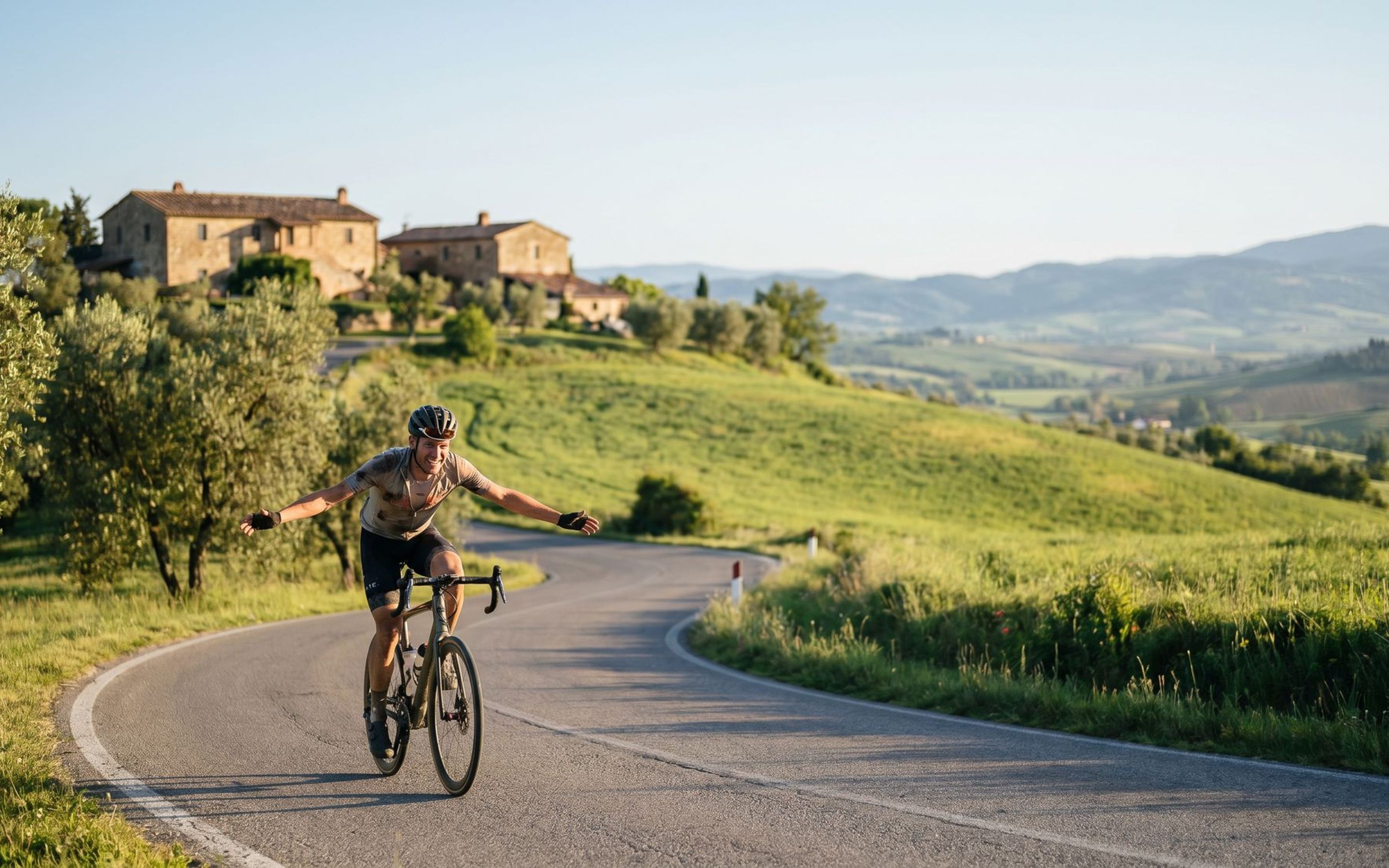
You have been riding for five days through Umbria's quiet valleys — past Lake Trasimeno's still waters, through Assisi's cobbled streets, alongside Spoleto's Roman aqueduct. Each day has been measured in kilometres and centuries, the landscape layered with medieval towers, Renaissance frescoes, and ancient stone. Then, on the final morning, you board a train and in ninety minutes the countryside gives way to the sprawl and drama of the Eternal City. Rome. You arrive with dusty legs, a week of stories, and the particular satisfaction of having earned it.
A cycling holiday to Rome is not a city bike tour. It is a multi-day ride through central Italy's green heart — Umbria — with Rome as the destination and reward. The journey starts in Florence, crosses the Val di Chiana and the shores of Italy's fourth-largest lake, climbs gently through hilltop towns that have barely changed in five hundred years, and delivers you to one of the world's great cities with context most visitors never have.
Cycle from Florence to Rome through Umbria’s medieval towns, vineyards, and valleys, with stops in Assisi, Perugia, and Spoleto.
This is how it works.
The Florence to Rome route on Pedal Ventures covers approximately 300 kilometres over seven to eight days of riding, starting in Tuscany and travelling south through Umbria. It is rated difficulty 3 out of 5 — moderate, with rolling terrain and regular climbs, but nothing that requires serious climbing fitness.
The journey unfolds in stages, each with its own character.
The first days take you from Florence by train to Arezzo, then south through the Val di Chiana — a broad, fertile valley between Tuscany and Umbria. The riding is relatively gentle here, following quiet roads through agricultural land toward Lake Trasimeno. The lake itself is peaceful and surprisingly large, with fishing villages along its shores and excellent local perch and eel on restaurant menus.
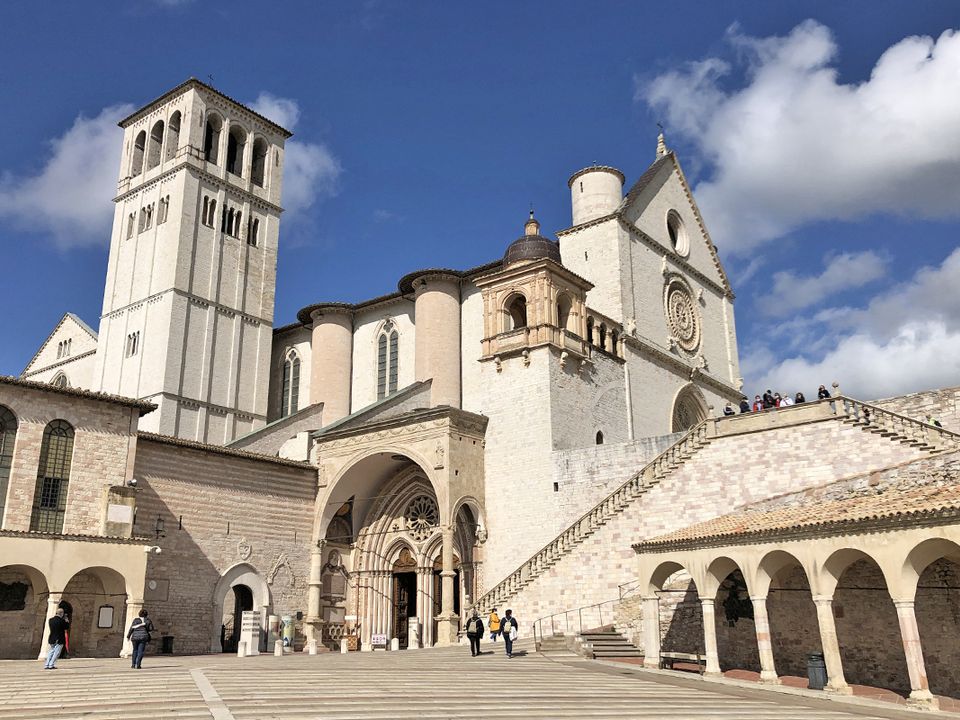
From Trasimeno, the route enters Umbria proper. Perugia sits on a hilltop overlooking the Tiber valley — a university city with a lively centro storico, a world-class chocolate tradition (Perugina was founded here), and views that stretch to the Apennines. Assisi, ten kilometres east, needs no introduction — the UNESCO World Heritage-listed basilica of St Francis, with its Giotto frescoes, is one of Italy's great artistic and spiritual sites. Even if you are not religious, the building is extraordinary.
South of Assisi, the landscape narrows into the Valle Umbra — a series of connected valleys with olive groves on the lower slopes and medieval towns perched above. Spoleto is the standout: a Roman-founded, medieval-built town with a dramatic aqueduct (the Ponte delle Torri) spanning a forested gorge. The riding through this section is the most consistently beautiful of the route — quiet roads, regular small towns, and an ever-present sense of deep history.
The route's conclusion is deliberately designed. You cycle to Poggio Mirteto, a small town in the Sabine Hills north of Rome, where you drop off your bike. From here, you take the train into Rome — arriving at Termini station or, if you prefer, Tiburtina. The transition from Umbrian quiet to Roman chaos is intentional: Rome lands with more impact because of the days of countryside that preceded it.
This is not a compromise. Cycling into Rome's traffic would be neither safe nor enjoyable. The train arrival lets you step from one world into another with the contrast fully intact.
The narrative arc. Most cycling holidays are circular or point-to-point between similar places. Florence to Rome is a story: it starts in one iconic city, travels through Italy's quiet interior, and finishes in another. You feel like you have been somewhere — not just ridden a loop.
Umbria itself. Often called "the green heart of Italy," Umbria gets a fraction of Tuscany's visitors despite comparable beauty. The hilltop towns are less polished but more lived-in. The food is earthy and specific — black truffles from Norcia, lentils from Castelluccio, wild boar ragu, and the local Sagrantino wine. You eat well here, and you eat cheaply. The Umbria regional tourism board has detailed visitor information for planning your time in the region.
The historical density. Etruscan tombs, Roman temples, early Christian basilicas, medieval fortresses, and Renaissance palaces — all within a week's ride. Every town has layers. Spoleto alone has been continuously inhabited for over 2,500 years.
The contrast. A week of quiet roads, small towns, and unhurried days — then Rome. The Colosseum, the Forum, the Trastevere restaurants, the Baroque piazzas. It lands differently when you have pedalled to get there.
The Florence to Rome route is rated difficulty 3 out of 5 on Pedal Ventures. In practice, this means:
You need moderate cycling fitness. If you ride once or twice a week and can manage 50 kilometres with hills comfortably, this route will suit you. It is harder than Puglia's flat terrain or the Veneto's river paths, but easier than Tuscany's steeper Chianti hills and considerably easier than the Dolomites.
E-bikes are available through the local operator if you want the route's beauty without the full physical effort.
April to June: Ideal. Umbria is green, temperatures are comfortable (18–27°C), and the tourist crowds in Assisi and Perugia are manageable. Late May and early June are particularly good — long days, settled weather, wildflowers still in bloom.
September and October: The second window. Harvest season in the olive groves, softer light, warm evenings. October can bring some rain but rarely enough to disrupt riding.
July and August: Hot (30°C+) and busier in the historic towns. Rideable but not recommended if you have flexibility to choose other months.
The Florence to Rome cycling holiday suits:
It is less suited to beginners (the hills are genuine), families with young children, or people who want Rome as a cycling destination in itself (Rome is the reward, not the route).
No. This is a multi-day cycling holiday that ends in Rome. The riding takes place through Umbria — Rome is the destination, not the route. If you want a guided city bike tour of Rome's landmarks, that is a different product entirely.
We recommend at least two nights. You will arrive in the afternoon and want to explore on foot — the centro storico, Trastevere for dinner, the Forum in the morning light. Two nights gives you a full day in the city without rushing.
Moderate fitness is required. Umbria is hilly — not mountainous, but the climbs are regular. If you can comfortably cycle 50 kilometres with 400 metres of climbing, you will enjoy this route. E-bikes are available if you prefer assistance.
Luggage is transferred between accommodations each day. You ride with a day bag only. At the end of the route, your main bag is transported to your Rome hotel.
Yes. Many riders add extra nights in Florence at the start, or extend their Rome stay at the end. The route can also be combined with a Tuscany cycling holiday for a two-week Italian journey.
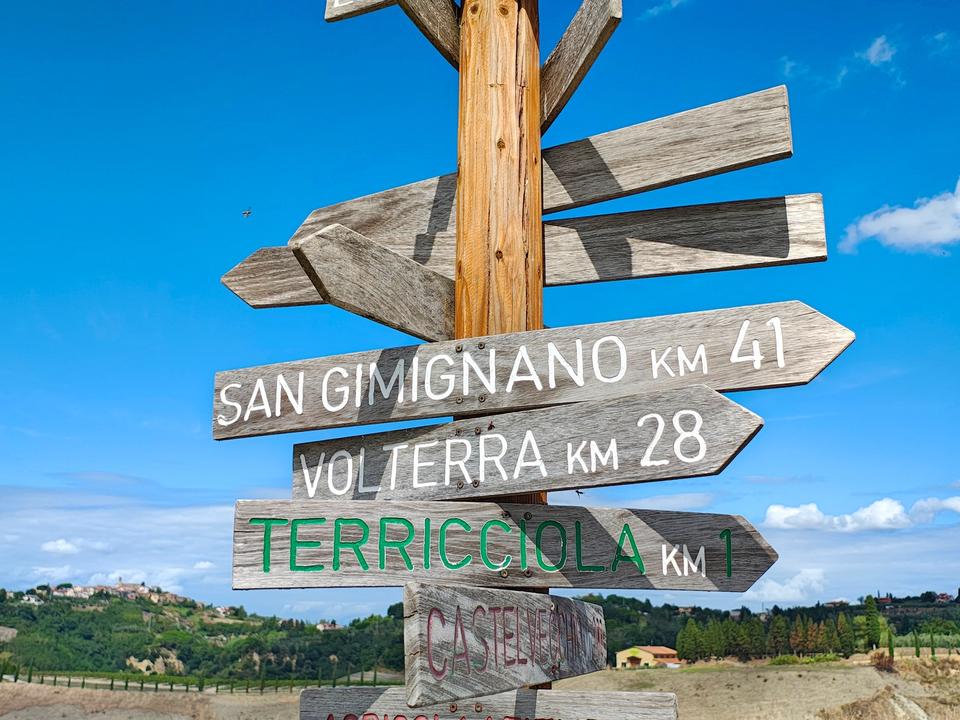
A 7-day self-guided cycling tour from Pisa to Florence via Casciana Terme, San Gimignano, Siena and the Chianti vineyards.
Fly from Rome Fiumicino (FCO) — direct flights to all major UK airports. The airport is 30 minutes by train from Roma Termini. Check the latest FCDO travel advice for Italy for up-to-date entry requirements before you travel.
Ready to ride to Rome? View the Florence to Rome cycling holiday on Pedal Ventures, or explore more cycling holidays in Italy.