Bike tour
Picturesque Provence
Cycle through the heart of Provence on quiet routes linking Orange, Avignon, Saint Rémy and L’Isle sur la Sorgue. Roman history, vineyard landscapes and classic Provençal towns, all at an unhurried pace.

Rob
Painters kept coming back to Provence for the light. On a bike, moving slowly enough to watch it change across a lavender field in the late morning, you begin to understand why. The quality of illumination here — the way it flattens the ochre cliffs, catches the pale stone of a hilltop village, turns the Luberon ridge from grey to amber in the hour before sunset — is not a travel writer's exaggeration. It is the thing Cézanne was trying to solve for the last thirty years of his life.
Cycling holidays in Provence sit at the more demanding end of what France offers cyclists. The terrain is hillier than the Loire Valley, the summer heat is real, and the region rewards those who understand what they are cycling into. Most guides to cycling in Provence describe it as beautiful and challenging without distinguishing between its very different zones — the gentle Luberon, the dramatic Alpilles, and the serious climbs of the Vaucluse plateau. Those zones suit different types of cyclist. Understanding which is right for you is the most important planning decision you will make.
This guide covers all three zones, the timing question that matters more in Provence than anywhere else in France, and the practical information you need to plan a trip that matches your ability.
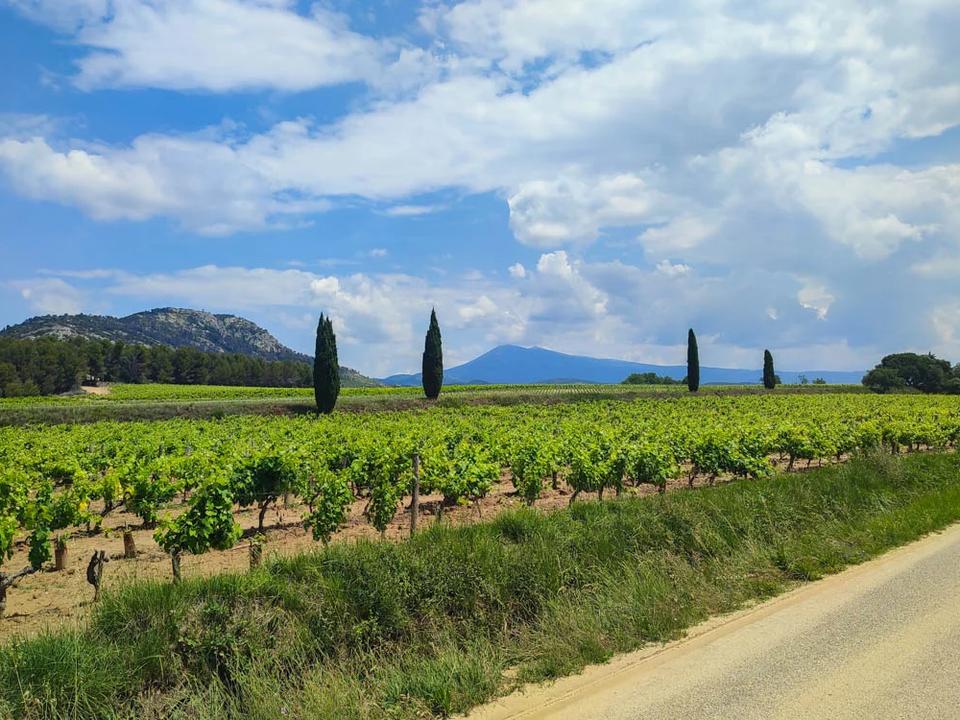
Most of the landscapes that make Provence famous are experienced differently on a bike than by car or on foot. The back roads connecting the hilltop villages of the Luberon — Gordes, Bonnieux, Roussillon, Lourmarin — are not, in any meaningful sense, accessible by tourist bus. You arrive at them from below, having climbed through vineyards to reach a village perched on a ridge, and the effort makes the arrival feel earned in a way that parking a rental car does not.
The scent dimension matters too, and it is specifically a cycling experience. In July, riding through lavender fields in bloom, the smell arrives before you can see the purple rows — it fills the morning before the heat builds. It is a sensory detail that does not register from inside a car and barely registers on foot. On a bike, at 18km/h, it is the thing that stays in the memory.
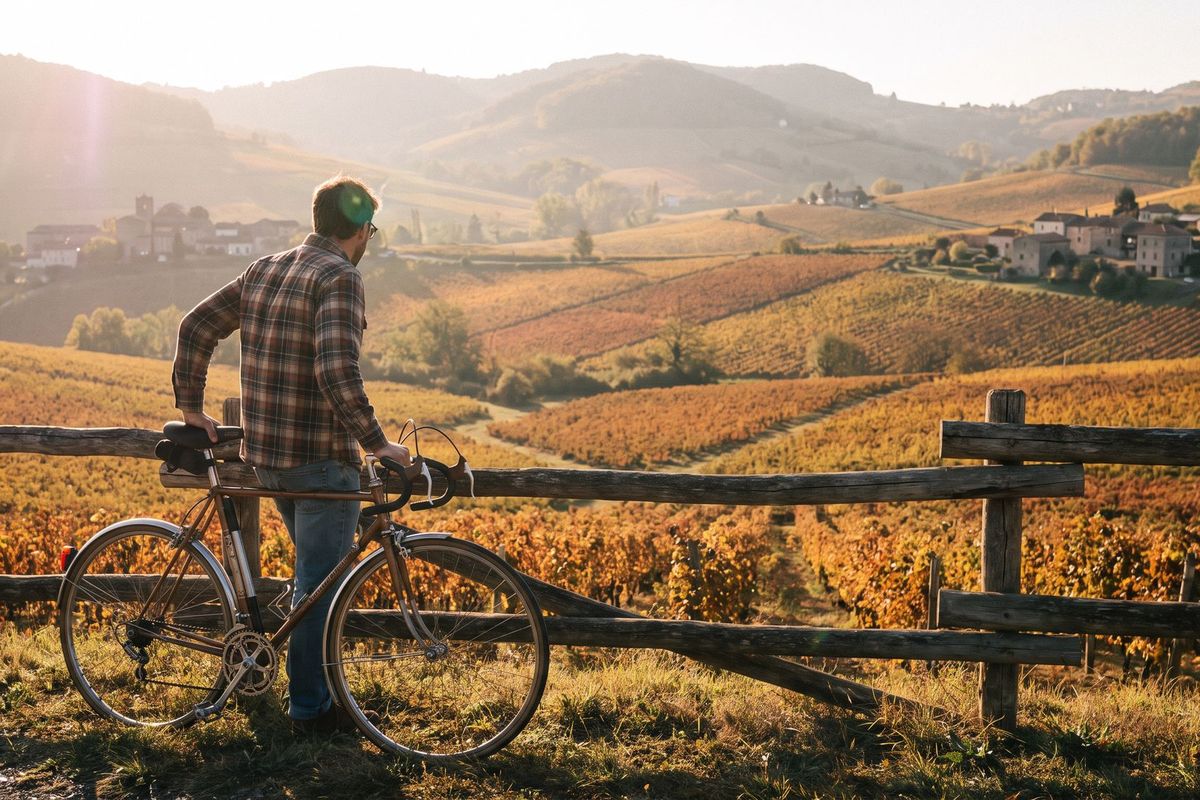
The food and wine context is equally strong. Provence produces rosé wines that account for more than 40% of all French rosé production — the pale, mineral style of Bandol and Côtes de Provence that is worth tasting at a domaine rather than from a supermarket shelf. The Provençal markets — Apt on Saturday, Lourmarin on Friday, Aix-en-Provence daily — are among the best in France. The olive oil of the Vallée des Baux de Provence carries its own AOC designation. These are experiences that cycling integrates rather than interrupts.
The most common planning mistake is treating Provence as a single cycling destination. It has three distinct zones, each with different terrain, difficulty, and character.
The Luberon is the most accessible and most popular zone for cycling holidays. The Parc Naturel Régional du Luberon covers a long ridge of hills between the Durance Valley to the south and the Calavon Valley to the north, with the best-known Provençal villages perched on or near the ridge: Gordes (carved into white limestone), Roussillon (ochre-red cliffs), Bonnieux (visible from 30km away), Lourmarin (the Luberon's most liveable town, with the best restaurant options).
Daily cycling distances: 40–55km. The terrain is rolling to hilly — there are climbs through the vineyards that reward effort with views, but nothing that requires exceptional fitness. The Luberon is what most people picture when they imagine a Provence cycling holiday. It is accessible to experienced recreational cyclists but not suitable for anyone on their very first cycling holiday.
The Alpilles are a compact range of white limestone hills west of the Luberon, shaped by millennia of wind erosion into jagged ridges and pale outcrops. This is Van Gogh's landscape — Saint-Rémy-de-Provence, where he was hospitalised and produced over 150 works in a year, sits at the edge of the range. Les Baux-de-Provence, built into the cliff above a sheer drop, is one of the most dramatic villages in France.
Daily cycling distances: 35–50km. The Alpilles terrain is similar to the Luberon — rolling, with some climbs — but the landscapes are starker and more monumental. The cycling routes connect fewer wine villages and more cultural sites. Best for cyclists with a cultural focus who want visual drama without serious climbing.
The Vaucluse plateau north of the Luberon is a different category of cycling. Mont Ventoux — 1,912 metres, the Giant of Provence — stands alone on the northern edge of the plateau and is one of the most iconic cycling climbs in the world, hosting the Tour de France on a near-regular basis. The summit ascent is for experienced and fit cyclists only: 21km from Bédoin, with an average gradient of 7.5% and sections of 10–12%.
The cycling on the plateau surrounding Ventoux — through the Dentelles de Montmirail and the vineyards of Gigondas and Vacqueyras — is serious but beautiful, and does not require a summit attempt. Best for: experienced cyclists comfortable with regular multi-hour climbs, who want a route with genuine physical challenge in one of France's finest wine landscapes. Not recommended for first-time cycling holiday guests or those without regular hill cycling.
The rhythm of a Provence cycling holiday is shaped by the heat more than any other factor. This is not a problem — it is an invitation to cycle the way the French do: begin early, ride hard in the cool morning, eat a long lunch in the shade, and move again when the day begins to ease.
A typical day on the Luberon route: departure by 8:30am, before the day reaches its peak temperature. A morning of 30–35km through vineyards and garrigue, arriving at a market village by 11am. The market, then lunch — properly, with rosé, at a table in the shade. The afternoon is for the cultural visit: a château, a priory, a viewpoint, a wine cave. A second stage of 10–20km to the next town by 4pm. Luggage in the room. The evening in a Provençal town in summer is its own reward: the plane trees, the pétanque, the menus written in chalk and changed daily.
The self-guided cycling holiday format suits Provence because the route notes handle navigation — the back roads are not always well-signed — and the helpline handles the unexpected. But the independence to stop at a domaine for an impromptu tasting or to spend an extra hour in a market is what makes Provence feel like Provence.
The timing question in Provence is not about rain or cold — it is about heat and crowds. Get it right and Provence is extraordinary. Get it wrong and both can overwhelm the experience.
Browse cycling holidays in Provence
Cycle through the heart of Provence on quiet routes linking Orange, Avignon, Saint Rémy and L’Isle sur la Sorgue. Roman history, vineyard landscapes and classic Provençal towns, all at an unhurried pace.
Yes, if:
Consider elsewhere if:
It depends on the zone. The Luberon and Alpilles are moderately hilly — rolling terrain with regular climbs through vineyards and up to hilltop villages. Daily elevation on a typical Luberon tour: 400–600m. This is manageable for anyone who cycles regularly and is classified as Moderate on Pedal Ventures. The Vaucluse/Ventoux area involves serious climbing and is classified as Challenging — only suitable for experienced cyclists.
May and September are the strongest recommendations. Both offer excellent weather, manageable tourist numbers, and fully open accommodation and wine caves. September has the advantage of the wine harvest beginning — the vineyards are at their most active and many producers welcome visitors. July offers the lavender peak but requires early riding and heat management. Avoid cycling in Provence in July and August if you dislike heat above 30°C.
Not strictly, but it is strongly recommended. The Luberon and Alpilles terrain involves regular climbs that are manageable on a standard touring bike for fit cyclists, but the e-bike removes the pressure from the hillier stages and extends your afternoon range. In July and August, when heat management is part of the trip, an e-bike allows you to ride comfortably in conditions where a standard bike requires more effort. All Pedal Ventures Provence listings note whether e-bikes are available.
For most cyclists — particularly those visiting Provence for the first time — the Luberon is the right starting point. It combines the most iconic Provençal villages with manageable terrain and the best wine and food options. The Alpilles suit cyclists with a stronger cultural focus and an interest in Van Gogh's landscape. The Vaucluse is for experienced cyclists who want a physical challenge in a serious wine landscape.
A week (5–6 cycling days) covers the Luberon circuit comfortably and gives enough time to visit two or three of the key villages properly. A shorter 3–4 day break is possible for the Luberon loop — Apt to Lourmarin covers a strong concentration of highlights. A combined Luberon and Alpilles tour needs 8–10 days and is better suited to returning guests.
Provence rewards the cyclist who plans carefully — the right zone, the right timing, the right pace. Browse our Provence cycling holidays, or get in touch if you would like advice on which route and format suits your cycling level.
Browse cycling holidays in Provence
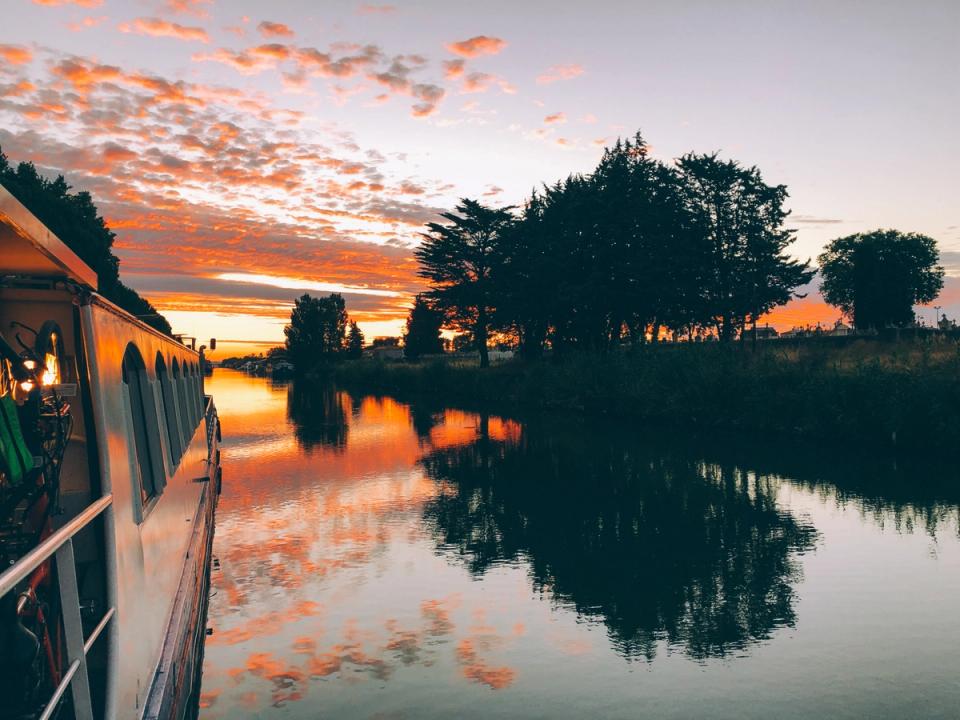
Discover Provence and the Camargue: 7-day bike & boat journey from Aigues-Mortes to Avignon, with guided tours and local wine tastings.