Bike tour
Amsterdam to Bruges: Canals and Culture
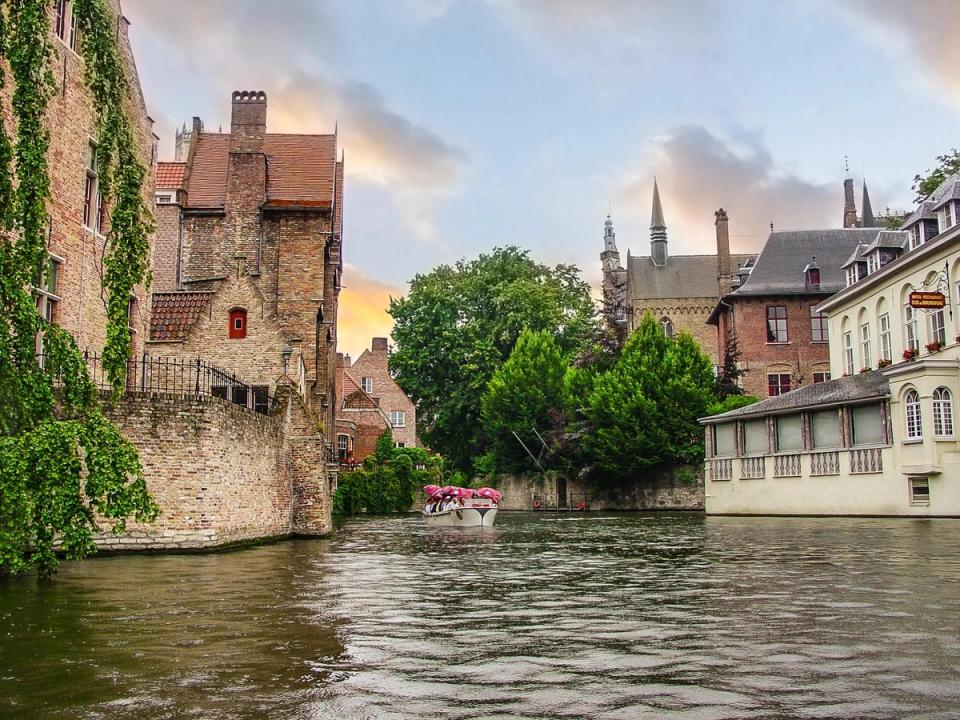
Explore Holland and Belgium by bike and boat: 8 days of flat cycling, cultural highlights, and scenic waterways from Amsterdam to Bruges.

Rob
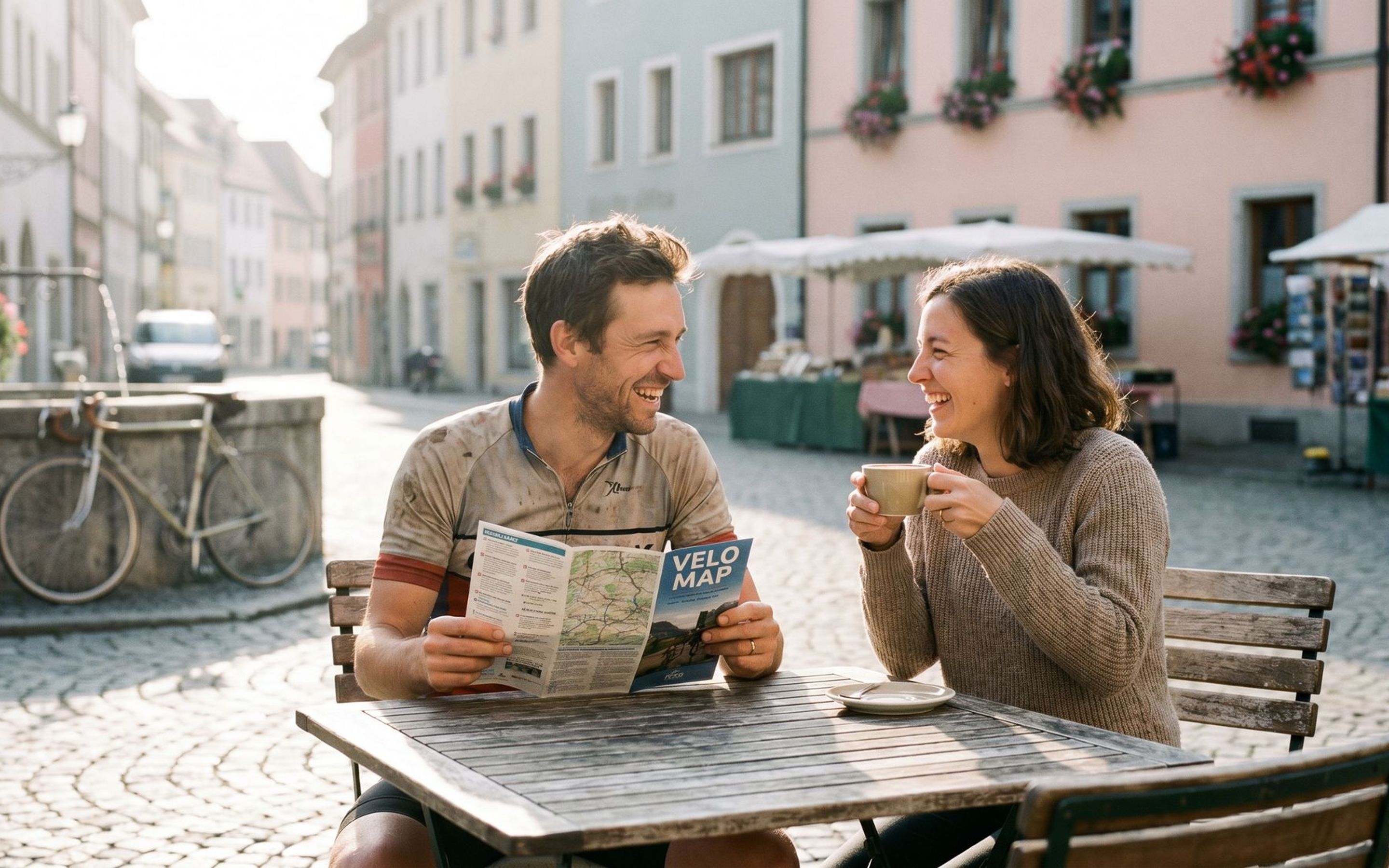
One of you is already studying the elevation profiles, planning 70km days and quietly looking forward to the climbs. The other is wondering whether a week of that counts as a holiday at all — or whether it means a week of being red-faced at the back, or waiting alone in a café while their partner rides on. It is the most common reason couples talk themselves out of a cycling holiday: they don't ride at the same level, and they assume one of them will end up either exhausted or bored.
There is a format built for exactly this, and it works because your accommodation moves with you. Bike and boat holidays for couples let the keener cyclist ride the full route while the other rides a gentler version, or none of it at all — and you still meet at the same village, the same cabin and the same dinner table every night. This post explains how that resolves the mismatched-pace problem, where the e-bike fits in, and who the format genuinely does not suit.
Most couples are not matched in fitness or enthusiasm, and that is completely normal. One of you rides regularly and the other gets on a bike twice a year. Or you are both fit, but one wants distance and the other wants long lunches and a swim.
On a standard stage-to-stage cycling holiday, that mismatch becomes a structural problem rather than a personal one. Each day has a fixed destination you both have to reach by bike, because that is where the next hotel and your luggage are waiting. So the slower or less-keen partner gets pulled along at a pace that was never theirs, while the keener one soft-pedals all day and never gets the ride they actually came for.
By day three, a quiet resentment has usually set in — not because either of you dislikes cycling, or each other, but because the format forced two different people onto one identical day. This is the real reason a lot of couples decide a cycling holiday "isn't for us." It is a reasonable conclusion to reach about the wrong format. A cycling holiday for mixed abilities only works if the day stops being compulsory, and that is precisely what changes next.
On a bike and boat holiday, your accommodation — a barge or a small vessel — moves to the next mooring each day regardless of how far either of you cycles. That single fact changes everything for a mismatched couple.
The keener cyclist rides the full published route, the whole leg, at their own pace, with no one to wait for. The other has real options: ride a shorter section and board the boat partway, take the whole day off on deck with a book, or start late and ride only the gentle final stretch into the evening's mooring. Nobody has to reach a fixed hotel by bike. Nobody waits alone in a café.
Because the boat is the fixed point you both return to, you reunite at the same place every evening — same cabin, same dinner, same village — no matter how differently you spent the hours in between. Compare that with stage-to-stage cycling, where finishing the day's route is effectively compulsory. Here the route is optional and the destination comes to you.
There is a second benefit that quietly lowers the temperature on pace friction altogether: the boat is your home base, so there is no daily packing, no luggage transfer to track and no hunt for tonight's accommodation. Less logistical stress means fewer flashpoints. And because a £3,000 booking deserves protection, every operator listed on Pedal Ventures is covered by PTS financial protection, so your money is safe if anything goes wrong.
The boat lets you ride apart and still holiday together. But some couples don't want to ride apart at all — they want to be on the same towpath, at the same time. For them, the e-bike is usually the real answer.
An e-bike lets a less-fit or less-frequent partner ride the same full route as a strong cyclist, on the same day, at the same pace. The motor flattens the difference in legs, not the difference in interest. It does not turn you into a passenger; it takes the sting out of headwinds, gentle climbs and the back third of a long day — the bits that turn a nice ride into a slog for the less-conditioned rider.
Pair a standard bike with an e-bike and a genuine fitness gap closes to almost nothing. That gives a couple a third option beyond "ride hard together" or "ride apart": ride together, easily. An e-bike and boat holiday is one of the most flexible combinations available for two people of different fitness.
One honest caveat. Most bike and boat operators offer e-bikes to hire, but this is usually a separate add-on cost, confirmed per operator rather than assumed, so check it when you compare trips. You can browse the full range of e-bike holidays to see how the format works across different routes and operators.
The clearest way to picture it is to follow one couple — call them Partner A, the keen one, and Partner B, the less keen — through a single day on a flat canal route.
They had genuinely different days and still spent the holiday together. This is what a cycling holiday where one partner doesn't cycle as much actually looks like in practice — and none of it is rigid. The split can flip the next day, the keen partner can take a full rest day on deck, and either of you can change your mind at the next mooring. Nothing about the day is locked in at breakfast.
This format is not the right answer for every couple, and saying so is the point. It suits less well in three situations.
There is also the matter of cost, honestly stated. Bike and boat is a premium format because accommodation, most meals and crew are all included, so it sits at the higher end — broadly in line with Pedal Ventures' roughly £3,000 average booking value, with e-bike hire usually extra. Read this section as a way to self-select, not a warning. A couple split on pace or enthusiasm is exactly who this format is built for.
As a rule, the flatter the route, the more comfortable the gentler rider — and the more useful the boat-and-e-bike combination becomes. Weight your choice towards the less-keen partner and the holiday gets easier for both of you.
Lead with the Netherlands: flat canal and coastal routes, dense and well-signed cycling infrastructure, and about the easiest riding in Europe for a less-confident partner, while the keener one can still rack up the kilometres. See cycling holidays in the Netherlands for the range.
Explore Holland and Belgium by bike and boat: 8 days of flat cycling, cultural highlights, and scenic waterways from Amsterdam to Bruges.
Then look at France — the Canal du Midi in the south and the Burgundy canals offer flat towpaths, short and gentle days, and a village every few kilometres to stop in. It is one of the most relaxed options for a couples cycling holiday in Europe; browse cycling holidays in France to compare routes. Croatia's island bike and boat is a scenic alternative, but its riding can be hillier, so it suits couples whose gap is enthusiasm rather than fitness.
If you later travel with grandchildren, the same format scales to families — see our sibling guide here: [CONFIRM LINK — Brief-22 bike and barge family France post].
When you are ready to see what is actually bookable, browse bike and boat holidays →.
It is a cycling holiday where your accommodation is a barge or small ship that moves to a new mooring each day. You cycle a daily route, the boat carries your luggage and meets you that evening, and for couples it means you can ride at different distances and paces while still sharing the same cabin and dinner table every night.
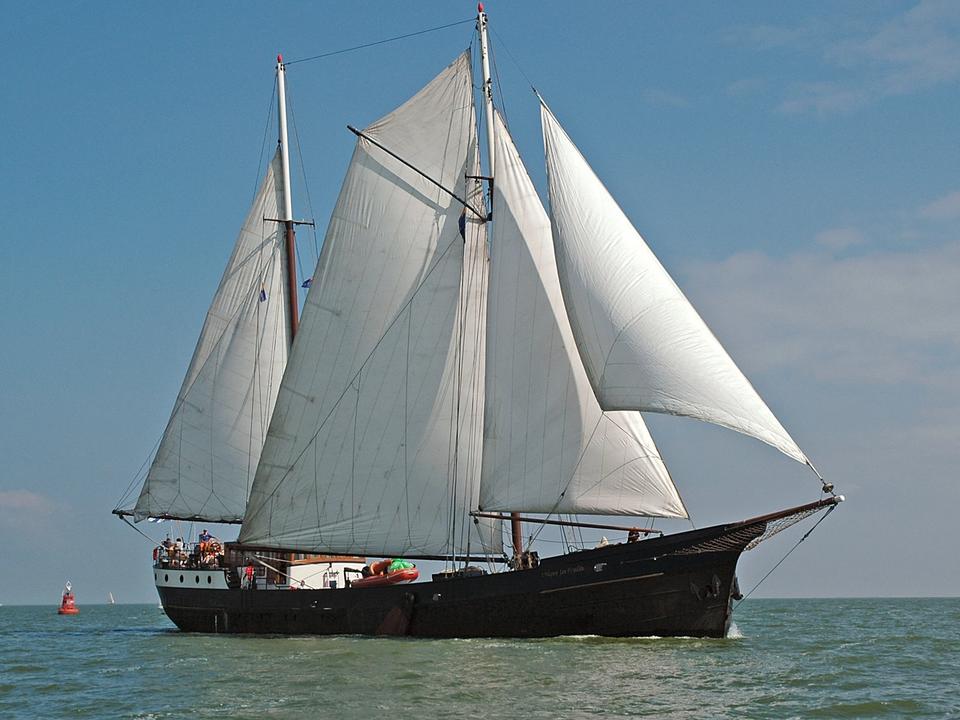
Explore the Wadden Sea by sailboat and bike. Ride Texel and Terschelling, visit old Dutch towns and enjoy island cycling.
Yes — this is the format built for it. Because the boat moves to the next mooring regardless of how far either of you rides, the fitter partner can take the full route while the other rides a shorter section or rests on deck. You spend the day differently and still reunite each evening.
That works too. On a bike and boat holiday the less-keen partner can ride as little as they like, board the boat partway, or take whole days off on deck and cruise to the next mooring. The keen partner still gets a proper ride, and you both arrive at the same place.
A significant one. An e-bike lets a less-conditioned rider keep up with a strong cyclist on the same route, at the same time, by easing headwinds and gentle climbs. It is often the simplest way for a mismatched couple to actually ride together rather than apart. E-bike hire is usually a separate add-on, so confirm it per operator.
Most barge and canal routes run roughly 20–50km a day on flat terrain, with the exact distance set by the itinerary. Crucially, that figure is a maximum rather than an obligation: you can ride part of it, all of it, or none of it, because the boat completes the day's journey for you.
Generally yes. Accommodation, most meals and crew are included, so it sits at the higher end — broadly in line with the roughly £3,000 average booking on Pedal Ventures. E-bike hire is usually extra. You are paying for everything being handled in one place and for both of you being looked after, whatever pace you ride.