Bike tour
The Ionian Islands and the Gulf of Corinth
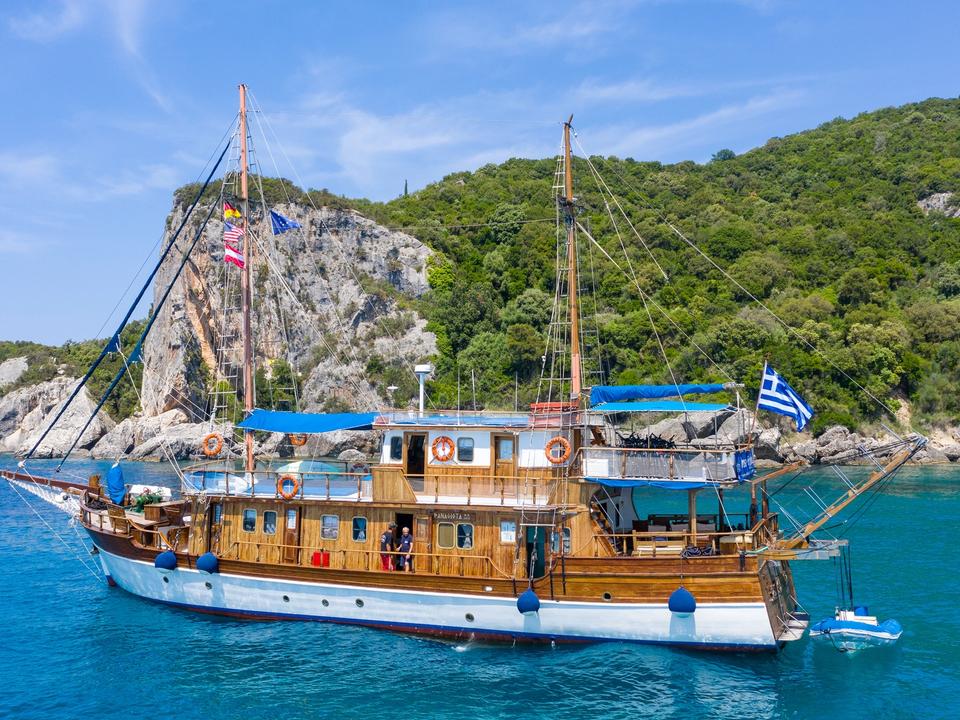
Discover Greece on this bike & boat tour from Athens to Corfu, passing through the Gulf of Corinth and scenic Ionian Islands.

Rob
Ask where to cycle in Greece and most people picture the islands — a whitewashed village above a blue bay, a bike leaning against a taverna wall. It is a lovely image, and for a cyclist it is often the wrong one. The Greek islands can be hard, hot and surprisingly steep riding, broken up by ferry timetables; the mainland, and the Peloponnese in particular, quietly offers some of the finest cycling in the Mediterranean.
So before you default to the islands, it is worth weighing the two properly. This is an honest comparison of where to cycle in Greece — what each is really like on a bike, the one problem they share, and which one suits which kind of rider.
Discover Greece on this bike & boat tour from Athens to Corfu, passing through the Gulf of Corinth and scenic Ionian Islands.
The islands deliver on the fantasy, up to a point. The Cyclades are spectacular — the Greek tourist board describes their rugged landscapes and solitary chapels as a truly unique experience — and hopping between them by ferry, bike in tow, is a genuine adventure. The villages, the swimming, the light: all of it is as good as the photographs.
The catch is that "rugged" is doing a lot of work in that sentence. Many islands are steep, climbing hard from sea-level ports to hilltop towns, and the roads can be rough and busy with summer traffic. The famous ones — Santorini, Mykonos — are small, crowded and not especially made for cycling. And the ferries that make island-hopping possible also govern your days: miss one, or hit a windy cancellation, and the plan changes. Island cycling in Greece is wonderful, but it rewards the confident, adaptable rider more than the one after a relaxed week.
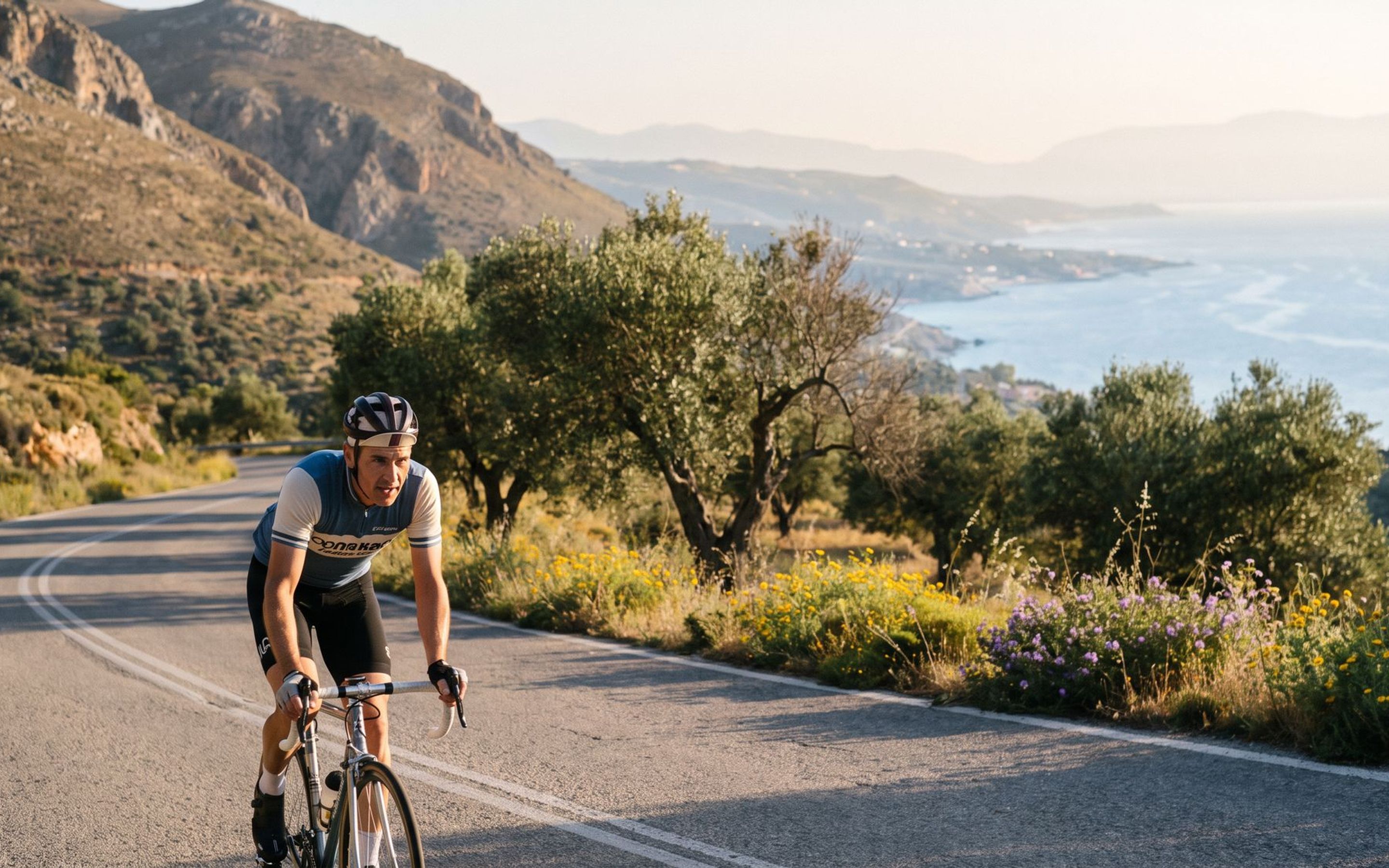
Cross to the mainland and the riding gets easier and, for many, better. The Peloponnese — the great four-fingered peninsula south of Athens — has the quiet roads, the space and the variety that a cycling holiday actually wants: coast and mountain, olive groves and vineyards, and long stretches where you barely see a car.
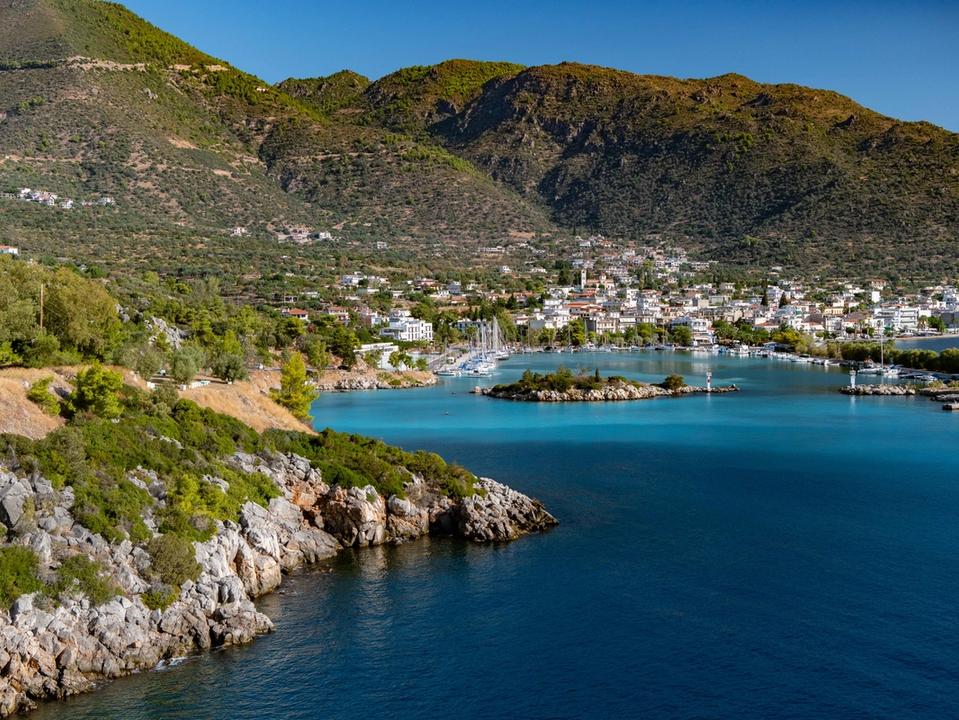
Explore the Peloponnese and Saronic Islands by e-bike and boat. Discover ancient sites, coastal villages, and crystal-clear waters on this guided Greek adventure.
It also has the history, more concentrated than almost anywhere. The Greek tourist board notes that five of Greece's twenty UNESCO World Heritage Monuments sit in the Peloponnese — among them Ancient Olympia, the birthplace of the Olympic Games, the citadel of Mycenae and the perfect theatre of Epidaurus. You can genuinely ride between them. Add the wine country around Nemea, where the tourist board points you to tastings of the famous Agiorgitiko red, and the mainland becomes a ride that feeds you culture, scenery and long lunches in equal measure, without a ferry in sight.
Whichever you choose, the same enemy applies. Greek summers are fierce: Kalamata, in the southern Peloponnese, averages highs around 31°C in July and August, and the interior and the treeless islands run hotter still. Cycling through the middle of a Greek July day is not a holiday, it is an ordeal. Both the mainland and the islands are at their best in spring, from April to June, and in autumn, in September and October — warm, bright and swimmable, but rideable all day. Time your trip for the shoulders and you sidestep the heat and the peak-season crowds at once.
The practical difference is the shape of the journey. The islands are a stitched-together trip: ride, ferry, ride, ferry, with the boats setting the rhythm and a bit of planning required to make the connections work. It is part of the charm, and part of the faff. The mainland is one continuous ride — you can cross the whole Peloponnese under your own steam, point to point, with luggage moved ahead and no timetable to catch. For a rider who wants to switch off and just pedal, that simplicity is worth a lot.
Choose the islands if the ferry-hopping adventure is the point, if you are a confident rider who does not mind steep climbs and rough roads, and if the swimming and the island atmosphere matter more than easy miles. Choose the mainland Peloponnese if you want quieter roads, a steadier ride, the richest concentration of ancient sites in Greece, and a proper continuous journey rather than a series of hops. For most people planning their first Greek cycling holiday — and especially anyone who wants culture and calm over drama and logistics — the mainland is the smarter pick.
Whichever way you lean, booking through a marketplace like Pedal Ventures connects you to handpicked local operators who know the roads and the ferries, with PTS-protected payment so your money is covered if a supplier fails. Decide which Greece you are after, aim for spring or autumn, and both are waiting.