Bike tour
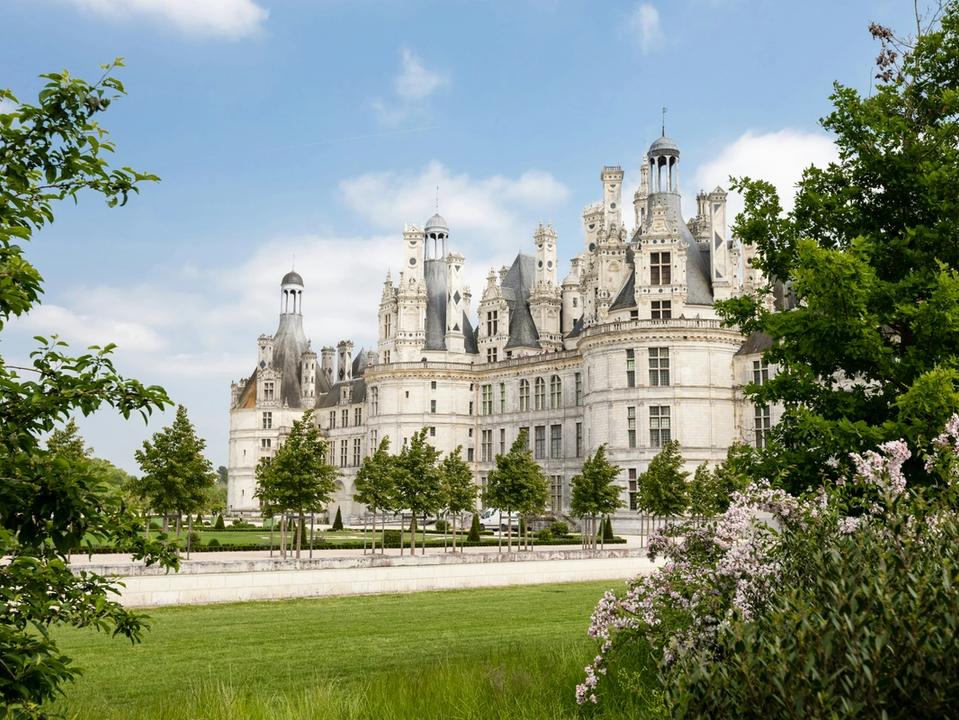
Castles of the Loire Valley
Cycle through the Loire Valley – Discover France’s most iconic châteaux, riverside paths, and historic towns on this relaxed, scenic bike tour.

Rob
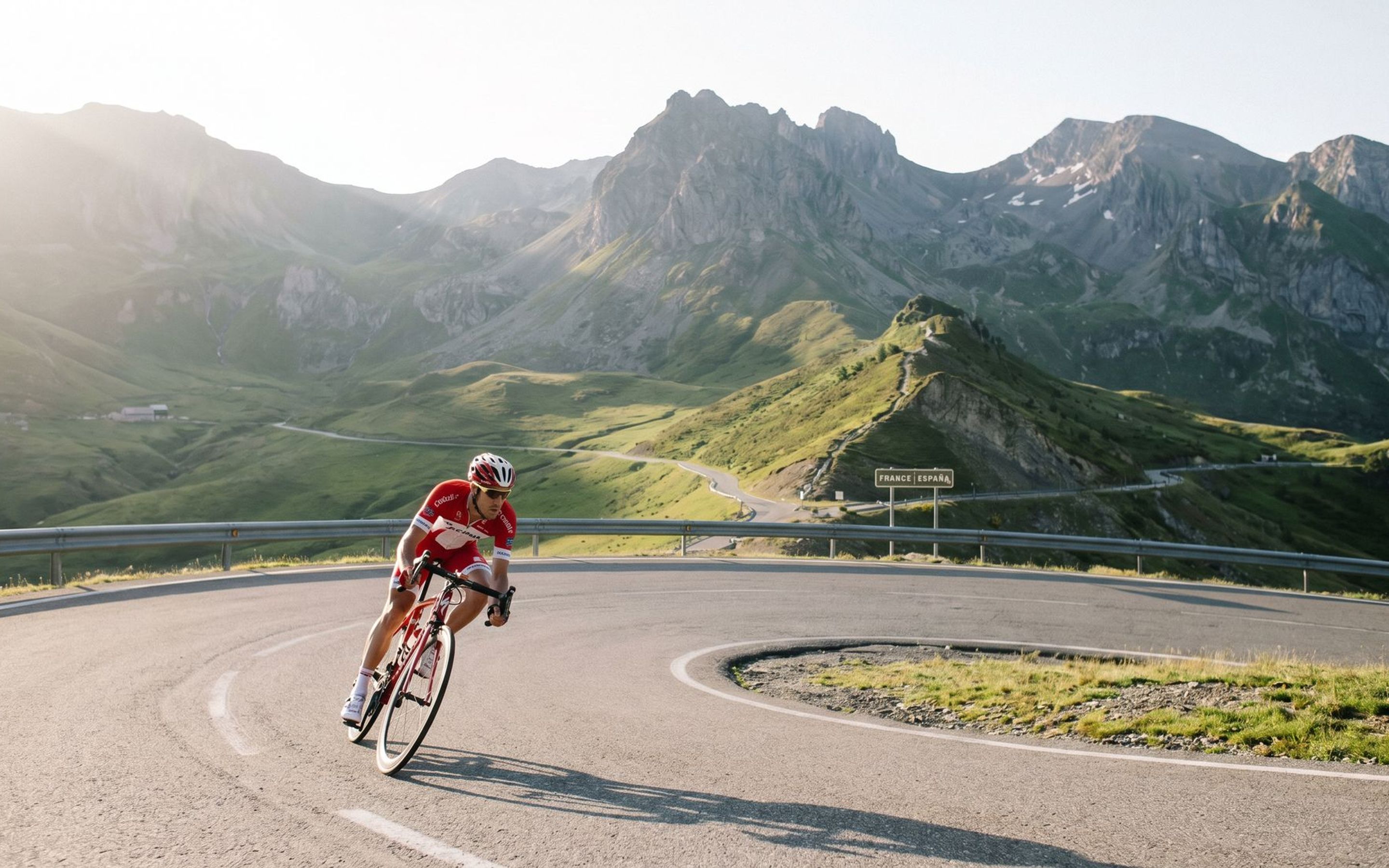
The road out of Luz-Saint-Sauveur starts gently. A few kilometres of warming up alongside the river, villages thinning out, the gradient barely noticeable. Then the Col du Tourmalet begins in earnest. The valley narrows. The switchbacks start stacking up above you, each one revealing another layer of rock and sky. By the time you reach the summit at 2,115 metres, the effort has been real — but so has the silence, the scale, and the strange satisfaction of standing where the Tour de France has been decided more than once.
That is the French side. Cross the border into Spain, and the Pyrenees become a different mountain range entirely. The valleys widen. The villages are quieter. The climbs are longer but often less steep, and the roads are emptier. If you are considering pyrenees cycling holidays, the question is not just whether the Pyrenees are right for you — it is which side of them suits you best.
This guide covers both. Most cycling content about the Pyrenees focuses on France or Spain, rarely both. But the two sides of this mountain range offer genuinely different riding, different food, different cultures, and different challenges. Whether you want to test yourself on legendary Tour de France climbs or prefer to ride quieter roads through the valleys of Aragon and Catalonia, we will help you work out which side — or which combination — fits your plans.
The Pyrenees stretch roughly 430 kilometres from the Atlantic to the Mediterranean, forming the natural border between France and Spain. Unlike the Alps, which sprawl across half a dozen countries, the Pyrenees belong to just two — and that gives the range a more concentrated, less commercialised character.
For cyclists, the draw is straightforward. The Pyrenees have the climbing, the scenery, and the cycling heritage, but without the motorhome traffic and crowded hairpins that parts of the Alps attract in high summer. The roads are well-surfaced. The communities along them are small and welcoming. And the range offers a genuine spectrum of difficulty, from valley-floor routes suitable for strong beginners to high-altitude cols that demand proper fitness and preparation.
There is also a cultural richness that gets overlooked in cycling content. The Basque Country straddles the western Pyrenees with its own language and culinary tradition. Catalan culture dominates the eastern end. In between, the French departments of Hautes-Pyrenees and Ariege and the Spanish provinces of Aragon and Navarre each have their own identity, architecture, and food. A bike tour pyrenees itinerary is as much a cultural journey as a physical one.
The French Pyrenees are where the legend lives. The Tour de France has been visiting these mountains since 1910, and the climbs that define it — Col du Tourmalet, Col d'Aubisque, Luz Ardiden, Hautacam, Col du Portet — are all on the northern slopes.
These are serious climbs. The Tourmalet, the most-visited col in Tour de France history, is 17.1 kilometres from the Luz-Saint-Sauveur side at an average gradient of 7.3 per cent. The Col d'Aubisque from Laruns is 16.6 kilometres at 7.2 per cent. These are not numbers designed to reassure — they are numbers designed to inform. If you are a strong recreational cyclist who rides regularly in hilly terrain, these cols are achievable and deeply rewarding. If you are a casual weekend rider, they require honest preparation.
The French side also has a well-developed cycling tourism infrastructure. Towns like Luz-Saint-Sauveur, Bagneres-de-Bigorre, and Saint-Lary-Soulan are geared towards cyclists. You will find bike-friendly hotels, mechanics, and rental shops. Route signage is good. The roads are well maintained, and drivers are largely accustomed to cyclists.
The northern French slopes tend to be steeper and more dramatic than their Spanish counterparts. Valleys are narrower, the ascents more concentrated. You climb hard, you descend fast, and then you arrive in a small spa town with a boulangerie and a bar. The rhythm of a cycling holiday in France in this region is intense riding punctuated by proper rest.
Cycle through the Loire Valley – Discover France’s most iconic châteaux, riverside paths, and historic towns on this relaxed, scenic bike tour.
The food here reflects both French mountain tradition and Basque influence — duck confit, garbure (a thick mountain soup), sheep's cheese from the Ossau Valley, and Madiran wines. Evenings after a day in the cols tend to involve large plates and early bedtimes.
Cross the border — through the Somport Tunnel, over the Col du Pourtalet, or via the eastern passes into Catalonia — and the Pyrenees change character. The Spanish side is drier, sunnier, and more expansive. Valleys open out. Villages are further apart. The landscape has a rawness to it that the more manicured French side does not quite match.
The roads are often quieter, particularly in Aragon and Navarre. You can ride for long stretches without seeing another cyclist. For some, this solitude is precisely the appeal. Cycling the Spanish Pyrenees offers a different kind of immersion — one defined by space and silence rather than by ticking off famous climbs.
The Spanish Pyrenees have their own roster of significant climbs, though they attract less international attention. The Alto de Angliru in Asturias (technically outside the Pyrenees proper) gets the headlines, but within the range itself, climbs like the Col du Portalet from the Spanish side, the Puerto de Somport, and the roads into the Ordesa Valley offer serious elevation gain on roads with minimal traffic.
Spanish Pyrenean climbs tend to be longer and more gradually graded than their French equivalents. Where the French side often hits you with 8-10 per cent gradients for concentrated stretches, the Spanish side is more likely to present 5-6 per cent over a longer distance. This suits riders who prefer a steady rhythm to sharp intensity.
The eastern end of the range, where the Pyrenees descend towards the Mediterranean and the cycling hub of Girona, offers yet another character — lower passes, more rolling terrain, and access to the Costa Brava coastline.
The Spanish Pyrenees have a wilder, more sparsely populated feel. Villages in the Aragonese Pyrenees are built from grey stone and feel genuinely remote. The Ordesa y Monte Perdido National Park — a UNESCO World Heritage Site — is one of the most dramatic mountain landscapes in Europe, with canyon walls dropping 1,000 metres. You will not ride through the park itself, but the approach roads and valley routes around it are spectacular.
The food is hearty and unapologetically Aragonese — migas (fried breadcrumbs with chorizo), ternasco (roast lamb), and local wines from the Somontano region that more people should know about. In the Basque end of the Spanish Pyrenees, the pintxo bars of San Sebastian are within striking distance — arguably the best casual food scene in Europe.
This is the question most riders want answered, and the honest response is: both sides are challenging, but in different ways.
French Pyrenees difficulty profile:
Spanish Pyrenees difficulty profile:
E-bikes have changed the equation meaningfully. Climbs that once required serious fitness are now accessible to riders with moderate conditioning. If you want the Pyrenees experience without the full physical toll, an e-bike tour makes the mountain passes feasible while still demanding enough to feel earned.
On Pedal Ventures, every tour listing includes honest difficulty ratings and real daily distances. We work with local operators who know these roads intimately and build itineraries around what is genuinely achievable, not what sounds impressive in a brochure.
The cycling season in the Pyrenees runs from May to October, but the usable window narrows as you go higher.
May and June: The high passes begin opening from late May, though snow can linger above 2,000 metres into June. Lower valley routes are rideable from early May. Temperatures are pleasant — 15-22 degrees at valley level, cooler at altitude. Wildflowers are at their best. This is an excellent time to visit if you are comfortable with some variability in pass accessibility.
July and August: Peak season. All passes are open. Temperatures at valley level reach 28-32 degrees, making early starts advisable. The French side sees more summer traffic — both cycling and general tourism. The Spanish side remains relatively quiet even in high summer. The Tour de France typically passes through in July, which brings a festival atmosphere to the host towns but also temporary road closures.
September and October: Many experienced Pyrenees cyclists consider September the best month. The summer crowds have gone, temperatures drop to a comfortable 18-25 degrees, and the light turns golden. The high passes remain open until mid-October most years, though early snow is always possible. Autumn colours in the beech forests of Aragon are genuinely striking.
The Pyrenees are generally inaccessible for cycling from December through March due to snow and ice on mountain roads. For the latest conditions and travel updates, check the FCDO travel advice for France and the FCDO travel advice for Spain before you book.
One of the advantages of the Pyrenees over the Alps is that you can realistically cross between France and Spain within a single trip. Several passes connect the two sides, and a well-planned itinerary can give you the steep French cols and the expansive Spanish valleys in the same week.
Common crossing points for cyclists include the Col du Pourtalet (linking the Ossau Valley to the Tena Valley), the Col du Somport (the historic pilgrimage route), and the lower eastern passes linking Ariege to Catalonia. Each crossing changes the landscape, the language, and the cooking within a few kilometres.
A strong format for a Pyrenees cycling holiday is to base yourself on one side and make day crossings to the other. From a base in Luz-Saint-Sauveur or Cauterets on the French side, you can ride into Spain and back in a day. From Ainsa or Jaca on the Spanish side, the reverse applies.
Pedal Ventures lists both French Pyrenees cycling holidays and Spanish Pyrenees cycling tours from local operators who know the cross-border routes. Browse the listings, compare difficulty levels and included services, and book with the confidence that your money is protected by PTS financial protection — your payment is safeguarded if anything happens to us or the operator before you travel.
From the UK by air: Toulouse and Pau are the main airports for the French side. Lourdes-Tarbes is smaller but closer to the central Pyrenees. For the Spanish side, Zaragoza and Barcelona are the main hubs, with Huesca closer to the Aragonese Pyrenees.
From the UK by train: Eurostar to Paris, then TGV to Toulouse (approximately five hours total from London). EuroVelo also maps long-distance cycling routes through the Pyrenean region for riders planning extended tours. From Toulouse, regional trains run to Lourdes, Tarbes, and other Pyrenean gateway towns. This is a viable and lower-carbon option.
Bike logistics: Most guided and self-guided cycling holidays in the Pyrenees include bike hire as standard or as an option. If you are bringing your own bike, the airlines serving these routes generally accept bike boxes or bags with advance booking.
On self-guided tours: Luggage transfers are typically included, so you ride with a day pack while your bags travel ahead to the next hotel. Routes are provided as GPS files and printed notes. You ride at your own pace, stop where you want, and arrive at your accommodation with your luggage already there.
It depends on the route. Valley-floor itineraries on either side of the range are suitable for regular recreational cyclists. The high cols — particularly on the French side — require a good level of cycling fitness and some experience with sustained climbing. Be honest about your current level, and choose accordingly. E-bikes extend the range of what is comfortable.
Not necessarily easier — but different. Spanish Pyrenean climbs tend to have lower average gradients spread over longer distances. If you prefer grinding steadily rather than pushing hard on steep ramps, the Spanish side may suit you better. The French side is steeper but shorter, with more infrastructure support along the way.
Yes. Self-guided tours are available on both sides, with pre-booked accommodation, luggage transfers, GPS routes, and local support contacts. The French side has slightly more developed self-guided infrastructure, but Spanish operators are well-established too. Browse options on Pedal Ventures and filter by guided or self-guided.
Luz-Saint-Sauveur is the classic choice — central to the Tourmalet, Aubisque, and Luz Ardiden. Bagneres-de-Bigorre and Argeles-Gazost are also well positioned. For the eastern Pyrenees, Ax-les-Thermes gives access to a different set of climbs and a more Mediterranean feel.
Ainsa in Aragon is a strong base — a beautifully preserved medieval town with access to the Ordesa Valley and several mountain passes. Jaca, further west, offers access to the Somport and Portalet passes. For the eastern end, the Pre-Pyrenean town of Tremp gives access to lower but still rewarding terrain.
Yes. All bookings made through Pedal Ventures are PTS financially protected. This means your money is safeguarded in the event that Pedal Ventures or the tour operator ceases to trade before your trip takes place. At typical booking values, this protection matters.
Pedal Ventures is a cycling holiday marketplace — we connect you with handpicked local operators across Europe. Every tour on the site has been reviewed for quality, and every booking is PTS financially protected. Browse Pyrenees cycling holidays and find the right trip for you.