Bike tour
Puglia - Alberobello to Lecce
Explore Southern Italy by bike – Ride from Alberobello to Lecce through UNESCO towns, countryside trails, and seaside paths on this unforgettable Puglia cycling tour.

Rob
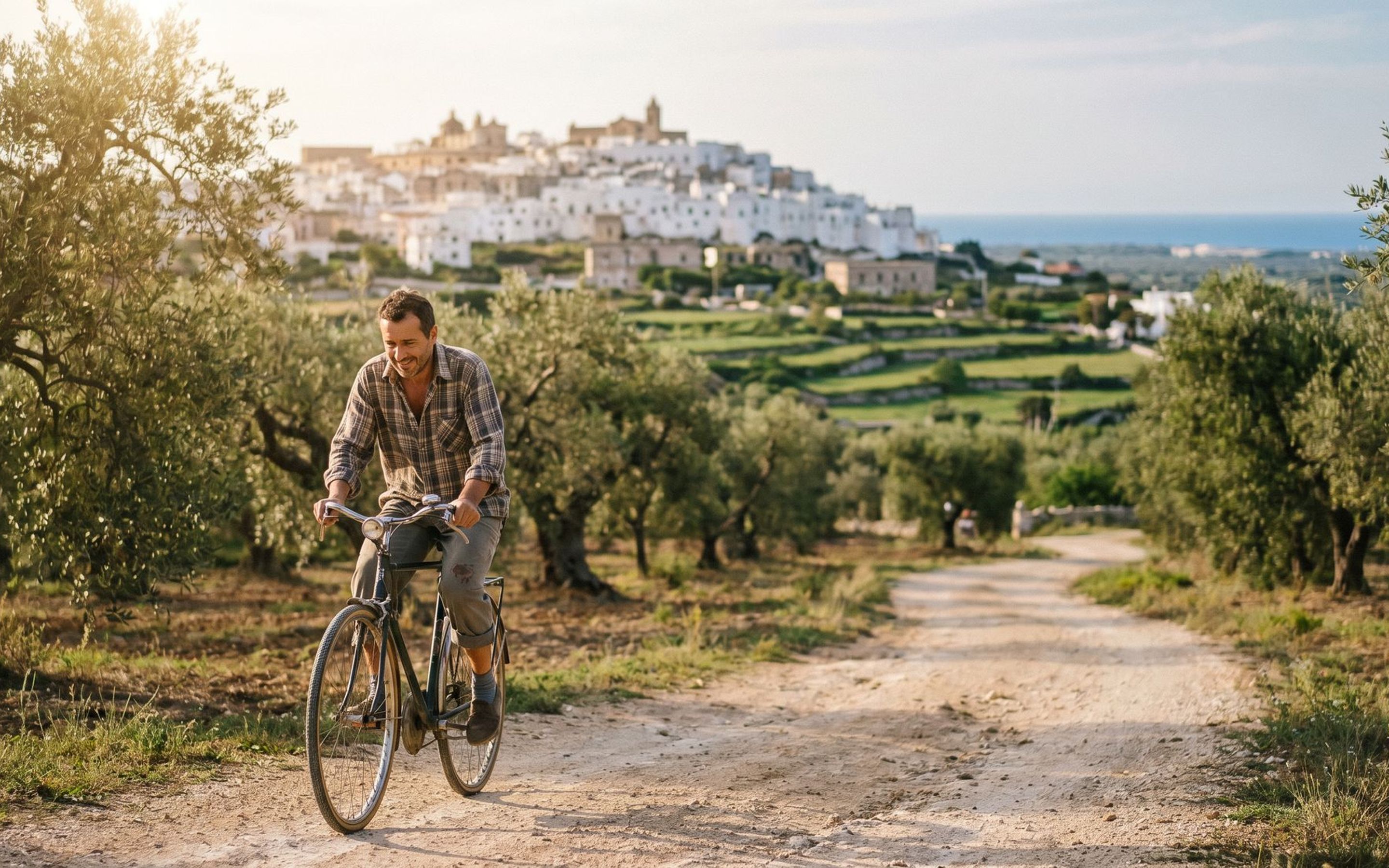
The road runs straight through olive groves so old their trunks have twisted into sculptures. The sun is warm but not fierce — it is late October and Puglia is still in short sleeves when northern Europe has reached for coats. Ahead, the white walls of Ostuni catch the light on a hillside. Behind, the Adriatic is a thin blue line at the edge of the fields. You have been riding for two hours, you have barely noticed a hill, and lunch is twenty minutes away in a town where the orecchiette is made by hand on a table outside the restaurant door. This is a cycling holiday in Puglia.
If Tuscany is the Italy everyone knows, Puglia is the Italy that Italians keep for themselves. It is flatter, warmer, less crowded, and — many would argue — the food is better. For cyclists, these are not minor details. Flat terrain means anyone can ride here. A longer season means you are not fighting for the same May and September weeks as everyone else. And the food is not a supplement to the cycling — it is an equal partner.
This guide covers everything you need to plan a cycling holiday in Italy's south: the terrain, the routes, the food, the timing, and what a week in Puglia actually looks like.
This is the question most people researching Italian cycling holidays are quietly asking. Both are extraordinary. But they suit different people.
Puglia is flat. The terrain is mostly level, with gentle, almost imperceptible undulations. Where Tuscany's hills accumulate through the day and require genuine effort, Puglia lets you ride 40 or 50 kilometres without your heart rate rising much above comfortable. For couples where one partner is fitter than the other, for people over 60 who want to enjoy the ride rather than survive it, and for anyone booking their first cycling holiday, this matters enormously.
Puglia's season is longer. The southern position and low elevation mean comfortable riding temperatures from early April through to mid-November — nearly eight months. Tuscany's reliable window is five months. If your only available holiday dates fall in October or November, Puglia is one of very few European cycling destinations that still works.
Puglia is less expensive. Accommodation, food, and tour costs are typically 15–25% lower than Tuscany for equivalent quality. At Pedal Ventures' average booking value of around £3,000, that difference buys a lot of extra dinners.
Puglia is quieter. You will not share your route with coach tours or large cycling groups. The roads are peaceful. The towns are lived-in, not museumified. You eat where locals eat, because in Puglia the tourist restaurants have not yet displaced the real ones.
None of this makes Puglia "better" than Tuscany. But if flat terrain, warm weather, great food, and a sense of discovery matter more to you than rolling vineyard hills and Renaissance art, Puglia is the smarter choice.
The terrain across Puglia is predominantly flat to gently rolling. This is the Tavoliere — Italy's breadbasket — transitioning into the low limestone plateau of the Murge and the coastal plains of the Salento peninsula.
Typical daily distances: 35 to 55 kilometres.
Elevation gain: Minimal. A typical day involves 100 to 200 metres of total climbing, usually spread across gentle rises that barely register. Compare this to Tuscany's 400–700 metres per day.
Road surfaces: A mix of quiet tarmac secondary roads and occasional agricultural tracks. Traffic is light outside the cities. The main hazard is not cars but the occasional farmer moving between olive groves on a small tractor.
The Alberobello to Lecce route is Pedal Ventures' signature Puglia tour. Rated difficulty 2 out of 5, it takes you from the famous trulli town of UNESCO World Heritage-listed Alberobello through the Itria Valley — white hilltop towns, ancient olive groves, and views across both the Ionian and Adriatic coasts — finishing in Lecce, the baroque jewel of the south. Highlights include Gallipoli's old town, Otranto's medieval castle, and the spectacular coastal sections between them.
Explore Southern Italy by bike – Ride from Alberobello to Lecce through UNESCO towns, countryside trails, and seaside paths on this unforgettable Puglia cycling tour.
The route is flat enough that e-bikes, while available, are genuinely unnecessary for most riders. This is one of the few Italian cycling holidays where a standard bike is all you need regardless of fitness.
Puglia's food deserves its own section because it is, frankly, one of the main reasons to come here.
This is not restaurant food pretending to be rustic. It is the real thing — simple preparations, extraordinary ingredients, and a culture that takes lunch as seriously as dinner.
The staples you will encounter daily:
A cycling holiday provides the perfect framework for Puglia's food culture. You ride 40 kilometres in the morning, arrive hungry, and eat things that taste better because you earned them. Lunch might be a focaccia and a glass of rosato at a roadside bar. Dinner is four courses at a trattoria where the menu is whatever the kitchen made today.
Puglia's extended season is one of its greatest advantages.
April and May: Spring wildflowers, comfortable temperatures (18–25°C), and the landscape at its greenest. Excellent riding conditions. Shoulder-season pricing on accommodation.
June: Warm (25–30°C) and settled. The sea is warm enough to swim. Longer days mean more flexibility in your riding schedule. One of the best months overall.
July and August: Hot (30–38°C) but rideable with early starts. The coast gets busy with Italian holidaymakers. Inland routes remain quiet. Not ideal, but possible — start cycling by 7:30am and finish by noon.
September and October: Many experienced travellers consider this Puglia's best window. Temperatures drop to 22–28°C, the sea remains warm for swimming, and the grape and olive harvests begin. The light turns golden. Tourist numbers thin.
November: Still rideable in most years. Temperatures around 15–20°C, occasional rain, but many dry, pleasant days. Accommodation is cheap and available. New olive oil arrives.
December to March: Off-season. Some tours operate in March, but options are limited.
The signature Puglia route crosses the heel of Italy from its most iconic town to its most beautiful city. Here is what each section offers.
Alberobello and the Itria Valley: Your starting point is a UNESCO World Heritage town — the conical limestone trulli houses look like something from a fairy tale, though they were built by practical farmers avoiding property tax. The first days ride through the Itria Valley, where similar architecture appears in the countryside among olive and almond groves.
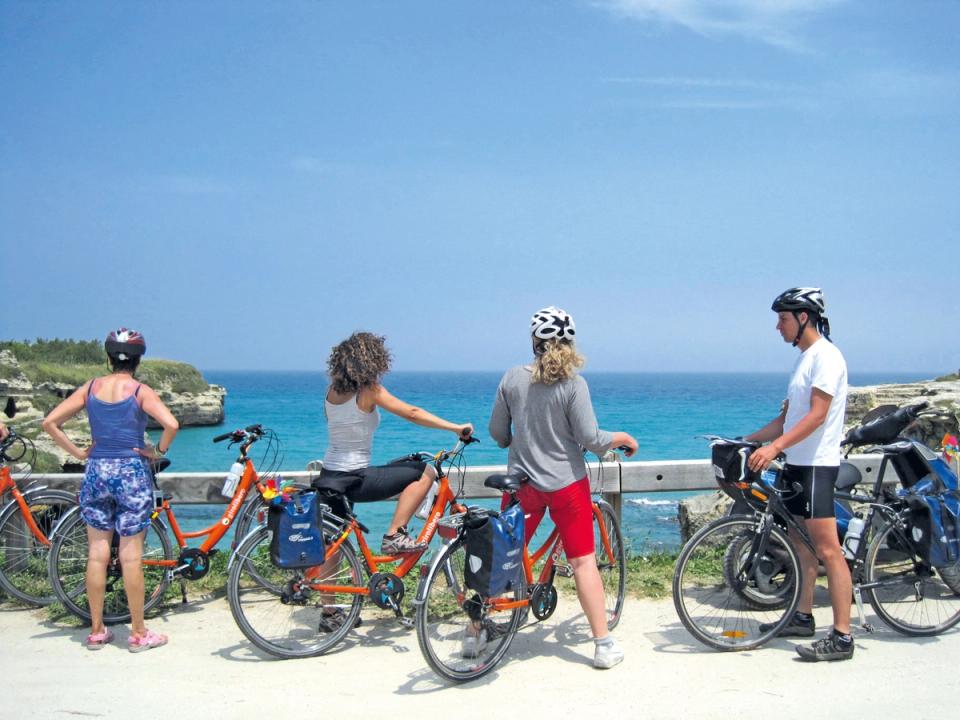
The Adriatic coast: The route reaches the sea at Ostuni, the "White City," perched dramatically on a hillside above the plain. From here, you follow the Adriatic south through fishing villages, past rocky coves, and along coastal roads where the water is impossibly clear.
Otranto and the Ionian coast: Otranto's medieval castle and cathedral (with its extraordinary floor mosaic) mark the easternmost point of Italy. The route rounds the heel, crossing to the Ionian coast where the beaches are sandier and the pace even slower.
Gallipoli: A walled old town built on an island, connected to the mainland by a bridge. Seafood restaurants line the harbour walls. This is where most people have their best dinner of the trip.
Lecce: The finish. Known as the "Florence of the South" for its extraordinary baroque architecture — but without Florence's crowds or prices. Spend an extra night here. The centro storico deserves a full day on foot.
Puglia is ideally suited to self-guided cycling. The flat terrain means you are unlikely to find yourself struggling up an unexpected hill. The towns are regularly spaced. And the culture is welcoming — even with minimal Italian, a smile and a buongiorno open doors. The Puglia regional tourism board has useful visitor information for planning your trip.
Your tour includes pre-booked accommodation (typically 3 to 4-star hotels or converted masserie — traditional farmhouses), daily luggage transfer, route notes, and GPS navigation. All managed by local Puglian operators who know these roads, know the best restaurants, and know which coastal detour is worth the extra five kilometres.
Your money is protected by the PTS financial protection scheme through Pedal Ventures. Every tour is handpicked — we only list operators whose routes, accommodation, and local knowledge meet our standards.
Yes — more so than any other Italian region. The flat terrain, manageable daily distances (35–55km), and warm climate make Puglia one of Europe's most accessible cycling holiday destinations. If you can ride a bike comfortably for 2–3 hours, you can cycle Puglia.
Both are southern, warm, and have excellent food. The key difference is terrain: Puglia is flat, Sicily has hills (especially inland). Sicily has more dramatic volcanic landscapes and ancient ruins; Puglia has calmer beauty, easier riding, and a more relaxed pace. Choose Puglia for comfort, Sicily for adventure.
Excellent. Because the terrain is flat, the fitter partner does not need to wait on hills, and the less fit partner does not need to worry about keeping up on climbs. You ride together naturally. E-bikes are available but often unnecessary.
Many tours use converted masserie — traditional Puglian farmhouses with thick stone walls, courtyards, and swimming pools. These are distinctive, comfortable, and often better value than equivalent Tuscan agriturismos. Hotels in the towns (Ostuni, Lecce, Alberobello) tend to be boutique-scale and well-located.
Yes. Several route days pass directly along the coast, with clear water and accessible beaches. June to October is warm enough for comfortable swimming. Some riders build in a beach stop as part of their afternoon.
July and August are hot (regularly above 32°C). It is still rideable with early morning starts — most riders are done by midday and spend the afternoon at the coast or pool. But if you have flexibility, April to June and September to November are more comfortable.
Fly to Bari or Brindisi — both have direct flights from the UK (Ryanair and BA from London, seasonal charters from regional airports). Transfer to Alberobello takes about an hour from either airport. Check the latest FCDO travel advice for Italy for up-to-date entry requirements before you travel.
Ready to explore Italy's south? Browse Puglia cycling holidays on Pedal Ventures, or read the complete cycling holidays in Italy guide for a region-by-region comparison.
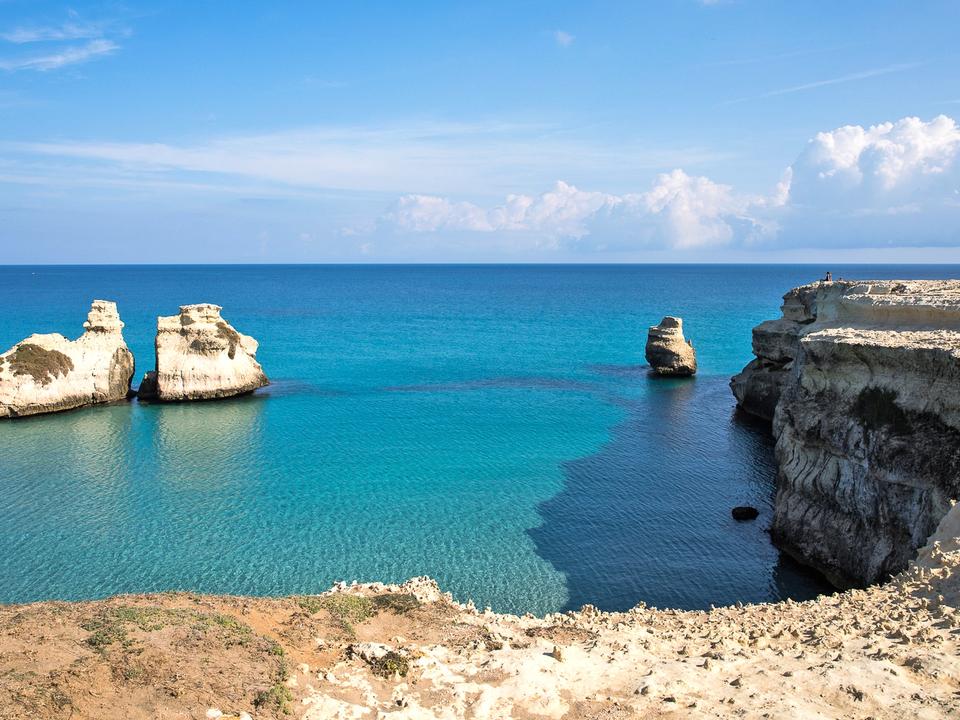
Cycle Puglia’s Salento coast on a self-guided 7-day loop from Lecce through Gallipoli, Santa Maria di Leuca and Otranto, with Baroque towns and turquoise seas.