Bike tour
Andalusia - Antequera to Seville
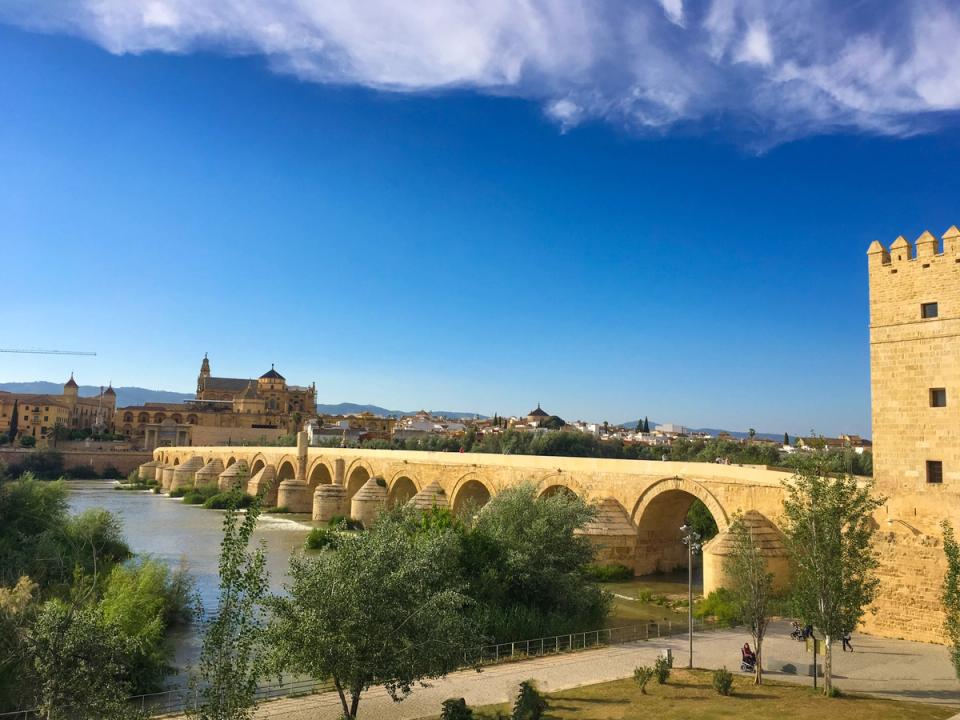
Cycle through Andalusia's olive groves and Moorish heritage: 7-day self-guided tour from Antequera to Seville, featuring historic towns and scenic routes.

Rob
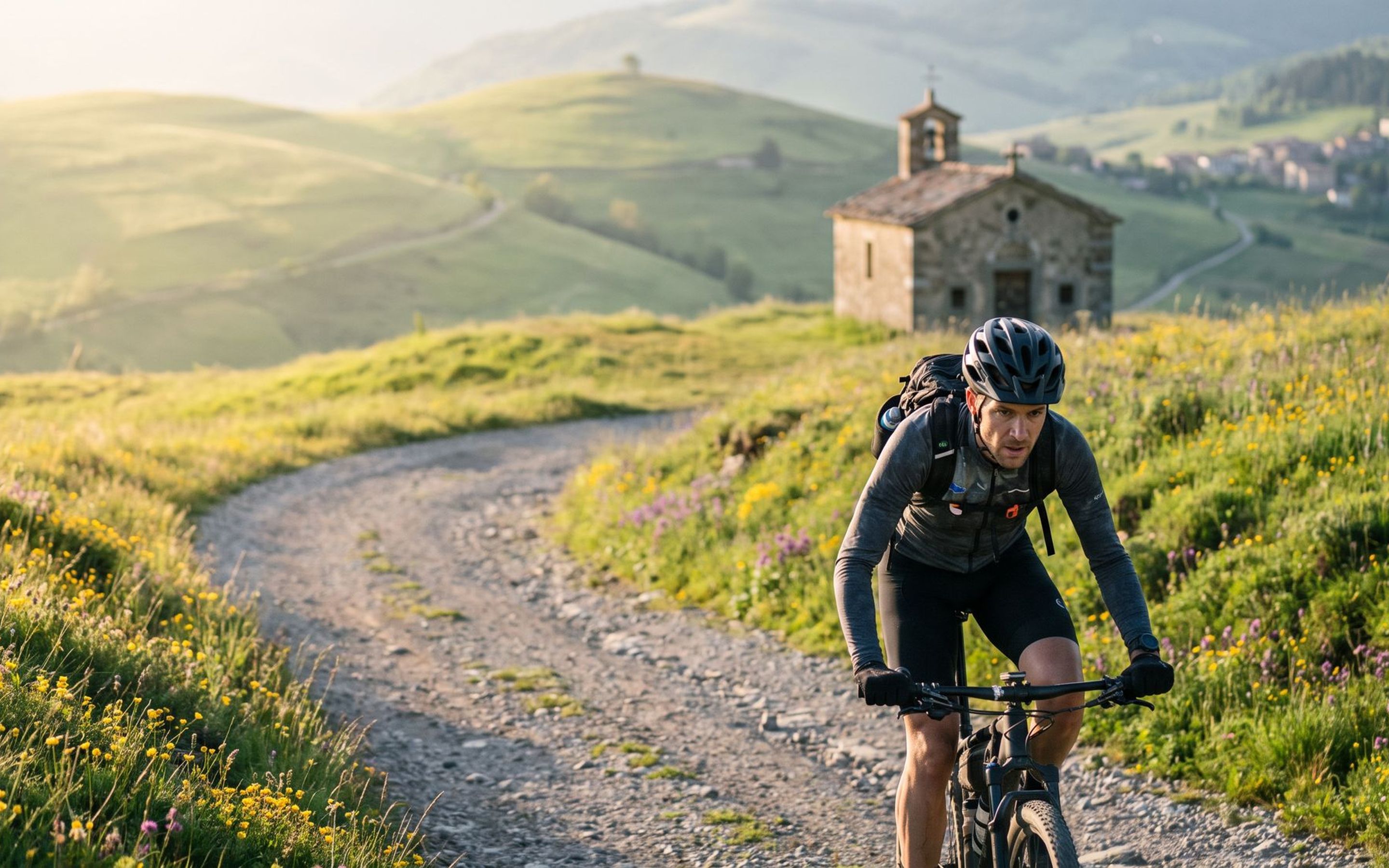
There is one number every cyclist on the Camino de Santiago needs to know, and it is 200. That is the distance, in kilometres, you have to ride into Santiago under your own steam to earn the Compostela — the certificate that says you completed the pilgrimage. Walkers only need to cover the final 100km; cyclists must do double. It is the first sign that cycling the Camino de Santiago is its own distinct undertaking — not a walking route you happen to ride, but a proper long-distance bike journey with its own rules, rhythms and rewards.
This is a practical guide to riding it: what the Camino actually is, which of its routes to choose, how long it takes by bike, the hard stretches nobody warns you about, the etiquette of sharing the way with walkers, and when to go.
The Camino is not a single road but a web of ancient pilgrim routes, all converging on the cathedral city of Santiago de Compostela in Spain's north-west, where the remains of Saint James are said to lie. People have walked them for more than a thousand years, and the most famous of them, the French Way, has been declared a UNESCO World Heritage Site. Each year hundreds of thousands of people reach Santiago along these routes, and a steadily growing share of them arrive on two wheels.
So yes, you can absolutely cycle it, and cyclists are a recognised part of the pilgrimage — they carry the same credencial, the pilgrim passport stamped along the way, and sleep in the same network of hostels. What riding it well takes is a little planning around the things a walker never has to think about: gradients, surfaces, and the fact that you cover a day's walking in a couple of hours.
The default, and the right choice for most first-timers, is the Camino Francés — the French Way. Spanish tourism traces it from the Pyrenees at Roncesvalles, on through Pamplona, Logroño, Burgos and León and across the high Meseta to Santiago, a distance of roughly 780 to 800km. It is the best waymarked, best served for food and beds, and the most sociable, which for a rider means help is never far away.
Cycle through Andalusia's olive groves and Moorish heritage: 7-day self-guided tour from Antequera to Seville, featuring historic towns and scenic routes.
There are strong alternatives. The Camino del Norte hugs the green northern coast — cooler, quieter and hillier. The Camino Portugués climbs up from Porto or Lisbon and is gentler and shorter. If you want the classic and the busiest one, ride the Francés; if you want solitude and can handle more climbing, the coast rewards it. The Francés begins its Spanish stretch just over the Pyrenees, which makes for a dramatic first day over the border.
Ridden in full, the Camino Francés is usually a two-week trip, a steady run of 50 to 70km days that leave time to stop, eat and look around. Fitter riders push it into ten days; anyone wanting to linger takes longer.
But most cyclists do not ride the whole thing, and this is where the 200km rule shapes everything. To be handed a Compostela at the end, the Pilgrim's Office requires that you complete at least the last 200 kilometres by bicycle — twice the 100km asked of walkers. In practice that means starting your ride at Ponferrada or a little before, rather than at Sarria, where the walking crowds join. It is a week's riding, it takes in the toughest and most beautiful climb of the whole route, and it earns you the certificate. If a fortnight is more than you have, this is the trip to do.
The Camino has a reputation for being gentle. It is not, quite, and three things catch cyclists out.
The first is the Meseta — the high, flat, treeless plateau in the middle, around Burgos and León. It is not hilly, but in summer it is an oven with no shade, and Spanish tourism advises cyclists plainly to avoid exercise during the hottest part of the day in July and August. The second is O Cebreiro, the long climb into Galicia near the end — a proper mountain pass that arrives when your legs are already two weeks tired, and the sting in the route's tail. The third is rain. Galicia is green because it is wet: Santiago itself sees around 1,368mm of rain a year, with only July reliably dry. Pack for a soaking even in a warm month, because the final days are the likeliest to deliver one.
The Camino is a walking route first, and riding it considerately matters. Walkers have priority everywhere; slow right down when you come up behind them, and a gentle bell or a called "¡buen Camino!" well in advance is far better than a silent pass at speed. On the narrow, rocky sections — and there are plenty on the Francés — it is often quicker and kinder to dismount than to force it. And be aware that some pilgrim hostels give walkers first call on beds in busy season, so a cyclist is wise to have a fallback plan for a place to sleep rather than assume a bunk.
Spring and early autumn, without much argument. Spanish tourism names April, May, June and September as the best months for a cycle pilgrimage, and the reasons line up with the route's hazards: you miss the worst of the Meseta heat, you ride before or after the peak-summer crowds, and the days are still long. July and August are ridable if you start at dawn and hide from the midday sun, but they are hard work and busy. Winter is for the experienced and well-equipped only — cold on the high ground, and wetter than ever in Galicia.
A one- or two-week ride across northern Spain is a real undertaking, and while plenty of people organise the Camino themselves, having the beds booked, the bikes sorted and the luggage moved ahead each day takes the logistics off your plate and leaves you to ride. Pedal Ventures is a marketplace rather than a tour operator: we connect you to handpicked local operators who run the route regularly, and every booking is PTS-protected, so your money is safe if a supplier or Pedal Ventures fails — the financial protection page has the detail. Whether you ride the full French Way or the final 200km to the cathedral, decide your route and your window first, and the rest follows.
Yes. Cyclists are a recognised part of the pilgrimage, carry the same pilgrim passport and use the same route and hostels as walkers. The main practical differences are that you cover far more ground each day, need to plan around gradients and rough surfaces, and must ride the last 200km to earn the Compostela certificate rather than the 100km asked of walkers.
The full Camino Francés — roughly 780 to 800km from the Pyrenees to Santiago — takes most cyclists about two weeks at a comfortable 50 to 70km a day, or around ten days for fitter riders. Many people instead ride only the final stretch from Ponferrada, about a week, which covers the required 200km and the route's best scenery.
Yes, provided you ride at least the last 200km into Santiago and collect stamps in your pilgrim passport along the way. That is double the 100km required of walkers. Start your ride at Ponferrada or earlier and keep your credencial stamped, and you can collect the Compostela at the Pilgrim's Office in Santiago.
April, May, June and September are the best months. They avoid the fierce midday heat of the Meseta in July and August, sit outside the busiest walking weeks, and still offer long days. Whenever you go, expect rain towards the Galician end, where Santiago is one of the wettest cities in Spain.