Bike tour
Amsterdam to Bruges: Canals and Culture
Explore Holland and Belgium by bike and boat: 8 days of flat cycling, cultural highlights, and scenic waterways from Amsterdam to Bruges.

Rob
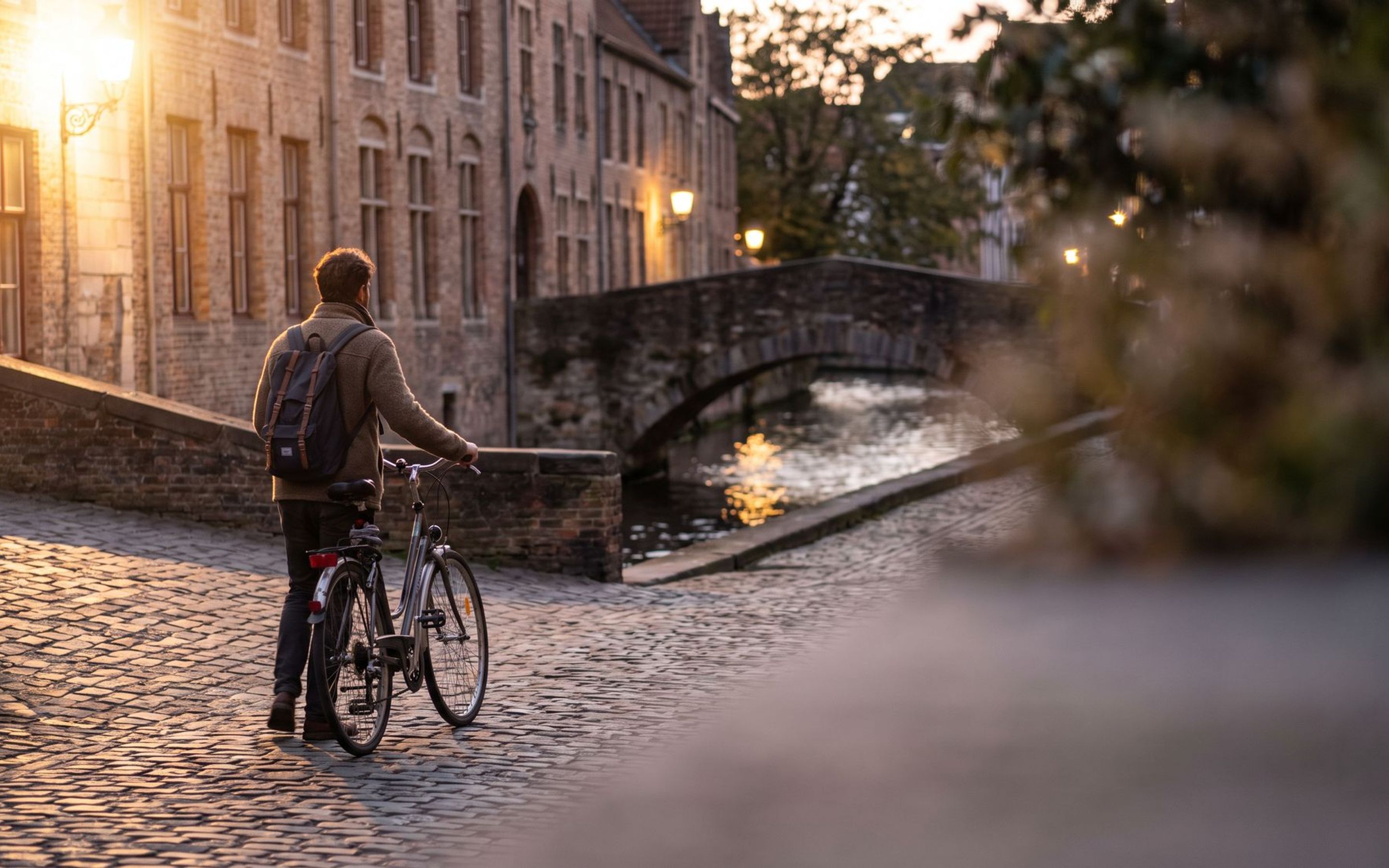
You roll into Bruges as the light goes. The day's riding is behind you — flat, easy kilometres along a canal and through green farmland — and now you are crossing a stone bridge into a city of stepped gables and reflected towers, wheeling the bike over cobbles towards a café where a dark abbey beer and a pot of mussels are waiting. Nobody is aching. Nobody climbed anything. That, more than any statistic, is what cycling in Flanders is about.
This is a guide to cycling in Flanders, Belgium for people who ride to arrive rather than to suffer. Flanders is genuinely flat, its cycle network is the easiest in Europe to navigate, and the real reward is everything between the pedalling: three of the continent's great art cities, the sobering landscape of the First World War, and a beer culture so distinctive that UNESCO has put it on a list. If you want mountains and gradients, this is honestly the wrong place. If you want to eat, drink and soak up a thousand years of history from the saddle, there is nowhere better.
Explore Holland and Belgium by bike and boat: 8 days of flat cycling, cultural highlights, and scenic waterways from Amsterdam to Bruges.
Flat. That is the headline, and it shapes everything. There are no climbs to speak of in this corner of northern Belgium, so the effort you would spend on hills you spend instead on distance, and comfortable 30 to 50km days link the towns without ever feeling like hard work. The surface is a mix of canal towpaths, dedicated cycle paths and quiet farm lanes, and the whole region is built for bikes rather than tolerating them.
What makes it uniquely easy, though, is the way you navigate. Flanders is covered by a numbered "node network" — the knooppunten — a system of junctions each given a number, so you plan a route as a simple string of figures and then, in the tourist board's own words, follow the signs from node to numbered node. There is no wrestling with a map or a phone: you note "join at 5, then 32, 31, 90" and the signs do the rest. It turns route-planning from a chore into part of the fun, and it means you can improvise, shorten a day or chase a detour to a brewery without ever getting lost.
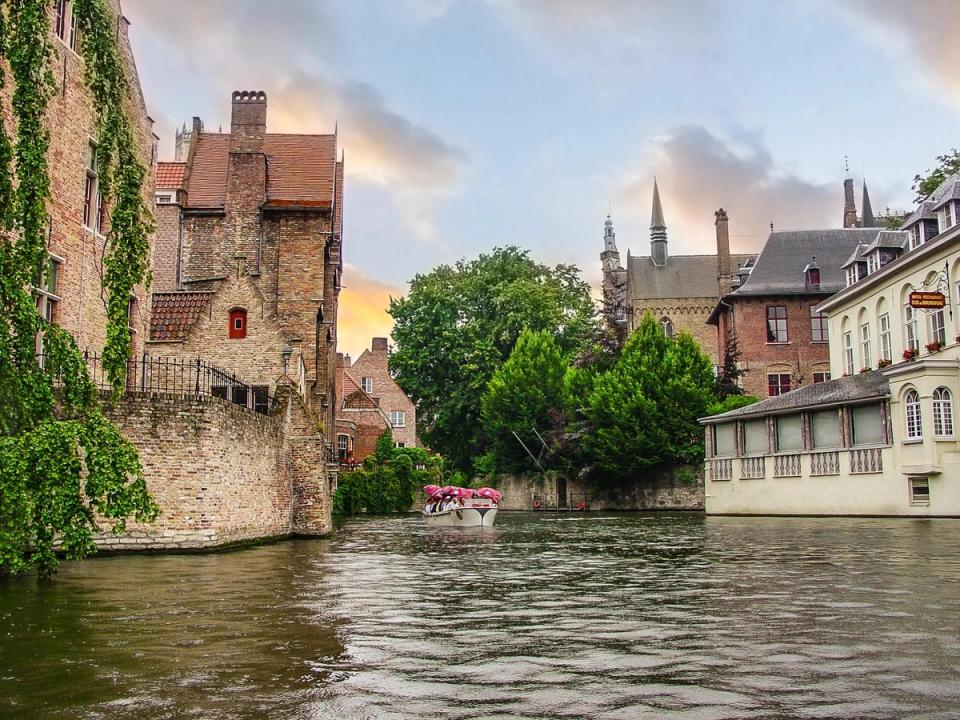
Most Flanders trips revolve around Bruges, and for good reason. Its entire medieval core is a UNESCO World Heritage site — a compact tangle of canals, market squares, gabled almshouses and the great belfry that rises over the whole town, remarkably intact because the city's fortunes faded at exactly the right moment to preserve it. Arriving by bike is the way to meet it: you are through the old gates and over the water before the day-trippers have found a parking space.
The riding around Bruges is some of the loveliest easy cycling in Europe. The classic short outing is the tree-lined canal path to Damme, a few flat kilometres to a pretty village made for a long lunch, and from there routes run on to the North Sea coast, where a paced seafront lets you ride between beach towns on the flat. Base yourself here and the town does double duty as a place to sleep and the reason to ride. You can explore how it anchors a trip on the Bruges page, or as part of a wider loop taking in Brussels, Ghent and Bruges.
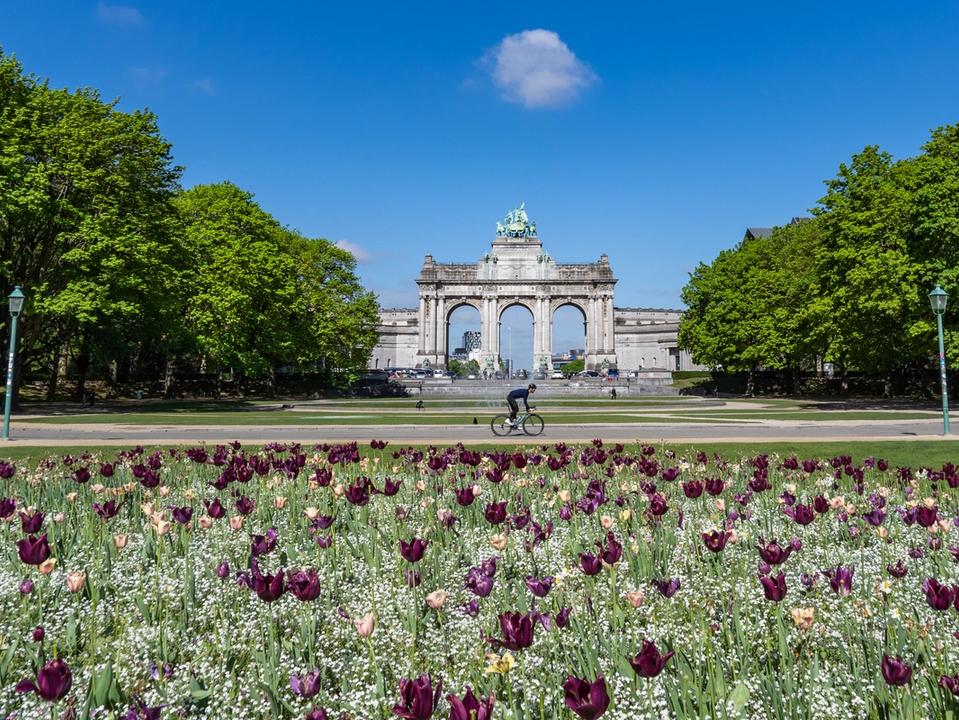
Cycle through Brussels, Ghent and Bruges. Discover Belgium’s history, canals, beer and culture on this unforgettable cycling holiday.
Bruges gets the postcards, but two more cities make Flanders a genuine art-and-architecture holiday rather than a single-town stay. Ghent, an easy flat ride away, has a medieval heart every bit as dramatic — a row of guild houses along the river, the vast St Bavo's Cathedral that holds the Van Eyck altarpiece — but a younger, student energy that keeps its cafés and bars busy well after Bruges has gone quiet. It is the city for a rider who wants history and a night out in the same evening.
Antwerp, further east on the Scheldt, adds a third register: Rubens and the Flemish masters, a cathedral, and a modern reputation for fashion and design that gives the old port a sharp contemporary edge. The country between these cities is flat and threaded with the node network, so linking them by bike is straightforward, and a trip built to take in Brussels alongside them — as the Brussels itineraries do — turns a cycling holiday into a tour of the Low Countries' finest cities.
South and west of the art cities, the mood changes. This flat, quiet farmland was the Western Front, and the fields you ride past between hedges and villages were, a century ago, the ground of some of the war's worst fighting. Cycling is a fitting way to cross it — slow enough to read the landscape, quiet enough to take it in.
The town of Ypres is the focus. Rebuilt stone by stone after being flattened, it holds the In Flanders Fields Museum in its restored Cloth Hall on the Grote Markt, which tells the story of the war in this region without romance or spectacle. Nearby, the Menin Gate carries the names of tens of thousands of missing, and the Last Post has sounded beneath it almost every evening since 1928. The riding here is gentle and the distances short, which leaves room for the war cemeteries and memorials that punctuate the fields — a landscape best approached with respect rather than as a checklist. A trip that pairs Bruges with this ground, such as the Bruges, Ypres and Flanders Fields route, gives the history the time it deserves.
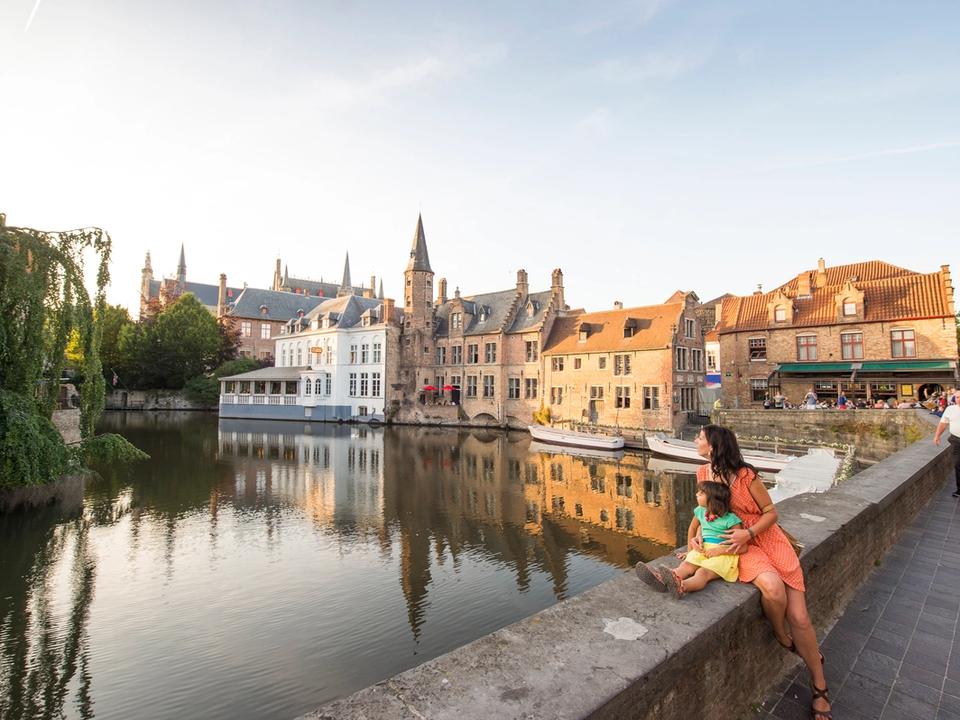
Cycle through West Flanders to explore Bruges, Ieper, and the coast, with WWI history, canals, castles, and Belgian culture.
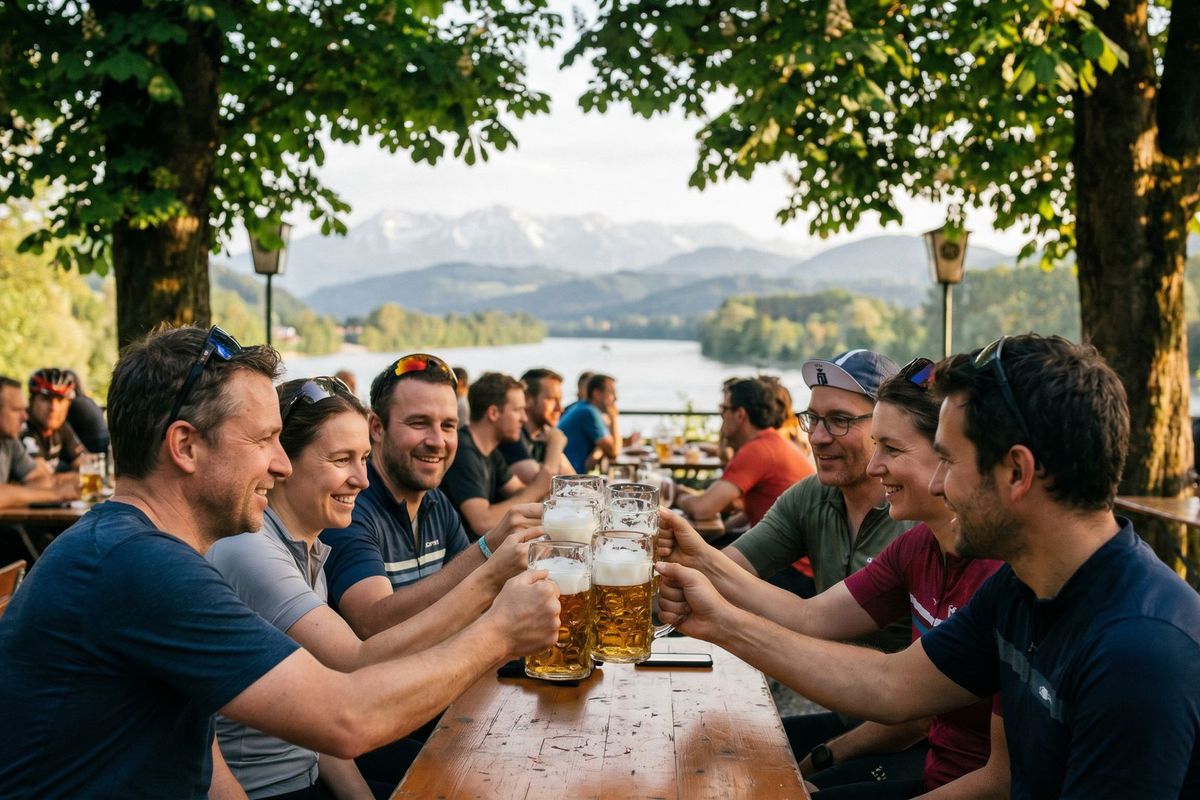
If the battlefields are the sober heart of a Flanders trip, the beer is its evening reward — and it is a more serious cultural fact than a pint suggests. Belgian beer culture is inscribed on UNESCO's list of the Intangible Cultural Heritage of Humanity, recognised in 2016 for the making and appreciation of beer as part of the country's living heritage. This is not a marketing line: it is a tradition of abbey and Trappist breweries, of hundreds of distinct styles, and of a café culture where a beer arrives in its own branded glass and is treated with the seriousness of wine.
For the Foodie Cyclist, this is the point. You finish a flat, easy day and settle in for a golden Tripel or a dark, complex Dubbel brewed by monks a few valleys away, with a plate of moules-frites or a stew cooked in the same beer. The riding earns the table, and the table is genuinely worth earning. Few cycling regions reward the evening quite as well as this one.
The season runs from roughly May to September, when the northern days are long and the weather is at its kindest — Flanders shares the mild, changeable climate of southern England, so pack for the odd shower whenever you come. High summer is warm and busy in Bruges; May, June and September give you quieter towns and comfortable riding.
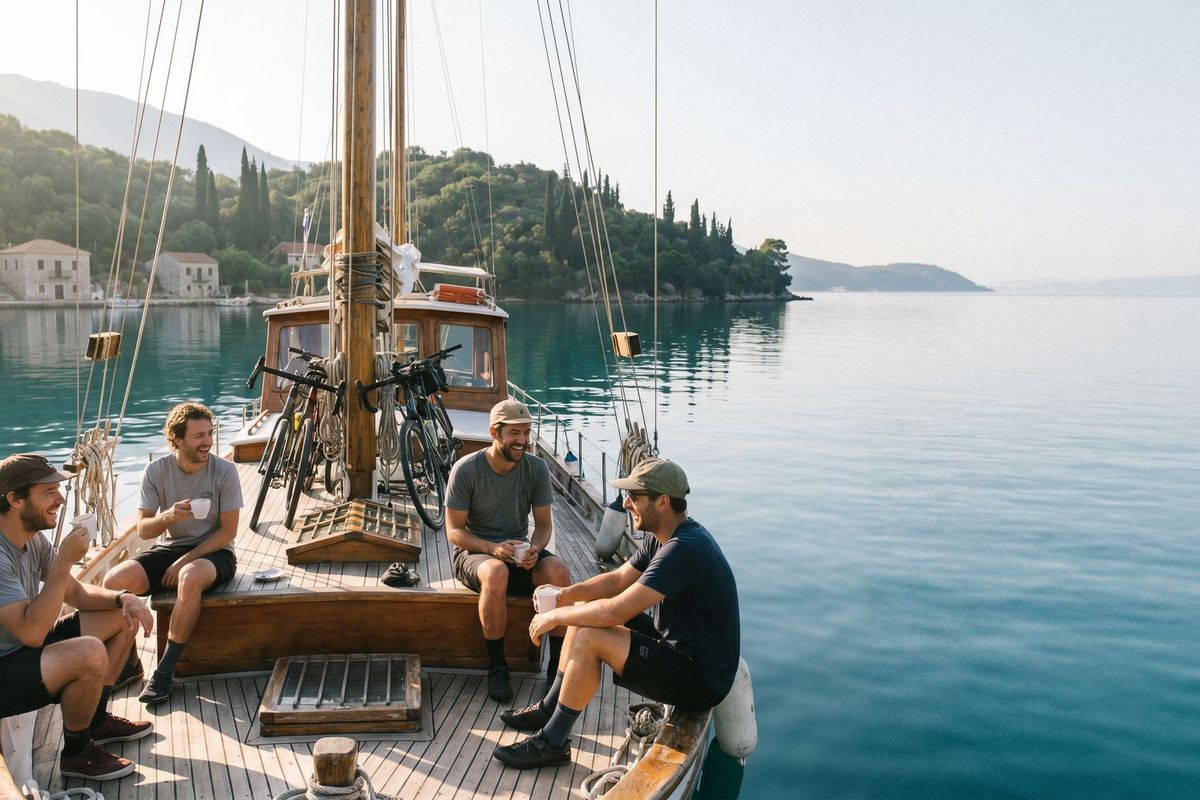
Two formats suit the region. Hotel-to-hotel cycling, with your luggage moved ahead each day, lets you string the cities together at your own pace. Bike and barge — where a small ship is your floating hotel and you ride off it each day — is a Low Countries speciality and a relaxed way to see the canal country without repacking. Either way, the flat terrain and the node network mean the logistics are about as gentle as cycling holidays get.
A cycling holiday across a region like this is a real outlay — the average booking through Pedal Ventures is around £3,000 — so it is worth knowing the money is safe. Pedal Ventures is a marketplace: we do not run the tours ourselves, we connect you to handpicked local operators who know Flanders well, and every booking is PTS-protected, which means your money is covered if an operator or Pedal Ventures fails. The detail is on the financial protection page. If flat riding, great cities and a very good beer at the end of the day sound like your kind of holiday, compare the Flanders routes and book your dates.
Flanders is one of the best cycling regions in Europe for riders who want easy, flat riding and rich culture rather than a physical challenge. The terrain is genuinely flat, the towns are close together, and a numbered node network makes routes simple to plan and follow. The reward is three great art cities, the Flanders Fields battlefields and a celebrated beer culture, all reachable at a gentle pace.
Yes — northern Belgium is famously flat, with no climbs of any note across Flanders. That makes it ideal for beginners, families and anyone who prefers to ride for the destinations rather than the exercise. The trade-off is that it is the wrong region for riders who specifically want hills and gradients; those looking for climbs should look to the Ardennes further south or elsewhere in Europe.
Yes. Bruges and the Ypres battlefield area both sit in flat, cycle-friendly Flanders, and a number of trips link the two, giving you the medieval city and the First World War landscape in one holiday. The riding around Ypres itself is gentle and the distances between the memorials and cemeteries are short, which leaves time to take in the history properly.
The node network, or knooppunten, is a system that numbers the junctions across the Flanders cycling network. You plan a route as a sequence of numbers and then simply follow the signs from one numbered node to the next, with no need for a map or GPS. It makes route-planning easy, lets you shorten or extend a ride on a whim, and is one of the main reasons cycling in Flanders is so relaxed.
May to September, when the days are long and the weather is at its best. May, June and September are quieter and just as pleasant as high summer, when Bruges in particular gets busy. Flanders has a mild, changeable climate similar to southern England, so a light waterproof is worth carrying whenever you visit.