Bike tour
Tuscany - From Pisa to Florence
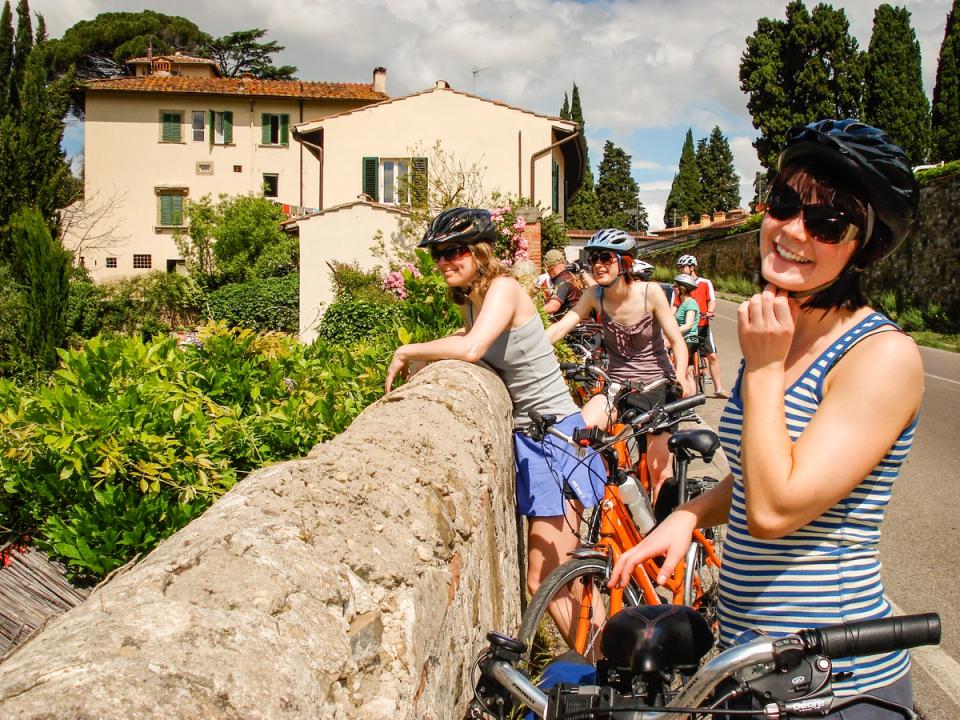
Discover Tuscany by bike – cycle from Pisa to Florence through rolling vineyards, medieval villages & iconic landmarks. Ideal for solo travellers & families.

Rob
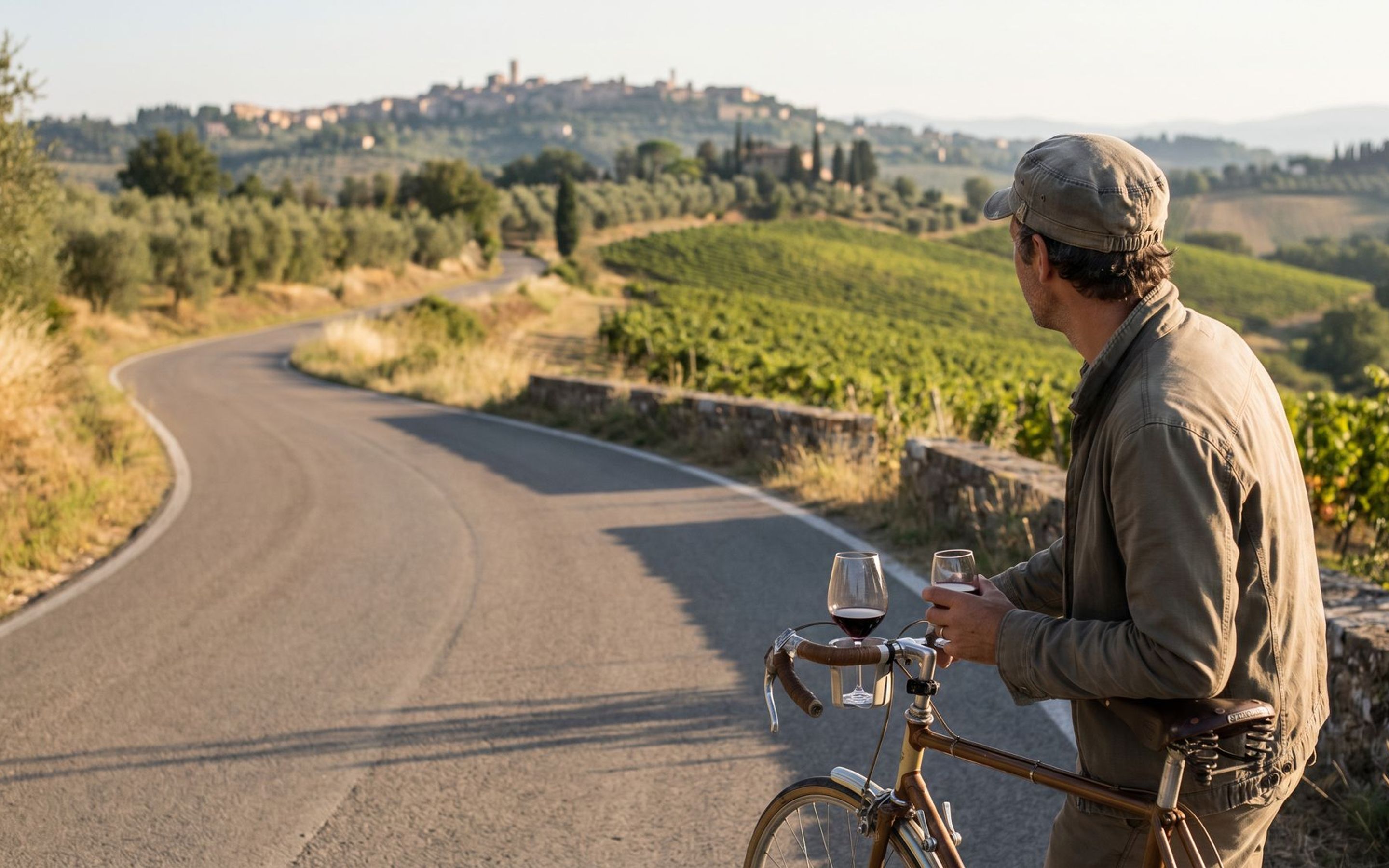
The road climbs gently between rows of vines, the kind of gradient that feels like nothing until you have been riding for an hour. Ahead, a hilltop town appears — terracotta roofs, a bell tower, a suggestion of shade and cold water. Behind you, the valley has opened into a patchwork of olive groves, wheat fields, and the dark punctuation of cypress trees. You are twenty kilometres from your next hotel, there is no rush, and the wine from this hillside will be on the table tonight. This is what a cycling holiday in Tuscany actually feels like.
Tuscany is the cycling destination most people picture when they think of Italy. The rolling hills, the golden light, the promise of Chianti at the end of every ride. But Tuscany earns its reputation for a reason — and it also surprises people. The hills are harder than the photographs suggest. The heat in summer is genuine. And the real magic of a Tuscan cycling holiday happens not during the ride but after it, when you arrive at a farmhouse hotel with your luggage already waiting and the evening stretching ahead.
This guide covers everything: which part of Tuscany to choose, how hard the riding really is, when to go, and what your days and evenings will look like.
Tuscany works as a cycling destination because the landscape is built for the pace of a bike. The distances between towns are short — typically 10 to 20 kilometres — and each one offers something worth stopping for. A Romanesque church. A family-run enoteca. A piazza where the afternoon light hits the stone in a way that makes you reach for your phone.
The roads between these towns are quiet, especially once you leave the main arteries. Tuscany's network of strade bianche (white gravel roads) and narrow secondary roads carry almost no traffic. This is farm country — you are more likely to encounter a tractor than a lorry. Several EuroVelo long-distance routes pass through the region, connecting Tuscany to the wider European cycling network.
And then there is the food. Tuscany is not a region where you cycle all day and eat whatever is closest. The cooking here is specific to the landscape: ribollita made with yesterday's bread, bistecca alla fiorentina from Chianina cattle raised in the Val di Chiana, pecorino aged in tufa caves, and wine from the vineyard you rode past that morning. On a cycling holiday, you arrive hungry enough to appreciate all of it.
This is the question that catches people out, and it deserves an honest answer.
Tuscany is not flat. The region's beauty comes directly from its topography — rolling hills, elevated hilltop towns, valleys with rivers running through them. On a typical day's riding, you will encounter several climbs of 100 to 300 metres. None are brutal, but they accumulate. By the end of a 40-kilometre day, you will have climbed more than you expected.
The Pisa to Florence route on Pedal Ventures is rated difficulty 2 out of 5 — moderate, manageable for anyone with reasonable fitness. The riding takes you through the Arno valley, past Renaissance villas, through Lucca's medieval walls, and into the countryside that inspired Leonardo da Vinci. Expect daily distances of 30 to 55 kilometres with rolling terrain.
Discover Tuscany by bike – cycle from Pisa to Florence through rolling vineyards, medieval villages & iconic landmarks. Ideal for solo travellers & families.
The Chianti hills are harder. If your route crosses the heart of Chianti — between Florence and Siena — expect steeper gradients and more sustained climbing. Beautiful, but genuinely physical. The reward is always the same: a downhill into a town with a glass of something remarkable at the bottom.
E-bikes change the equation. If you love the idea of Tuscany but worry about the hills, e-bikes are available on most routes. They do not eliminate the hills — you still pedal, you still feel the terrain — but they take the sting out of the longer climbs and let you arrive less tired, with more energy for the evening.
The honest assessment: If you cycle regularly (once or twice a week) and can ride 30–50 kilometres comfortably on mixed terrain, Tuscany will suit you. If you are a complete beginner, consider Puglia or the flat river paths of South Tyrol first, then come back to Tuscany with confidence.
Tuscany is a large region, and different areas offer genuinely different experiences.
The gentlest introduction. The valley floor is relatively flat, with the hills rising either side. You ride through Lucca (one of Italy's most beautiful walled cities), past the villas of the Lucchesia, and through the countryside where Puccini composed his operas. This is the route for first-timers who want Tuscany without the hardest climbing.
The classic. Rolling hills striped with vineyards, stone farmhouses, and hilltop towns like Greve, Radda, and Castellina. This is the landscape that sells a thousand postcards — and the riding matches the drama. More climbing than the Arno valley, but the wine at the end of each day is some of Italy's finest. Read more in our Chianti Wine Route cycling guide.
UNESCO World Heritage listed. Softer, more open landscape than Chianti — golden wheat fields, lone cypress trees on ridgelines, thermal springs at Bagno Vignoni. Less developed for tourism, which means quieter roads and more authentic encounters. The riding is moderate, with long views as reward.
Italy's wild west. Fewer tourists, flatter terrain near the coast, and a more rugged, untamed character. Good for riders who want Tuscany without the crowds, or who want to combine cycling with beach time.
Late April to mid-June is the sweet spot. Temperatures sit between 20°C and 28°C. The landscape is at its greenest. Wildflowers line the roadsides. Tourist numbers are manageable. This is when regular travellers — the ones who have done this before — book Tuscany.
September and October are equally good, with warmer evenings, harvest activity in the vineyards, and that particular golden light that makes the late afternoon feel significant. October can bring some rain, but it also brings new olive oil, vino novello, and truffle season in the south.
July and August are too hot for most people. Temperatures regularly exceed 35°C, and the hills that feel manageable in May become genuinely punishing in midsummer heat. If summer is your only option, ride early (start by 8am) and take a long midday break. But if you can choose, avoid these months.
November to March is off-season. Some tours operate in early November and late March, but accommodation options are limited and the weather is unpredictable.
Most Tuscany cycling holidays are self-guided, and the format works particularly well here. The towns are close together, the roads are well-signed, and getting lost (within reason) often leads somewhere interesting.
A self-guided holiday typically includes:
You set off each morning at whatever time suits you. The route is mapped, but you choose the pace — and whether to take that detour to the vineyard with the open tasting room, or add the extra five kilometres to the hilltop town that looks interesting.
Every tour on Pedal Ventures is run by local Tuscan operators who know these roads personally. They know which routes are genuinely scenic versus which ones look good on a map but run alongside a busy road. They know which agriturismos serve the best dinner. And they know which hills have a quiet alternative if you are running low on energy at 3pm.
Your booking is protected by the PTS financial protection scheme — your money is safe regardless of what happens to us or the local operator. For the latest entry requirements and safety information, check the FCDO travel advice for Italy.
A typical day on a Tuscan cycling holiday follows a rhythm that most people settle into by day two.
Morning: Breakfast at your hotel or agriturismo — fresh bread, local honey, cold meats, fruit, and strong coffee. Set off between 9 and 10am. The morning air is cool, the roads are quiet, and the light is soft.
Mid-morning: Stop in a village for a second coffee or a pastry. Twenty kilometres covered, feeling good.
Lunch: A trattoria, a market stall, or a picnic bought from a village alimentari. Tuscan lunches tend toward simplicity — cured meats, fresh bread, a tomato salad with oil that tastes like it came from another planet (it came from the trees outside).
Afternoon: The last 15 to 25 kilometres. The warmest part of the day, but manageable in spring or autumn. One or two more hills. The destination town comes into view.
Late afternoon: Arrive. Your luggage is in the room. Shower. Walk the town. Sit somewhere with a glass of Vernaccia or a cold Moretti.
Evening: Dinner. In Tuscany, this is not something to rush. A four-course meal at a local restaurant might include crostini with chicken liver, pici with wild boar ragu, grilled lamb with rosemary, and cantucci dipped in vin santo. You have earned every course.
Tuscany works best for:
It is less suited to complete cycling beginners (the hills are real), families with young children (South Tyrol is better), or road cycling enthusiasts chasing speed and distance (the Dolomites are waiting).
Most routes cover 30 to 55 kilometres per day. At a leisure pace with stops, this means 3 to 5 hours of riding. The distances are designed to leave time for long lunches and afternoon arrivals.
No. Most Tuscany cycling holidays are ridden on hybrid or touring bikes, which handle the mix of tarmac and occasional gravel roads comfortably. Road bikes are fine if you prefer them, but not necessary.
Tuscany's famous white roads are beautiful but not suitable for narrow road tyres. If your route includes strade bianche sections, a hybrid bike with wider tyres (32mm+) is ideal. Most tour operators provide suitable bikes or advise on tyre choices.
It depends on the route. The Arno Valley (Pisa to Florence) is manageable for most people with basic cycling fitness. The Chianti hills require more stamina. E-bikes are available and recommended if you want to enjoy Tuscany's terrain without the physical anxiety.
Absolutely. Tuscany connects naturally to Umbria (continue south toward Rome via the Florence to Rome route) or north to the Piedmont wine country. Both make excellent two-week itineraries.
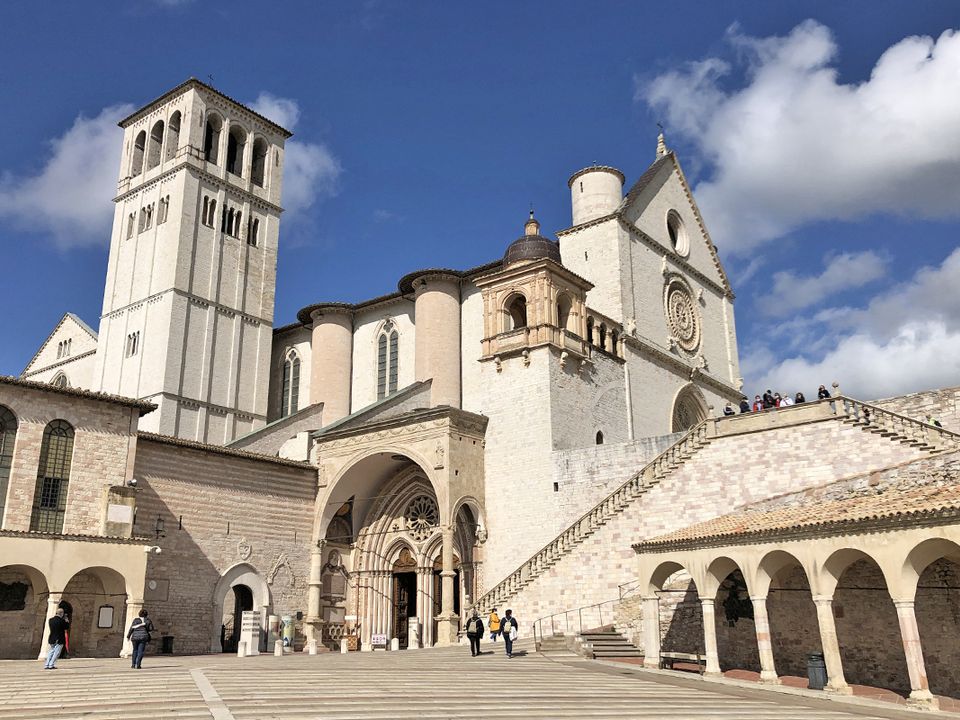
Cycle from Florence to Rome through Umbria’s medieval towns, vineyards, and valleys, with stops in Assisi, Perugia, and Spoleto.
It depends on your focus. Lucca is ideal for the Arno Valley and gentler routes. Siena works for Chianti exploration. Pienza or Montepulciano are good for the Val d'Orcia. On a point-to-point cycling holiday, you move each day, so the question becomes less relevant — every night is a different town.
Ready to explore Tuscany by bike? Browse Tuscany cycling holidays on Pedal Ventures, or read our guide to cycling holidays in Italy for a region-by-region comparison.