Bike tour
Scotland Bike & Boat - Inner Hebrides
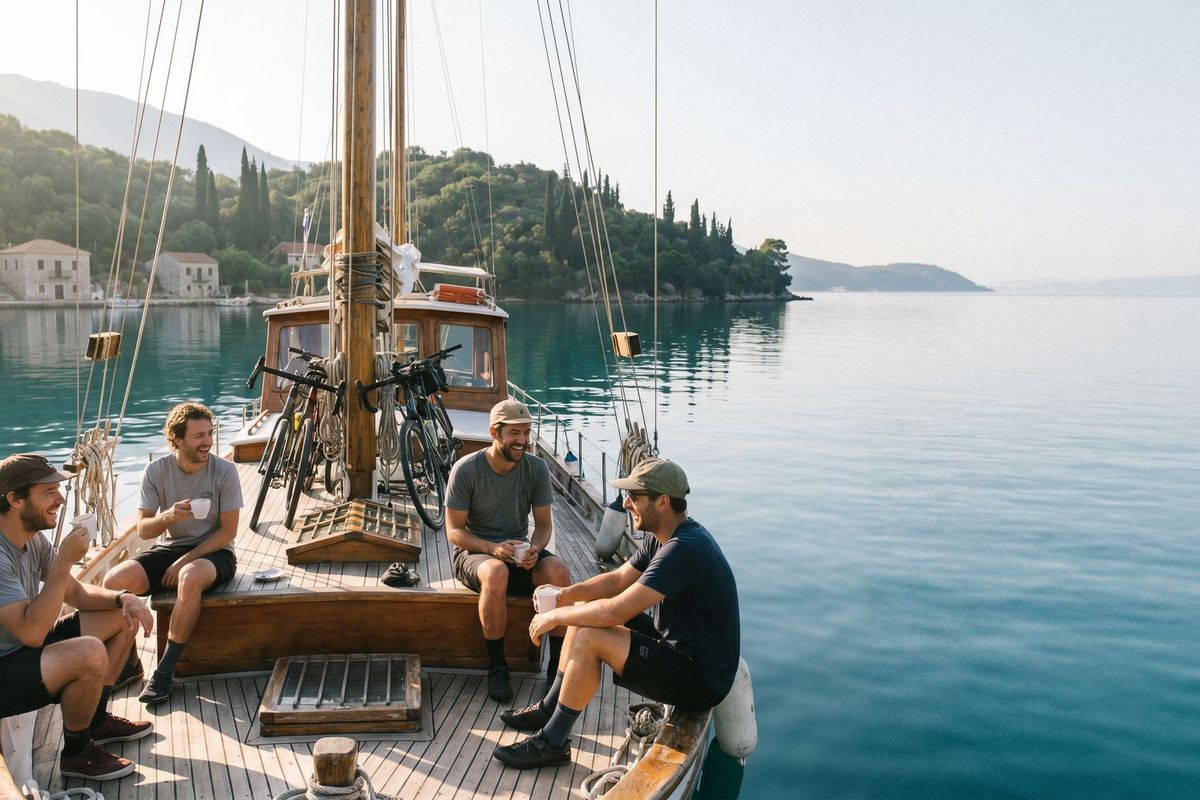
Discover the Inner Hebrides from Oban aboard a sailing hotel. Scenic shores, red deer, dolphins, whisky pubs and island beaches.

Rob
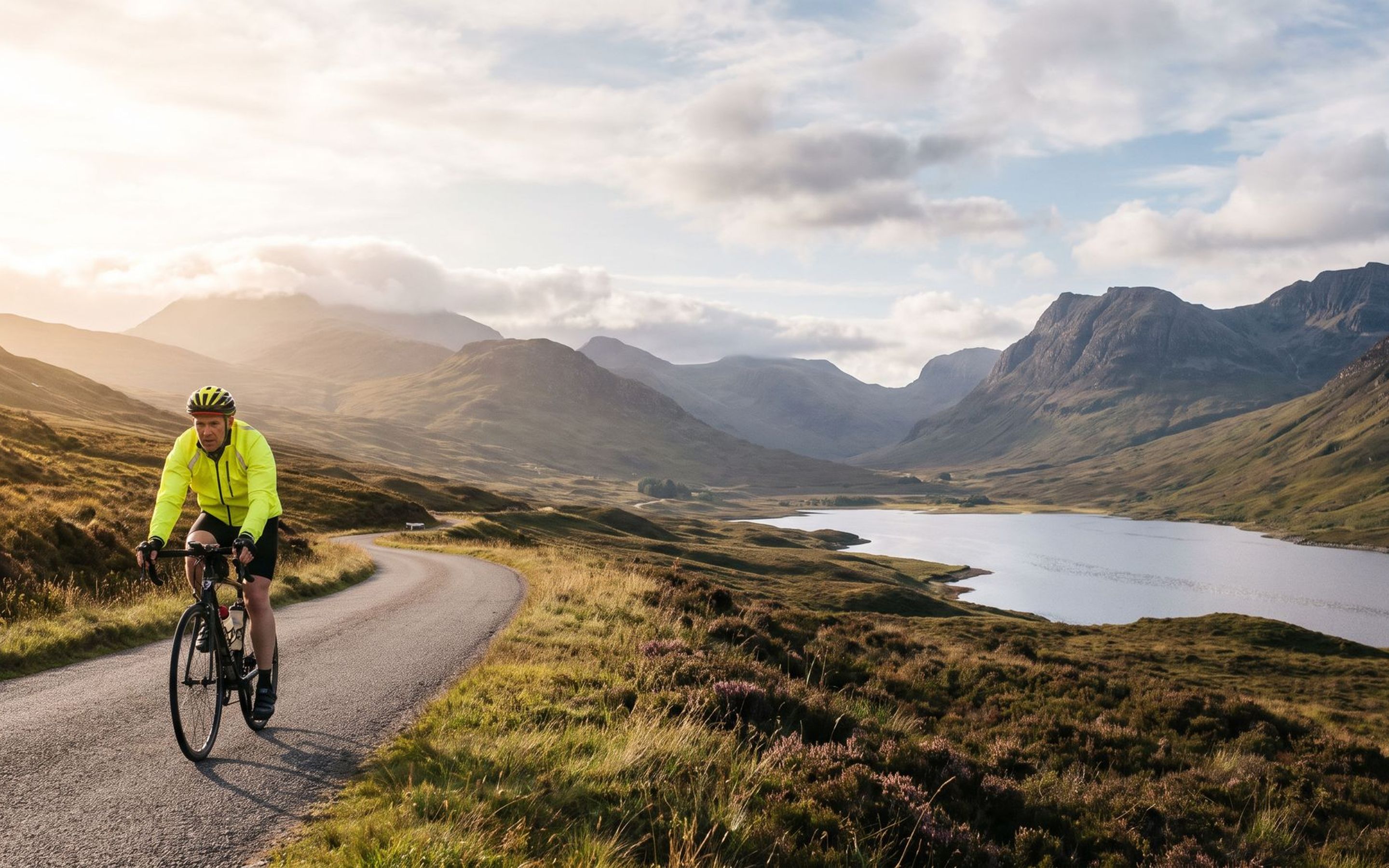
There is a moment, somewhere north of Ullapool, when you realise you have not seen a car for twenty minutes. The road ahead is a single ribbon of tarmac climbing across empty moorland, there is a loch below you and a wall of mountains beyond it, and the only traffic is a red deer stag that lifts its head to watch you grind past. You are cold, you are working hard, and you would not swap the moment for anything. This is what the far north of Scotland does to cyclists, and it is why people come back.
Cycling the North Coast 500 is one of Britain's great rides — and one of its most misunderstood. It is a roughly 516-mile loop around the top of the Scottish Highlands, and while the marketing tends to sell it as a bucket-list dream, the honest truth is that it is a serious undertaking on a bike: remote, exposed, hilly, and best suited to fit riders or a well-organised group rather than a gentle first tour. This guide gives you the real picture — what the route is, how long it takes, how hard it genuinely is, which way round to ride it, when to go, and whether it is the trip for you.
The North Coast 500, or NC500, is a circular scenic route that starts and finishes in Inverness and traces the coastline of the northern Highlands. VisitScotland describes it as a 516-mile route around the north of Scotland, launched in 2015 to link the region's coastal roads into a single named loop. It was conceived as a touring route — plenty of people drive it — but as a bike ride it has become a modern classic, precisely because those same quiet, spectacular roads are transformed when you take them at cycling pace.
Ridden on a bike, the NC500 is a proper expedition rather than a relaxed pootle. You are largely on single-track roads with passing places, threading between sea lochs and mountains, through fishing villages and long empty stretches where the next shop might be thirty miles away. That remoteness is the whole appeal, but it also means the route demands respect and planning in a way that a flat European canal trip does not. If you want to understand where it sits among gentler options, the Scotland cycling page lays out the range.
Discover the Inner Hebrides from Oban aboard a sailing hotel. Scenic shores, red deer, dolphins, whisky pubs and island beaches.
Most cyclists ride the North Coast 500 in seven to ten days, which works out at somewhere between 50 and 70 miles a day — manageable numbers on paper, but this is not flat ground. The route climbs constantly as it crosses headland after headland, and the cumulative ascent over a week is substantial. Add the Highland weather and the exposure, and the effort is a good deal higher than the mileage alone suggests.
The single hardest moment is the Bealach na Bà, the pass over to Applecross on the west coast. It is a genuinely fearsome climb: according to its record, it has the greatest ascent of any road climb in the United Kingdom, rising from sea level to 630 metres in about six kilometres, with hairpins and gradients that reduce most riders to their lowest gear and their slowest crawl. It is optional — there is a flatter coastal alternative round the headland — but for many riders it is the defining challenge of the trip.
So who is the NC500 for? Be honest with yourself here. It rewards a rider who is reasonably fit and used to consecutive days in the saddle, or a group who share the load and plan the logistics well. It is not a good choice for a complete beginner, for anyone nervous about traffic on single-track roads, or for a family with young children. If that is you, the Scottish Highlands and Hebrides offer gentler ways to ride the same landscapes without committing to the full loop.
Every NC500 cyclist ends up in this debate, and there is no single right answer — but the choice does change your trip. Riding anticlockwise takes you out to the dramatic west coast early, puts the sea on your left for the big coastal stretches, and gets the Bealach na Bà done while your legs are fresh. Riding clockwise sends you up the gentler east coast first, letting you build fitness before the hard western section, and saves the finest scenery for the back half of the week.
Wind is the deciding factor for many. The prevailing weather comes off the Atlantic from the south-west, which can argue for either direction depending on the forecast, so it pays to look at the week ahead before committing. Whichever way you go, the single-track roads come with an etiquette: pull into passing places to let faster traffic by, do not use them as laybys, and give a wave to the drivers who wait for you. It costs nothing and it keeps the Highlands friendly to cyclists.
Leaving Inverness, an anticlockwise loop heads west into the mountains and quickly reaches the trip's early crux at Applecross and the Bealach na Bà, with its reward of a village pub and a view across to Skye. From there the road runs north through Torridon, where some of Scotland's most striking mountains rise straight out of the sea lochs, and on to the fishing town of Ullapool — the natural halfway hub, and the last sizeable place for supplies before the wild north.
North of Ullapool the landscape becomes almost lunar. Assynt is a scatter of isolated peaks — Suilven, Stac Pollaidh — standing over empty moorland and hidden white-sand beaches, and the riding here is the emotional heart of the trip. The road threads on through Kylesku and up to Durness on the far north-west corner, where Balnakeil beach and the Smoo Cave sit at the edge of the country. Then the route turns east along the exposed north coast towards Thurso and the much-photographed signpost at John o' Groats, before the final stretch drops down the gentler east coast — Dornoch, its cathedral and firth — back towards Inverness. It is a lot of country for one week, and every day looks different from the last.
Timing matters more here than almost anywhere else you might ride, for two reasons: the weather and the midges. The season runs from roughly May to September, but the sweet spots are late May to June and September. Early summer gives you the longest days — this far north it barely gets fully dark in June — and the drier, brighter shoulder weeks. Inverness in May typically sees highs around 15°C and cool nights near 6°C, which is close to ideal cycling weather, though you should always pack for wind, rain and sun in the same day.
Then there are the midges. The Highland midge is the one genuine misery of a summer trip here: these tiny biting insects are, as the record puts it, very prevalent from late spring to late summer, at their worst in the still, damp conditions of June, July and August, especially at dawn and dusk when you are setting up or breaking camp. They are far less of a problem when you are moving and in any breeze, but they are a real reason many riders favour late May or September, and a reason to carry repellent and a head net if you are camping. Plan around the midges and the weather, and the far north is glorious; ignore them and you will remember the trip for the wrong reasons.
There are two ways to take on the NC500, and the right one depends on your group. Self-supported means carrying your own kit and either camping or booking your own accommodation as you go — the purest version, cheap and flexible, but hard work and dependent on the weather, and it puts you at the mercy of a very sparse spread of shops and beds in the north.
The alternative is a supported trip, where your luggage is moved ahead each day and your accommodation is booked in advance, so you ride with only a day bag and arrive to a bed and a hot meal. For a group of friends who want the challenge without the logistical headache — and without pitching a tent in the midges — this is usually the better call, and it is what turns a hard slog into a genuinely enjoyable week. If the full 516 miles sounds like more than you want to take on, a gentler alternative is to see the Scottish coast by bike and boat through the Inner Hebrides, where a small ship carries you and your bags between islands and the daily distances are far kinder.
Most cyclists complete the 516-mile North Coast 500 in seven to ten days, averaging 50 to 70 miles a day. The route is hilly and exposed rather than flat, so the effort is higher than the mileage suggests, and building in a rest day or a shorter stage is sensible. Fit, experienced riders on a supported trip can go faster; a first-timer should allow more time, not less.
Yes — it is a genuinely challenging ride. The route climbs constantly as it crosses headland after headland, the total ascent over a week is significant, and the weather can be cold, wet and windy even in summer. The Bealach na Bà, the pass to Applecross, is the hardest single climb in the UK. It is best suited to fit riders or well-organised groups, not to beginners.
Both work, and it comes down to preference and the forecast. Anticlockwise takes you to the spectacular west coast early and tackles the Bealach na Bà on fresh legs; clockwise eases you in along the gentler east coast first and saves the best scenery for later. Because the prevailing wind comes off the Atlantic from the south-west, it is worth checking the week's forecast before deciding.
Late May to June and September are the pick. Early summer brings the longest daylight — it barely gets dark in June this far north — and the driest, brightest shoulder-season weather, while September is quieter. The biting Highland midges are at their worst in the still, damp weeks of June to August, which is another reason many riders favour late spring or early autumn.
You do. This is not a route to attempt without some cycling fitness and, ideally, experience of riding several days in a row. The climbs, the distances and the exposure all add up, and there are long remote stretches with little in the way of shops or shelter. If you are not there yet, a gentler Highlands or island trip is a better first step towards it.