
Rob
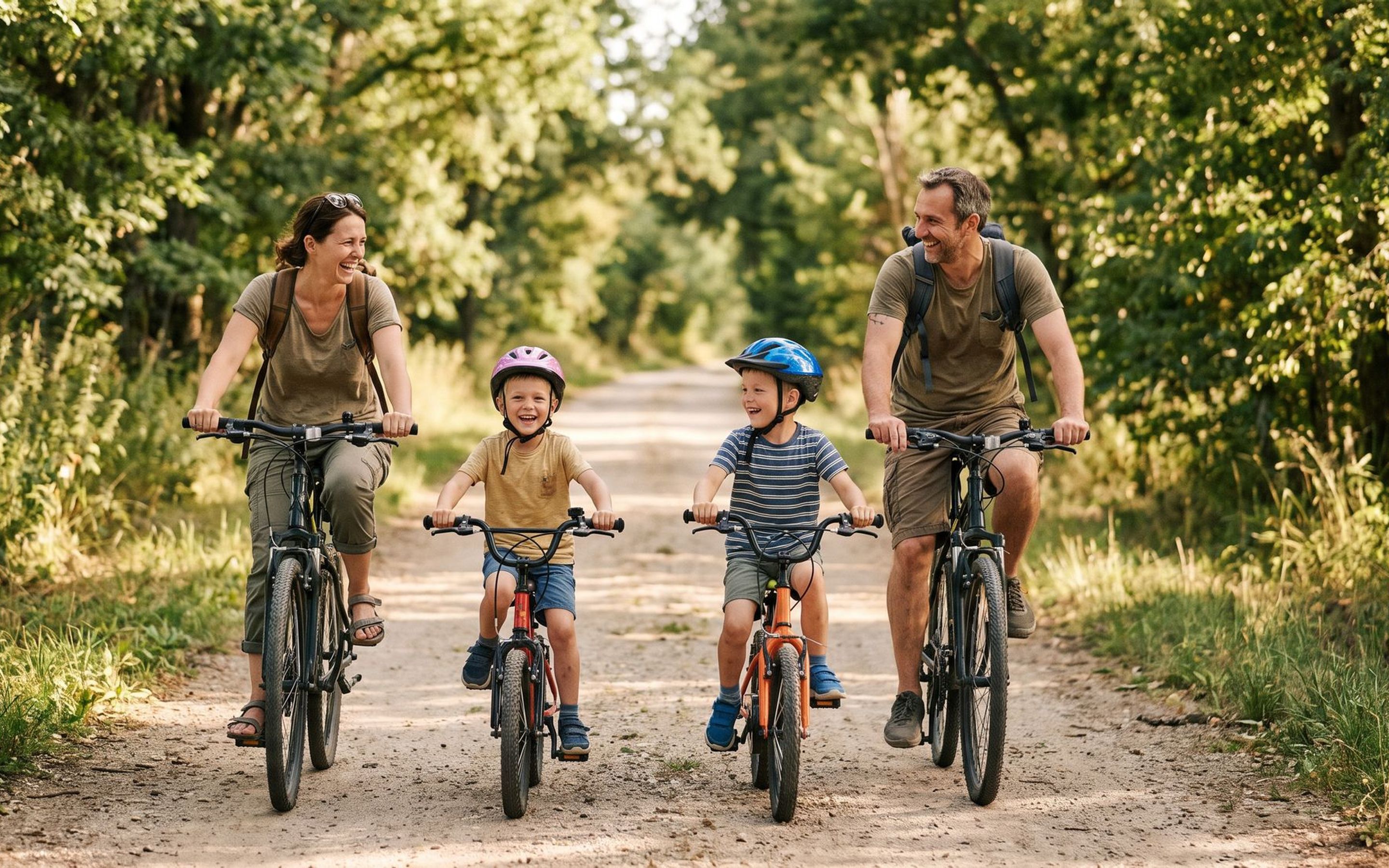
It is the question that stops more people from booking a cycling holiday than any other, and it is rarely asked out loud: am I fit enough? Behind it sit the real worries — that you will struggle up every hill, that you will hold a group back, that you will spend the week exhausted rather than enjoying it. They are reasonable fears. They are also, for the great majority of trips, unfounded.
The honest answer is that you need far less fitness than you probably imagine, because how hard a cycling holiday feels is mostly a choice you make before you go, not a verdict on your current form. Pick the right trip, use the tools available, and do a little preparation, and a cycling holiday is open to almost anyone who is reasonably active. Here is how that actually works — including the cases where a trip genuinely is demanding, so you can steer around them.
The single biggest factor in how hard your holiday feels is not your fitness. It is the trip you book. Cycling holidays are graded, and the gap between the easiest and the hardest is enormous.
At the gentle end — the kind of trip on our cycling holidays for beginners pages — you might ride 20 to 35 kilometres a day on flat, traffic-free routes, with a long lunch in the middle and no climb worth the name. That is a distance most people who can comfortably walk for a couple of hours can manage on a bike, because cycling carries your weight for you. At the hard end, a challenging trip might ask for 60 to 90 kilometres a day across real mountains, day after day, and that genuinely demands training and experience.
Between those extremes sits a full spectrum, and every grade is clearly labelled. The skill is not in getting fit enough for the hardest trip; it is in honestly matching the grade to the rider you are today. Choose well and the fitness question largely answers itself.
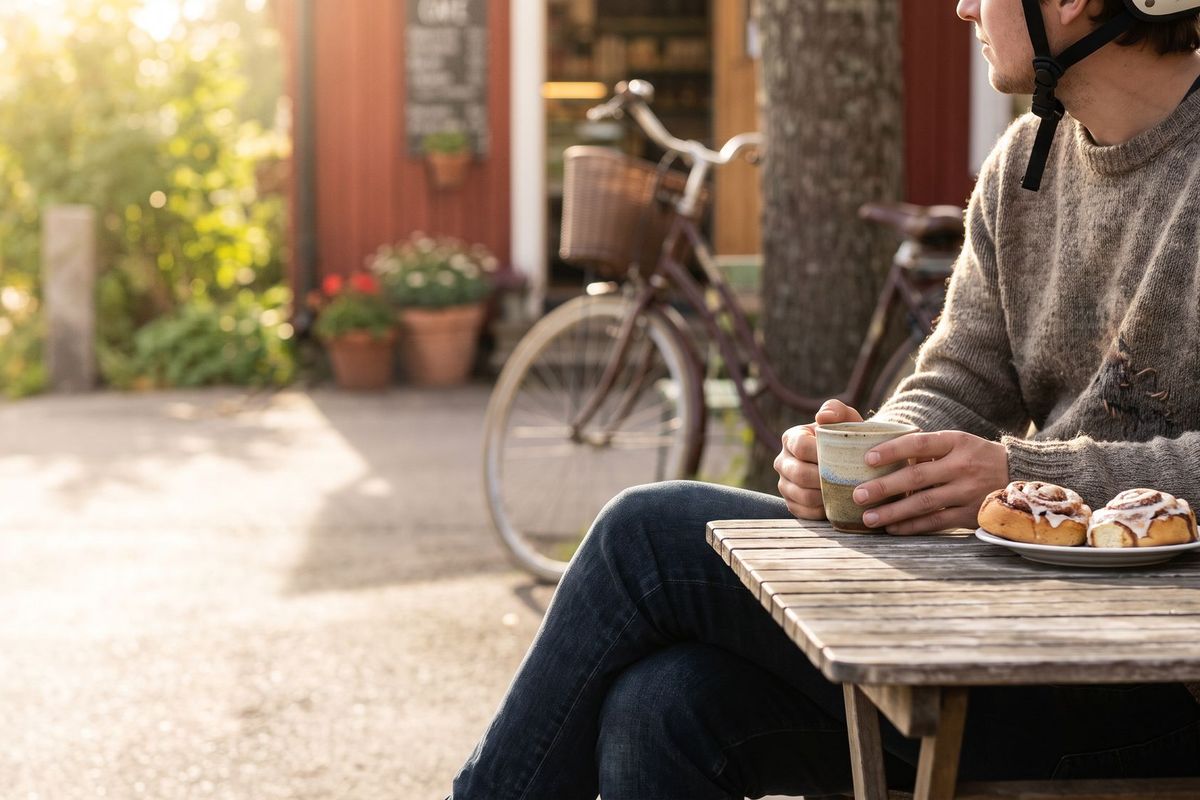
Numbers on a page do not tell you much, so picture the day. On an easy trip you set off mid-morning after breakfast, ride for an hour or so at a conversational pace — fast enough to feel you are travelling, slow enough to talk — and stop for coffee. You ride another stretch to lunch, which is unhurried and often the highlight. The afternoon is shorter, and you are at your hotel with time to spare before dinner, pleasantly tired rather than wrung out.
Crucially, you set the pace. There is no one timing you, and the route is designed so that the riding is the pleasure, not the price of admission. People routinely arrive at these trips braced for an ordeal and spend the first evening surprised at how civilised the whole thing was.
If any doubt remains, the electric bike removes most of it. An e-bike does not do the work for you — you still pedal, still ride, still get the fresh air and the sense of a day's journey — but it flattens the hills and shrinks the distances, so the effort is always within your control. A gradient that would have you off and pushing becomes a steady, enjoyable climb.
What the e-bike really does is widen the range of people who can ride together. A couple with different fitness levels can share the same route happily; someone returning from injury or simply out of practice can keep up with no strain; a hillier, more scenic region opens up to riders who would otherwise have to avoid it. For anyone whose honest answer to "am I fit enough?" is "I'm not sure", the e-bike turns a maybe into a yes.
You do not need to train like an athlete, but a little preparation makes the week more comfortable and more fun. If you already cycle, walk, swim or do any regular activity, you have a base to build on. If you do not, a few weeks of gentle riding before you go is plenty for an easy or moderate trip.
The useful principle is specificity: the best preparation for riding is riding. In the month or two before your holiday, get out on a bike and gradually build up to roughly the daily distance your trip involves — if your days are 40 kilometres, a couple of comfortable 40-kilometre rides beforehand will do more for your confidence than any gym session. If your trip has back-to-back riding days, try two rides on consecutive days once or twice, so your body knows what that feels like. Beyond that, make sure you are comfortable on the bike — a sensible saddle and position matter more than raw fitness — and you will arrive ready.
The fear of being the slow one is real, and worth addressing directly. On a self-guided trip it simply does not arise: you ride alone or with your own party, at your own pace, with nobody to keep up with. On a guided trip, good operators plan for a range of abilities, with regroup points, a sweep rider at the back and often a support vehicle for anyone who wants a break. The slowest rider is not an inconvenience to be managed; a well-run group is built around exactly that mix. If being the weakest link worries you, self-guided gives you privacy and guided gives you a safety net — either way, the problem is designed out.
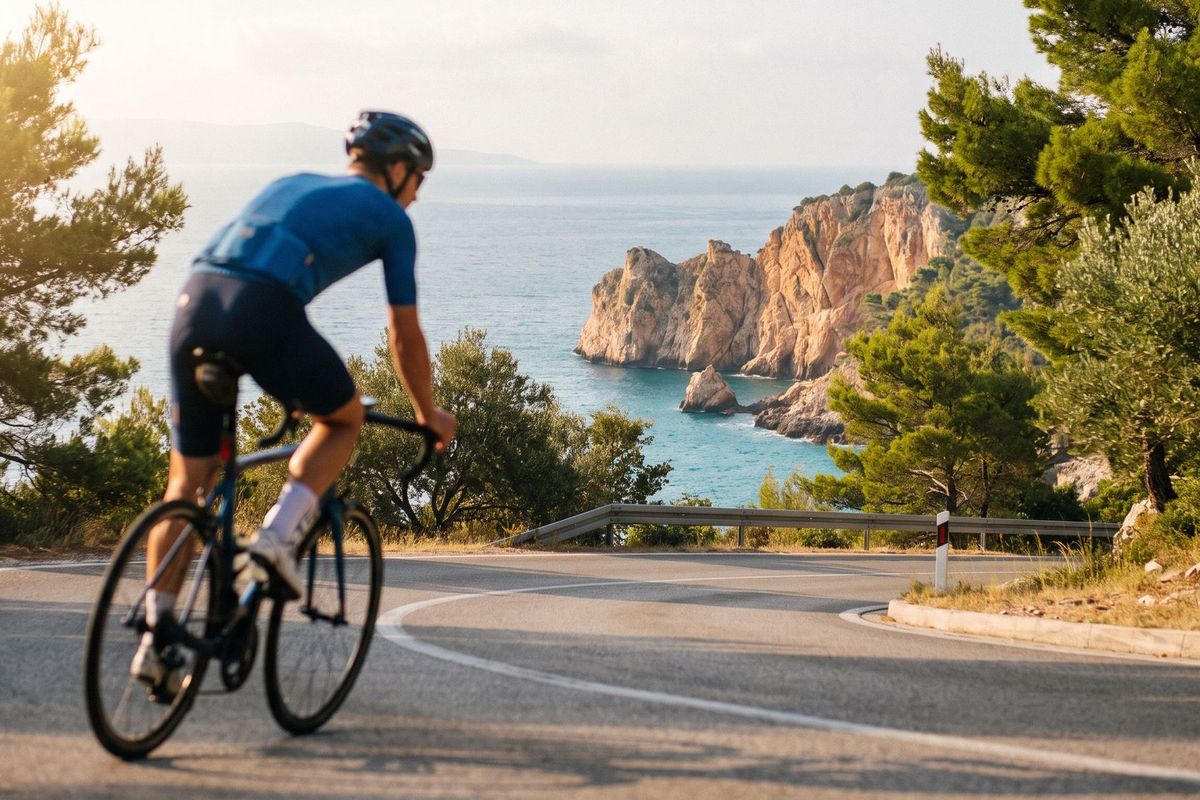
Honesty cuts both ways, and it is worth knowing the trips that really do demand fitness so you can choose them deliberately or not at all. Long-distance point-to-point routes that cover serious daily distances, anything billed as a mountain or climbing trip, road-cycling holidays aimed at experienced cyclists, and multi-week expeditions all ask for genuine conditioning and some cycling background. These are wonderful trips for the riders they are meant for and a miserable week for anyone who booked them by mistake. The grade and the trip description will always tell you which camp a holiday is in — the only real error is ignoring them.
A few numbers tell you almost everything about how hard a holiday will be. Look first at the daily distance, and be honest about whether you could ride it comfortably today. Then look at the total daily ascent — the metres of climbing matter far more than the kilometres, and a short hilly day can be tougher than a long flat one. Check whether the days are back-to-back or broken by rest days, what the surface is (smooth tarmac and loose gravel ride very differently), and whether an e-bike is offered. Finally, read the grade and trust it: operators grade conservatively, and a trip labelled easy really is. If the numbers sit inside what you can already do — or just a little beyond it — you have found your trip. And if you are still unsure, ask: a quick conversation about your riding usually settles which grade is right faster than any chart can.
Do I need to train for a cycling holiday?
For an easy or moderate trip, not formally — a few weeks of gentle riding to build up to the daily distance is enough. For a challenging or mountain trip, yes, you should train properly and have some cycling experience behind you.
Can I do a cycling holiday if I don't cycle regularly?
Yes, provided you choose an easy or moderate graded trip, and especially if you ride an e-bike. Being generally active — walking, swimming, the odd bike ride — is a perfectly good starting point.
What if I'm slower or less fit than my partner?
Very common, and easily solved. An e-bike lets mismatched riders share the same route comfortably, and a self-guided trip means you set your own pace with no group to keep up with.
For the great majority of cycling holidays, the honest answer is: reasonably active, and willing to do a little riding beforehand. That is it. The fitness question feels enormous before you book and tends to evaporate on the first morning, once you discover the pace is yours to set and the hills are optional. Match the grade to where you honestly are today — and lean on an e-bike if you want the terrain taken out of the equation — and the week becomes about the scenery and the food, not survival. A good place to start is our beginner cycling holidays, the gentle regions best suited to newer riders, or the full range of routes across Europe graded so you can find your level.