Bike tour
Denmark & Sweden - Sail & Cycle Øresund
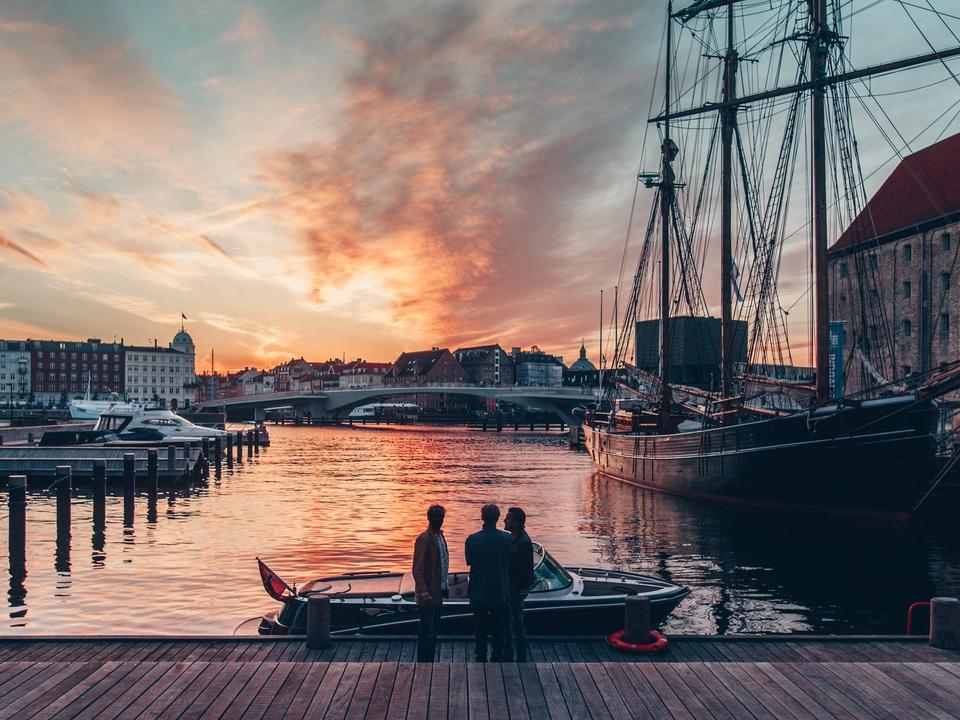
Cycle and sail through Denmark and Sweden. Explore the Øresund Strait, coastal towns, Ven Island, and UNESCO-listed Stevns Klint.

Rob
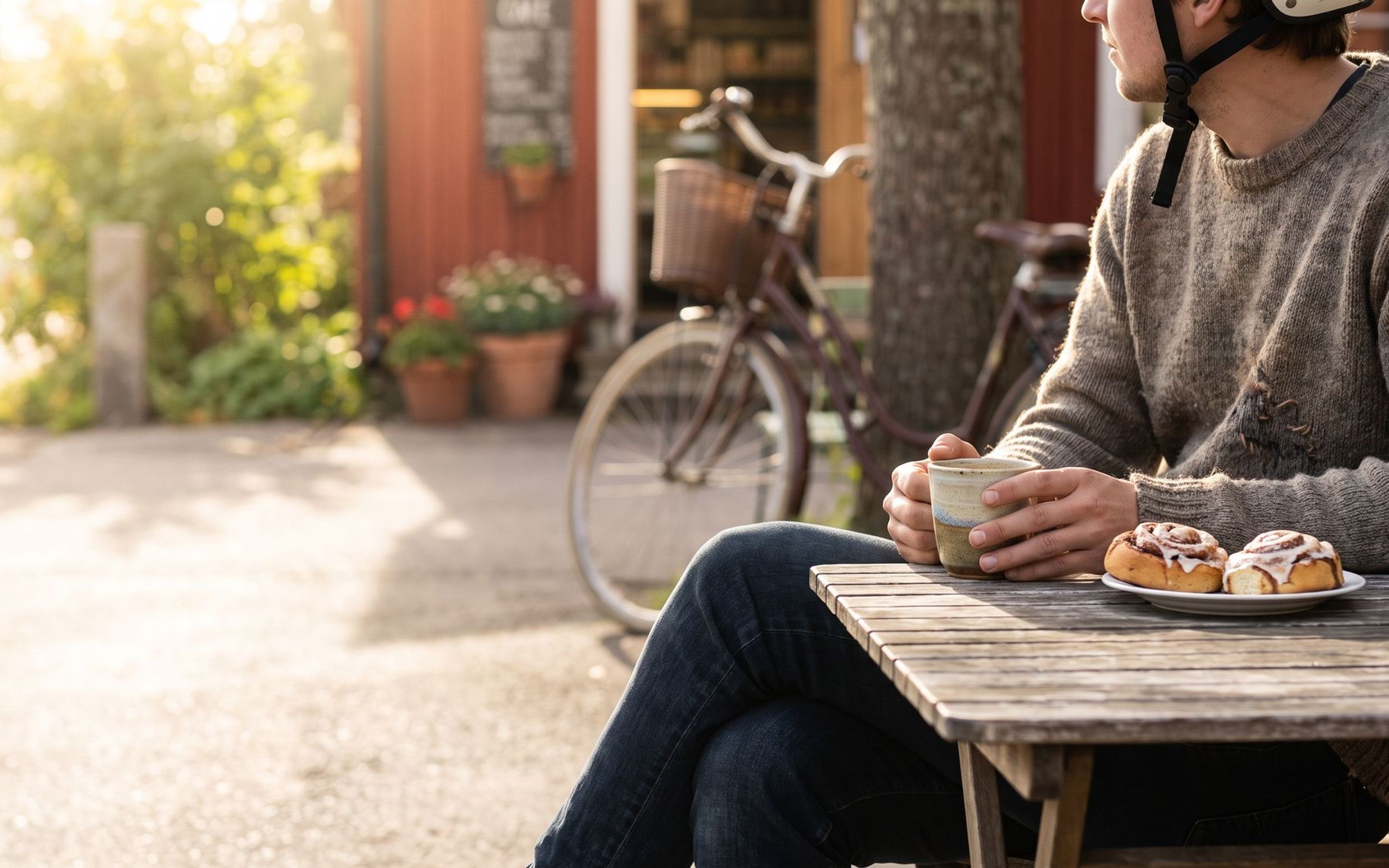
Fika is not a coffee break. Swedes will gently correct you if you call it one, and after a week of cycling here you understand why. A coffee break is something you take so you can get back to work. Fika is the thing you organise the rest of the day around — coffee, something sweet, a pause with no particular end time, taken on purpose and often more than once. On a bike, it turns out to be the best possible way to structure a ride.
That is the quiet argument for a cycling holiday in Sweden that most route descriptions miss. The country is built for the kind of food-led, unhurried riding where the stops are not interruptions to the day but the shape of it. You ride between fikas. Everything else — the distance, the scenery, the weather — arranges itself around the next bakery.
At its simplest, fika is coffee and a bun shared with someone, or with yourself and a view. The West Sweden tourist board describes it as taking a break to enjoy freshly brewed coffee with homemade cinnamon buns, cakes and pastries — which sounds ordinary until you notice how seriously it is taken. Swedes fika daily, sometimes twice, at work and at home, and no one treats stopping as a failure of productivity.
The coffee is usually filter, served black and strong, which is exactly what you want halfway through a cool morning on the coast. The classic accompaniment is the kanelbulle, the Swedish cinnamon bun — less sweet than its American cousin, cardamom-scented, topped with pearl sugar rather than icing. On a bike, this is close to ideal fuel: enough to carry you to lunch, not so much that you want a nap in a hedge.
What makes it suit cycling specifically is the permission it grants. Elsewhere, stopping twice in a morning feels indulgent. In Sweden it is simply what people do, so you ride at a pace that leaves room for it, and the ride improves. You arrive at places awake to them rather than grinding through to a daily total.
The kanelbulle is the headline, but a fika spread has more range than first-timers expect, and knowing the vocabulary makes the café stops better. Its close cousin is the kardemummabulle, the cardamom bun — same shape, warmer spice, and to many Swedes the superior of the two. Alongside them you will meet the chokladboll, a no-bake chocolate-and-oat ball rolled in coconut or pearl sugar that is effectively a cyclist's energy bar in disguise, and, on a smarter afternoon, a slice of prinsesstårta — the green marzipan-domed princess cake that turns an ordinary stop into a small occasion.
Some of the best fika is seasonal, which gives a trip a sense of timing. In late winter and early spring the semla appears — a cardamom bun split and filled with almond paste and cream — and vanishes again by Easter, so catching it is a small reward for riding early in the year. Through summer, the bakeries lean on berries and rhubarb; by autumn, on apples and cinnamon. Ride the same stretch of Skåne coast in April and in September and the plate in front of you tells you which month it is.
On the west coast, fika shades towards the sea. The cardamom and coffee are still there, but so are the smokehouses and the harbour kiosks, and a mid-ride stop can just as easily be a paper cone of peeled prawns, a slice of toast Skagen, or a plate of cured herring eaten at a picnic table with the boats clanking behind you. It is still fika in spirit — an unhurried pause with something good in front of you — even when it arrives on a fork rather than with a coffee.
The south is the natural home of a fika-led trip. Down along the Öresund coast in Skåne, the villages come close together and, as the locals say, there is always a bakery just around the corner. The riding is flat and short-hopped, which means you can genuinely build a day around café stops rather than apologising for them. Harbour town, coffee, ride an hour, fishing village, coffee again — it is a rhythm the landscape hands you.
Cycle and sail through Denmark and Sweden. Explore the Øresund Strait, coastal towns, Ven Island, and UNESCO-listed Stevns Klint.
Skåne is also bakery country in its own right. This is a corner of Sweden with a real baking culture, long summer light, and a coastline of small working harbours where the café is often the social centre of the village. The Österlen area in Skåne's south-east, in particular, strings together art galleries, orchards and bakeries along quiet lanes, and rewards a slow, sweet-toothed approach more than a fast one.
Further north, the west coast proper — the long Kattegattleden route that Cycling UK's riders have written up in detail — keeps the same habit going over a bigger distance, with fishing villages and smokehouses added to the bakeries. Here fika often shades into a plate of prawns or cured herring by the water, which is no hardship after a morning in the sea air.
If you need proof that Sweden takes its sweet pause seriously, consider that the cinnamon bun has a day in the calendar. Kanelbullens dag — Cinnamon Bun Day — falls on 4 October every year, a tradition started in 1999, and the West Sweden board notes it straight-faced on their site. Bakeries sell them by the million; people bake them at home; the smell of cardamom follows you down the street.
For a cyclist, early October is a quietly brilliant time to be here for exactly this reason. The summer crowds have gone, the light turns low and gold, the riding is cool and clear, and the entire country is, briefly, even more focused on buns than usual. It is a small thing to plan a trip around. It is also a very Swedish one.
Strip away the coffee and the pastry and what fika teaches a visiting cyclist is something about tempo. The instinct on a cycling holiday — especially for anyone who rides seriously at home — is to measure the day in kilometres and feel the stops as lost time. Sweden quietly argues the opposite. The stop is not the cost of the ride; it is part of what you came for.
This sits inside a wider national habit the Swedes call friluftsliv, or open-air life — the idea that time spent outdoors, unhurried, is simply good for a person and needs no further justification. A fika taken on a bench by the water, bike leaning against the railing, is friluftsliv in miniature. You are not killing time until the next effort. You are doing the thing itself.
It changes how a week feels. You finish a fika-led holiday less with a sense of distance conquered than with a collection of specific pauses — the bakery in the harbour town, the coffee you drank watching a ferry come in, the bun you still think about. For the kind of traveller who books a cycling holiday for the experience rather than the exercise, that is the whole return on the trip.
A few practical notes make it work. Keep daily distances modest — this is flat, forgiving terrain, so there is no reason to push, and shorter days leave room for two or three proper stops. Carry a little cash as well as a card; some village bakeries are small operations. Learn the shape of the morning: cafés open early and the first fika of the day, mid-morning, is often the best, before the ride warms up.
It is also worth planning the route around the bakeries rather than the other way round. A village with a good konditori — the Swedish word for a patisserie-café — is a better lunch stop than a bigger town with none, and locals will happily tell you which is which. Treat the day's bakeries as the waypoints and the kilometres as the bits in between, and you have understood how a Swedish cyclist actually rides.
Self-guided suits this style of trip well, because it puts the timing entirely in your hands — you stop when the bakery looks good, not when a group schedule allows. If you would rather have company at the table, the Sail and Cycle Øresund trip builds in shared evenings across the Danish and Swedish coasts while leaving your riding days your own.
Either way, go with the intention to be slow. Sweden is not a country you rush through to a total. It is one you fika your way along, and arrive at the end of better rested than when you started. For more trips built around the table as much as the saddle, browse our food and wine cycling stories or the full range of Sweden cycling holidays.